Backpackers Guide to Buying a Backpack for Europe Trips
Hayley
You’ve just arrived in a European station with a platform change, a set of stone stairs and ten minutes before...
Share This Article
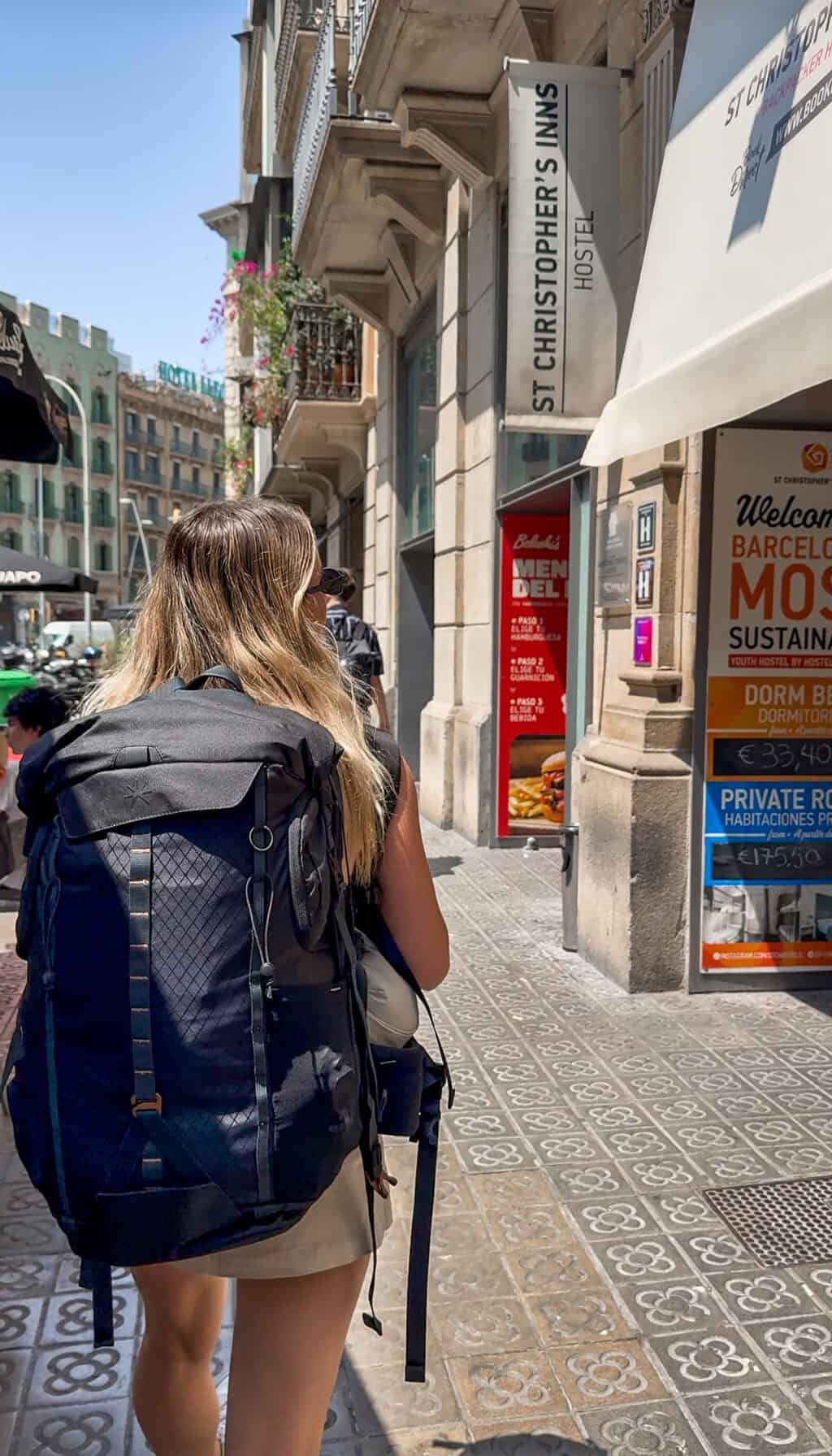
You’ve just arrived in a European station with a platform change, a set of stone stairs and ten minutes before check-in closes. Your backpack is bigger than you expected, one shoulder is aching, and the zip containing your passport is buried somewhere beneath spare clothes. That’s when a bag that looked adventurous in a shop starts feeling like a poor decision.
The right backpack for European city-hopping isn’t necessarily a hiking pack, the biggest pack or the lightest pack. It’s the one that fits your torso, works with your airline’s rules, opens sensibly in a hostel dorm and carries what you need without tempting you to bring everything. This backpackers guide to buying a backpack focuses on those practical realities, so you can spend more time catching trains and less time wrestling with luggage.
Why the Right Backpack Makes or Breaks a European Trip
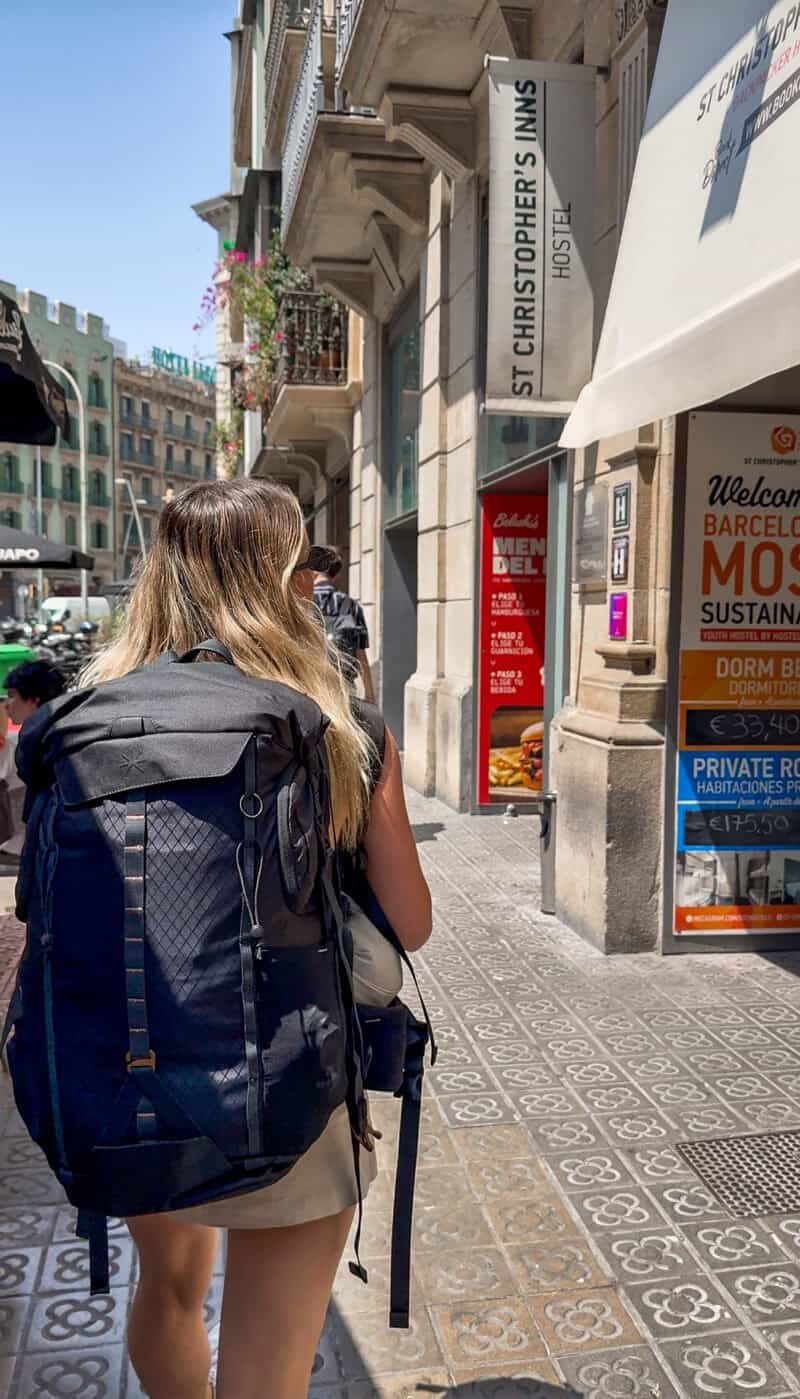
A European trip puts unusual demands on a bag. You may carry it from a budget flight to a railway station, lift it into an overhead rack, squeeze through a crowded tram and then haul it up hostel stairs. A pack designed mainly for countryside trekking can be comfortable on a trail but awkward on public transport, while a fashionable daypack may lack the support you need for a full day of city-hopping.
The problem usually appears gradually. A bag that feels fine while empty becomes irritating when packed. Its narrow opening forces you to unpack half your clothes to reach a charger. Its loose straps catch on train seats. Its capacity encourages you to pack “just in case” items that you rarely use, but still have to carry between every stop.
Treat the purchase as travel equipment
UK travellers tend to buy luggage deliberately rather than as a throwaway impulse. A UK consumer report found that 44% of respondents always planned suitcase purchases and 33% mostly planned them, while consumers typically bought a suitcase about once every two years. The figures concern suitcases, but the same logic applies to a serious travel backpack. You’re buying something expected to serve future holidays, city breaks and work trips, not just one weekend. The UK consumer report on travel-bag buying behaviour supports testing the bag properly and judging long-term value before committing.
The market is mature enough to offer dedicated designs for laptops, travel organisation, outdoor use and daily commuting. One UK market estimate places the bags and luggage market at USD 6.38 billion in 2025, with a projection of USD 6.86 billion by 2032, while another estimate puts UK backpack revenue at USD 1,019.6 million in 2025 and projects USD 1,742.7 million by 2033. These are market estimates, not a reason to spend more, but they show why you’ll find so many competing features and price levels. The UK bags and luggage market report makes the useful point that function should lead your choice.
Practical rule: Buy for the journey you’ll actually take, not the expedition you might take one day.
Hostel travel also rewards organisation. If your essentials have dedicated places, you can reach your passport, headphones or medication without scattering clothes across a dorm floor. A well-sized pack makes lockers easier to use, reduces the temptation to overpack and lets you move through cities without paying for taxis because the bag is unpleasant to carry.
Match Your Trip to the Right Capacity and Pack Style
Your first train leaves early, the hostel locker is narrow and the airline checks every bag at the gate. Choose your pack around that reality. Count the nights, decide whether you will wash clothes, check the airline’s personal-item rules and allow for any separate daypack. A weekend between London and Paris needs a different setup from a longer route through several cities in colder weather.
Capacity helps narrow the choice, but it does not decide the packing list. UK travel guidance places 40 to 60 litres around trips of 1 to 5 nights, 50 to 75 litres around 2 to 7 nights, and 60 to 85 litres for week-long trips or longer. The ranges overlap because clothing bulk, weather and packing habits vary. St Christopher’s backpack-buying guidance covers these broader travel ranges, while a separate volume guide gives 20 to 30 litres for day use, 30 to 45 litres for overnight or light travel, and 45 to 65 litres for longer trips. This backpack volume guide helps compare compact city packs with larger travel bags.
Choose capacity by use case
Trip Length
Recommended Litres
Packing Tip
Weekend city break
20 to 30 L
Pack one adaptable outfit plan and keep the bag within personal-item dimensions where possible
Overnight or light travel
30 to 45 L
Choose front access, a laptop sleeve and room for a small wash kit
One to five nights
40 to 60 L
Prioritise compression and avoid filling unused space
Two to seven nights
50 to 75 L
Use packing cubes and plan laundry rather than carrying duplicate outfits
Week-long trip or longer
60 to 85 L
Buy only if you genuinely need the bulk, and check the airline or rail plan first
Treat these as planning bands, not an invitation to buy the biggest pack. A fuller bag becomes awkward through stations, on crowded buses and under a hostel bed. UK backpacking guidance recommends keeping a fully loaded pack at or below about 20% of body weight, with some guidance suggesting 15% can feel more comfortable for beginners.
Pick the style that suits hostel life
A 20 to 30 litre daypack suits strict personal-item rules, short city breaks and sightseeing after you leave your main luggage at the hostel. It fits public transport easily, although it demands selective packing for anything longer.
A 30 to 45 litre travel pack is the sensible middle ground for many solo travellers. Choose a suitcase-style opening or full front access, compression straps, a padded laptop sleeve and a removable or separate daypack if you will use one. Front access is much easier than a deep top loader when your bunk is surrounded by other travellers’ bags and you need a clean shirt quickly.
A 45 to 65 litre pack accommodates bulkier clothing or outdoor equipment, but it takes up more space on trains and city pavements. Choose it only when your packing list proves you need it. For ordinary European hostel-hopping, a smaller, well-organised pack is usually easier to store, carry and keep secure.
Get the Fit Right With Torso Measurement and Load Testing
A pack can feel fine in the shop and become miserable between the station and your hostel. Height is a poor sizing shortcut. Two travellers of the same height can have different torso lengths, so measure from the C7 vertebra to the iliac crest and match the result with the manufacturer’s torso range.
The C7 is the prominent vertebra at the base of your neck when you tilt your head forwards. The iliac crest is the upper edge of your hip bones. UK rucksack guidance commonly uses these approximate bands: 38 to 43 cm for Small, 43 to 48 cm for Medium, 48 to 53 cm for Large and 53 cm or more for Extra Large. This UK torso-measurement guide explains the measuring method, why torso length matters more than height, and how fit affects load distribution.
Measure before you compare features
Ask someone to help rather than twisting while measuring yourself. Stand naturally, locate the C7 vertebra and measure down your spine to the level of the iliac crest. Record the result, then check the brand’s own sizing chart. A Small or Medium from one manufacturer may fit differently from the same labelled size elsewhere.
Test the likely size with the weight you expect on a city trip. Add clothing, shoes, books or filled water bottles, then walk around for several minutes. An empty pack reveals almost nothing about pressure points, balance or whether the hip belt will stay in place.
Compare city comfort, not trail performance
A hiking pack may have extensive suspension and adjustment, yet still be awkward in hostels. For European city hopping, prioritise a stable carry on trains, a fit that stays comfortable while walking between stations, and enough flexibility for cramped dorms. A structured travel pack can protect a laptop and keep clothing steady in a busy carriage. A minimalist daypack may feel light at first, but several days of clothes can quickly make it uncomfortable.
Use this fitting sequence:
Loosen every strap first. Put on the loaded pack and let it settle naturally against your back.
Position the hip belt. It should sit over the iliac crest, not around the soft part of your waist.
Tighten the shoulder straps. Pull them until the pack rests close to your back, without lifting the hip belt.
Adjust the sternum strap and load lifters. They should steady the bag, not press across your chest or neck.
Walk properly. Climb stairs, turn sharply and bend to pick something up.
Aim for roughly 70 to 80% of the load to sit on the hips and 20 to 30% on the shoulders, as described in the UK backpack-fitting guidance linked above. If your shoulders take most of the pressure, the torso length, belt position or pack design is wrong.
Reject any pack that pulls you backwards, digs into your hips, rubs your neck or leaves a gap that lets the contents swing. A shop assistant can adjust straps, but cannot correct a frame that does not match your body.
Materials Durability and Security Features That Matter in Hostels
Urban backpacking exposes your luggage to different abuse from a hiking trip. The bag gets placed under train seats, pushed into overhead racks, scraped against station walls and opened repeatedly in shared accommodation. Focus on construction quality and practical protection rather than a long list of clever-sounding extras.
Start with the fabric. Water-resistant material helps during sudden showers and damp station platforms, but it isn’t the same as waterproof construction. Inspect the stitching around shoulder straps, grab handles and the base, because these areas take the strain when you lift the pack. Run each zip smoothly and check whether the sliders feel secure rather than flimsy.
Match security to real city risks
Hostel and public-transport security is mostly about reducing easy access. Prioritise features in this order:
Lockable zips: Useful when your bag is in a locker, luggage area or crowded carriage. They won’t make the bag theft-proof, but they make casual opening harder.
Back-facing pockets: Keep passports, cards and other flat essentials against your body rather than exposed on the outside.
A padded laptop sleeve: Choose a compartment that stops the laptop moving around when you put the bag down.
A structured back panel: This protects fragile contents and prevents the pack collapsing when you’re carrying electronics.
A rain cover or water-resistant shell: Helpful for short exposure to rain, but keep documents in an internal dry pouch.
RFID blocking: Treat it as a nice-to-have, not your main security system. It doesn’t replace awareness, sensible storage or a lockable compartment.
Paying more often buys tougher fabric, better zips, cleaner organisation and a more comfortable harness. It doesn’t necessarily buy a completely different level of security. A well-designed affordable pack can protect your belongings effectively if you use hostel lockers and keep valuables close in busy places.
For practical context on shared accommodation, read this guide to staying safe in European youth hostels. Your pack should still be organised enough that you can take what you need without emptying it beside your bunk.
Carry On Limits Budget Tips and Where to Buy Smart
A 40 litre backpack isn’t automatically a safe free cabin bag. Airlines judge the bag by its external dimensions, including how much it bulges when packed, so litre capacity alone can mislead you.
British Airways lists a standard cabin bag allowance of 56 x 45 x 25 cm, including wheels and handles, while a smaller personal item on many fares can be 40 x 30 x 15 cm. Saga describes that smaller allowance as roughly 18 litres, which gives a useful benchmark for travellers aiming to stay under an airline seat. This UK cabin-bag size guide sets out the distinction.
Ryanair’s free cabin bag is listed at 40 x 30 x 20 cm, easyJet’s under-seat bag at 45 x 36 x 20 cm, and British Airways’ larger cabin allowance at 56 x 45 x 25 cm, according to Which?’s airline hand-luggage comparison.
Choose the bag around your flight pattern
For frequent short flights on strict fares, choose a soft-sided 20 to 30 litre pack that stays within the smallest allowance when packed sensibly. It’ll hold a compact clothing system, wash kit, electronics and travel documents, but you’ll need discipline.
A 30 to 45 litre pack works better for longer city trips or travellers prepared to pay for a larger cabin allowance. Check the exact airline, fare and route before buying. Some 40 litre bags can fit paid priority allowances but remain too large for free under-seat travel, especially once the front pocket is full.
The cheapest bag can become expensive if it triggers a gate-check fee or forces you to take taxis because it’s miserable to carry. Compare total value, including airline charges, transport convenience, durability and whether the pack works for more than one trip.
Spend deliberately
Try the bag in a shop with weight inside, test the zips and inspect the base and strap stitching. Second-hand can work well for a durable travel pack, provided the harness isn’t compressed, the seams aren’t stretched and every zip, buckle and lock functions properly.
UK travel-bag research found that luggage purchases are usually considered and infrequent, so don’t rush because a colour is appealing. This guide to saving money while travelling covers the wider value principle.
Final Checklist Before You Buy and Pack
Before paying, treat the backpack like a piece of travel equipment rather than a fashion purchase. Put it on with realistic weight, walk around the shop and test the movements you’ll make at stations. If the bag only feels comfortable while empty, leave it behind.
Use this final check:
Body fit: Confirm the torso range matches your measurement, then set the hip belt over the iliac crest.
Movement: Walk up steps, sit down and turn quickly. The pack should stay close without rubbing or shifting.
Access: Reach your passport, water bottle, charger and wash kit without unpacking the whole bag.
Opening: Prefer suitcase-style or full front access for hostel rooms, especially when you’re sharing limited floor space.
Compression: Tighten the straps with a partial load. The bag shouldn’t become floppy or balloon out.
Construction: Test every zip, buckle, handle and strap attachment. Inspect the bottom panel and seams.
Security: Check that lockable zips, back-facing pockets and the laptop sleeve suit the belongings you’ll carry.
Locker fit: Consider the pack’s shape when compressed. A tall, rigid bag may be harder to place in hostel storage than a flexible rectangular one.
Airline dimensions: Measure the packed exterior, not just the advertised litres, against the exact fare you’ll use.
Packing plan: Read this practical guide on what to pack in your travel backpack and remove anything you’re carrying only because there’s spare room.
Keep the first trip simple. A compact wardrobe, one pair of reliable shoes, a small wash kit and accessible documents will serve you better than a huge bag full of contingency items. The right pack should make the journey quieter in the background, whether you’re taking trains through London, Paris, Amsterdam, Berlin, Barcelona or Bruges, or using a social base in Edinburgh or Newquay.
St Christopher’s offers central hostels with clean dorms and private rooms, secure storage, communal spaces and thriving on-site bars where solo travellers can meet naturally without leaving the building. Visit St Christopher’s to find a suitable city base and book direct for travel-friendly benefits including a welcome drink and 25% off food during your stay.
Our direct rates are guaranteed to be at least 5% cheaper than anywhere else online, with a free drink on arrival, 25% off food at the bar, and free cancellation options available.