You’ve probably done similar mental maths before Berlin. Find a low nightly rate, screenshot a few hostels, then realise the bed price is only half the story. A place that looks budget-friendly can turn expensive fast if you’re spending extra on transport, scrambling to find somewhere social each evening, or booking a room that doesn’t match how you travel.
That’s why choosing the right berlin hostel accommodation matters more than many first-time visitors expect. In Berlin, the smart pick isn’t just a bed. It’s your base, your shortcut across the city, your fallback when the weather turns, and often the easiest place to meet people without forcing it.
Why Berlin is a World-Class Hostel City
Berlin suits hostel travel because the city itself rewards curiosity. You can spend the morning around monumental history, drift into a courtyard café by lunch, then end up in a lively bar or late-night food spot without feeling like you’ve crossed into a different city altogether.
That rhythm works especially well for solo travellers and small groups. Berlin gives you enough big sights to fill a first trip, but it also leaves room for accidental discoveries, which is where hostel travel shines.
Why the city fits hostel life so well
Berlin’s hostel scene isn’t an afterthought. It’s one of the most established in Europe, with around 100 hostels, average bed occupancy at nearly 75% pre-pandemic, and average daily rates of around €22, according to this comparative analysis of Berlin’s accommodation sector.
That mix matters. It tells you two useful things straight away:
-
Berlin has depth. There are enough hostels and enough demand that travellers aren’t relying on a tiny, patchy budget scene.
-
Berlin stays accessible. The city can still work for travellers who care about cost, but don’t want to sacrifice atmosphere.
Practical rule: In Berlin, the right hostel doesn’t just cut accommodation costs. It widens what you can do each day.
More than a cheap bed
A lot of cities have hostels. Berlin has neighbourhoods that feel made for them.
You’ve got districts where walking outside already puts you among galleries, bars, food spots, parks or major landmarks. That means your hostel becomes part of the trip, not a place you only return to sleep.
For a first-time visitor, that’s often the difference between a rushed weekend and one that feels spacious. If your base is central and connected, you spend less time figuring things out and more time seeing Berlin properly.
Why travellers keep coming back
Berlin also attracts repeat visitors better than most cities. The first trip is usually the classic route. Brandenburg Gate, Museum Island, the Wall, East Side Gallery, some nightlife, plenty of walking.
The second trip is where Berlin really gets under your skin. You start choosing areas by mood rather than landmarks. You care more about café streets, late-night food, flea markets, riverside walks and whether your hostel helps the trip flow easily.
That’s why Berlin remains such a strong hostel city. It works for first-timers on a budget, but it also rewards travellers who want a smarter, more rounded stay.
Choosing Your Base Camp Berlin's Best Neighbourhoods
Where you stay changes your Berlin trip more than people think. The city is well connected, but “well connected” isn’t the same as “convenient at midnight” or “easy when you’re carrying a backpack and haven’t had coffee yet”.
The best area depends on what you want your days to feel like. Sightseeing-heavy, late-night, food-led, or slower and more local.
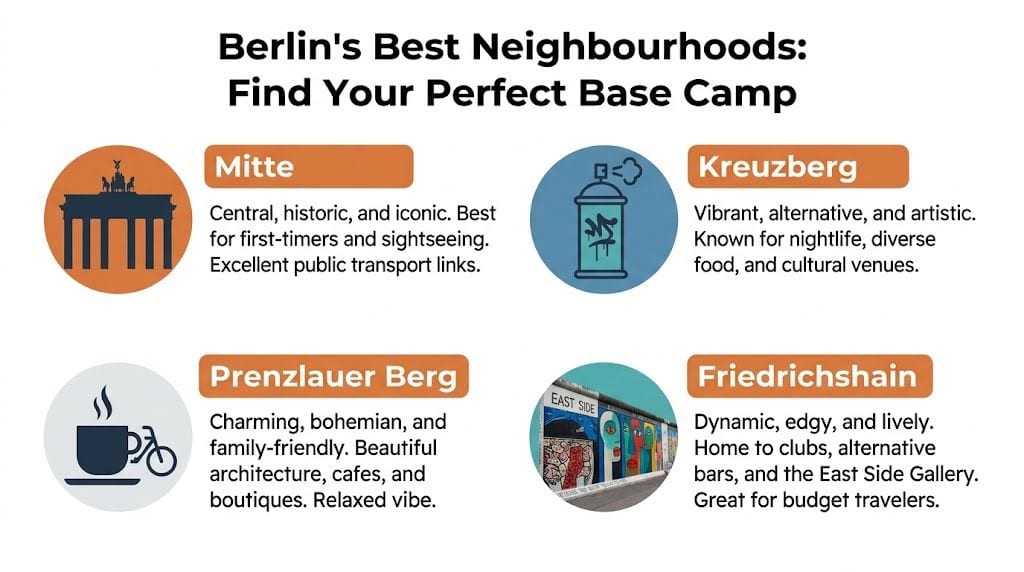
Mitte for first-timers and classic Berlin
If it’s your first visit, Mitte is the easiest answer.
In Mitte, Berlin feels most recognisable. You’re close to major history, museums, government buildings, older streets, and plenty of transport links. It’s practical without feeling bland, which is rare in capital city centres.
A hostel in Mitte works well if you want to:
-
Walk to major sights instead of planning every journey
-
Mix daytime culture with evening plans without crossing the whole city
-
Keep logistics simple for a short stay
Mitte also suits solo travellers who don’t want to overcomplicate their base. You can wake up and make decisions on the fly, which is often how the best Berlin days happen.
If you’re looking at central hostel options, St Christopher's Berlin Mitte is the kind of location that makes sense for travellers who want a straightforward city base near the action rather than somewhere remote that looks cheaper on paper.
Kreuzberg for food, culture and long evenings
Kreuzberg is for travellers who care as much about the atmosphere between landmarks as the landmarks themselves.
This part of Berlin feels layered. You’ll find strong food options, street life, nightlife, and a more lived-in pace than the polished heart of Mitte. It’s often the better pick if your ideal day includes wandering, stopping often, and not sticking to a rigid itinerary.
Kreuzberg tends to suit:
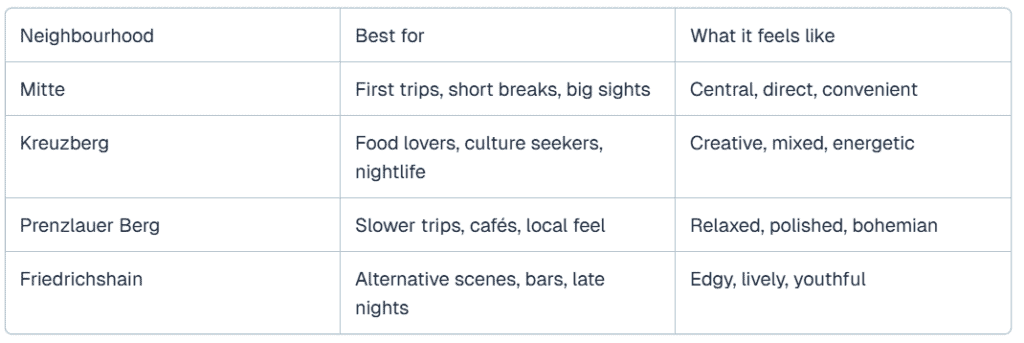
Kreuzberg isn’t always the easiest base for ticking off every classic sight quickly. But if your Berlin trip is more about finding your own version of the city, it’s often a strong fit.
Stay in Kreuzberg if you’d rather finish the day in a neighbourhood bar or food spot than head straight back to the tourist centre.
Prenzlauer Berg for a calmer rhythm
Prenzlauer Berg is the area for travellers who want Berlin with less friction.
It’s attractive, café-filled, and more relaxed than the city’s louder districts. You still get character, but the mood is softer. Think leafy streets, brunch spots, independent shops and a generally easier pace.
This area makes sense if you:
-
Prefer mornings to midnight
-
Want a quieter base after long museum or walking days
-
Like neighbourhood charm more than constant buzz
For some travellers, especially on a first trip, Prenzlauer Berg can feel slightly detached from the version of Berlin they pictured. For others, that’s exactly the point. You get breathing room.
Friedrichshain for nightlife and alternative energy
Friedrichshain is where many people go when they want Berlin to feel rougher around the edges, in a good way.
There’s nightlife, street art, a younger feel, and a stronger sense of the city’s more alternative identity. If your evenings matter as much as your sightseeing, Friedrichshain often delivers.
It’s a good choice for travellers who want:
-
Late nights without a long ride home
-
A less polished neighbourhood feel
-
Easy access to East Side Gallery and riverside walks
The trade-off is simple. If you stay here, your trip may feel more social and more spontaneous, but less classically “central”. That’s fine if you know what you’re choosing.
How to choose without overthinking it
If you’re stuck, use this rule:
-
Choose Mitte if this is your first Berlin trip
-
Choose Kreuzberg if food and culture shape your plans
-
Choose Prenzlauer Berg if you want a calmer base
-
Choose Friedrichshain if nightlife is part of the point
Most booking mistakes happen when travellers chase the lowest nightly rate and ignore what the area will cost them in time, effort and transport. Berlin rewards location more than bargain hunting.
Decoding Your Stay Room Types and Typical Prices
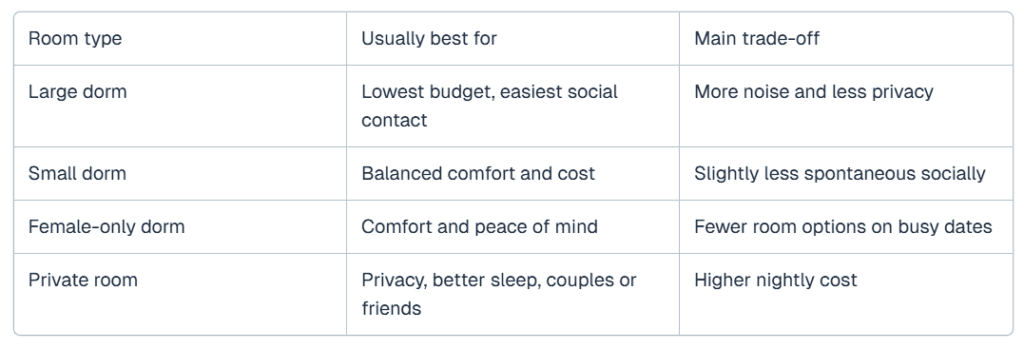
Room type shapes your trip just as much as neighbourhood. Some people book the cheapest bed available, then spend two nights sleeping badly and wondering why they feel wrecked. Others pay for privacy they barely use.
The smarter move is matching the room to how you travel.
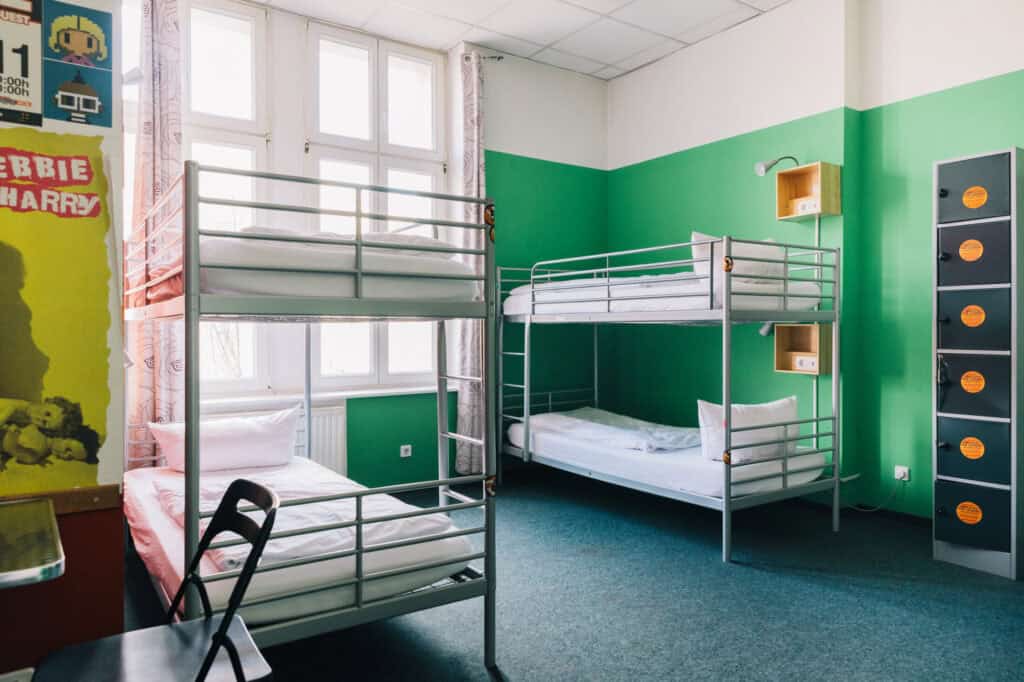
Dorms for budget and social ease
A large mixed dorm usually gives you the lowest entry price and the easiest path into hostel life. If you’re travelling solo and want conversation to happen naturally, this is often the simplest setup.
The trade-off is obvious. More people means more movement, more bags, more alarms and more variables.
Smaller dorms are often a better middle ground. You still get the social side, but with less chaos.
Consider this practical approach:
-
Large mixed dorms suit travellers who prioritise budget and don’t mind noise
-
Smaller dorms suit people who want some social energy without feeling constantly “on”
-
Female-only dorms can offer a bit more comfort for travellers who prefer that setup
Female-only dorms for extra ease
For some solo travellers, especially on a first hostel trip, female-only dorms remove a layer of stress. They won’t change the whole hostel experience, but they can make sleeping and settling in feel easier.
That matters more than people admit. If you feel comfortable in your room, you’re more likely to enjoy the shared spaces and the city outside it.
Private rooms for couples, friends or light sleepers
Private rooms are the move if you want hostel atmosphere without dorm logistics.
They work well for:
-
Couples who want privacy but still like a social base
-
Friends splitting costs while keeping their own space
-
Light sleepers who know dorm life will wear them down
-
Longer stays where comfort starts to matter more
You’ll usually pay more for the room itself, but the overall value can still be good if the location is central and shared facilities are solid.
Don’t choose a private room because you think hostels are only for dorms. Choose it if you want the social option without sharing your sleeping space.
Typical price thinking without getting trapped by the number
Berlin hostel prices move around with season, weekends, events and how early you book. A bed that looks affordable on a quieter date can jump when demand rises, especially in central areas.
The useful mindset isn’t “What’s the absolute lowest price?” It’s “What am I getting for this rate?”
Check these factors before booking:
A central room that saves you repeated transport spend and cuts dead time can be better value than a cheaper bed far out. That's the calculation to consider.
The Hostel Experience Facilities Culture and What to Expect
A Berlin hostel stay usually works on two levels. There’s the practical side, which is where you sleep, shower, store your bag and charge your phone. Then there’s the social side, which is often the bit that decides whether your trip feels flat or memorable.
People who’ve never stayed in a hostel sometimes expect either total chaos or awkward silence. Berlin hostels are usually neither. The better ones are organised, social in a low-pressure way, and set up so you can opt in or out as you like.
What you’ll usually find
Most travellers care about the same basics once they arrive. Clean bathrooms, secure storage, reliable WiFi, helpful reception, and somewhere to sit that isn’t your bunk.
Good hostels tend to offer a mix of:
-
Communal spaces where you can read, plan, eat or chat
-
Luggage storage for early arrivals and late departures
-
Laundry facilities for longer trips
-
Shared kitchens or food options depending on the property
-
Common areas that feel usable, not just decorative
The difference between a decent stay and a draining one often comes down to the shared spaces. If people can comfortably linger, conversations happen naturally. If the layout is poor, everyone disappears into their beds or heads elsewhere.
The social side without forced fun
Berlin attracts people travelling for different reasons. Some come for history, some for nightlife, some for a long Europe trip, some because they just wanted a city with personality. A good hostel gives those people chances to cross paths without turning every evening into organised entertainment.
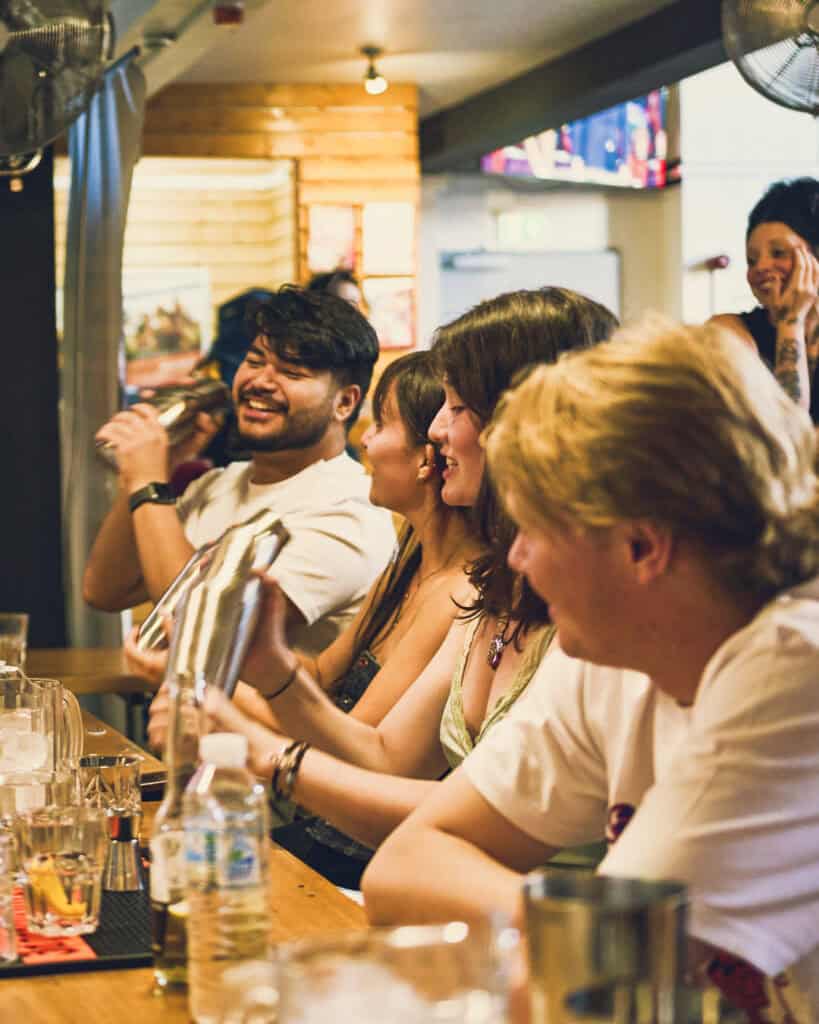
That’s where an on-site bar can be useful. Not because you have to drink, but because it removes the awkward first step of figuring out where to go and how to meet people.
A place like St Christopher's Inns Berlin Alexanderplatz is a practical example of this setup because the Belushi’s bar downstairs gives guests a ready-made social starting point in a busy part of the city. It’s easier to decide what the night becomes when you don’t have to begin it by searching for somewhere suitable.
The best hostel social spaces don’t push interaction. They make it easy.
A common mistake is assuming a “social hostel” means no sleep and constant noise. In reality, social usually means there’s a natural meeting point. You can join in, disappear for the evening, or do a mix of both.
What works and what doesn’t
Some hostel features matter more in Berlin than travellers expect.
What tends to work well:
-
A central location because Berlin is spread out and days get long
-
A proper communal area, especially for solo travellers
-
Food or bar access on site, which helps on arrival night
-
Room options beyond big dorms, because not everyone travels the same way What often sounds good but matters less than you think.
-
Over-designed interiors if the common spaces feel dead
-
Ultra-low rates in remote areas if transport adds hassle
-
A huge event schedule if there’s nowhere comfortable to talk
Later in your planning, it helps to see a place in motion rather than only in photos. This quick look gives a better feel for Berlin hostel atmosphere and layout.
Sustainability is becoming part of the decision
Hostel culture is changing as traveller priorities change. One clear shift is sustainability.
According to background on eco-conscious travel and Berlin hostel trends, 68% of UK travellers under 30 prioritise green certifications when booking accommodation. Even if you’re not filtering every stay through formal eco labels, it shows what more travellers care about now.
In practice, that means many guests are looking beyond the bed and asking different questions. Is the property trying to reduce waste? Does it make low-impact travel easier? Are sustainable claims specific or just vague mood-setting?
Berlin is a good city for that mindset because you can already do a lot on foot and by public transport. The hostel that fits you best may not have every answer, but it should make a lower-impact trip easier, not harder.
Staying Safe and Getting Around Berlin
Berlin is generally straightforward to travel in. It’s big, but not confusing once you get the rhythm. The two things that make the biggest difference are simple street awareness and choosing a base that saves you unnecessary journeys.
If you sort those early, the city becomes much easier to enjoy.
Staying safe in and around your hostel
Most hostel safety is routine rather than dramatic. Use the locker. Keep your phone and wallet on you in shared spaces. Don’t leave chargers, cards or headphones scattered across a dorm.
The bigger risk for most visitors isn’t inside the hostel. It’s the usual city issue of distraction in crowded areas.
UK government advice for Germany notes the risk of pickpocketing in busy tourist zones, and says places with heavy footfall such as Alexanderplatz need the same awareness you’d use in any major European capital.
That doesn’t mean avoid these areas. It means act like someone who knows cities.
A few habits help:
-
Keep valuables zipped and close on public transport and in stations
-
Use hostel lockers properly instead of treating them as optional
-
Don’t flash everything at check-in when sorting cash, passport and cards
-
Stay aware in busy squares and platforms , especially when tired or distracted
-
Choose female-only dorms if that setup helps you relax
If an area is busy enough to be convenient, it’s busy enough to attract opportunists.
Practical transport basics
Berlin’s public transport is one of the reasons a hostel stay works so well here. You can cover a lot of city without much effort once you understand the basics.
You’ll mostly use:
-
U-Bahn for underground routes through the city
-
S-Bahn for wider urban rail connections
-
Trams and buses for the final stretch or neighbourhood links
What matters most isn’t memorising the whole network. It’s knowing the stop nearest your hostel, the line back at night, and whether your plans cluster in one part of the city or bounce around.
If you want a simple breakdown of routes, tickets and practical habits, this guide on how to get around Berlin on public transport is a useful place to start.
Why location saves more than money
A central hostel helps with safety as much as convenience.
When your base is well placed, you spend less time making awkward late returns, less time changing lines when you’re tired, and less time standing around checking maps with your phone out. You also have the option to walk home from some areas rather than always relying on transport.
That’s part of total value. Not glamour, just fewer annoying moments.
A calm way to approach solo travel here
Berlin can look intimidating from the outside because the city is large and its reputation is loud. In practice, most solo travellers settle in quickly if they keep things simple.
Arrive with your first route planned. Save your hostel address offline. Keep your valuables sorted. Learn the nearest station. For the first evening, stay local rather than trying to do too much.
That approach gives you confidence fast, and confidence matters more than trying to look experienced.
Booking Smart How to Get the Best Value
The cheapest-looking rate isn’t always the cheapest stay. That’s the mistake a lot of travellers make with berlin hostel accommodation searches.
A lower nightly price can hide extra transport costs, weaker cancellation terms, and more spending on food and drink because the hostel itself offers nothing useful once you’re back for the evening. Total value is the better filter.
What total value actually means
Before you book, weigh the room against the full shape of your trip.
A hostel usually offers stronger value when it gives you:
-
A central location, which cuts repeated transport spending
-
Social space on site, so you’re not buying convenience elsewhere
-
Food options that reduce daily costs
-
Flexible booking terms, which matter more than people think
The nightly rate is still important. It’s just not the whole decision.
What not to prioritise
Don’t overvalue tiny headline savings if the trade-offs are obvious.
Be careful with:
-
Remote locations that look affordable but add friction every day
-
Bare-bones properties where you end up buying comfort elsewhere
-
Non-flexible bookings if your travel plans still feel fluid
A smart Berlin booking should make the trip easier. If the room rate looks great but everything around it becomes harder, it wasn’t the value option after all.

Your Essential Berlin Hostel Packing List
The right hostel packing list is less about bringing more and more about bringing the things that stop small annoyances from piling up.
Berlin is easy to travel light in, but hostel stays reward a bit of planning.
The items that earn their space
-
Padlock for lockers. Don’t assume one will be waiting for you.
-
Earplugs because even good dorms have late arrivals, early alarms and the occasional champion snorer.
-
Eye mask if you’re sharing with people on different schedules.
-
Quick-dry towel which is lighter, faster to dry and easier to repack.
-
Power bank for long walking days and map-checking on the move.
-
Small day bag that zips properly and sits close to the body.
-
Flip-flops for shared bathrooms if you prefer them.
-
Reusable water bottle for full days out.
-
Portable charger cable in your day bag rather than buried in your main backpack.
What people forget most often
The most forgotten item is usually not glamorous. It’s a way to organise your stuff.
A few packing cubes or simple pouches make dorm life easier because you’re not rustling through everything each time you need socks, chargers or toiletries. Your roommates will appreciate that as much as you do.
One final packing habit
Keep the first-night essentials together. Passport, charger, toiletries, sleepwear, medication, and anything valuable should be easy to grab without unpacking your whole bag.
That matters when you arrive late, when the room lights are low, or when all you want is a shower and bed.
Frequently Asked Questions about Berlin Hostels
Are Berlin hostels safe for solo female travellers
In general, yes, if you use the same judgement you’d use in any major city. Female-only dorms can make some travellers feel more comfortable, and hostel lockers, staffed reception and busy common areas all help. In crowded parts of Berlin, especially major transport and tourist zones, basic anti-pickpocket habits matter more than anything dramatic.
Are Berlin hostels only for very young travellers
No. Plenty of hostel guests are well past the gap-year stage. Berlin especially attracts people on short city breaks, solo trips, cultural weekends and longer Europe itineraries.
Can you get private rooms in a hostel
Yes. Many Berlin hostels offer private rooms alongside dorms. They’re useful for couples, friends travelling together, remote workers who want better sleep, or anyone who likes hostel atmosphere but doesn’t want to share a room.
When should you book
Earlier is usually better if your dates are fixed, especially for weekends and busy travel periods. The exact right moment depends on your flexibility, but waiting too long usually gives you fewer room types, fewer central options and weaker value.
Is a central hostel worth paying more for
Usually, yes. In Berlin, location changes the shape of the trip. A central base can save transport time, simplify late evenings and make spontaneous plans much easier. That often outweighs a lower room rate farther out.
If you want a Berlin base that keeps the city easy, social and budget-friendly without losing the practical perks, take a look at St Christopher's Inns. Booking direct can make the whole stay better value, especially once you factor in the welcome drink, food discount, flexible cancellation and central locations that save time as well as money.