The best city for solo female travel in Europe isn’t automatically the one with the highest safety ranking. It’s the...
Share This Article
The best city for solo female travel in Europe isn’t automatically the one with the highest safety ranking. It’s the place that matches your pace, budget, transport confidence and preferred level of social contact. A UK-focused analysis found that average spending per visit by British women across key European destinations rose from £243 in 2023 to £500 in 2024, a 105.56% year-on-year increase (The Traveler). The demand is real, but so is the need for practical planning.
This guide compares eight St Christopher’s destinations through distinct travel styles, from cycling independence in Amsterdam and creative confidence in Berlin to medieval wandering in Bruges and classical culture in Vienna. For each city, consider the same essentials: how easy it feels to move around after dark, which neighbourhood gives you the right base, how to manage daily spending, what you can do alone without feeling awkward, and where you can meet people naturally without committing to nightlife. Before you travel, check the official FCDO advice for women travelling abroad, save your accommodation details, and plan your return route before an evening out.
1. London for safety, neighbourhoods and social connection
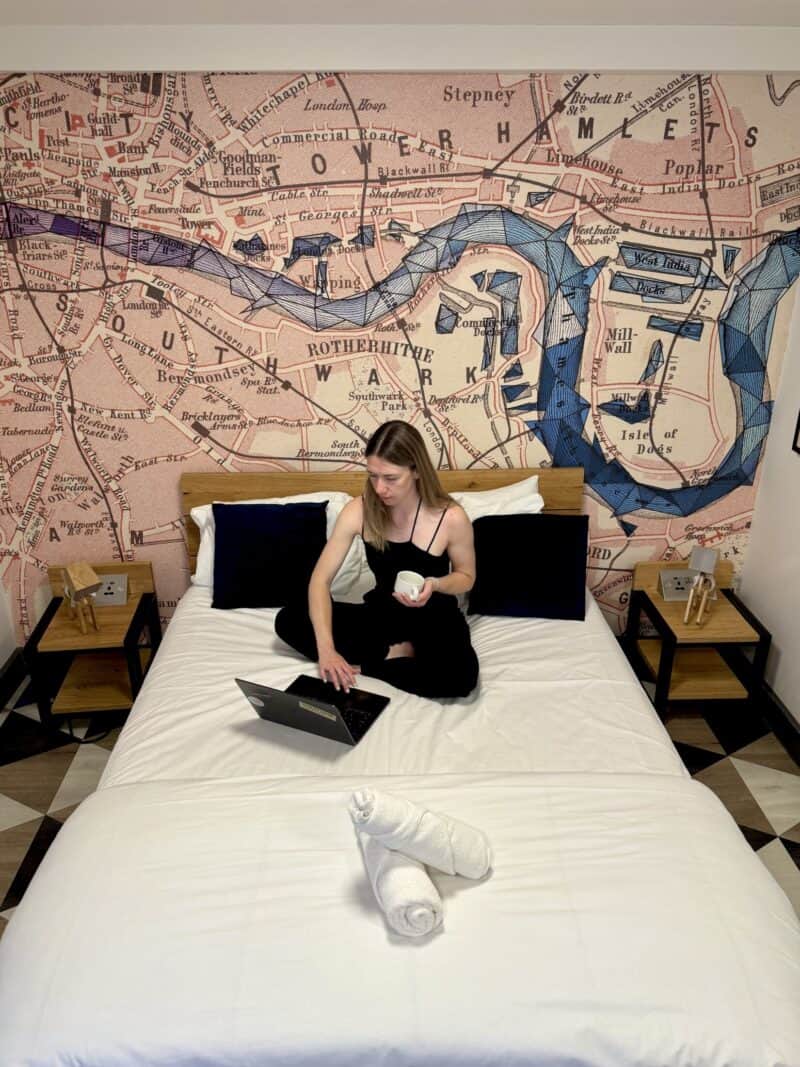
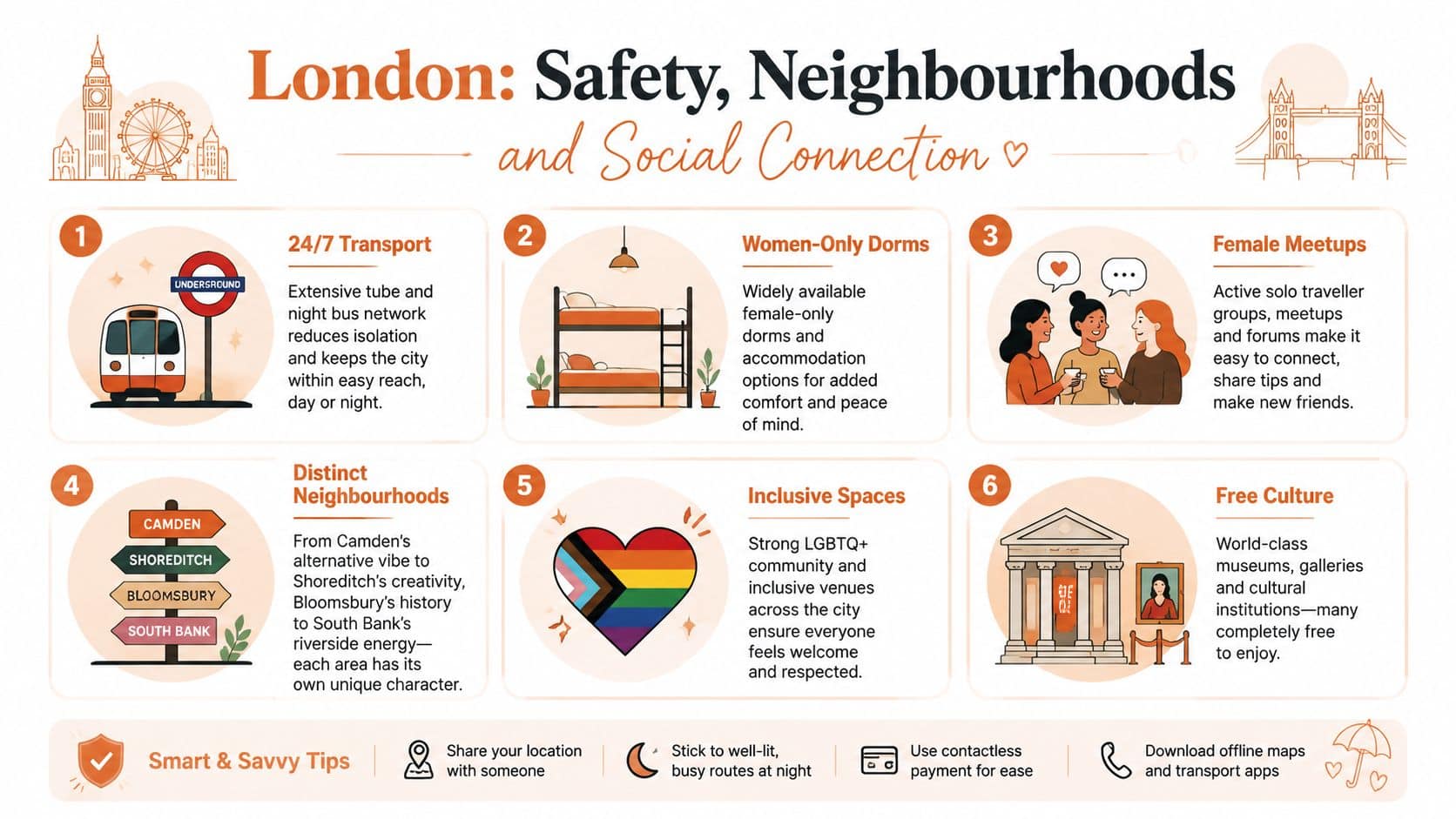
London works especially well when you want choice without changing bases. You can spend the morning in Bloomsbury, browse food stalls in Brixton, visit galleries in Shoreditch and still return to a central room using familiar public transport. The network is extensive, but the city’s size means location matters more here than in almost any other destination on this list.
St Christopher’s multiple London properties give solo travellers a practical way to stay close to the neighbourhood they want to explore. A South Bank base suits museum days and riverside walks, while other locations place you near different local hubs. Staying central can reduce both travel time and the temptation to rely on expensive late-night taxis.
Practical rule: Choose your London base around your evening plans, not only your daytime sightseeing list.
The social side is straightforward. On-site bars and organised events mean you can meet other guests without having to search for a venue alone, and female-only dormitories can offer additional privacy. Direct booking includes a free welcome drink and 25% off food at the bars throughout your stay, subject to the property’s current terms. For more ideas, use this guide to things to do alone in London.
Visit major museums on quieter weekday mornings, then explore areas such as Peckham, Walthamstow or Brixton for a less tourist-focused day. Check the latest TfL routes before travelling, especially if you’ll be returning late, and join a hostel walking tour early in your stay if you’d like to learn the area alongside other travellers.
2. Berlin for creativity, history and solo confidence
Berlin is a strong choice if you want independence to feel normal rather than conspicuous. Its neighbourhoods have distinct personalities, and a solo day can move easily from the museums and memorials around Mitte to street art, independent galleries and small venues in Kreuzberg or Friedrichshain. You’re not expected to follow a prescribed sightseeing route.
St Christopher’s Berlin offers two useful central bases. The Alexanderplatz property has Belushi’s downstairs, while the Mitte location has a different bar setting. Both make it easier to return from a day of exploring without crossing the city to find company. Museum Island is close to the Mitte property, so you can visit at your own pace, take a break, and return for an evening event or meal.
Berlin rewards a little self-sufficiency. Walking and cycling can cover many plans, but the city is spread out, so check transport connections rather than assuming every district is nearby. A bike is particularly useful for linking Prenzlauer Berg, Tempelhof and Friedrichshain, while Kreuzberg’s galleries and murals are best explored in daylight before returning to a central social space.
Build confidence in manageable stages
Start with a neighbourhood walk, then try a solo museum visit, followed by dinner in a communal setting. St Christopher’s direct booking benefits include 25% off food at Belushi’s, and a meal that’s available on site can remove the pressure of finding a restaurant when you’re tired. Staff and other guests can also help with local orientation, and conversation meetups offer a gentler way to practise basic German phrases.
Berlin’s nightlife is varied, but you don’t need to make it the centre of your trip. Pick a venue with a clear route home, keep your phone charged, and avoid accepting drinks from strangers. The city is at its best when you combine structured daytime culture with unplanned neighbourhood wandering.
3. Paris for romance, culture and everyday authenticity
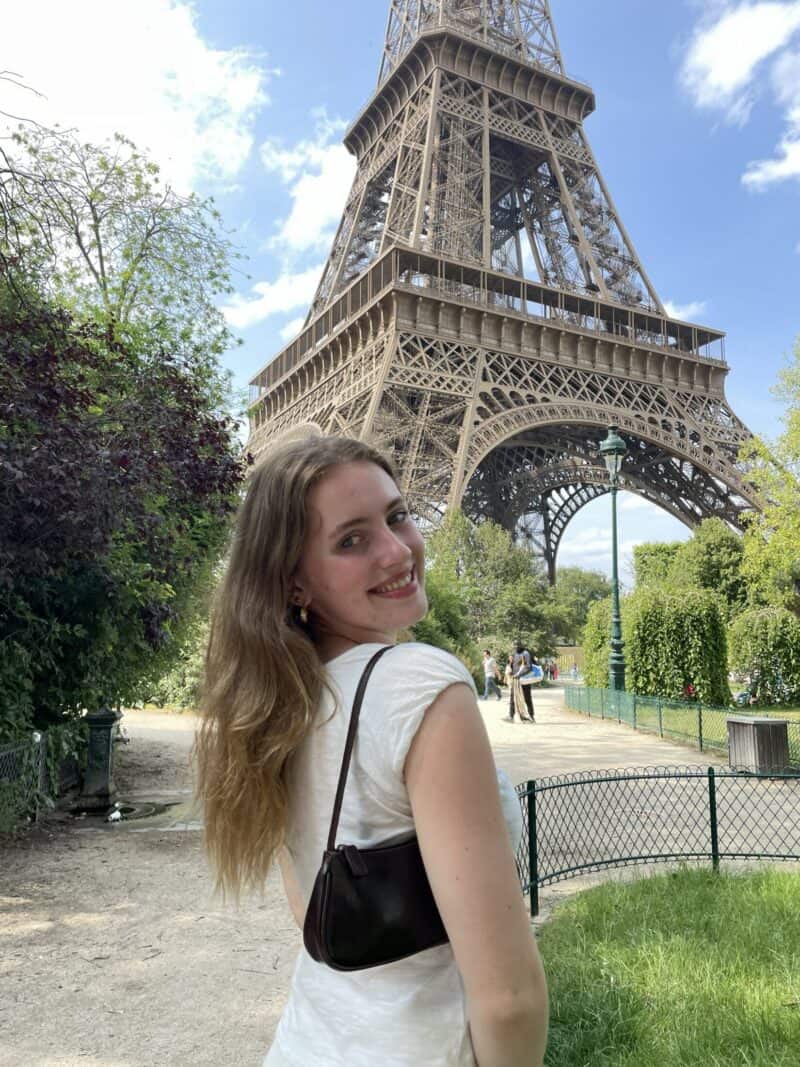
Paris doesn’t become less rewarding because you’re travelling alone. In fact, the city’s cafés, museums and neighbourhood streets make solo observation feel completely natural. The trick is to treat Paris as a collection of local districts rather than a checklist built around the Eiffel Tower.
St Christopher’s Paris properties at Canal and Gare du Nord place you in practical, well-connected areas with access to cafés, markets and independent shops. The Canal location suits slow walks along Canal Saint-Martin, while Gare du Nord is particularly convenient if you’re arriving by train or planning onward travel. Both properties have Belushi’s bars, creating an easy place to meet people after a day out.
The Marais is a dependable choice for independent bookshops, historic streets, Jewish quarter heritage and LGBTQ+ friendly spaces. Belleville and Canal Saint-Martin offer a more local rhythm than the busiest central routes. Rather than paying tourist-zone prices for every meal, browse markets such as Rue Mouffetard or Rue Cler and build a picnic around fresh produce.
Paris is easier when your itinerary leaves room for sitting, looking and changing direction.
A solo museum visit can be one of the city’s simplest pleasures, especially if you arrive early and choose one collection rather than attempting everything. Use the Paris in September guide when planning a shoulder-season cultural break, and check current opening arrangements before setting out.
Direct booking at St Christopher’s includes a free welcome drink and 25% off food at Belushi’s throughout your stay, which can make a social evening easier to manage. Hostel walking tours are useful on your first day because they give you a feel for the neighbourhood before you explore it alone. Keep valuables secure on busy transport, and decide your route home before settling into an evening out.
4. Amsterdam for cycling independence and female-friendly infrastructure
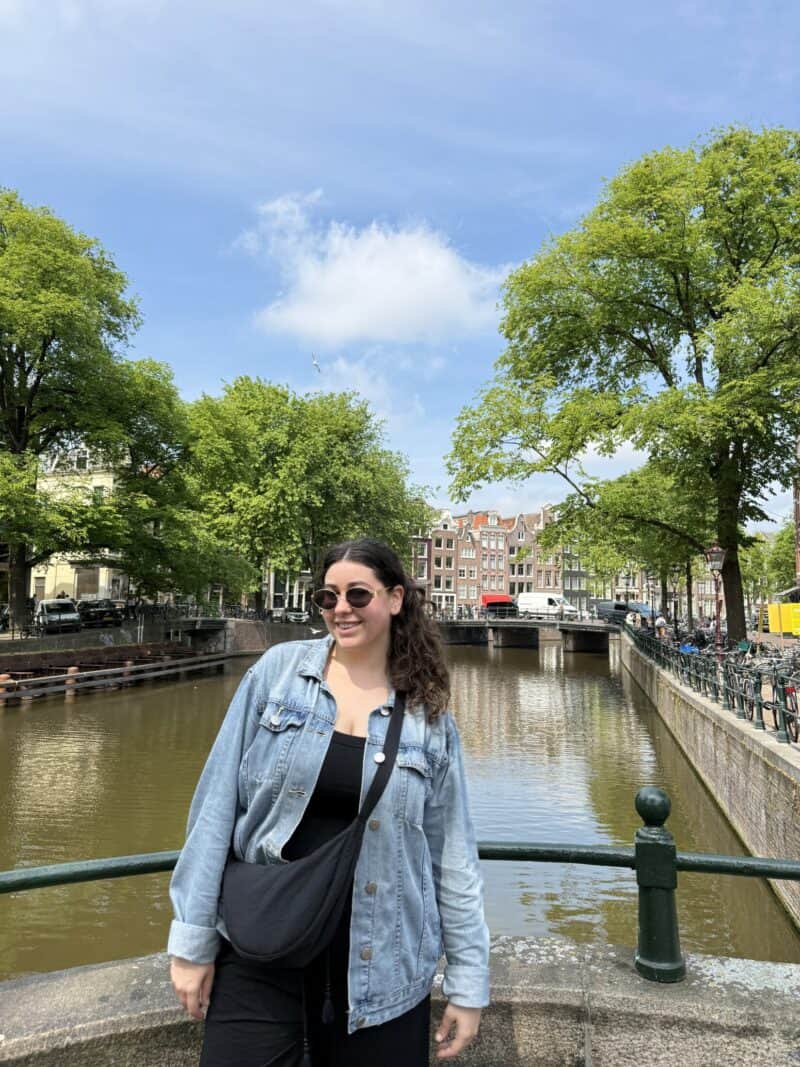
Amsterdam suits solo travellers who want movement to feel intuitive. The city is compact and flat, and cycling isn’t a novelty reserved for tourists. It’s part of ordinary life, which means you can travel alone without feeling as though you’re making a conspicuous choice.
St Christopher’s The Winston sits in the city centre, close to canals, cultural attractions and evening activity. That central position matters because you can return easily between plans, rather than carrying a full day’s belongings across distant districts. The social setting also helps if you’ve spent the day independently and would like company over a meal or drink.
Start with a short cycle before attempting a longer route. Learn the local lane signals, use a sturdy lock and don’t leave a bike unsecured while you visit a museum. Jordaan works well for independent shops and galleries, Oud West for markets, and De Pijp for a livelier local atmosphere. Vondelpark provides a softer change of pace when you want greenery without leaving the city.
Make your first ride easy
Join a hostel bike tour before setting off alone. It gives you practical confidence with junctions and cycle lanes, while providing a natural way to meet other guests. Later, you can use the best cycle routes in and around Amsterdam to plan a longer independent outing or a shared day beyond the centre.
The Winston’s central social atmosphere means you don’t have to leave the property to find company in the evening. Direct booking includes a free welcome drink and 25% off food throughout your stay, giving you a useful budget option after a full day on two wheels. You can also read this practical perspective on why Amsterdam suits solo travellers.
If cycling isn’t your thing, Amsterdam still works. Use public transport, walk between nearby districts and check the return route before visiting areas that become quieter at night. Museums are generally calmer on weekday mornings or later opening evenings, but verify current hours before travelling.
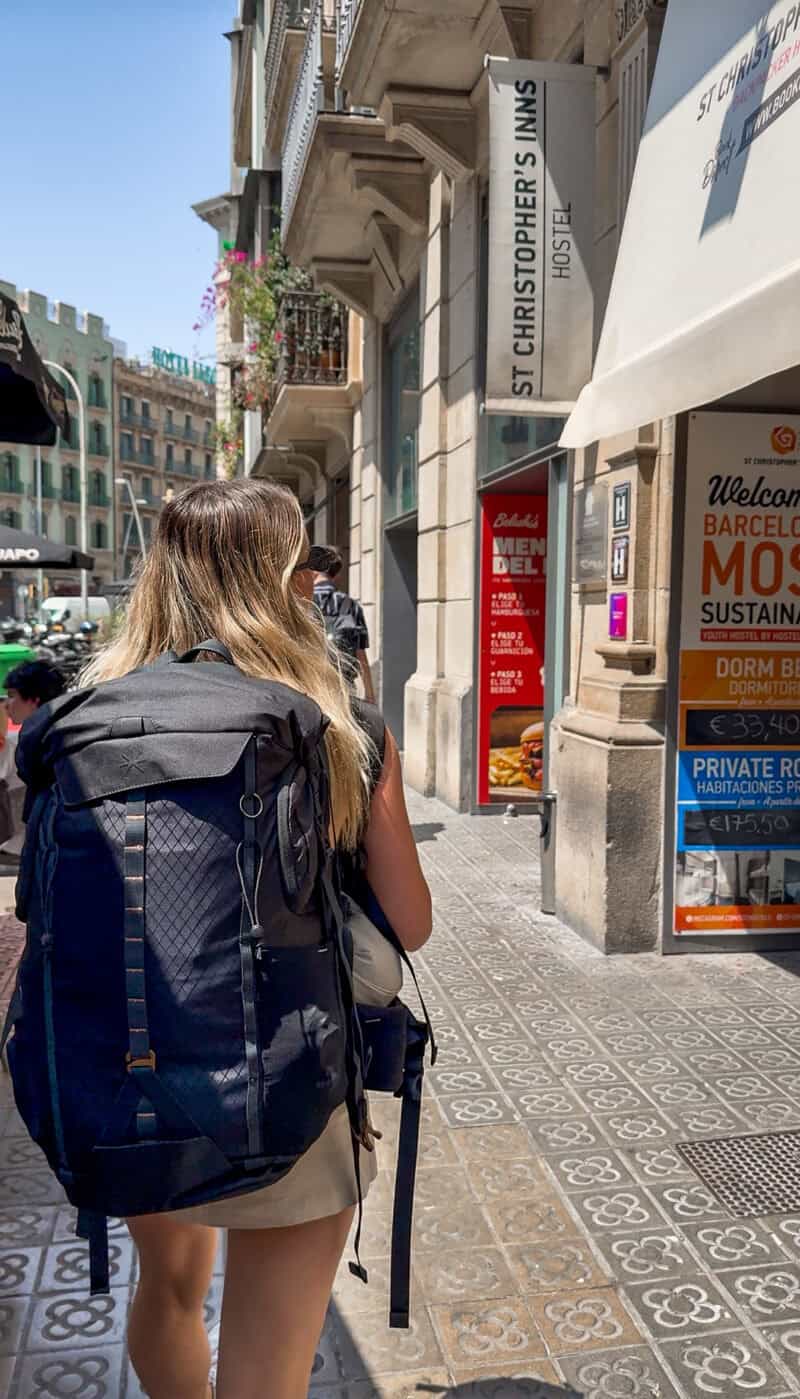
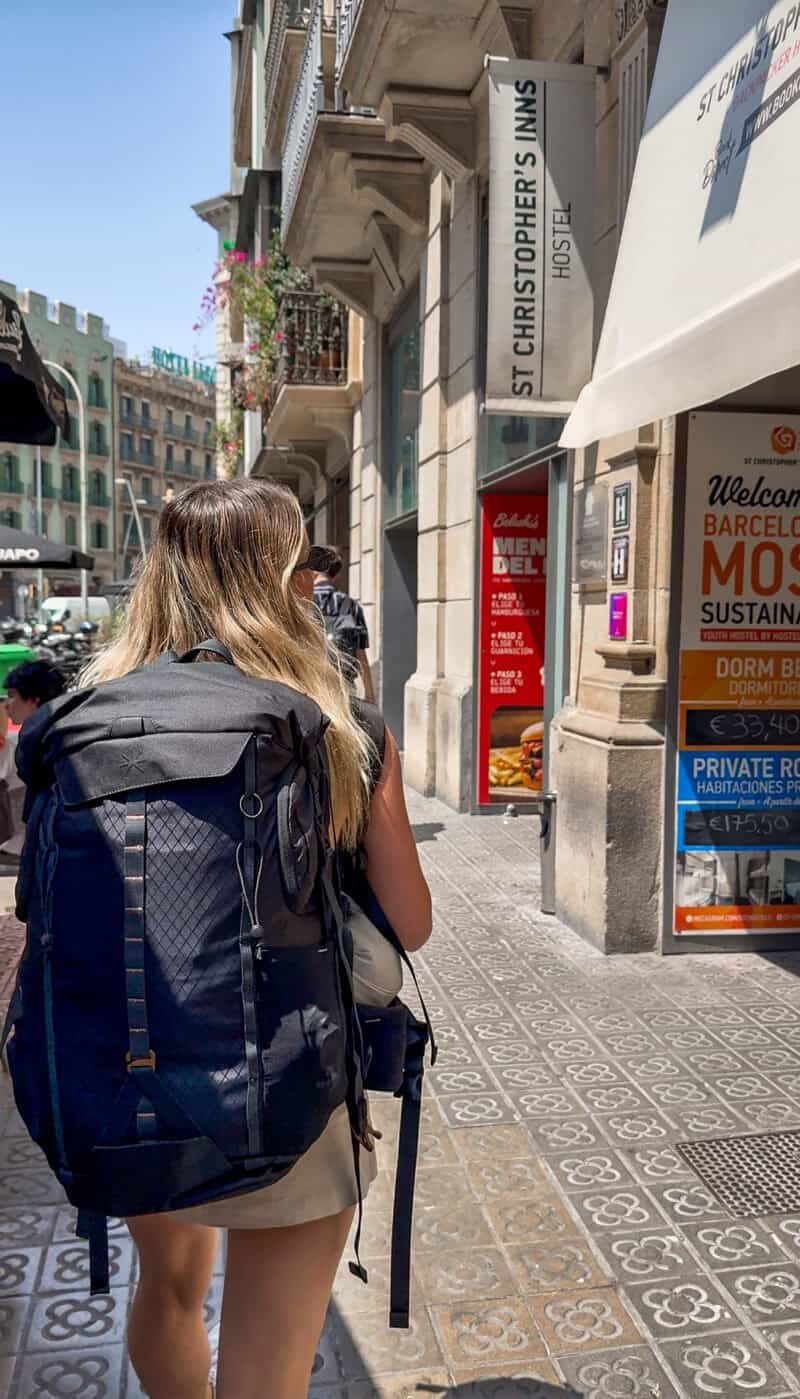
5. Barcelona for beach time, culture and social energy
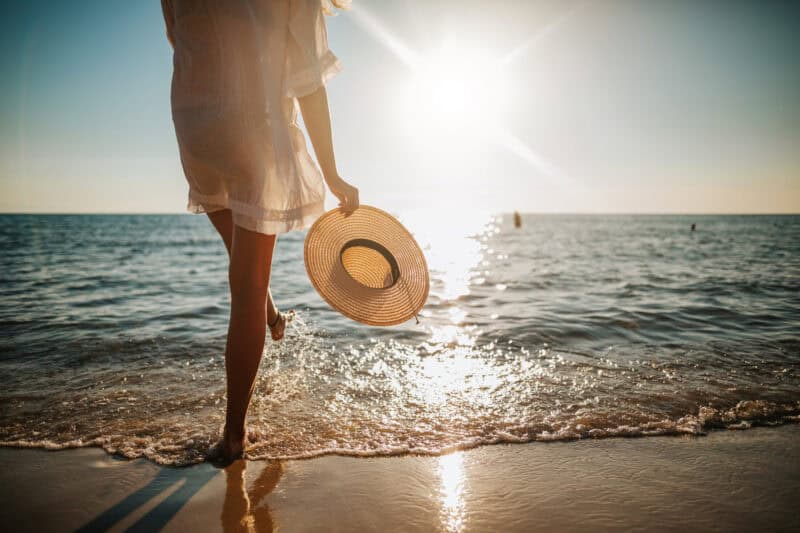
Barcelona gives solo female travellers an unusually useful combination: a city break with an outdoor reset button. You can spend the morning beside the sea, move into the Gothic Quarter for architecture and history, then finish with food and conversation in a lively central setting. That variety stops a solo trip from feeling overly scheduled.
Start at Barceloneta in daylight and use lifeguarded areas and available locker facilities. Then move inland for the Gothic Quarter, Raval galleries or the market streets around La Boqueria. Visit La Boqueria early, when the market feels more like a working food destination than a crowded photo stop. For Gaudí’s major sights, reserve ahead and confirm entry arrangements before leaving your accommodation.
Keep the city comfortable after dark
Barcelona’s Metro is efficient, but busy transport requires ordinary city awareness. Keep your bag closed and in front of you, particularly when changing lines or standing in crowded carriages. Use a route you’ve checked in advance, and choose a well-lit return journey rather than extending an evening because the next venue is across town.
A hostel tour can help you learn the Metro and understand the city’s layout before exploring independently. Once you’re comfortable, consider a day trip to Montserrat or Colònia Güell and return to the same central base. The city’s beach, food and cultural mix makes it especially good for travellers who want social possibilities without having to join a group all day.
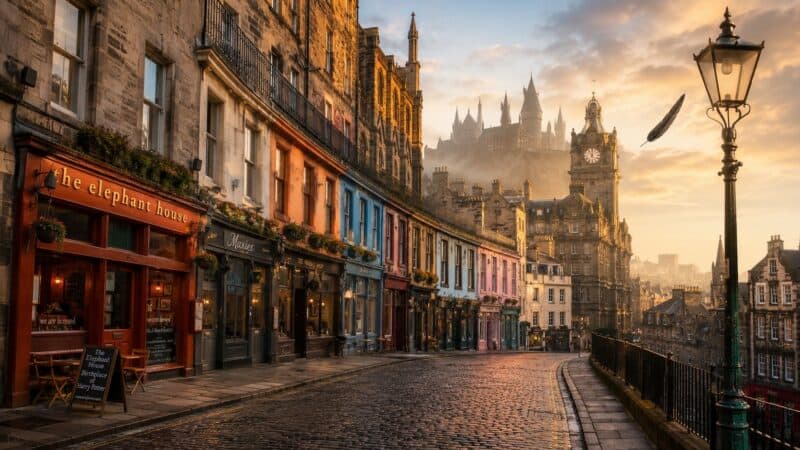
6. Edinburgh for literary history, walking and Scottish hospitality
Edinburgh is a strong domestic benchmark for British solo travellers. A recent expert ranking placed it in the top 10 European cities for solo female travellers, with the methodology focusing on safety and walking safety rather than general tourism appeal (Travel + Leisure). That matches the city’s practical appeal: a compact centre, clear landmarks and a culture where a solo visitor rarely feels out of place.
St Christopher’s Edinburgh sits centrally on the Royal Mile. From there, you can walk towards Edinburgh Castle, descend to Grassmarket, visit the National Museum and reach local pubs without building every day around transport. The location also makes it easier to return for a rest before an evening event, which is a small but important advantage when you’re travelling alone.
Arthur’s Seat gives you a memorable solo challenge, but treat it as a proper outdoor walk. The route is exposed, weather can change quickly, and comfortable shoes matter more than an ambitious outfit. The Water of Leith walkway offers a quieter alternative when you want greenery and distance from the busiest streets.
Match the season to your style
Summer festivals bring crowds, performances and plenty of opportunities to meet people, while colder months offer a more reflective city with cosy cultural spaces. The National Museum and Scottish Parliament suit daytime exploration, and independent bookshops around Waverley Station add to Edinburgh’s literary character.
Direct St Christopher’s bookings include a free welcome drink and 25% off food at the on-site bar throughout your stay. That’s useful after a long walk or hike, and the communal setting gives you somewhere to meet other guests without leaving the Royal Mile. Pack waterproof layers, plan your route back from evening activities and check current local transport information before exploring beyond the centre.
7. Vienna for imperial culture and classical immersion
Vienna is for travellers who enjoy giving a museum, concert or coffee house the attention it deserves. The city’s imperial architecture and classical culture create a calm structure for solo days, while the U-Bahn makes it simple to cross between central sights and quieter districts.
A central St Christopher’s Vienna base supports a slower itinerary. You can spend the morning at the Kunsthistorisches Museum or Belvedere, take an afternoon coffee break, then return to change before a concert. That rhythm is more rewarding than rushing through every palace and gallery. It also gives you natural solo activities, so you’re not depending on nightlife to make the trip feel full.
Let the city set the pace
Viennese coffee houses are particularly good for solo travellers because reading, writing or observing is part of the experience. Naschmarkt adds a more informal food stop, while Augarten provides space away from the grandest central buildings. St Stephen’s Cathedral offers a clear orientation point, and the tower climb provides a city view if you’d rather not commit to a long excursion.
Public transport is the practical backbone of the visit, but check current ticket and museum arrangements before buying a pass. Museums may have late openings, though hours and free-entry rules can change. If you’re interested in classical music, reserve through an established venue and confirm the performance location, as historic halls can sit in different parts of the city.
Give yourself permission to do one major cultural experience per day. Vienna rewards attention, not speed.
St Christopher’s on-site bar gives you a casual evening option, and direct booking benefits include a food discount and free welcome drink. Join a hostel walking tour focused on imperial architecture or coffee house culture if you want context without booking a full private guide. Vienna is less about spontaneous chaos and more about building a thoughtful, comfortable routine.
8. Bruges for medieval charm and intimate solo exploration
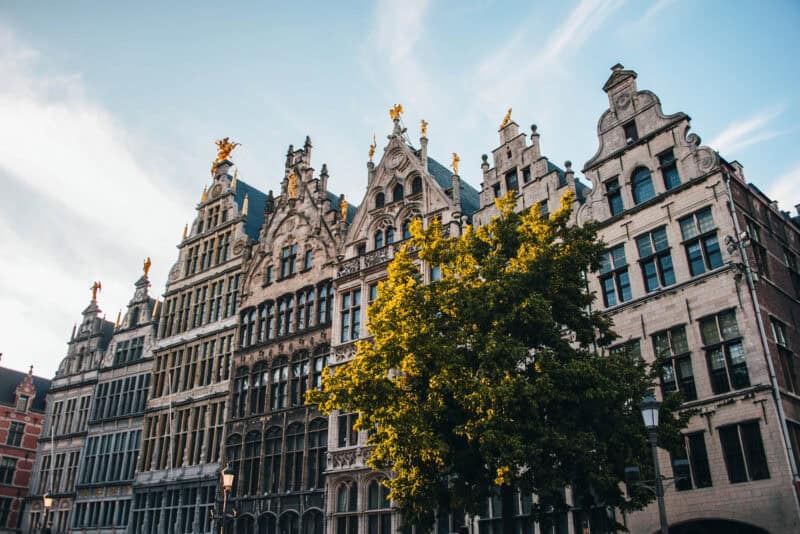
Bruges offers the most intimate experience in this list. Its medieval streets, canals and market squares create a city that’s easy to understand on foot, making it an appealing choice if large capitals feel tiring or if this is your first solo European trip.
St Christopher’s The Bauhaus sits in the city centre and combines central accommodation with a traditional Belgian beer house. It isn’t a sports bar, and that distinction matters. The atmosphere suits slow conversation, local beer and meeting other travellers after a day of wandering.
Begin early around Markt and Burg Square, then step away from the main visitor routes. The canals, Minnewater and the surrounding green spaces offer quieter walking, while independent chocolate makers, cheese shops and bookshops give the day a purpose without requiring a rigid schedule. Bruges is compact enough that you can return to your base easily if the weather changes or you want a break.
Use Bruges as a gentle European base
A day trip to Ghent adds street art and a more alternative atmosphere, while Antwerp offers a larger, more cosmopolitan contrast. Check current rail times and fares before travelling, and leave enough time to return before the evening becomes quiet. A canal boat trip can be intimate, but shared departures or a hostel-organised outing may feel more comfortable than arranging a private experience alone.
The city’s greatest strength is also its limitation. Bruges can feel quiet once the daytime crowds have gone, so it suits travellers who enjoy reflection more than constant nightlife. If you want an evening conversation, use The Bauhaus as your social anchor rather than wandering without a plan.
Top 8 European Cities for Solo Female Travel, Key Features
City
Implementation complexity
Resource requirements
Expected outcomes
Ideal use cases
Key advantages
London
Moderate, large city navigation, well- signposted transport
The best cities for solo female travel in Europe serve different versions of independence. London is the practical choice when you want transport, neighbourhood variety and a constant supply of museums, events and communities. Its scale gives you endless options, but it also demands more attention to where you stay and how you’ll get home.
Choose Berlin for creative energy, modern history and a trip that encourages you to build confidence gradually. Its districts reward curiosity, and central St Christopher’s bases make it easier to combine independent days with relaxed social evenings. Paris is better for cultural depth, café time and neighbourhood wandering. Stay near the Canal or Gare du Nord if you want practical transport and a social base away from the most concentrated tourist routes.
Amsterdam suits travellers who want cycling to become part of the experience rather than a simple way to get around. Its compact layout can make independent movement feel reassuring, although you should learn the cycling rules before attempting longer rides. Barcelona is the choice for beach time, outdoor living and easy social energy. Keep valuables secure on crowded transport, use beaches in daylight and choose a central base so evening movement stays simple.
Pick Edinburgh for walkable history, literary atmosphere and Scottish hospitality. It works particularly well when you want dramatic scenery and cultural activities without needing a car for the city itself. Vienna rewards a refined, slower trip built around museums, architecture, music and coffee houses. It’s a good fit if you’re happy creating your own structure rather than relying on a busy social scene.
Finally, Bruges is the gentlest option for intimate exploration. Its canals and medieval streets are easy to get around, and The Bauhaus provides a social place to return to when you’ve finished wandering. The trade-off is a quieter evening rhythm, so it’s less suitable if you want major-city nightlife every night.
Whichever city you choose, match your neighbourhood and accommodation location to your actual itinerary. Check current transport routes, attraction opening times and official travel advice before departure. Look for female-only dormitories or bathrooms if those details would make you more comfortable, and decide in advance whether you want organised walking tours, communal meals or the option to talk to someone when you need company. Practical extras, including secure luggage storage, a charged phone and suitable clothing, matter as much as a destination’s reputation.
At St Christopher’s, central locations, communal spaces, on-site bars and direct booking benefits can support different versions of solo travel, from a social London weekend to a quiet Bruges escape. Booking direct also offers the best online rate, flexible free-cancellation options, no deposit, a free welcome drink and 25% off food, so compare the total value with your itinerary rather than judging accommodation by the bed alone.
Choose your city, check the latest official travel information and plan your first evening before you arrive. Visit St Christopher’s to find central bases in London, Paris, Berlin, Amsterdam, Barcelona, Bruges, Edinburgh and Vienna, with female-only accommodation options, social spaces, on-site bars and direct booking benefits designed for independent travellers.
Our direct rates are guaranteed to be at least 5% cheaper than anywhere else online, with a free drink on arrival, 25% off food at the bar, and free cancellation options available.



















































_1783508733.jpg)