Vienna is one of those cities that can sell you three different trips at once. You see the palaces and think culture break. Then you see the cafés and think slow mornings with coffee and cake. Then you spot the riverside hangouts, festive markets, concert posters and late bars, and suddenly you’re trying to work out which version of Vienna you want.
That’s why the best time to visit Vienna isn’t one neat answer. It depends on whether you care most about saving money, getting the full cultural calendar, meeting people easily, or catching the city at its most atmospheric. For a solo traveller, those trade-offs matter even more because the wrong season can leave you paying more for a vibe that doesn’t match your trip.
So You're Dreaming of Vienna
Maybe you’ve already got the mental picture sorted. Grand buildings, old-school coffee houses, classical music, neat streets, and enough history to fill a long weekend without trying too hard. Vienna does all of that well. What catches first-time visitors out is that the city changes character quite a lot across the year.
Some months are better for café-hopping and meeting people outdoors. Some are better for museums and quiet wandering. Some look magical on Instagram but come with bigger crowds and higher costs. And some give you a smarter balance than the obvious peak dates.
If you’re planning your first trip, I’d think less in terms of “What’s the weather like?” and more in terms of “What kind of Vienna do I want?” A social trip feels different from a culture-heavy one. A budget trip feels different from an Advent market trip. Vienna rewards timing more than people expect.
That’s also why a short trip needs a bit of strategy. If you’re only squeezing in a weekend, you’ll want a season that fits your pace. If that’s your plan, this 48 hours in Vienna guide is a useful companion once you’ve picked your dates.
Practical rule: Don’t choose your month first and your travel style second. Do it the other way round.
Vienna's Seasons At a Glance
Vienna changes more by season than many first-time visitors expect. Pick the right month and the city feels open, social, and easy to enjoy alone. Pick the wrong one for your travel style and you can end up paying more, queueing more, or arriving just as parts of the cultural calendar go quiet.
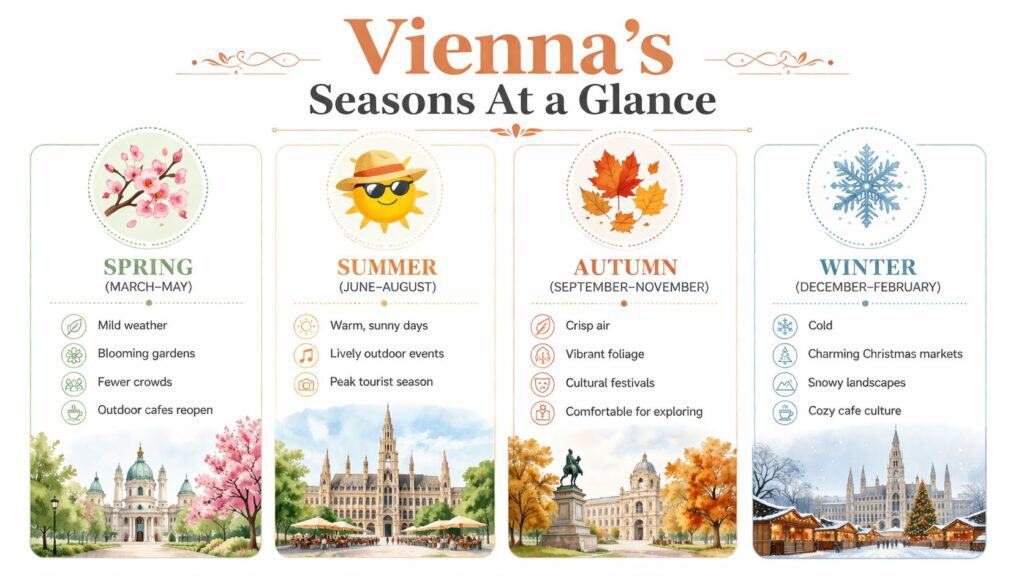
A simple way to choose is by vibe, not just weather. Spring and early autumn suit solo travellers who want a sociable, well-balanced trip. Summer works best for outdoor energy and late nights. Winter splits into two very different versions of Vienna: festive in December, cheaper and calmer after New Year.
Spring from March to May
Spring is Vienna warming back up, in every sense. Café terraces fill out, parks start pulling people outdoors, and the city becomes much better for wandering without a strict indoor plan.
For solo travellers, spring is one of the safest bets because it gives you options. You can spend half the day walking, sit outside with a coffee, then switch to museums or palaces if the weather turns. March can still feel a bit grey and in-between, but April and May usually bring a lighter, more social mood.
This is a strong season for first visits.
Summer from June to August
Summer gives you the longest days and the most outdoor life. If your ideal Vienna trip includes riverbank evenings, open-air events, beer gardens, and a busier nightlife scene, this is the season that delivers.
There is a trade-off. The city is busier, prices usually rise, and some first-time visitors are surprised to find that high summer is not perfect for a full culture-heavy itinerary. As noted by Rick Steves on the best time to go to Austria, some major cultural attractions take their annual break in July and August, including the Vienna Boys' Choir and the State Opera, and the Lipizzaner stallions are also away for part of the season.
So summer is best for travellers who care more about atmosphere and outdoor fun than ticking off every classic performance.
Autumn from September to November
Autumn is often the smartest choice if you want Vienna at its most polished. Early autumn still has enough mild weather for long walks and outdoor coffee stops, but the city usually feels less frantic than it does in peak summer.
September is especially good for solo travellers who want both comfort and culture. You still get a lively city, but with fewer of the summer headaches. October can also work well if you prefer a quieter pace and don't mind cooler evenings. By November, Vienna starts turning inward. That is good for museum days, concerts, and a more atmospheric city break.

Winter from December to February
Winter is two different trips sharing the same skyline. December is the classic postcard version. Markets, lights, seasonal food, and big crowds in the most popular areas.
January and February feel completely different. The festive rush is gone, hotel prices often ease, and Vienna becomes a better value choice for travellers who care more about museums, cafés, and elegant streets than Christmas atmosphere. It is a good season for budget-conscious solo trips, as long as you are happy to trade outdoor comfort for lower costs and fewer crowds.
The Social Sweet Spot Spring and Autumn
If a friend asked me for the safest answer to “When should I book Vienna?”, I’d usually say May or September. Not because those months are the cheapest or the hottest, but because they give solo travellers the best mix of good weather, a social atmosphere and a city that still feels easy to enjoy.
Why these months work so well
Vienna can feel formal on paper. In practice, it’s much warmer as a social city when people are outside. Street cafés are busy, outdoor bars make sense, and public spaces feel lived in rather than just looked at. That matters if you’re travelling alone and want organic contact with other people instead of forcing it.
The key advantage is that you get this outdoor life without the full strain of high summer. According to Visiting Vienna’s guide to the best time to visit, May and September offer a “social traveller premium”, with optimal conditions for outdoor bars and street cafés while avoiding the summer disruption of major attractions such as the State Opera.
That’s exactly the sort of detail generic climate guides miss. Solo travel isn’t just about whether it’s warm enough to sit outside. It’s about whether a city makes connection easy.
Better rhythm, less friction
In shoulder season, Vienna tends to move at a pace that suits first-time solo travellers. You can start with a museum in the morning, have lunch outdoors, wander through a market or park in the afternoon, then roll into the evening without needing a hard reset.
Summer can still be fun, but shoulder season usually means less waiting, less crowd fatigue and fewer moments where a beautiful place feels overrun. You’re more likely to linger. That’s often when a city clicks.
A few signs that spring or early autumn is probably your best fit:
-
You want conversation, not chaos Busy enough to feel alive, but not so packed that every café seat and public square feels like a battle.
-
You care about both culture and atmosphere You’re not choosing between museum days and outdoor evenings. Vienna does both well in these months.
-
You like walking cities properly Vienna rewards aimless wandering. The shoulder months make that easy.
-
You’re doing a wider Europe trip May and September slot neatly into multi-city routes without the peak-season intensity of midsummer.
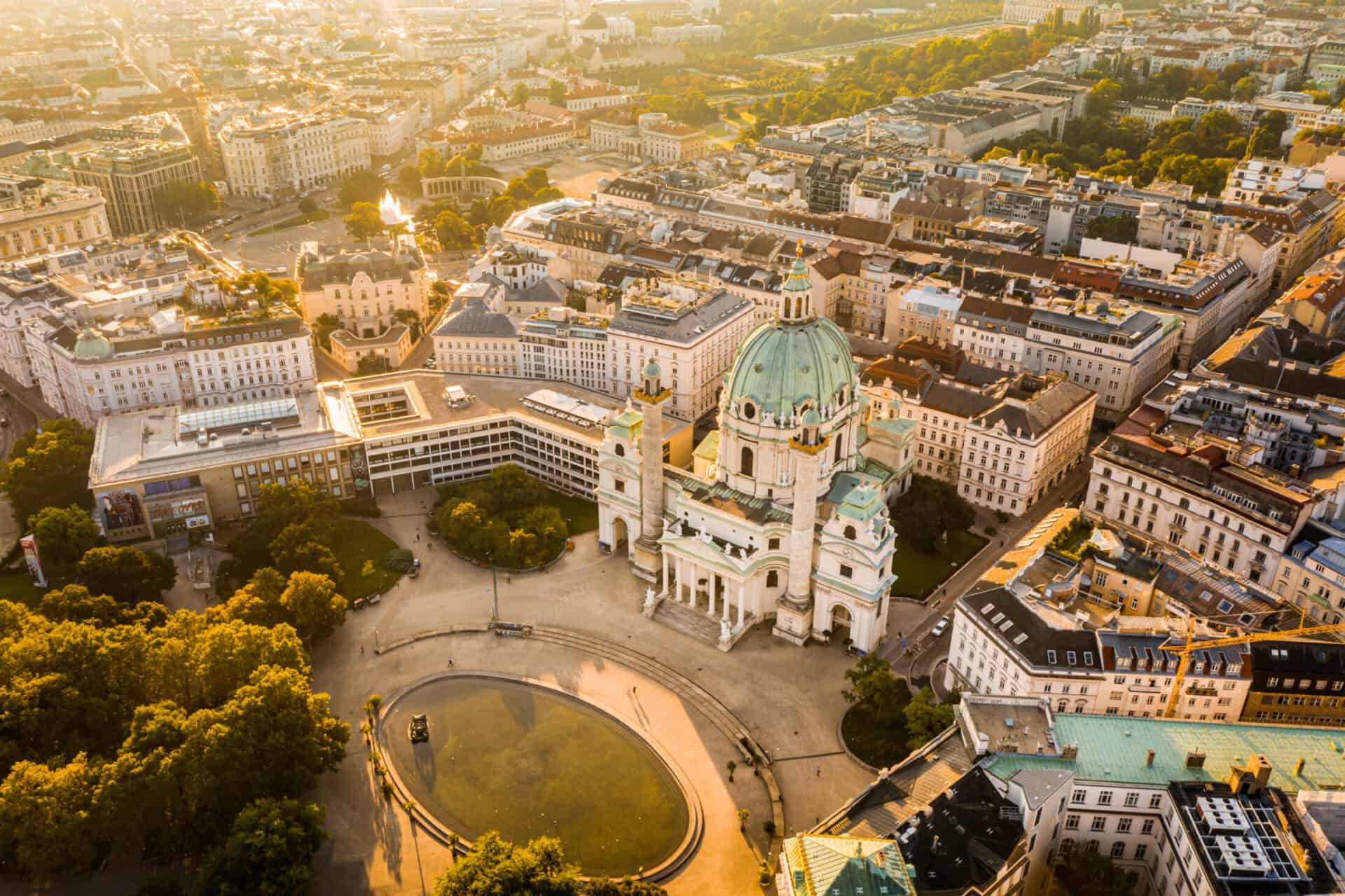
Here’s a visual feel for the city in one of these sweet-spot periods:
Spring versus autumn
If you’re torn between the two, the choice comes down to mood.
Spring feels hopeful, lighter and a bit more open-ended. It suits travellers who want outdoor cafés, gardens and a city that feels like it’s stretching out after winter. There’s a freshness to it that works brilliantly if you like long walks and a slower pace.
Autumn, especially September, tends to feel richer and more cultural. The city looks sharper somehow. It’s an excellent month if you want to combine café life, concerts, architecture and a slightly more grown-up atmosphere.
If you want Vienna at its most easy to like, book for May or September and don’t overthink it.
What doesn’t work as well
The main mistake is assuming July and August are automatically best because they’re summer. For beach destinations, maybe. For Vienna, not necessarily. If your dream trip includes classical performances, iconic cultural institutions and relaxed café culture, midsummer can feel oddly compromised.
Another mistake is booking deep winter without meaning to. If you’re not actively seeking lower costs and quieter streets, January or February can feel flatter than expected. They work best when you choose them on purpose.
Vienna in Full Swing Summer
Summer in Vienna is for travellers who want the city turned up. Long evenings, full parks, plenty happening outdoors, and that constant feeling that everyone is out doing something. If you’re chasing energy, this is the season that delivers it.
What summer gets right
The city looks great in sunshine. Palace grounds, broad avenues and green spaces all come into their own, and Vienna’s outdoor side becomes much more obvious. Even if you arrived expecting formality, summer shows you a looser version of the city.
This is also the easiest season for a spontaneous trip style. You can wander, stop for a drink, change plans late, and spend more time outside without needing a fixed indoor-heavy itinerary. For some solo travellers, that freedom is exactly the point.
If your trip is mostly about atmosphere and city life, have a look at these extra things to do in Vienna before you lock in your route.
The trade-offs you need to accept
Summer is not the best season for every version of Vienna, a common misunderstanding for many visitors. They book the busiest months expecting the complete imperial, musical and cultural package, then discover that peak season doesn’t always line up with peak access to the city’s best-known traditions.
The other issue is simple crowd pressure. Even when a place is beautiful, there’s a tipping point where queues, packed public spaces and higher travel costs start to chip away at the fun. Vienna can hit that point in summer if you’re not mentally prepared for it.
Who should book summer
Summer works best for you if most of these sound right:
-
You prefer outdoor city life You’ll spend more time in parks, cafés, open-air settings and evening strolls than inside museums.
-
You don’t mind a busier atmosphere Crowds don’t ruin a trip for you. They add buzz.
-
You care more about long days than full cultural access You’re happy if the city feels alive, even if some signature institutions aren’t operating.
-
You’re good at pacing yourself Early starts, afternoon breaks and late evenings make summer much more enjoyable.
How to make summer work
Treat Vienna like a city of rhythms, not a checklist. Start early for major sights, slow down in the middle of the day, then pick things back up later. Don’t try to power through every landmark in the hottest, busiest hours. That’s when people stop enjoying themselves.
A good summer day in Vienna often looks like this:
-
Morning for the big sights Palaces, major streets and headline attractions feel easier before the city is fully busy.
-
Midday for lunch and shade Sit down properly. Vienna rewards breaks.
-
Late afternoon for neighbourhood wandering Better light, softer pace, less stress.
-
Evening for the social side This is when the city comes back to life in the best way.
Summer can still be a great time to visit Vienna. Just don’t book it if what you really want is the calm, complete culture-heavy version of the city. That’s usually not what midsummer does best.
Magical Markets and Quiet Palaces Winter
You step out after dark, breath visible in the air, and Vienna feels completely different from summer. In one version of winter, the squares glow, mugs of punch are everywhere, and the city is busy with market crowds. In the other, the lights are gone, the streets are quieter, and grand interiors suddenly feel easier to enjoy at your own pace.
Winter in Vienna works best when you match the season to your travel style. Advent suits travellers who want atmosphere first and are happy to pay for it. January and February suit solo travellers who care more about space, value, and museum time than outdoor buzz.
Advent for atmosphere
From mid-November to late December, Vienna goes full festive. Christmas markets, decorated streets, seasonal food, and evening walks all feel special here. If your ideal trip is built around mood, this is the strongest winter window.
It is also one of the least budget-friendly times to come.
Prices rise, central areas stay busy, and the popular markets can feel crowded by early evening. That trade-off is worth it for travellers who want the classic Vienna-at-Christmas experience. It is less appealing if you were hoping for a cheap, quiet city break.
Book Advent for the vibe. Book early, and expect to pay more for well-located accommodation.
January and February for value
After New Year, Vienna settles down. This is the winter period I usually recommend to solo travellers who want the city itself, not just the festive version of it. You get shorter days and colder weather, but you also get calmer museums, less pressure on accommodation, and a trip that feels easier to shape around your own pace.
This is the budget winter slot. Rates often soften after the holiday rush, and the city feels less performative and more liveable. That matters if you are travelling alone and want time to sit in cafés, wander palace grounds without shoulder-to-shoulder foot traffic, and enjoy the big indoor sights instead of queueing through them.
It can also be a smart season to stay somewhere social without paying peak prices. If you want company on a winter city break without giving up flexibility, these benefits of staying in hostels for solo travel are worth weighing before you book.
Who winter suits best
Winter is strongest for a few specific Vienna trip styles:
-
Budget solo travel in deep winter January and February usually give you better value than the festive period.
-
Culture-first trips Vienna's museums, concert venues, cafés, and palaces make more sense in cold weather than many European capitals.
-
Calmer first visits If busy cities drain you, winter gives Vienna a more manageable pace.
-
Short solo breaks Two or three well-planned days work very well here in winter because the city's highlights are relatively compact.
Where winter falls short
Winter is weaker if your ideal city break depends on long outdoor stretches. Park time is limited, terrace culture drops off, and some of Vienna's everyday charm feels less visible when everyone is moving quickly between indoor stops.
Cold tolerance matters too. A traveller who enjoys wrapping up and ducking into cafés will probably have a great trip. A traveller who gets fed up after an hour in low temperatures will feel every extra minute outside.
For party travellers, winter is not Vienna at its strongest. For cultural solo travellers and budget-focused travellers, it can be one of the best-value times in the year. The key is picking the version of winter you want, instead of booking Christmas prices when what you really wanted was quiet.
Your Vienna Solo Travel Toolkit
Once you’ve picked your season, the next question is how to make the trip easy on the ground. Vienna is one of the more approachable capitals for a solo traveller because it’s orderly, walkable in central areas and packed with worthwhile sights that don’t require a complicated plan.
A good base strategy matters too. If you’re travelling alone and want the social side of city breaks without the awkwardness of having to manufacture it, this guide to the benefits of staying in hostels for solo travel is worth a read before you choose where to stay.
Five sights that work especially well solo
You don’t need a huge list in Vienna. You need a strong shortlist and enough time to enjoy it properly.
-
Schönbrunn Palace
Go for the grounds as much as the palace itself. Even if you’re pacing the budget carefully, the wider setting gives you plenty of atmosphere and room to wander.
-
St Stephen’s Cathedral
This is the obvious landmark, but it earns that status. It’s an easy anchor point for your first day because so many central streets and sights flow naturally from here.
-
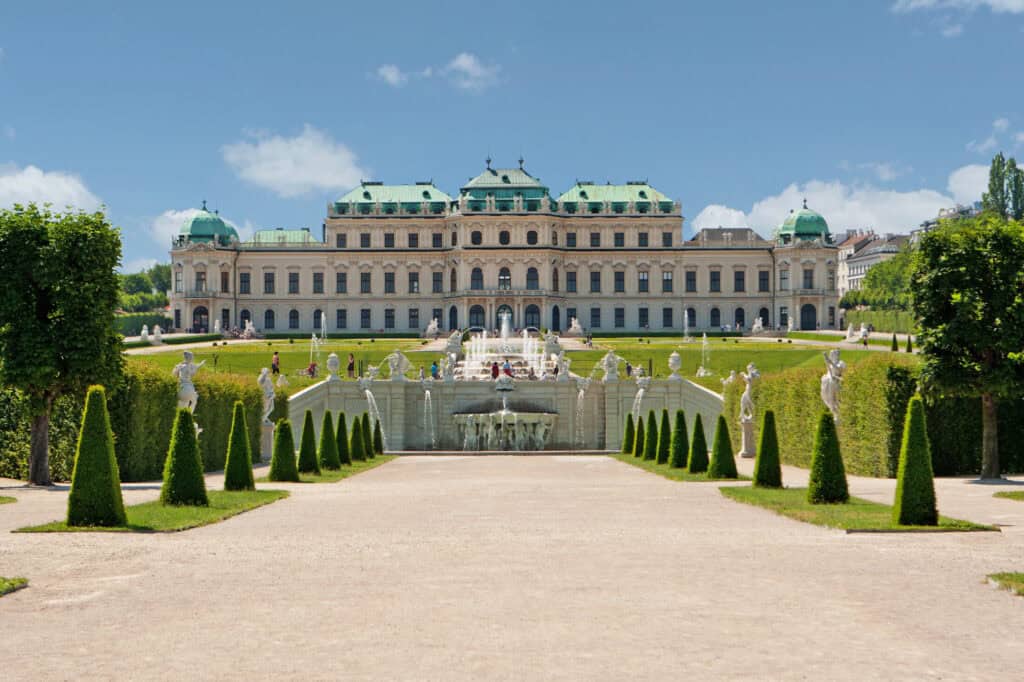
Belvedere
Ideal if you want art and architecture in the same stop. It’s one of those places that feels rewarding even if you’re not trying to do an ultra-serious museum day.
-
Hofburg area
A good choice for solo travellers because the whole surrounding district is part of the experience. You can walk, pause, take photos, grab coffee and keep moving.
-
A traditional Viennese café
This counts as a sight in Vienna. Sitting with a coffee and cake is not wasted time here. It’s part of understanding the city.
Vienna works best when you mix headline sights with unhurried stops. If every hour is scheduled, the city loses some of its charm.
Getting around without stress
Vienna is a very manageable city for first-time solo travellers. The centre is walkable enough that you’ll cover a lot on foot, and public transport fills in the gaps cleanly.
The easiest approach is simple:
-
Walk the historic centre You’ll notice far more, and Vienna’s beauty lives in the details between landmarks.
-
Use public transport for longer hops Especially if you’re heading out to larger palace areas or want to save your feet.
-
Don’t overuse taxis In a city like Vienna, they often add cost without saving much time.
If you’re only in town for a few days, group nearby sights together rather than zigzagging all over the city. Vienna rewards neighbourhood logic.
What to eat and drink
Vienna’s food scene suits solo travellers well because you can do it at several price levels without feeling like you’re missing out. You don’t need a blowout meal every night to eat well here.
A good starter list:
-
Wiener Schnitzel The classic. Worth trying once from a proper traditional spot.
-
Sachertorte More of a ritual than just a dessert. Best done with coffee and time to sit.
-
Kaiserschmarrn Great if you want something indulgent and don’t mind leaning sweet.
-
Coffee house breakfast or afternoon stop Vienna’s café culture is part of the trip, not just a refuelling break.
Solo travel habits that make Vienna easier
A few practical habits go a long way here:
-
Start earlier than you think Vienna’s big sights feel much better before the main rush.
-
Wear proper walking shoes This city invites more walking than maps suggest.
-
Leave breathing room You’ll want time for coffee, side streets and places you didn’t plan.
-
Keep one evening flexible Best for saying yes to a concert, a bar recommendation or just another slow dinner.
Vienna isn’t difficult. It just rewards travellers who don’t rush it.
Essential Booking and Packing Advice
A few smart decisions before you leave make a noticeable difference in Vienna, especially if you’re travelling solo and want things to feel straightforward rather than improvised.
Booking smart
Book accommodation direct whenever you can. It usually gives you clearer terms, easier communication and better overall value than handing your booking to a third-party platform. That matters if your plans shift, your train changes, or you want a real answer from the place you’re staying.
If you’re looking at St Christopher's Inns, direct booking is the smarter move because it includes the best price guarantee, a free welcome drink, 25% off food throughout your stay, and free cancellation with direct customer service. That’s better total value than just chasing the lowest-looking room rate in isolation.
The bigger point is simple. Compare the full package, not just the headline bed price.
What to pack for Vienna
Vienna is polished, but you don’t need to dress up constantly. You do need to pack with walking and shifting plans in mind.
Bring these as standard:
-
Comfortable walking shoes Non-negotiable. Vienna is the kind of city where “just a short walk” turns into a long afternoon.
-
Layers Useful in every season, especially when you’re moving between streets, transport and large indoor spaces.
-
A power bank Handy if you’re navigating all day, taking photos and using digital tickets.
-
A padlock Essential hostel item if your room setup requires one.
-
One smart-casual outfit Vienna has a slightly dressed-up evening feel in some places. You don’t need formalwear, but it’s nice to have one outfit that isn’t purely practical.
Safety and sustainability
Vienna is generally a comfortable city for solo travellers, including solo female travellers. That doesn’t mean switching your brain off. Use the same habits you’d use anywhere else. Keep an eye on your belongings, know your route home at night, and don’t overdo it if you’re out drinking.
For a more sustainable trip, keep it simple. Walk more, use public transport, carry a refillable water bottle, and avoid bouncing across the city unnecessarily. Vienna is one of those places where the lower-impact option is often the easier one too.
Vienna Solo Travel FAQs
Is Vienna expensive for solo travellers
It can be, but it doesn’t have to be. Vienna gets expensive when you travel at busy times, book late, and treat every meal and attraction like a special occasion. It becomes much more manageable when you travel in shoulder season or deep winter, walk a lot, and choose a few priority experiences instead of trying to buy your way through the whole city.
Is Vienna safe for solo female travellers
Yes, Vienna has a strong reputation for feeling orderly and easy to get around. Most solo female travellers will find it comfortable as long as they stick to normal city precautions. Stay aware at night, keep your phone charged, and trust your instincts if a situation feels off.
How many days do I need in Vienna
Three days is enough for a satisfying first visit if you want the main sights, cafés and a couple of museums. Five days is better if you want Vienna at a slower, more enjoyable pace, with time for longer coffee breaks, evening plans and neighbourhood wandering. This is not a city that improves when rushed.
If you’re planning your Vienna trip and want a social, central base that keeps the city easy to explore, have a look at St Christopher's Inns. Booking direct gives you the best price guarantee, a free welcome drink, 25% off food during your stay, and flexible free cancellation, which is especially handy if your travel plans are still shifting.