Getting Around Barcelona: A Practical Transport Guide
Sophie
You’ve just landed at El Prat with a backpack digging into your shoulders, a phone on low battery and a...
Share This Article
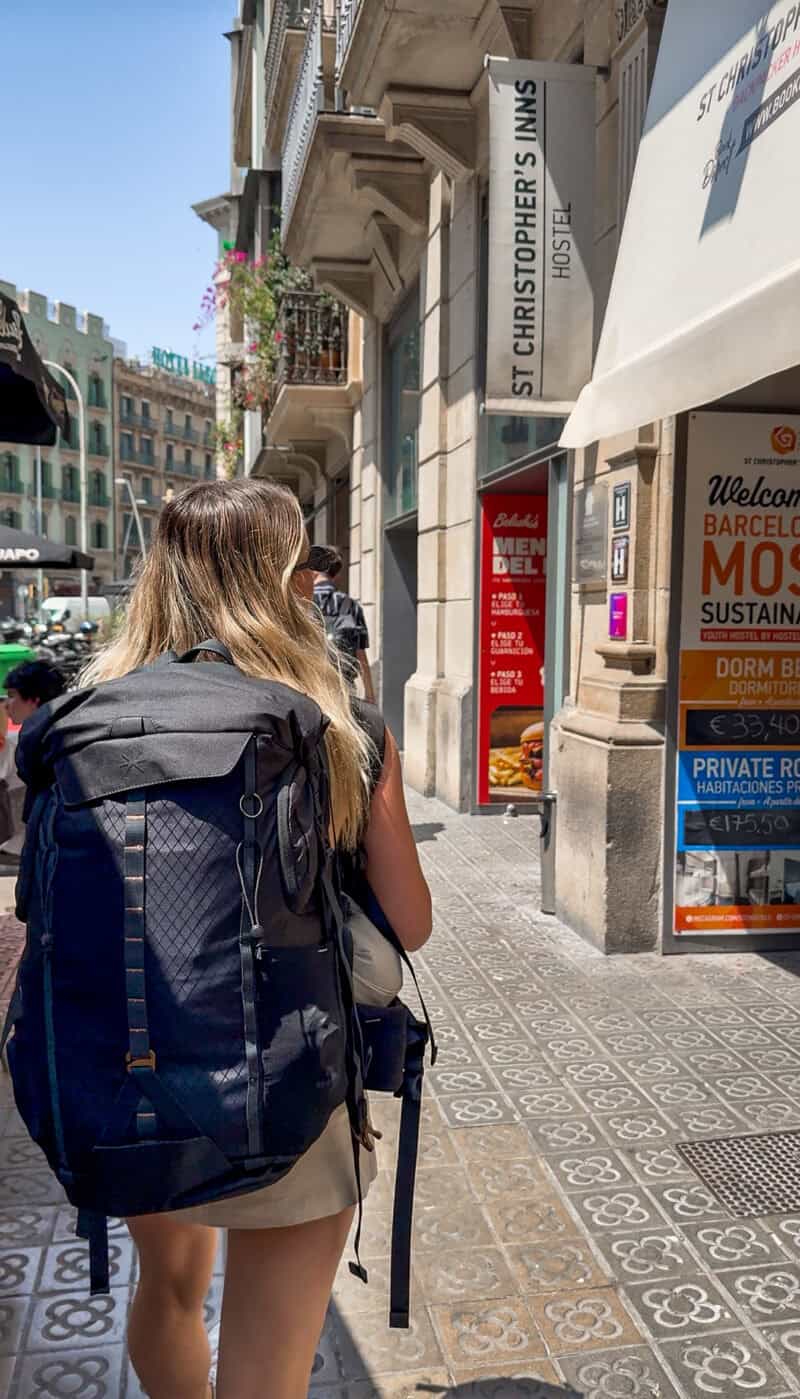
You’ve just landed at El Prat with a backpack digging into your shoulders, a phone on low battery and a row of ticket machines offering cards you’ve never heard of. Meanwhile, every taxi driver seems to know exactly where you’re going. Getting around Barcelona is easy once you match the ticket to where you’re sleeping and how often you’ll move, but buying the wrong pass at the airport is a quick way to waste money.
Barcelona’s transport system carries huge numbers of residents and visitors. TMB recorded 479.91 million metro journeys in 2025, alongside 223.19 million bus journeys across its network (UK Civil Aviation Authority transport data). The practical lesson is simple: use your feet in the centre, take the metro for longer cross-city trips, and choose your first ticket based on your next day rather than the whole holiday.
Landing in Barcelona and Choosing Your First Ticket
Before you touch the ticket machine, count how many times you’ll board a metro, bus or tram during your first 24 hours.
One ride: Buy a single ticket.
Two to nine rides: Buy a T-Casual, which gives you 10 journeys.
More than that: Choose an unlimited Hola Barcelona travel card.
That rule works particularly well if you’re staying near Las Ramblas, the Gothic Quarter or Plaça de Catalunya, where plenty of first-day sightseeing can happen on foot. If you’re staying further out, or you’ve planned Sagrada Família, Park Güell and Montjuïc in quick succession, you’ll use public transport more often and an unlimited card may make more sense.
What your first ticket can cover
The Aerobus, L9 Sud metro and RENFE train serve different airport routes, but once you’re inside the city, Barcelona’s integrated fare system lets you combine metro, bus, tram, FGC and Rodalies services across the relevant zones. TMB’s integrated network brings together 125.4 kilometres of metro track, eight lines and 165 stations, while the bus network spans 820 kilometres and 104 lines (TMB transport figures).
Don’t assume every airport fare is included, though. The specific L9 Sud airport metro ticket costs €5.90 in 2026, which is materially higher than a standard Zone 1 single fare (Barcelona airport fare information). Check the machine’s airport conditions before you validate anything.
If you need data as soon as you land, sort out a Barcelona travel eSIM plan before leaving the terminal.
Getting From the Airport to the City Centre
For a solo traveller carrying a large backpack, I’d rank the options like this: Aerobus first, metro second, train third and taxi only when sharing. The Aerobus is the least stressful choice after a flight because it drops you directly at Plaça de Catalunya and avoids a complicated interchange with luggage.
Option
Approx. Cost
Travel Time
Luggage Friendly
Best For
Aerobus
Around €7 to €8
Around 35 minutes
Very good
First-time visitors and central hostels
L9 Sud metro
Airport fare applies
Around 30 minutes
Reasonable
Travellers already near the line
RENFE R2 Nord train
Standard fare applies
Around 25 minutes to Passeig de Gràcia
Limited
Light packers heading near the station
Official taxi
Variable by conditions
Traffic dependent
Excellent
Groups splitting the fare
The Aerobus runs every five minutes year-round, according to TMB's airport transport information, and connects the airport with the city centre frequently (Barcelona airport transport options). It's the clear winner if you're arriving alone, staying around Las Ramblas or El Raval, and don't want to manage a change while tired.
The L9 Sud reaches the airport and city centre in about 30 minutes, but the route may not be convenient for your final stop. Choose it when your accommodation sits close to the line, or when you already hold a suitable multi-journey ticket. The R2 train is useful for Passeig de Gràcia and some onward rail connections, but luggage space is less generous.
My airport rule: Aerobus for convenience, metro for an already-planned route, taxi for a shared fare.
Once you're travelling within the integrated city area, transfers between public transport modes can be included under the relevant ticket conditions. For broader context on the first and last parts of a journey, this first mile and last mile transport guide is useful, particularly if your accommodation isn't directly beside a station.
The Public Transport Network Explained Simply
Think of Barcelona's transport system as overlapping layers rather than separate networks.
Metro
The metro is your quickest tool for crossing the city. It handles the long jumps between central districts, Sants, Sagrada Família and other major areas far more reliably than surface traffic. TMB's figures show why it functions as Barcelona's mobility backbone, with eight lines and 165 stations carrying hundreds of millions of journeys (TMB network data).
Buses
Buses fill the gaps where rail doesn't reach, especially around hills and areas such as Montjuïc and Tibidabo. They're also handy when a direct surface route saves you a station change. The trade-off is speed. TMB lists an average bus speed of 11.4 km/h over the day and 10.8 km/h during rush hour, so don't choose a bus just because the map makes it look direct (TMB bus performance data).
Trams and trains
Trams are more relevant for outer districts than the usual short break itinerary. FGC and Renfe Rodalies become useful when your accommodation or destination sits beyond the central metro grid. Barcelona's T-mobilitat system integrates metro, bus, tram, FGC Zone 1 and Renfe Rodalies Zone 1, and the wider system covers the ATM fare zones (ATM integrated transport information).
For most short stays, Zone 1 covers the places you're likely to visit. Follow the signs, choose the fastest sensible mode and validate your ticket as instructed. Keep the card accessible during transfers, because an inspector may ask to see it.
Travel Cards Compared Without the Sales Spin
Barcelona's fare system rewards travellers who know their daily pattern. If you're sleeping centrally and exploring mostly on foot, the T-Casual is usually the sensible starting point. TMB lists the Zone 1 T-Casual at €13.00 for 10 journeys, or about €1.30 per validated journey, compared with €2.90 for a single ticket (official TMB fares).
The T-Usual starts at €22.80 for unlimited travel in the integrated network, while the Zone 1 T-Casual becomes better value once you're making roughly nine to ten rides across the relevant itinerary (official TMB fares). The key detail is not the headline price. It's whether your accommodation location makes you board transport repeatedly.
Card
Price
Valid For
Best For
Skip If
T-Casual
€13.00
10 journeys in Zone 1
Central stays and mixed walking days
You’ll travel repeatedly every day
T-Usual
From €22.80
Unlimited integrated travel for the validity period
Frequent travel and longer stays
You’re only making occasional trips
Hola Barcelona
Varies by duration
Unlimited travel for the selected period
Intensive city breaks and planned airport travel
You’ll walk most central routes
Match the card to your bed
Choose the T-Casual if you're staying around Las Ramblas, the Gothic Quarter or El Born and expect to walk between meals, landmarks and nightlife. Choose the T-Usual if you're staying outside the central grid or plan to move around the city every day.
Hola Barcelona can be convenient for a concentrated short break, particularly if airport travel is included in the product you choose. Read the exact airport conditions before buying, because airport access and standard Zone 1 journeys don't always follow the same fare rules.
The Barcelona budget travel guide is useful alongside your transport plan. Add up accommodation, food and daily movement together, rather than treating the travel card as an isolated purchase.
Night Buses, Taxis, Bikes and Scooters
Barcelona's metro doesn't run all night every day. TMB states that the metro operates all night on Saturdays, while weekday service ends at midnight and runs later on Fridays, so late-night plans need a second option (Barcelona public transport night guidance).
The NitBus network, with routes N0 through N28, is the practical fallback after the metro closes. Check the route before you leave your hostel, particularly after a late flight, because night buses don't operate as a 24-hour replacement for the metro.
For a last-mile trip, use an official taxi rank or hail a licensed taxi on the street. FreeNow and Cabify can help when you want a digital booking trail or need to see the pickup point clearly. Don't rely on an exact fare estimate from memory, because traffic, route and timing change the price.
Bikes and scooters
Barcelona Bicing is intended for residents, so visitors should look at private hire schemes instead. Shared e-bikes and scooters can be useful for a single awkward stretch, but they're poor value if your hostel already puts you beside the main sights.
Park scooters properly and never leave one across a pavement, doorway or tactile path. Local enforcement can issue fines for obstructive parking, so use marked parking areas and follow the app's instructions.
If your flight leaves around dawn, pre-book a taxi the night before. The metro's early opening won't always give you enough margin once you add the walk from your bed to the station and airport check-in time.
Walking Barcelona and Staying Safe on the Street
Central Barcelona makes walking the default, not the backup. A useful route starts at Plaça de Catalunya, follows Las Ramblas towards the harbour, turns through the Gothic Quarter to the Cathedral, then heads up Passeig de Gràcia into Eixample. It's roughly 3.5 kilometres and about 60 minutes at an easy pace, with mostly flat streets and plenty of reasons to stop.
That route links several areas where solo travellers naturally spend time. Barcelona's pedestrian-friendly superblocks make wandering more pleasant, but traffic still appears suddenly at junctions and cycle lanes.
Protect the things you're carrying
Pickpocketing risk rises around crowded landmarks and transport interchanges. Be particularly alert on Las Ramblas, at the metro around Plaça de Catalunya, on the beach promenade after dark and beside stopped tour buses.
Wear valuables forward: Use a front pocket or money belt rather than a back pocket.
Secure your phone: A phone strap is sensible when checking maps in a crowd.
Control your bag: Never hang it over the back of a café chair.
Stop before searching: Step into a shop or against a wall before opening a map or wallet.
A central bed turns many daily journeys into walks, which means your transport card lasts longer and you spend less time underground. It also makes the return after dinner simpler, especially when the night bus is busy.
Why a Central Hostel Base Saves You Money
A bed farther out isn't automatically affordable once you price the journeys around it. If one dorm costs €18 and a central dorm costs €32, the apparent saving is €14 per night, but the outer option can add transport, taxi and time costs every day. Those figures are an editorial example, not a current market quote, so check the accommodation price for your dates.
The same logic applies to daily movement. A traveller staying centrally may walk to the Gothic Quarter, El Born, the waterfront and Eixample. Someone based in an outer district may need rail or metro travel before the sightseeing even begins, then another trip back after dinner.
Cost Item
Central Hostel (Las Ramblas)
Outlying Hostel (Zona 2+)
Morning sightseeing
Often walkable
Rail or metro likely
Gothic Quarter and El Born
Walkable
Requires a city connection
Sagrada Família
One direct trip or a longer walk
Longer return journey
Late-night return
Walk or short taxi
Night bus, taxi or multiple changes
Airport arrival
Direct central connection
Additional onward journey
Daily time cost
Lower
Higher
Two travellers, two route patterns
The Sagrada Família visitor staying near Las Ramblas can walk through the Gothic Quarter, Port Vell and El Born, then take one metro journey for the basilica and walk back through Eixample. A visitor staying beyond the centre may pay for every outward and return leg, even on days when the actual sightseeing is close together.
Montjuïc is the exception that proves the rule. It’s a hill, so public transport earns its place there regardless of where you sleep. The smart choice is to pay for the occasional difficult route, not to make every meal, museum and evening return dependent on a long commute.
Putting It All Together for Your Trip
Your transport plan should take five minutes before departure, not twenty minutes beside an airport vending machine.
Choose the bed first. Look near Las Ramblas or Plaça de Catalunya if you want to walk to the Gothic Quarter, Port Vell and El Born. A central address changes the right ticket more than a generic city pass recommendation does.
Choose the first ticket from your first day. Buy a T-Casual if you’ll make a handful of rides, or select an unlimited product if your itinerary is packed with distant sights.
Download essential tools. Put the TMB App on your phone, save your accommodation address offline and install FreeNow before you fly.
Separate walking routes from transport routes. Walk between the harbour, Gothic Quarter, El Born, Plaça de Catalunya and much of Eixample. Use the metro for Montjuïc, Tibidabo and Camp Nou.
Keep your ticket and phone separate. Store the travel card away from magnets, and validate it the first time you use it.
If you’re travelling alone, download a language tool before arrival so asking for directions or clarifying a stop doesn’t become stressful. This travel language app review gives you a way to compare useful options without relying on airport Wi-Fi.
For a concise itinerary that matches a central base with realistic walking and metro routes, use this guide to spending two days in Barcelona.
Final check: validate the card, keep your bag in front and choose the route that fits where you’re sleeping, not the route that looks cheapest on a map.
Book direct with St Christopher’s for central, social accommodation, on-site bars and travel perks including a welcome drink and food savings. Choose the Barcelona location on Las Ramblas, then spend your transport budget on the places that sit beyond walking distance.
Our direct rates are guaranteed to be at least 5% cheaper than anywhere else online, with a free drink on arrival, 25% off food at the bar, and free cancellation options available.