You’ve got one sunny morning in Barcelona, a coffee in hand, and a choice between following the crowds down La...
Share This Article
You’ve got one sunny morning in Barcelona, a coffee in hand, and a choice between following the crowds down La Rambla or turning into a lane that looks too narrow to lead anywhere useful. Turn in. The Gothic Quarter rewards a planned entrance and an unhurried exit, not a frantic hunt for every landmark.
This guide to the Gothic Quarter Barcelona treats the Barri Gòtic as a timed walking experience. You’ll get the essential route, the sights worth your attention, the places I’d skip, and a practical way to fit the quarter around a solo traveller’s hostel base near La Rambla.
Stepping Into the Gothic Quarter
Start at the edge of the quarter on a bright morning, where the broad noise of La Rambla begins to soften. Walk towards Plaça Reial, then turn into Carrer dels Comtes. The change is immediate. Pale stone catches the early light, footsteps echo between the buildings, and small bakeries are already serving people who look as though they know exactly where they’re going.
Plaça Reial is the first useful pause. Its arcaded square opens suddenly from the tighter lanes, with palms, balconies and café tables giving you a sense of the district’s scale. I’d have coffee here only if you want the atmosphere. For better value, walk a little further into the side streets and choose somewhere busy with local workers rather than a terrace positioned for passing views.
Let the lanes set the pace
The quarter sits between La Rambla and Via Laietana, and between the seafront and Ronda de Sant Pere, making it a defined, walkable district rather than a vague old-town label (Wikipedia’s overview of the Gothic Quarter). Its streets still preserve Roman and medieval layers, but they don’t behave like a modern grid.
That’s why walking beats public transport once you’re inside. Narrow lanes, uneven cobbles and dense frontages make short distances feel slower than they look on a map. Enter early, follow Carrer dels Comtes towards the cathedral, and let the side streets branch off naturally before the larger groups arrive.
You’ll pass students heading towards the university, delivery riders squeezing through gaps, and shopkeepers lifting shutters. The quarter feels most convincing during this brief working morning, before every attractive doorway becomes a photo stop.
Practical rule: Start before the late-morning rush. You’ll see more, stop more often and spend less time negotiating around tour groups.
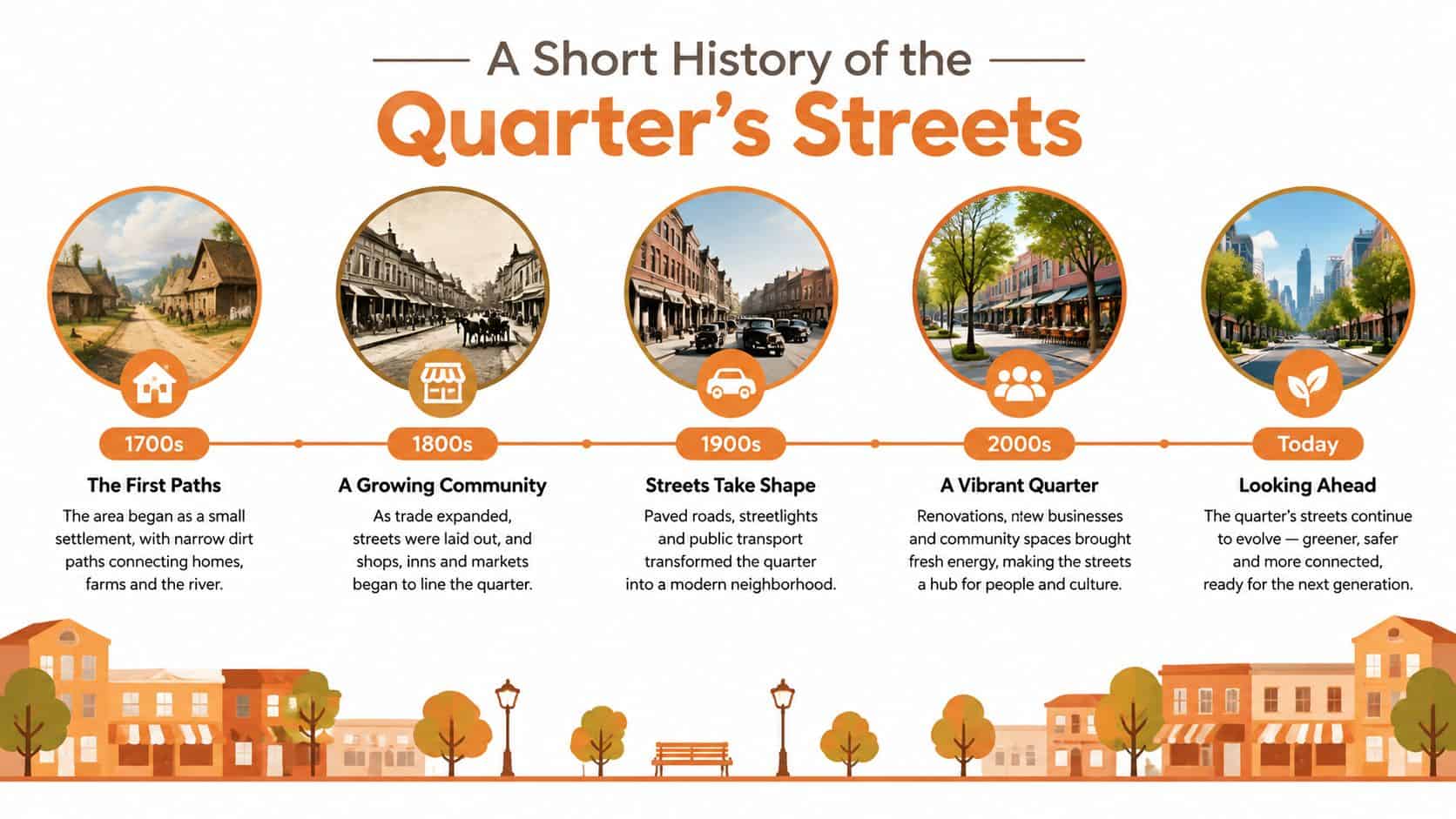
A Short History of the Quarter’s Streets
The Gothic Quarter feels old because several different cities occupy the same footprint. Begin with Barcino, the Roman colony founded around 15 BC, whose origins reach back more than 2,000 years (Spanish Express explains the quarter’s Roman origins). Roman walls and foundations still survive, especially around the cathedral and Carrer del Paradís.
Read the street plan from the ground up
The first clue is the irregular layout. Roman and medieval streets were shaped by walls, buildings and foot traffic, not by the broad, straight avenues you’ll find in the Eixample. When you turn through the Barri Gòtic, you’re following an accumulated pattern rather than a single master plan.
The medieval period added the cathedral complex, royal buildings and Jewish Quarter. Barcelona Cathedral’s complex was completed in 1448, and its position explains why the surrounding lanes feel like they funnel towards a central religious and civic core (RAC’s Barcelona sightseeing guide).
The walls later lost their practical role as Barcelona expanded beyond the old city. Modern redevelopment altered the relationship between the old centre and the newer Cerdà grid, which is why the quarter feels enclosed when compared with the open blocks beyond Via Laietana.
The Gothic character is partly modern
The most useful correction to the usual travel story is that the quarter isn’t an untouched medieval survival. Academic research recorded by Cardiff University describes substantial rebuilding and re-styling between 1927 and 1970, including medieval buildings restored in Gothic style, façades moved stone by stone and ordinary housing removed to create a more historically themed district (Cardiff University’s ORCA record).
Barcelona Bus Turístic also links the quarter’s current form to late-19th-century redesign and the opening of Via Laietana, noting that some buildings were moved to create the area now marketed as the Gothic Quarter (Barcelona Bus Turístic’s guide).
That doesn’t make the quarter fake. It makes it more interesting. Look for Roman masonry below later walls, medieval alignments around the cathedral and deliberately Gothic details above streets that were reshaped in modern times.
Must-See Sights and What to Actually Notice
Follow the route in this order and you’ll avoid doubling back. Start at Plaça Reial, move towards the cathedral, then work east through the historic core before finishing at the waterfront.
The cathedral deserves the first serious stop. Arrive as close to opening as you can, enter through the appropriate visitor route and check the current admission arrangements on the day. The cloister geese are the detail many visitors miss. They give the grand building a surprisingly domestic feel, and the cloister is calmer than the façade outside.
From there, cross Carrer del Bisbe and pause beneath Pont del Bisbe. Look up at the carved underside and wait for the light to fall through the bridge. The bridge is one of the quarter’s busiest photo points, so early morning gives you a far better chance of seeing its details rather than a wall of raised phones.
The sights worth your time
Sight
Entry
Time Needed
Plaça Reial
Free
15 minutes
Barcelona Cathedral and cloister
Ticket or worship access, check current rules
30 to 45 minutes
Plaça del Rei and Museu d’Història de Barcelona
Museum ticket, check current rate
45 to 60 minutes
Roman walls on Carrer del Paradís
Free street view
10 minutes
Pont del Bisbe
Free
10 minutes
Plaça de Sant Jaume
Free
10 minutes
El Call
Free
20 to 30 minutes
Statue of Columbus and waterfront
Monument access varies
20 to 30 minutes
At Plaça del Rei, give yourself time to look down rather than only across. The Museu d'Història de Barcelona presents the Roman city below, and its aerial view of Barcino makes the quarter's strange street geometry suddenly understandable. This is one of the paid sights I'd keep, particularly if you've already noticed how little the lanes resemble the Eixample.
Carrer del Paradís gives you a free Roman detail, while Plaça de Sant Jaume shows the quarter's continuing civic role. Continue through El Call, the former Jewish Quarter, where the narrower lanes and restrained stone façades reward slow walking.
Skip any attraction that requires crossing the district just to collect another exterior photograph. Finish towards the waterfront and the Statue of Columbus, where the compressed lanes open into the harbour edge.
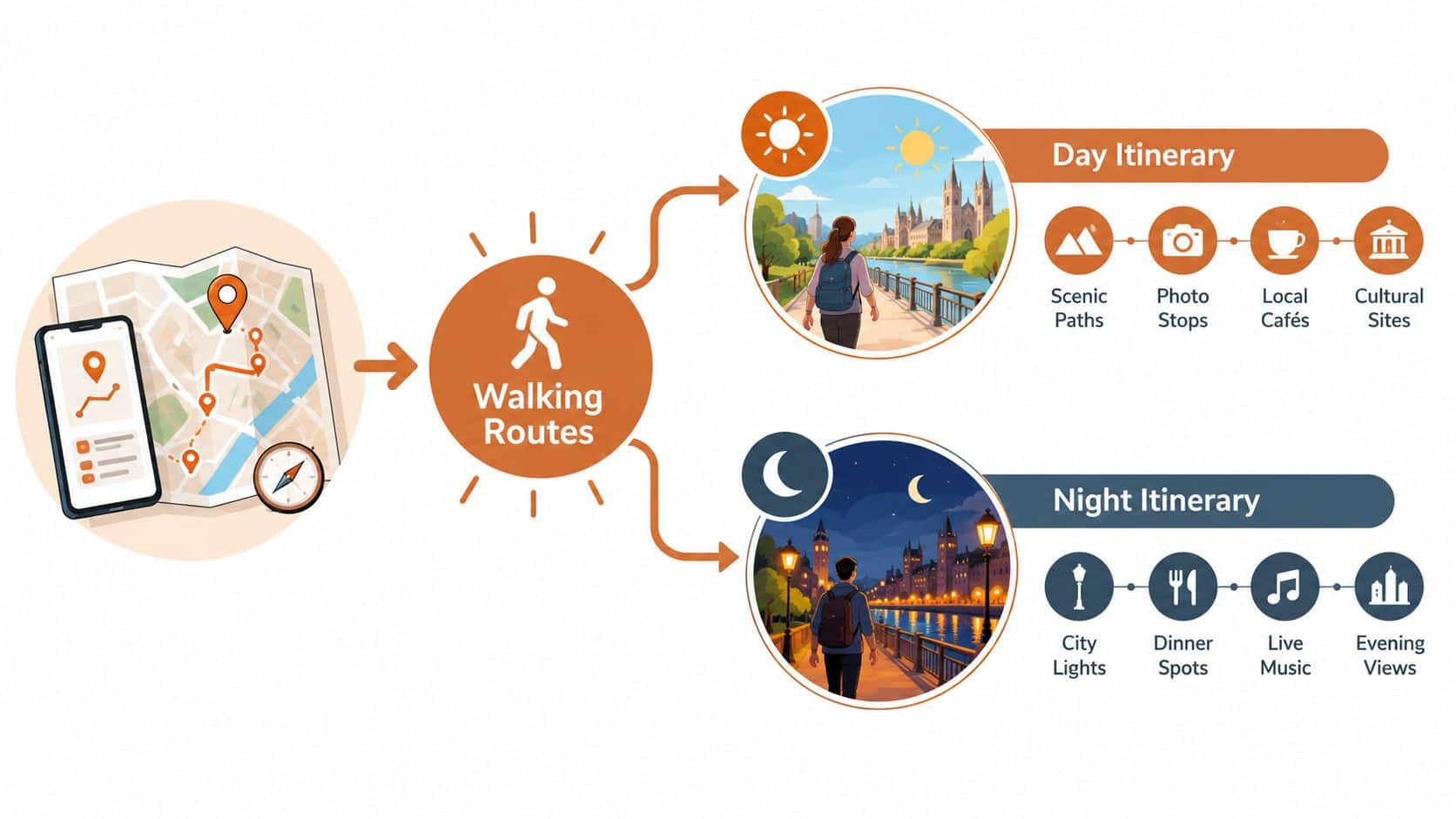
Walking Routes and Day or Night Itineraries
Use one of these routes rather than trying to cover every square. The first is a clean half-day loop, while the second gives you room for El Born, a break and an evening meal.
The half-day loop
09:00, Plaça de Catalunya. Walk down La Rambla towards the Portal de la Pau end, but leave the boulevard at Plaça Reial rather than lingering among the busiest stalls.
09:25, Plaça Reial. Have a quick coffee or continue into Carrer dels Comtes.
09:45, cathedral cloister side. Start here, then move through the cathedral and out towards Carrer del Bisbe.
10:45, Pont del Bisbe and Plaça de Sant Jaume. Take photographs quickly, then spend longer watching the civic square.
11:15, El Call and Plaça del Rei. Visit the museum if it fits your interest, or focus on the streets and Roman remains.
12:15, Plaça Reial. Stop for a small plate or drink, then walk towards the waterfront.
13:00, back at your hostel. From the La Rambla area, you can drop your bag, shower and reset before lunch elsewhere.
A self-guided core route covering Barcelona Cathedral, Pont del Bisbe, Plaça de Sant Felip Neri, El Call, Plaça del Rei, Santa Maria del Pi and Plaça Reial takes about two to two and a half hours, according to Finding the Universe's walking route. Add food stops and museum time rather than forcing every landmark into a rushed circuit.
The day-and-night version
Start with the same cathedral route, then continue over Via Laietana into El Born. Walk to Plaça de Sant Cugat and Santa Maria del Mar, take a proper siesta break, and return for golden hour at Mirador de Colón or a rooftop opposite the monument.
For dinner, follow Carrer de l'Argenteria into El Born and choose a few tapas rather than committing to one long meal. Jaume I is useful for the eastern side, Liceu for La Rambla and Drassanes for the waterfront edge. At night, walking usually beats the metro across this compact area, provided you stay on well-lit streets and keep your phone away at junctions.
Budget Eats, Cafes and Bars Worth Knowing
Eat by time of day, not by whichever menu shouts loudest from the pavement. The Gothic Quarter has good food, but its most visible terraces often charge for the view and the footfall.
Time of Day
Spot Type
Price Range
What to Order
Breakfast
Traditional café
€3 to €5
Café con leche and tostada con tomate
Midday
Worker-style bar
Under €13
Menú del día, especially a filling main
Afternoon
Vermutería
€4 to €8
Vermouth with olives or a small snack
Evening
El Born tapas bar
€3 to €8 per plate
Patatas bravas, anchovies or a pincho
Late night
Cervecería
€2 to €5
A draught beer and a simple snack
Start with café con tostada con tomate at Granja M. Viader or Forns Mistral. I’d choose the option with the livelier local queue and avoid turning breakfast into a long terrace session. You’ll want your appetite later.
For lunch, look for a worker-style menu near Plaça de Sant Josep Oriol. Bar Celta is the sort of place I’d consider for a straightforward meal, with portions that matter more than presentation. Check the day’s menu before sitting down, because the value depends on what is being served.
Where I’d spend the evening
Move towards El Born for tapas and pinchos. Order a few plates to share, then change venue if the room feels too quiet or the menu looks designed entirely for passing visitors. I’d skip the most obvious tourist strip around Carrer Boteria and explore a side street instead.
Plaça Reial is excellent for people-watching, but I wouldn’t make it my main drinking stop after dark. Prices rise with the setting. Choose a vermutería in a side alley, a small cervecería for a casual beer, or a late-night cocktail bar away from the square.
Safety, Scams and When to Visit
The Gothic Quarter is enjoyable, but you should treat your belongings as part of the itinerary. Pickpockets work the top of La Rambla near the Metro entrance, the cathedral steps, the crowded stalls around Mercat de la Boqueria, and the exits of Liceu and Jaume I stations.
The common patterns rely on distraction rather than force. Someone may try to place a friendship bracelet on your wrist, a group may crowd an outdoor café table, or someone with a petition may block your path. ATMs create another easy distraction, particularly when one person starts a conversation while another watches your wallet.
The habits that actually help
Use a front pocket: Keep your phone and cards where your hand can feel them.
Wear your bag forward: Zip it fully and bring it to the front in crowded lanes or on the metro.
Hold your phone securely: Don’t stand beside a station exit scrolling with your attention elsewhere.
Protect café belongings: Never leave a phone or wallet on a chair, table edge or bag hanging behind you.
Reject interruptions: Say no, keep moving and don’t engage with anyone who touches your clothing or belongings.
The best visiting window is early, especially around 8am to 9am, when the quarter can feel almost empty. April to May and September to October generally offer a more comfortable balance of weather and thinner crowds, while July and August can feel punishing in the narrow lanes. Barcelona’s official tourism observatory continues to track destination demand in 2025, which reinforces the need to think about timing rather than assume the district will stay quiet (Barcelona Tourism Observatory’s 2025 data).
Getting There, Accessibility and Where to Stay
From Barcelona El Prat, take the Aerobus to Plaça de Catalunya, then walk south for about five minutes towards La Rambla. From Sants station, use Metro L3 towards the old city. Inside the quarter, the useful stops are Liceu on L3, Jaume I on L4 and Drassanes for the waterfront edge.
The district itself is largely pedestrianised, which makes it pleasant for walking but less straightforward for anyone with mobility issues. La Rambla and Via Laietana provide the easiest step-free approaches, while many interior lanes retain uneven medieval cobbles and lack ramps. Wheelchair users should plan a perimeter route and treat the maze’s centre as optional rather than assume every landmark is accessible.
For route details across Barcelona, keep this practical guide to getting around Barcelona handy.
Budgeting and Final Tips Before You Go
A realistic hostel-based day can sit around €40 to €55, covering a hostel bed, breakfast, two self-guided sights, a budget lunch, tapas dinner and a couple of drinks. If you want more comfortable meals, extra museum time and less careful ordering, allow roughly €70 to €90.
Small savings come from simple choices. Tiny bars may add a small surcharge for card payments, so carry some cash. Rounding up or leaving 5% to 10% is a normal way to tip when service has been good. A T-Casual 10-ride metro pass can make sense if you’re combining the Gothic Quarter with other parts of Barcelona, while a single ticket is simpler when most of your day is on foot.
The best final decision is also the simplest one: give the cathedral the first hour after it opens, then let the rest of the day flow outward through Pont del Bisbe, El Call, Plaça del Rei, Plaça Reial and the waterfront. You’ll leave with a route that feels lived in, not a checklist you’ve survived.
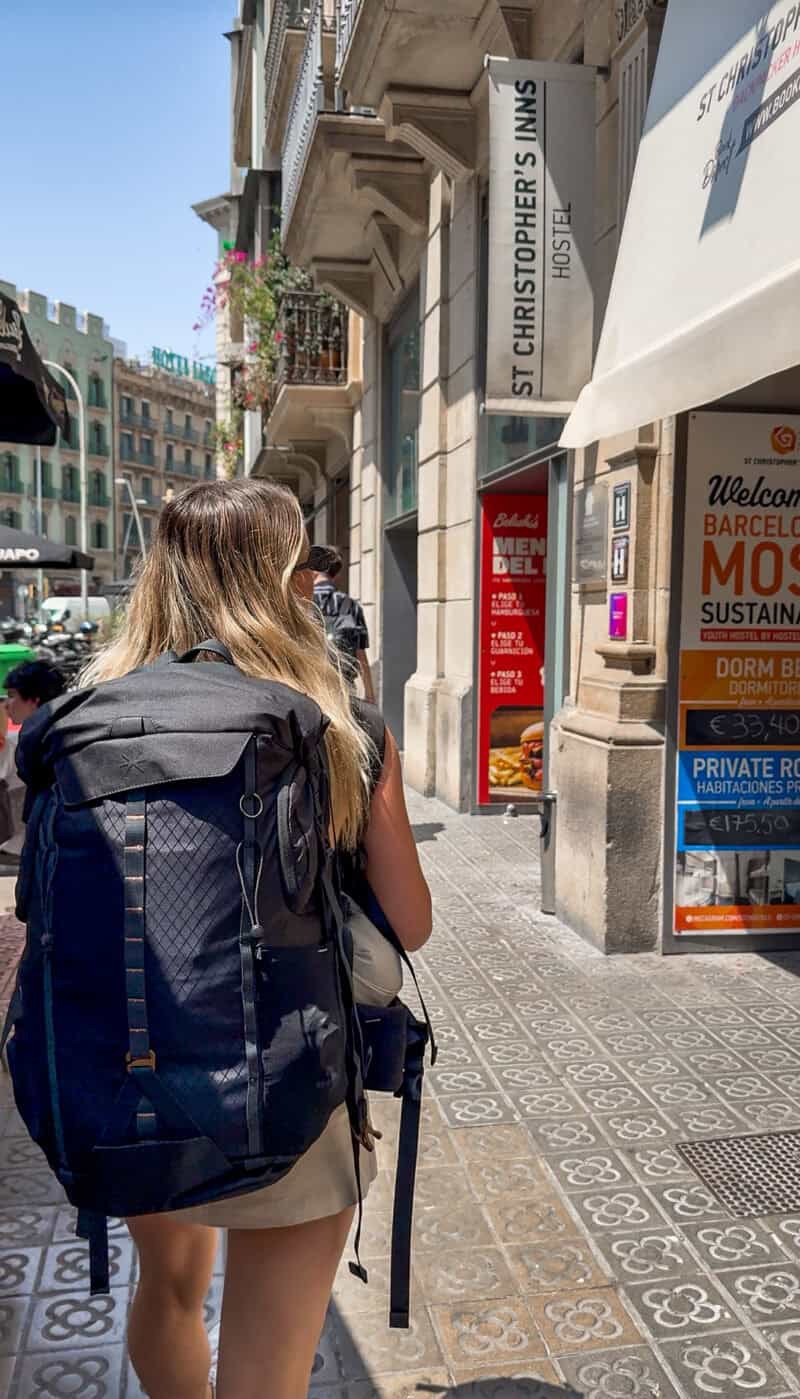
St Christopher’s Barcelona offers a central La Rambla base, clean dorms and private rooms, communal spaces and Belushi’s downstairs for meeting other travellers after your Gothic Quarter walk. Visit St Christopher’s to check the Barcelona location and direct booking benefits before you go.
Our direct rates are guaranteed to be at least 5% cheaper than anywhere else online, with a free drink on arrival, 25% off food at the bar, and free cancellation options available.