Movie Locations Paris: 8 Famous Film Spots for 2026
Hayley
Say you land at Gare du Nord with one free afternoon and a camera roll full of film stills. The...
Share This Article
Say you land at Gare du Nord with one free afternoon and a camera roll full of film stills. The good news: movie locations Paris are rarely sealed behind gates. Plenty are working cafés, bridges, cinemas and museum steps, a short Metro ride apart, and many cost nothing more than the fare and a coffee if you want to linger.
You do not need a themed bus tour or a guide holding an umbrella. You need a charged phone, a couple of Metro tickets, shoes that can handle cobbles, and a realistic idea of which screen addresses still look like the film. VisitBritain has found that British travellers often seek out places they have seen on screen, so expect company at the famous corners, especially late morning.
Each stop below pairs the scene with the route from one of those bases, the likely spend, and the honest catch, so you can turn a list of film locations into a day that runs on time.
1. Café des 2 Moulins, Montmartre (Amélie)
Say you’ve seen the film twice and you want to see it for yourself. The café at 15 Rue Lepic is where Jean-Pierre Jeunet set Amélie Poulain’s workplace in his 2001 film, and the City of Paris Amélie trail still lists it as a stop, alongside Studio 28 cinema in the 18th, the screen where she watches a film. The paintwork has changed since filming and the menu is standard brasserie fare, but the corner, the awning and the zinc bar are unmistakable.
Budget €5-10 for a coffee and pastry, and expect to pay more for a full sit-down meal.
Arrive before 10am or after 4pm: the pavement outside is busiest late morning, when groups come through.
Order at the bar if money’s tight: counter prices undercut terrace prices in most Montmartre cafés.
Keep the camera respectful: people are eating. Wait for a gap rather than shooting through the window from half a metre away.
Amélie’s Paris isn’t one address. The film stitches together Montmartre, the canal and a dozen corners, which is why a single stop feels thin and a half-day walk feels right.
Pair the café with the Sacré-Cœur, ten minutes uphill, and our guide to Montmartre for which staircases earn the detour.
2. Canal Saint-Martin and the Stone-Skipping Scene
Say you have one evening left in Paris and almost no budget. This is the stop for it. Amélie skips stones across the water here, and the iron footbridges, locks and plane trees still look much as they did on screen. What the film leaves out is a working neighbourhood going about its day around you.
Evening is the right time
Locals gather on the quays with picnic blankets and bottles of wine once the weather warms up. Join them and you will have a better night than any ticketed attraction on this list. Walk the towpath from Jaurès or Stalingrad for the classic stretch, past the lock keeper’s cottages and the curved footbridges.
Buy your picnic in the 10th: a baguette, cheese and fruit from a boulangerie on Rue du Faubourg Saint-Martin costs a fraction of a canal-side table.
Go on a weekday: Saturday afternoons in summer belong to groups, not to you.
Stay switched on after dark: stretches of the quay are badly lit. Keep your phone out of sight and walk in company.
Crowds here are neighbours as much as tourists. Residents near the city’s most photographed spots often feel the pressure of visitors, so keep the noise down once night falls and treat the homes and doorways you pass as someone’s front step.
The rule that covers every stop on this list: public access is a courtesy, not a licence. Treat a front door like a front door.
3. Pont-Neuf and Les Amants du Pont-Neuf
Despite the name, the Pont-Neuf is the oldest standing bridge across the Seine. Leos Carax’s 1991 Les Amants du Pont-Neuf used it as the stage for a love story among people sleeping rough, and its width still gives you the best free panorama on the river, with the Louvre on one bank and Île de la Cité on the other.
Check a location before you walk to it
Half the fun of a film trail is catching the small lies. Paris publishes an open-data catalogue of shooting records that lists the production name, director, producer, filming type, exact address, arrondissement, start and end dates and geographic coordinates, with feature-film entries dated to specific days such as 13 to 14 November 2023 (Paris filming locations dataset).
Say a blog tells you a scene was shot on the bridge itself. The catalogue tells you whether the address was the bridge, the quay beneath it or a street two roads back. It also explains why a spot looks different in person: editing, set dressing and three nearby viewpoints do a lot of work.
Go at sunset for the light and the thinner crowds. Walk the lower riverbank paths for quieter angles, and bring water in summer because there’s nowhere on the bridge to buy any. Keep bags zipped and phones in front pockets.
4. The Louvre and The Da Vinci Code
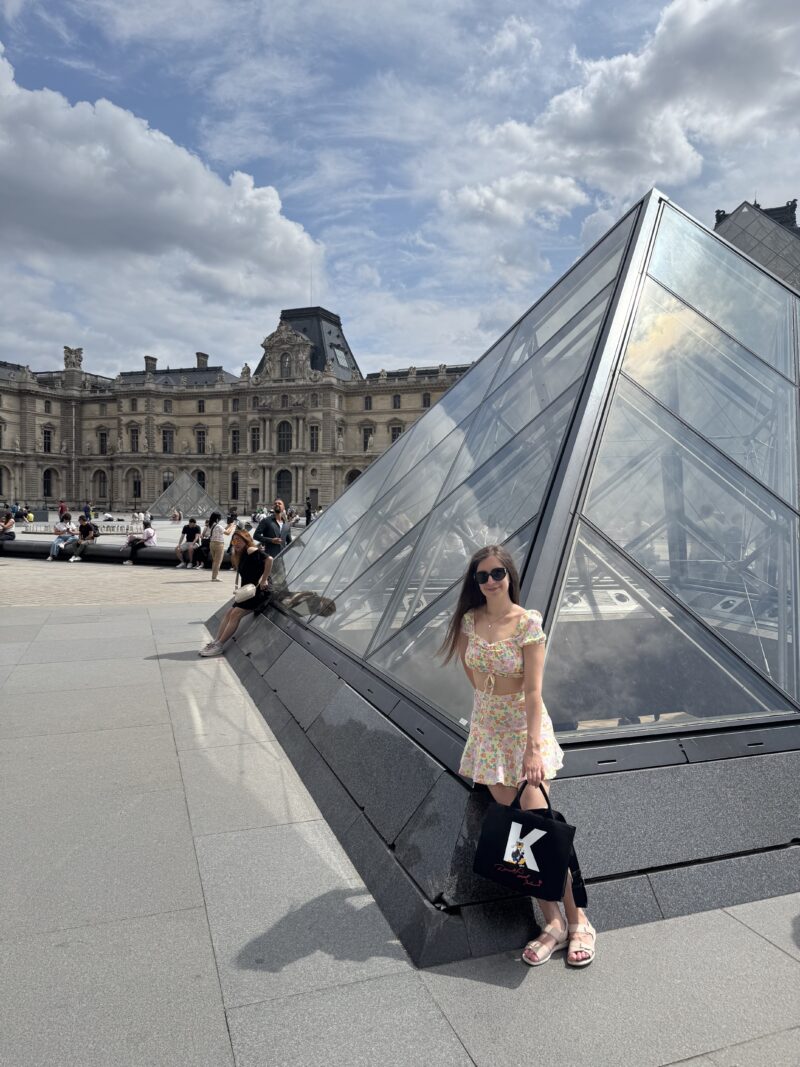
Ron Howard’s 2006 adaptation of The Da Vinci Code put the glass pyramid and the Denon wing galleries in front of a global audience, and the museum has been fielding film questions ever since. The books and film are one thing. The collection is another, and it’s the reason people come back.
Academic work on film tourism reports that visitor increases commonly range from 30% to 60% at locations strongly associated with successful productions (University of Exeter film tourism research). The Louvre is the textbook case in Paris, which is precisely why you should treat a visit as a logistics problem rather than a wander.
A two-hour route that doesn’t wreck your feet
Book timed entry online before you travel. The longest queues form at the pyramid entrance, and a slot spares you the worst of it.
Budget €15-22 for adult general admission, with free entry for under-18s. Card and phone payments are standard.
Pick two or three galleries: the Mona Lisa, the Venus de Milo and the Winged Victory of Samothrace are all within a manageable loop.
Check opening hours first, as the museum closes on some weekdays and the calendar shifts through the year.
Our Paris landmarks guide covers the other screen-famous buildings within walking distance.
5. Shakespeare and Company and Midnight in Paris
The English-language bookshop opposite Notre-Dame has appeared in more films than most Parisians realise, from Before Sunset to Woody Allen’s Midnight in Paris, where Gil Pender drifts into an imagined 1920s city. Browsing costs nothing. That’s the whole appeal for a backpacker on day nine of a trip.
Free to browse, easy to overspend
Most Paris location listicles skip the boring part: which stops are free exteriors, which need a ticket in advance, and which turn out to be a private building you can only admire from the pavement. That gap between a recognisable facade and a visitable attraction is the one worth planning around (film tourism research overview).
Set a book budget of €10-30 and stick to it. It’s a bookshop, not a museum. The stock is very good.
Go early, ideally at opening, before the tour groups fill the narrow rooms.
Walk the bouquinistes afterwards: the green riverside book boxes between here and the Louvre are free to browse and rarely crowded.
Students: this is the best free study break in the 5th. Grab a coffee nearby, sit on the quay wall and read for an hour.
Money saver: two people who each buy a paperback have spent more than a guided tour of the Opéra. Decide before you walk in.
6. The Eiffel Tower and Trocadéro
The best view of the tower is free, and it isn’t from the tower. Stand in the Trocadéro gardens on the opposite bank and the ironwork sits framed by the Palais de Chaillot, which is why filmmakers have used that exact angle for decades to signal Paris in a single shot.
There’s a practical wrinkle if you’re the type to turn up with a camera rig. The City of Paris handles general filming permits through Paris Film, but requests involving named landmarks, including the Eiffel Tower, the Trocadéro Esplanade and the banks of the Seine, are handled separately (Paris Film permits). Public access for a phone snap and a commercial shoot are two different things.
Costs, timing and the walk back
Book tower tickets on the official site well ahead. Ticket prices vary by level, typically €10-30.
Skip the climb if your budget is tight: the sparkle on the hour, watched from Trocadéro, costs nothing and beats a queue.
Picnic on the Champ de Mars with supplies from a supermarket on Rue Cler. Cheaper than any café with a tower view.
Time it for dusk so you get daylight, sunset and the light show in one visit.
We’ve mapped the alternatives in our guide to the best views in Paris, several of which are free rooftops within a Metro stop of the river.
7. Palais Garnier and The Phantom of the Opera
Gaston Leroux’s 1910 novel turned this opera house into a haunted building, and the chandelier, the grand staircase and the gilded foyer have been feeding adaptations ever since. Emily in Paris filmed here too, which explains the number of under-30s photographing the facade on any given afternoon.
That isn’t coincidence. Research on UK screen tourism reports that 58% of younger UK adults had travelled somewhere after seeing it on screen, compared with 40% of UK holidaymakers overall, and that 38% of 18 to 34-year-olds had planned a trip around filming locations (report on young Britons and screen-set travel). If you’re booking a city break because of a series, you’re in the majority for your age group.
Tours, tickets and the cheap seat trick
Book a guided visit in advance, usually €15-25 depending on the route, for access to the auditorium and foyer.
Check the performance calendar: a restricted-view or standing seat can cost less than a daytime tour and gets you inside during a show.
Go on a weekday morning for the quietest staircases and the best photos.
Walk five minutes to Galeries Lafayette afterwards for a free rooftop view over the opera district.
8. Montmartre, Sacré-Cœur and Paris Film Backdrops
Say you climb out of Abbesses station and the street in front of you looks like a film set. It probably is one. Montmartre is one of the most filmed neighbourhoods in the city, and not only because of Amélie. The steep lanes, the surviving windmills and the white dome of the Sacré-Cœur have stood in for old-world Paris for a century of cinema.
Citywide, the figures are startling. The City of Paris’s own film trails state that the capital hosts more than 650 film shoots each year and that around 4,000 different outdoor locations have been used as natural sets (Paris Film Trails guide). In other words, the ordinary street you’re standing on has probably had a camera crew on it.
Getting up the hill without wrecking your legs
Take Line 12 to Abbesses or the funicular from Anvers. Both save the worst of the climb.
Reach the basilica before 9am to dodge the largest crowds and the pushiest souvenir sellers.
Budget €5-10 for a coffee and pastry in the village, and eat before you sit down. Terrace prices climb with the view.
Be polite but firm with street sellers near the steps. A clear “non, merci” works better than a debate.
Walk back down to the canal for a cheap evening. It’s a 25-minute stroll or two Metro stops, and St Christopher’s Paris Canal is a relaxed spot to rest your legs.
Paris Movie Locations at a Glance
Item
Area
Nearest Metro
Typical Cost
Best For
Café des 2 Moulins, Montmartre (Amélie)
Montmartre, 18th arrondissement
Abbesses (Line 12)
€5–10 for coffee and pastry
Film fans and a café stop
Canal Saint-Martin and the Stone-Skipping Scene
Canal Saint-Martin
Jaurès or Stalingrad
Free to walk; food and drinks extra
A relaxed local walk or picnic
Pont-Neuf and Les Amants du Pont-Neuf
Seine, central Paris
Pont Neuf (Line 7)
Free to walk across
River views and film locations
The Louvre and The Da Vinci Code
1st arrondissement
Palais Royal–Musée du Louvre (Lines 1, 7)
Around €15–22 for adults; some visitors enter free
Two days is enough for a proper screen tour if you group the stops by riverbank rather than by film.
Day one, hill and water. Start at Café des 2 Moulins before 10am, walk up to the Sacré-Cœur while the light is soft, then descend through the village. Metro Line 12 and a change gets you to the Canal Saint-Martin for the afternoon, which leaves you free to picnic on the quay. That’s two films, one hill and almost no spending beyond coffee and lunch.
Day two, the grand loop. Book the Louvre for opening time, spend two hours in the Denon wing, then walk the river to the Pont-Neuf and cross to Shakespeare and Company. Finish at Trocadéro for the tower at dusk.
What makes a route like this work is treating each location as one layer of a day rather than the whole point of it. A film title and a pin on the map won’t fill a day. A location, a station, a cost and a nearby bench will. Group two or three stops per neighbourhood, give each one a cheap food option within a short walk, and the itinerary builds itself.
One last thing on money. Almost everything on this list is free to look at, and the paid items, the Louvre, a tower ticket, an opera tour, all have cheaper substitutes nearby. Build the trip around the free exteriors and spend your budget on food and one big interior. That’s a better two days than five ticketed attractions.
St Christopher’s runs two Paris hostels, at Canal and Gare du Nord, both a short Metro ride from every location in this guide, with an on-site bar for the evening debrief. Book direct and you’ll get at least 5% off the best online rate, no deposit, a free welcome drink and 25% off food throughout your stay, which stretches a budget further than an OTA booking will. Take a look at St Christopher’s and pick your base before the good dorms go.
Our direct rates are guaranteed to be at least 5% cheaper than anywhere else online, with a free drink on arrival, 25% off food at the bar, and free cancellation options available.