Newquay Attractions: A Budget Guide to Cornwall’s Coast
Phill
You’ve arrived in Newquay with a rucksack, a few days to spare and a budget that needs to last beyond...
Share This Article
You’ve arrived in Newquay with a rucksack, a few days to spare and a budget that needs to last beyond tonight. The surf looks brilliant, but you’re not sure whether to book a lesson, head straight for the sand or save your money for something that doesn’t involve falling off a board. The smartest approach is to choose a small patch of coast, build around the conditions and spend on what you enjoy.
Planning Your Newquay Trip on a Realistic Budget
Choose your base before your activities. A room that looks affordable isn’t much help if you keep paying for lifts back from the beach. Check your arrival point, accommodation and intended attractions together on a map, then work out which journeys you can realistically walk with your luggage or surf gear.
Start with the Newquay hostel’s location and facilities rather than comparing beds on price alone. For a solo trip, somewhere convenient and sociable can be more useful than saving a little on accommodation and spending the difference getting around.
Build a budget you’ll actually use
Separate your spending before committing to bookings:
Essentials: Accommodation, arrival and departure travel, food and any necessary local transport.
Your main experience: A surf lesson, wildlife visit or another activity you’d regret missing.
A reserve: Money for a weather change, an unexpectedly awkward journey or equipment you haven’t packed.
Don’t buy a bundle of activities just because they look good together. Check what each booking includes, particularly wetsuits, boards, instruction and cancellation terms. A lower headline price isn’t automatically better value.
Budget rule: Protect the experience you came for, then simplify everything around it.
For Newquay, I’d choose a coast-first trip with a deliberate paid highlight, not a string of ticketed attractions. Carry lunch when it suits the day, leave space for a proper meal out and resist travelling across town just to recreate another beach photograph. Affordable doesn’t have to mean joyless.
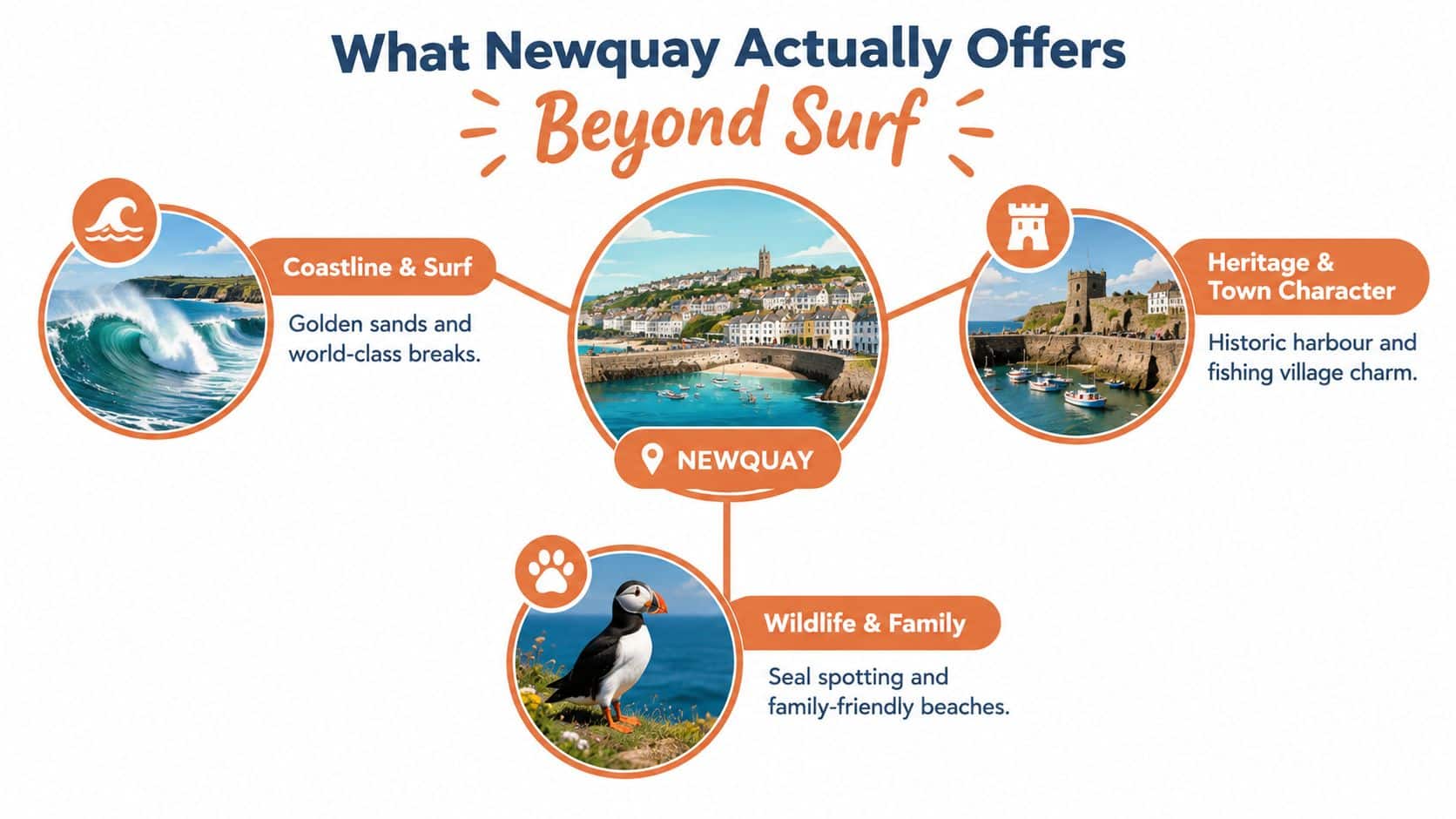
What Newquay Actually Offers Beyond Surf
Newquay makes more sense when you stop treating it as either a surfing destination or a night out. There’s coastal scenery, harbour history, wildlife and room for a slower afternoon without hiring any equipment.
Its history gives those walks some substance. A new quay developed in the mid-15th century, tourism accelerated after the railway arrived in 1876, and Bronze Age burial evidence at the Barrowfields reaches back approximately 3,500 years, according to Visit Cornwall’s Newquay destination guide.
Match the attraction to your interests
For coast and activity, choose between enjoying the scenery and paying to participate. A shoreline walk and an instructed surf session are different experiences, not competing versions of the same day. Book instruction if learning matters to you. Don’t hire a board just to feel you’ve done Newquay properly.
For heritage and town character, make the harbour and Barrowfields purposeful stops rather than background scenery. They’re good choices for travellers who prefer wandering, photography and understanding a place over organised entertainment.
Newquay Zoo supplies a different kind of visit. It officially opened in Trenance Leisure Park on 26 May 1969, and its specialist conservation history includes being the first zoo to hold Owston’s civets in captivity, as documented in the zoo’s history. Consider it if wildlife interests you or your group wants a break from beach activities. Don’t mistake a land-based attraction for a completely weatherproof one.
Lowest-spend mix: Harbour, heritage stops and coastal scenery.
Activity-led mix: Walking plus a booked lesson.
Mixed-interest group: Beach time balanced with a wildlife visit.
Social evening: Choose a pub or meal because you fancy it, not because every night needs an expensive plan.
Keep food and nightlife as flexible spending rather than prepaid obligations. Current menus and admission pages are better guides than stale price estimates.
If you’ve exhausted the local options, use these Newquay day-trip ideas to weigh an excursion against its travel costs. For a short stay, I’d explore the town properly first.
Choosing the Right Beach for Your Budget
The best beach is the one you can reach comfortably and use safely that day. A dramatic photograph tells you nothing about the climb back up, the available rescue cover or whether carrying equipment down is sensible.
The differences are substantial. Newquay’s official beach guidance describes Porth’s beachside public car park and shallow concrete slope, steep roadways at Towan, Harbour, Tolcarne and Great Western, and steep steps at Lusty Glaze and Whipsiderry. It also identifies beach-wheelchair hire at Fistral, with availability requiring advance checking.
Newquay beaches compared
Beach
Access
Toilets and showers
Surf level
Budget notes
Towan
Steep roadway
Confirm opening and shower availability
Ask an instructor about conditions
Consider alongside a town-focused day
Harbour
Steep roadway
Check nearby provision before descending
Don’t assume it’s a lesson beach
Prioritise harbour scenery
Great Western
Steep roadway
Verify seasonal facilities
Suitability depends on conditions
Check the return climb with equipment
Fistral
Check your specific route; enquire about a beach wheelchair
Confirm current toilets and showers
Get conditions-specific advice
Compare lesson inclusions before paying
Lusty Glaze
Steep steps
Confirm access and facilities before visiting
Check with the activity provider
Skip if steps make the visit impractical
Porth
Shallow concrete slope beside the public car park
Verify opening and shower provision
Don’t judge suitability by appearance
Useful to investigate for step-free access
The facilities column is deliberately cautious. A café nearby doesn't guarantee an accessible toilet, changing space or working shower. Ask about the particular facility you need, including whether it's available during your planned visit.
Choose conditions over reputation
Fistral combines Atlantic swell, sand, dunes and headlands with cafés, takeaways and shops beside the beach. The South West Coast Path also passes it, making a walk and surf activity a practical pairing, according to Visit Cornwall's Fistral Beach guide.
That doesn't make every Fistral session suitable for beginners. Let an instructor assess the conditions and explain where your activity belongs.
For transport, check the current bus stop, timetable and final approach rather than assuming a beach name on a route means easy sand access. If walking between beaches, use signed land routes. Never depend on crossing the shoreline beneath cliffs without checking tides and escape routes.
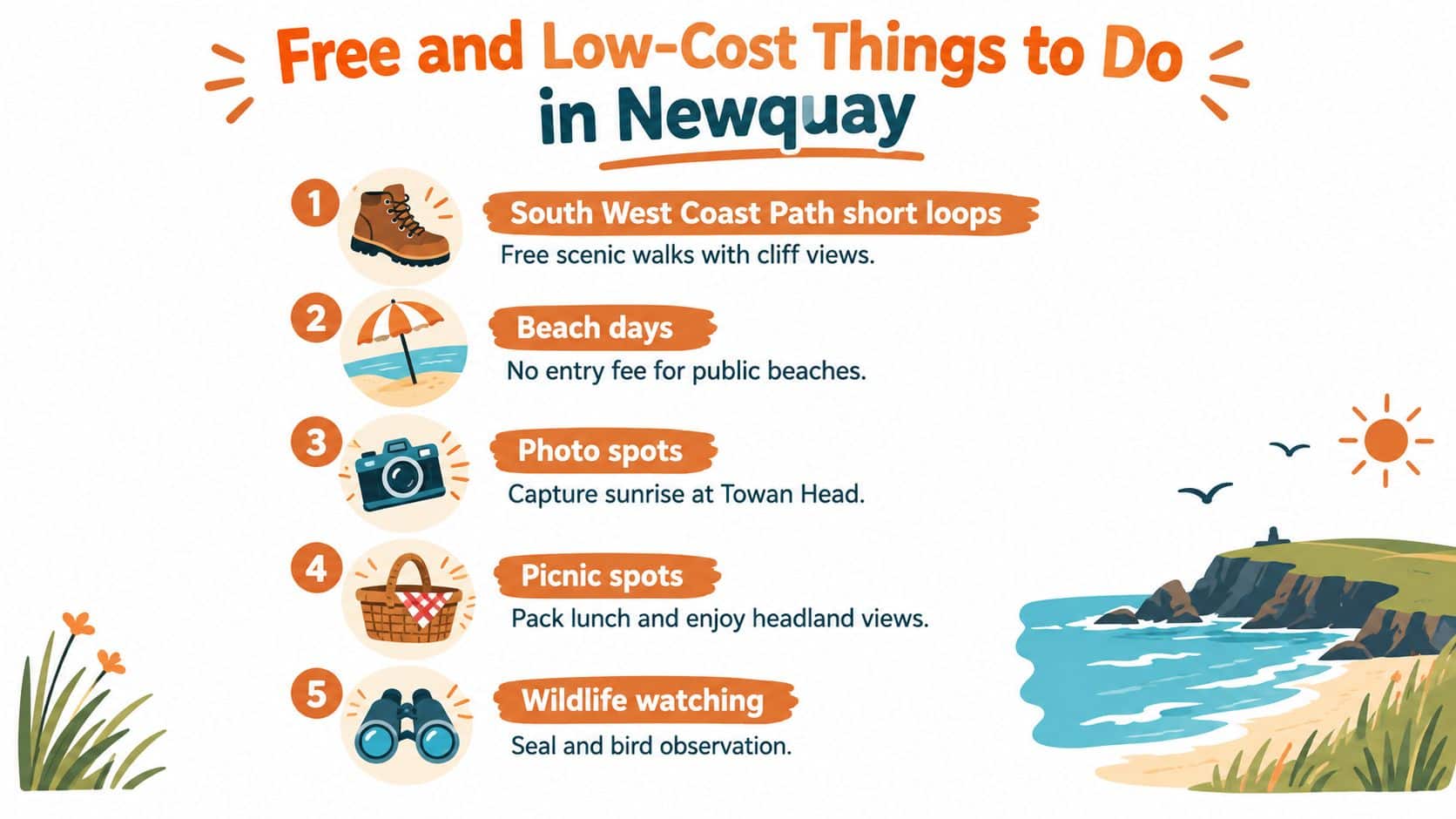
Free and Low-Cost Things to Do in Newquay
You don't need to keep buying activities to fill a coastal trip. Give a walk a purpose, whether that's learning about the sea, taking photographs or finding somewhere sheltered to eat your packed lunch. You'll get more from it than repeatedly moving between beaches without stopping.
Start at the free Fistral Lifeguard Visitor Centre. It introduces local hazards, rip currents and tides, with an RNLI jet ski and lifeguard equipment to examine. Check opening arrangements before going, and treat the exhibits as preparation rather than a substitute for live beach advice.
Make a short walk feel like a day out
Around Fistral, choose a signed coast-path section towards a headland, with a clear turnaround point. An out-and-back walk is perfectly respectable. You don't need to force a loop if the route, weather or your energy doesn't support it.
Take a picnic: Buy food before setting off, bring water and pack everything back out.
Give photography some time: Stay with a viewpoint as the light changes rather than chasing every location.
Watch wildlife: Keep your distance, don't feed animals and never climb down for a closer photograph.
Leave room for stopping: A sheltered sit with a sea view is part of the outing, not wasted time.
For a gentler alternative, consider a town-and-harbour wander or investigate Trenance Gardens rather than committing to exposed cliffs. Choose the route according to how you feel that morning, not the distance you thought you ought to cover.
A shorter walk with time to enjoy it beats finishing a long route cold, hungry and looking for a taxi.
Check local listings for events and market days, but confirm whether entry is free before building your day around them. A seasonal event can be a useful extra, not a reason to spend money you hadn't planned.
Sunset is another easy plan, provided you've thought about the return. Know your route before dark and don't stay on an unfamiliar headland just to wait for better colours.
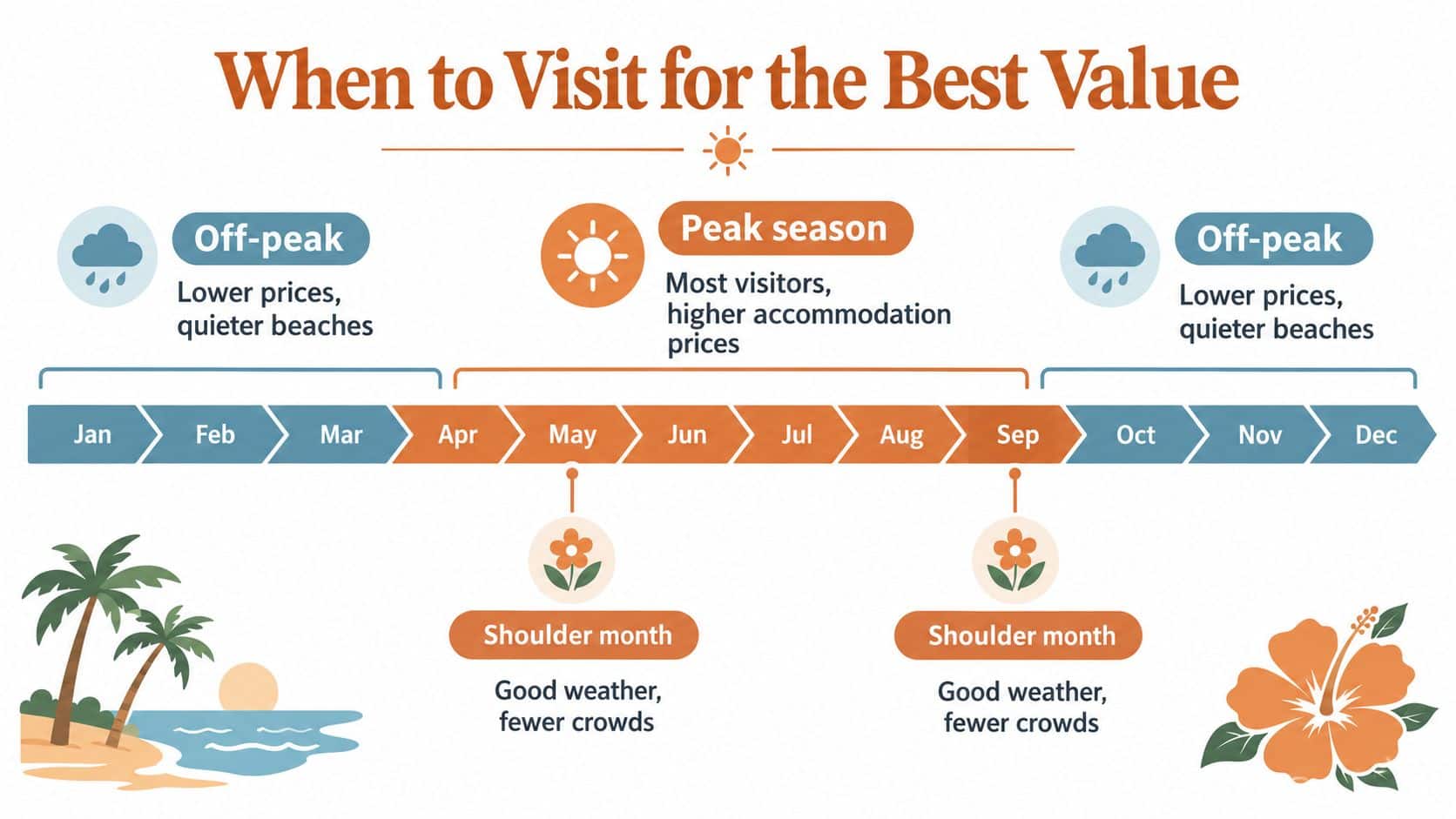
When to Visit for the Best Value
Summer isn't automatically the smartest time to visit Newquay. It's the obvious choice for a beach holiday, but your priorities might be walking, photography or a quieter social weekend rather than long sessions in the sea.
Cornwall Council reports that April to September accounts for 67% of visitors, while Newquay's November 2024 event weekends recorded approximately 42% higher footfall than comparable weekends in the previous year, through its Experience Newquay programme. That supports checking the actual calendar rather than treating every summer weekend or winter weekend alike.
Quieter doesn't always mean more practical
Compare accommodation and activity quotes for your dates. Don't assume an off-season trip will save money once you've added transport and checked what's operating. Likewise, May or September shouldn't be treated as a promise of good weather or empty beaches.
The bigger distinction is between being able to reach a beach and having lifeguard cover there. Official Newquay beach-safety guidance says the main lifeguard season generally runs from May to September, with provision varying by beach.
A winter coastal break can still be excellent. I'd build it around walking, harbour scenery and a confirmed event, with somewhere indoors to retreat when needed. I wouldn't copy a summer swimming itinerary into a quieter month.
Travel period
Sensible emphasis
Check before committing
January to March
Flexible land-based plans
Daylight, weather, open venues and return transport
April
A mix of coast and town
Exact patrol dates and activity operation
May to September
Beach activities when suitable
Daily conditions, bookings and event demand
October to December
Walks and confirmed events
Seasonal facilities, cancellations and indoor alternatives
Use that as a planning checklist, not a forecast. Before booking, check your particular month’s daylight, dog restrictions, toilet and café opening, bus timetable and lifeguard dates.
Off-season trade-off: Save on the trip you can actually enjoy, not on a summer itinerary that no longer works.
A Sample Two-Day Budget Itinerary
Keep this plan deliberately compact. Choose a town-based start, a coastal day and a flexible activity day, then rearrange them around the forecast.
Pack for the outing before leaving, rather than buying essentials beside the beach.
Day one for getting your bearings
Begin with Towan and the harbour before committing to a longer walk. Use the morning to assess your energy and the weather. If you want quieter photographs, try an early outing, but don’t assume the beach will be empty.
Continue towards Fistral by a suitable land route, carrying a supermarket lunch. Visit the lifeguard centre if it’s open, then choose between a coast-path walk and time watching the surfing. Leave the water-based spending until you understand what conditions and instruction are available.
For dinner, use this guide to fish and chips in Newquay to shortlist somewhere, then check its current menu. Make that your planned meal out rather than buying snacks all afternoon and finding you’ve already spent the dinner money.
This is the lower-spend day: groceries, your chosen evening meal and any necessary bus fare. No admission or equipment booking is built into it.
Day two for your chosen experience
Book a surf taster if learning is your priority, or choose the zoo if wildlife appeals more. Don’t squeeze both in to prove you’ve made the most of the trip. Keep the remaining time for a nearby beach or a relaxed town wander.
This is the activity-spend day: add the provider’s current price and any transport to your food allowance. Build your actual daily totals from live quotes, rather than relying on an invented price band.
For any water session, agree a meeting point with companions and follow the beach team’s instructions. If the conditions aren’t suitable, use the land-based alternative without treating it as a failed day.
Smart Ways to Save and Stay Safe
The strongest Newquay attractions plan leaves you with choices. A tightly packed schedule becomes expensive when you’re tired, the weather changes or the route turns out to be harder than expected.
Keep everyday spending deliberate
Transport: Save the return bus timetable before leaving. Download your walking route and avoid making an unfamiliar cliff path your only way home.
Food: Carry a refillable bottle and something substantial to eat. Check menus and any pub lunch offers before sitting down.
Accommodation: Assess location, cleanliness, security and communal space alongside the bed price. Ask about luggage storage if your arrival or departure falls outside room access times.
Solo travellers should also leave some time uncommitted. You might meet someone who fancies the same walk or lesson, but you shouldn’t need company to make your day work. Choose activities you’re happy doing independently and treat shared plans as a bonus.
Know what to do around the water
Beach fame isn’t a safety assessment. On 6 July 2024, RNLI lifeguards rescued six people caught in a rip current at Watergate Bay, as detailed in the RNLI’s warning following the rescue.
Before entering: Read the signs, check conditions and follow lifeguard directions. Swim between red-and-yellow flags; ask where boards and other activities belong.
If caught in a rip: Don’t fight against it. Swim parallel to shore if able, raise a hand and shout for help.
If unexpectedly in deep water: Use Float to Live to regain control of your breathing before deciding your next action.
Keep alcohol and swimming separate, charge your phone and tell someone your route if you’re heading out alone. Then stop adding attractions. A manageable plan with room to enjoy yourself is better than an impressive list you spend the trip rushing through.
St Christopher’s offers a social Newquay base with communal spaces and on-site facilities that suit a coast-focused break. Visit St Christopher’s to check rooms and booking terms, then plan your stay around the beach, walk or surf experience you most want to enjoy.
Our direct rates are guaranteed to be at least 5% cheaper than anywhere else online, with a free drink on arrival, 25% off food at the bar, and free cancellation options available.