Buy the cheapest ticket, get there early, add the tower. That's the standard advice for the Sagrada Família, and it's...
Share This Article
Buy the cheapest ticket, get there early, add the tower. That's the standard advice for the Sagrada Família, and it's incomplete enough to waste your money. The cheapest option can be poor value if the name on the ticket is wrong, if someone in your group can't use the tower, or if you wanted an explanation rather than an hour of taking photos without knowing what you're looking at.
This Sagrada Familia guide starts from a different rule. Buy the basilica first, then add one extra only if it solves a real problem. A tower solves a desire for height and a panorama. A guided tour solves confusion. An audioguide solves a need to move at your own pace. None of them is automatically essential, and none of them suits everyone.
Plan Your Sagrada Familia Visit
A first-timer I helped plan Barcelona kept changing the visit date because a flight might move, friends might join, and they wanted the tower at the best light. They nearly booked four times. That indecision is normal, and it's also how people end up with the wrong slot, the wrong names, or an add-on half the group can't use.
Treat the visit as four decisions in order. Decide what you want to understand, whether height matters to you, who is definitely coming, and how you'll get through the entrance checks. Once those are settled, booking is straightforward. Before they're settled, a bargain ticket is just a risk you've paid for.
Put the Basilica at the Centre of the Plan
The basilica is the essential experience. The towers, the official tour and the app-based audioguide are ways of shaping that experience, not substitutes for it. If your time or budget is tight, protect the basilica entry first and be honest about whether anything else adds enough.
That order also helps solo travellers. You don't need to build a complicated day around one attraction. Pick a timed slot that leaves room for security, keep your documents and phone ready, and leave space before or after to look at the exterior properly. If you're fitting the basilica into a short stay, our suggested route for two days in Barcelona shows how to place a major timed attraction without rushing the rest of the city.
Decide What Kind of Visitor You Are
Be direct with yourself before you pay.
You want the building explained: Choose structured guidance rather than hoping details will become clear by staring harder.
You want freedom to pause: Use the audioguide and accept you'll do more of the navigation yourself.
You want a view: Consider the tower, but check health, mobility, age and weather limits first.
You're travelling in a mixed group: Build the plan around the person with the most constraints, not the keenest climber.
Decision rule: If an extra doesn't match your body, your interests or your confirmed itinerary, don't buy it because other visitors recommend it.
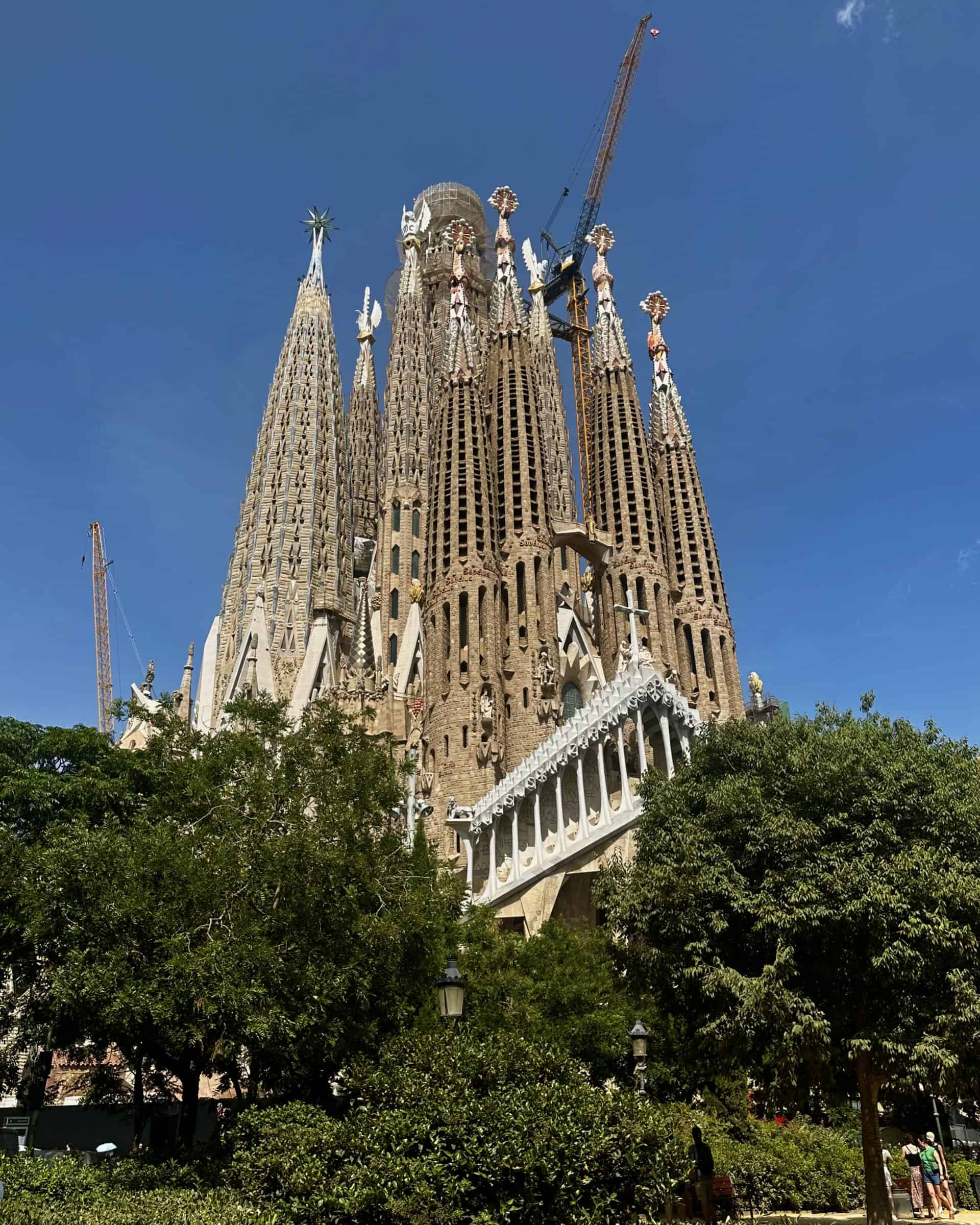
The building itself rewards that patience. It wasn't finished in one generation, and it doesn't read like a church designed, built and frozen in a single moment. You'll enjoy it more if you arrive expecting layers, change and visible construction rather than a neat, completed monument.
Understand the Sagrada Familia History
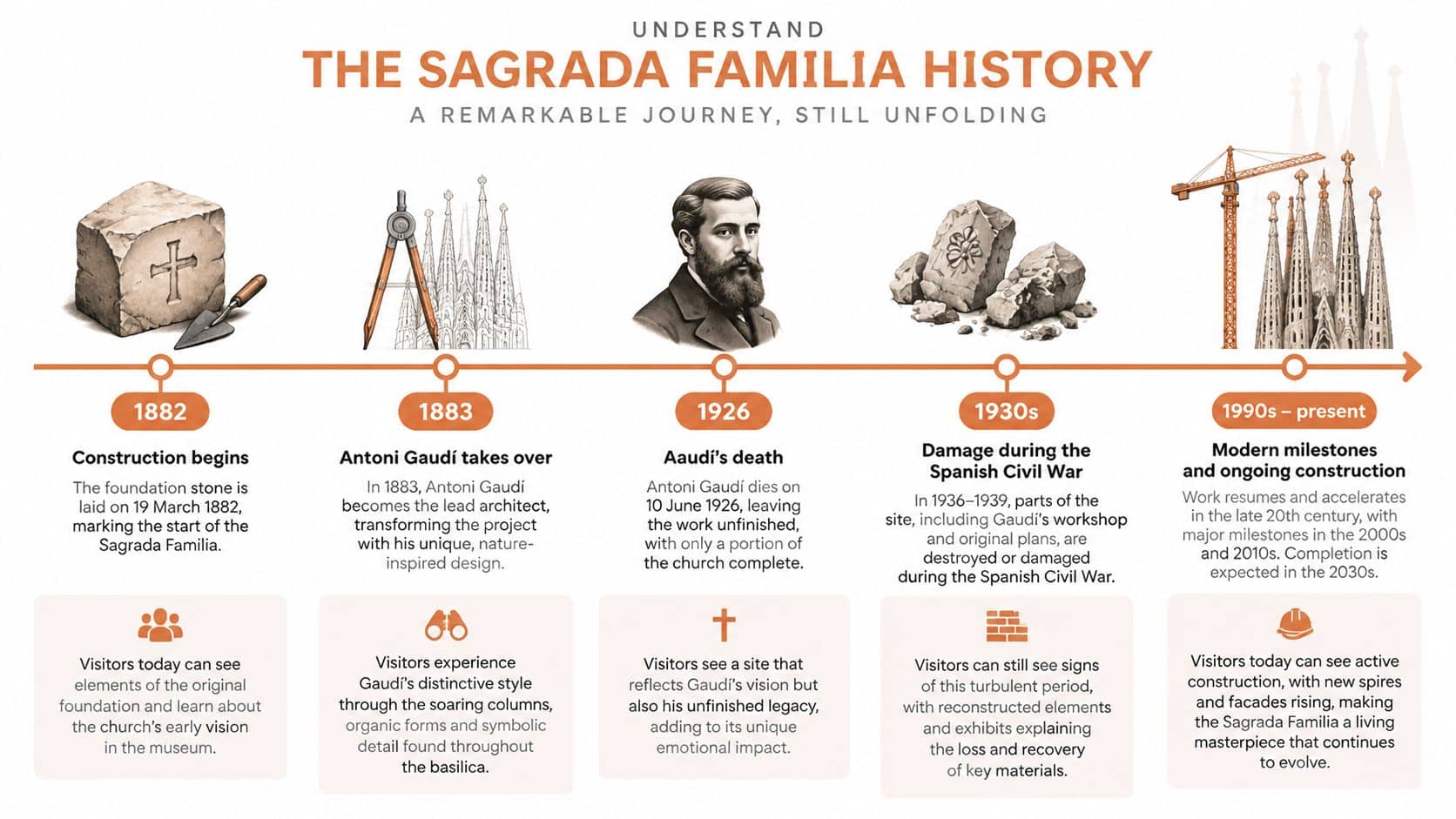
Get two dates right and much of the building makes more sense. Construction began on 19 March 1882 under architect Francisco de Paula del Villar, and Antoni Gaudí took over in 1883, as set out in the documented history of the Sagrada Família. So 1882 is the start of construction and laying of the cornerstone. 1883 is Gaudí's arrival. Don't merge them.
Villar initially proposed a Neo-Gothic design, a more conventional starting point for a church of that period. Gaudí transformed the project into something highly distinctive, with organic forms that make the basilica look grown as much as built. That change explains why first-time visitors often feel they're seeing medieval inspiration, natural shapes and modern construction in the same building.
The timeline below places the key turning points beside what they mean when you're standing in front of the basilica.
An Unfinished Manuscript Rather Than a Finished Book
When Gaudí died in 1926, less than one-quarter of the project had been completed. This is a key fact. You're not visiting a work completed by one architect in one lifetime. You're visiting an evolving manuscript, continued by later hands, with construction running for more than 140 years and major structural work on the church completed in 2010.
That changes how you should look at it. Don't waste your visit asking why it isn't finished yet, as if the building had fallen behind schedule. Ask what each phase added, what survived from Gaudí's thinking, and how later builders interpreted an unfinished idea. The cranes and newer work aren't interruptions to the story. They're part of it.
Why the History Helps on the Day
First, it stops you treating the exterior as decoration. The façades belong to a building conceived across generations, so differences in tone and execution are information, not flaws. Second, it prepares you for a living building site as well as a place of worship and major attraction. Third, it makes a guided explanation more valuable if you choose one, because you'll already know the basic sequence and can listen for interpretation rather than dates.
If you enjoy that kind of context before you travel, start with these lesser known Barcelona facts and stories, then keep your basilica reading simple. Villar began it. Gaudí transformed it. Later generations kept building it. That's enough to walk in with your eyes open.
Compare Basilica Tower and Tour Options
Don't buy a bundle before you know what each part does. The basilica, the towers and the official guided tour solve different problems, and stacking them together isn't automatically better. For some visitors it creates a fuller visit. For others it creates cost, fatigue and a timetable they can't comfortably keep.
The basilica is essential if you have come to see Gaudí's building properly. It's where you get the scale, the interior light and the architectural ideas that made the site famous. If you only buy one thing, buy basilica entry with whatever level of explanation you need.
Choose the Right Sagrada Família Experience
Option
Best For
Key Consideration
Basilica entry
Every first-time visitor
The core visit, so protect this slot first
Basilica with audioguide
Solo travellers who like their own pace
You navigate and pace yourself
Official guided tour
Visitors who want the symbolism joined up
Fixed structure and language availability to check
Tower add-on
Visitors who specifically want height and views
Health, mobility, age and weather restrictions apply
The Tower Is a Separate Physical Experience
The tower isn’t a quick lift ride for a photo. Visitors go up by lift and return on foot, and rucksacks, bags and other accessories must go in the lockers provided before ascending, under the official tower conditions. Plan for that descent. If stairs, narrow movement or heights bother you, the view won’t fix it.
The official conditions also advise against climbing for people with vertigo, claustrophobia, anaemia, a tendency to dizziness, or heart and respiratory problems. Children under six can’t visit the towers, and visitors aged six to 16 must be accompanied by an adult. Towers may close when weather creates a safety risk, so don’t build your whole day around an assumption that ascent is guaranteed.
My recommendation is firm. Skip the tower if anyone in your party is unsure. A split group, one half waiting while the other climbs, can work, but only if you’ve agreed it in advance and the people waiting are happy. Don’t pressure a nervous traveller upstairs because the ticket is already paid for.
The Official Tour Buys Structure, Not Freedom
Choose the official guided tour when you want someone to sequence the building for you, connect façade to interior, and stop you drifting past important details. That’s a real benefit in a complex, crowded space. The trade-off is pace. You follow a route, listen when the guide speaks, and get less freedom to linger or return to a viewpoint.
Choose the audioguide when independence matters more. You’ll have more control over pauses, photographs and personal reflection, but you’ll also carry the burden of working out where to stand and what deserves attention. Neither choice is more authentic. One gives you a narrator beside you. The other gives you control.
Buy the basilica first. Add the tour for understanding. Add the tower for the panorama and the physical experience. If you can’t name the reason for an extra in one sentence, don’t buy it.
Secure the Right Tickets
Book late enough to know your plans, early enough to get a workable slot. That balance matters more than hunting for the lowest headline price. The official rules require visitors to present a passport or national ID, and tickets are personal, non-transferable and nominative, as stated in the official rules and regulations. A spare ticket under the wrong name isn’t a spare ticket. It’s a problem.
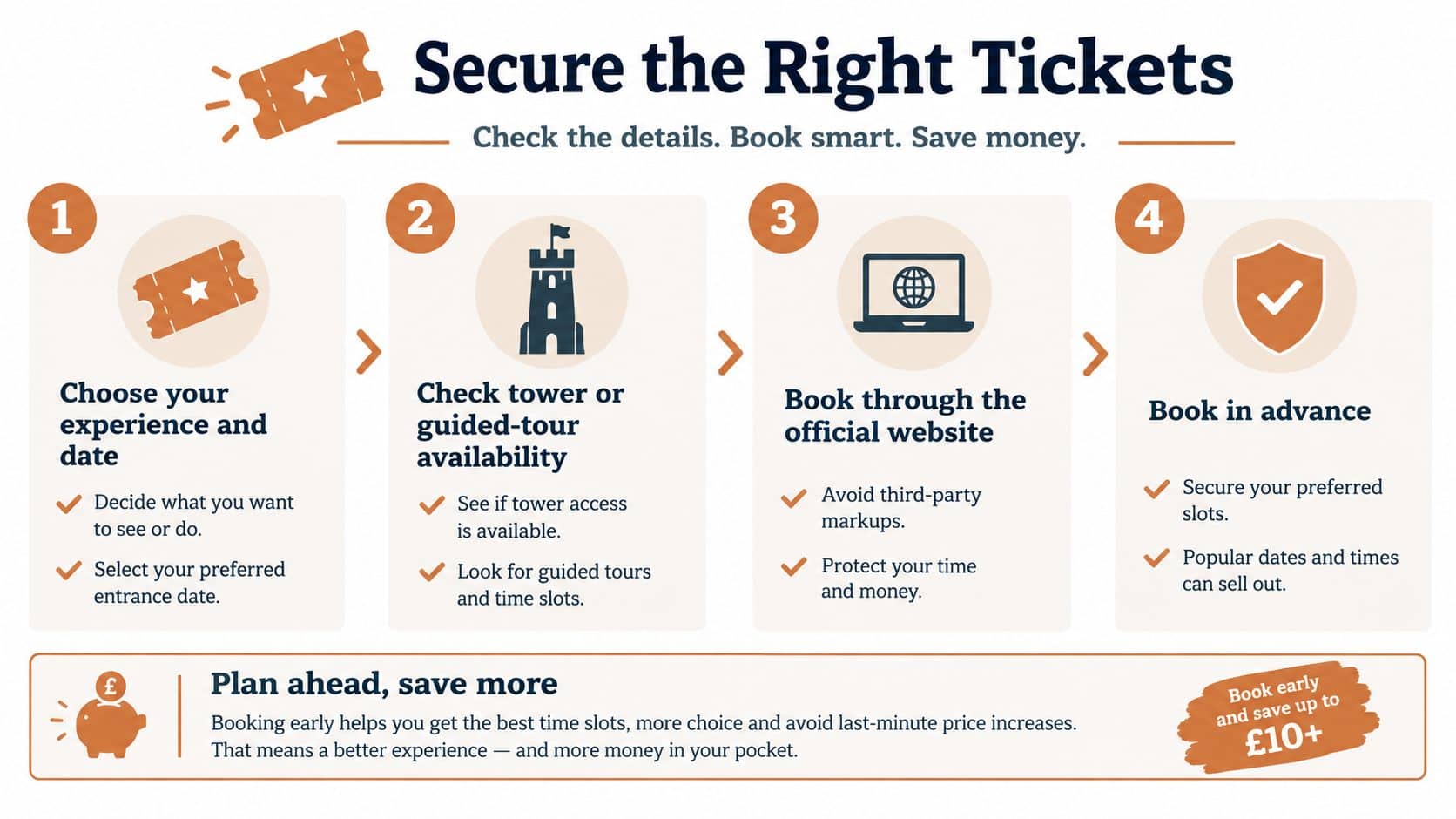
Start with the booking steps in the checklist below, then work through the identity and phone checks before you pay.
Book in This Order
Confirm who is coming: Lock the names before anyone pays, especially in a student society or friends group where one person often books for everyone.
Confirm the experience: Decide on basilica only, audioguide, official tour or tower before you compare slots.
Check restrictions: Run through mobility, health, age and language needs while you can still change the configuration.
Book through the official source: Use the basilica’s own booking route so the ticket conditions are clear and you’re not relying on an intermediary explanation.
Store everything offline: Save the booking where you can open it without mobile data, and keep a second copy if one person holds the group details.
Don’t book around a vague plan. If flights, hostel check-in, a day trip or another timed attraction could move, settle the shape of the day first. Advance entry can reduce waiting, but you still need time for security and identity checks. Arriving flustered at the exact minute on your ticket is poor planning, however efficient the booking felt.
The video below is useful for getting a sense of scale before you commit to a tower or tour choice.
Protect the Booking from Simple Failures
Carry the same passport or national ID used for booking. Don’t assume a photo of someone else’s document, a changed surname or a friend’s ticket will be waved through. Charge your phone, download what you need before you leave your accommodation, and bring headphones if your visit depends on the app.
Groups need more discipline. Official group bookings require at least 10 participants, with the full balance paid 15 days before the visit, under the official guided tour booking information. That deadline should sit in the group organiser’s calendar, not in a chat thread nobody rereads. Collect names and document details early, because chasing them after payment creates exactly the nominative ticket problem you’re trying to avoid.
Do not buy for a maybe person. A nominative ticket turns casual group planning into wasted money.
Choose Tickets and Guided Tours
Timed entry isn’t a marketing trick at a site this busy. The basilica welcomed 4,877,567 visitors in 2025, compared with 4,833,658 in 2024, an increase of 0.91%, according to the official Sagrada Família report. British visitors formed 4.52% of attendance in 2025, making the UK the sixth-largest listed national market, ahead of Germany at 4.10%. You’re visiting with nearly five million other people a year. Plan like it.
That scale is why your slot, arrival buffer and choice of guidance matter. A good configuration reduces uncertainty. A bad one leaves you navigating crowds while trying to learn, climb, photograph and keep a group together at the same time.
Match the Format to Your Trip
For a solo traveller, I recommend basilica entry with the audioguide unless you know you learn better from a person. You can pause, sit, revisit a view and leave when you’ve had enough. Download the app content in advance, bring headphones, and don’t let a low battery turn a flexible visit into a silent wander.
For a couple interested in architecture, the official guided tour is often the better buy. One of you may spot structural details while the other follows the symbolism, and a guide joins those threads in real time. You’ll sacrifice some freedom, but you’ll leave able to explain what you saw, not just show photographs of it.
For a family, keep the plan simple. Basilica entry plus flexible audioguide use usually beats forcing everyone through the same fixed pace and tower decision. Add the tower only for those who meet the age and health conditions and want it. Splitting briefly is better than dragging a tired child or nervous adult into an experience they didn’t choose.
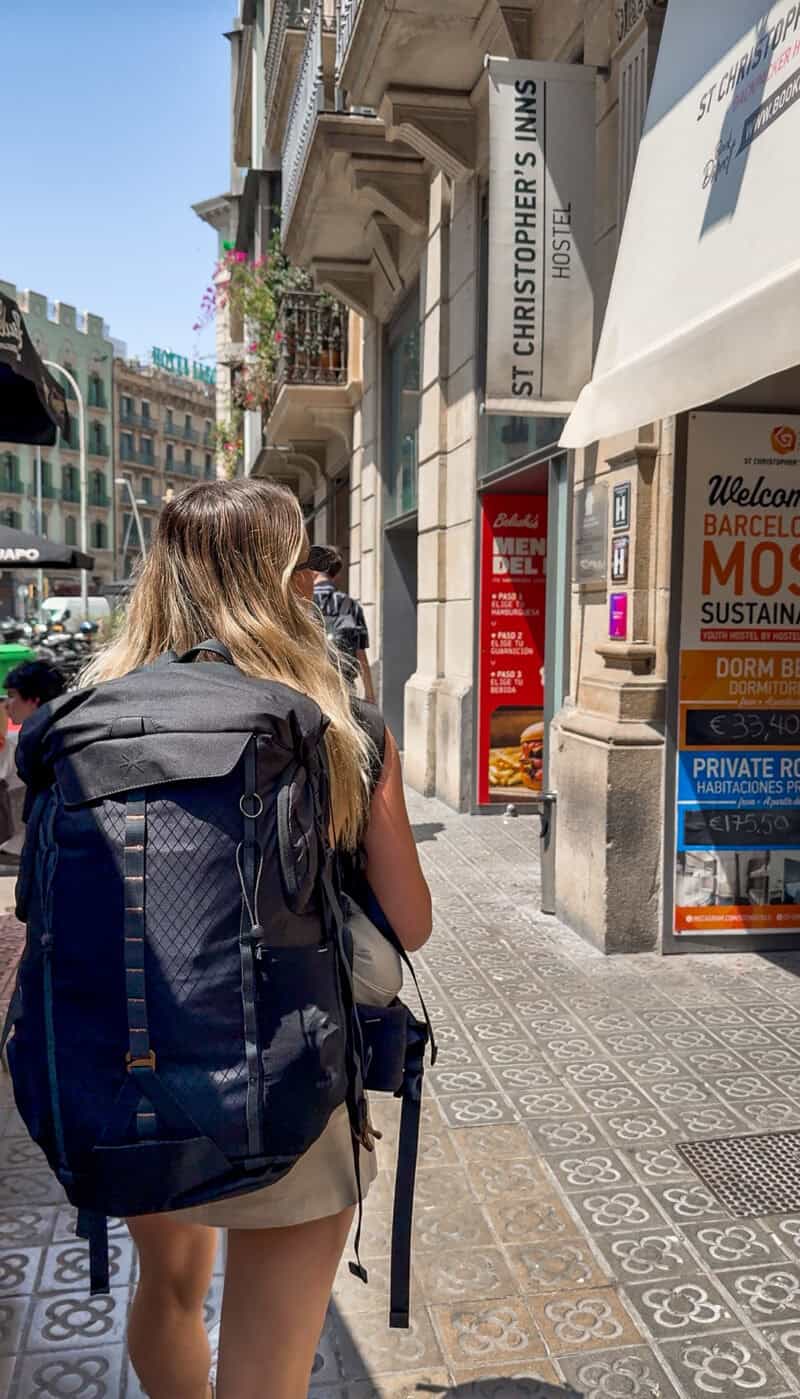
For a student society, coordination is the product. Nominate one organiser, confirm names and documents, and check tour language before money moves. Staying somewhere social and central such as St Christopher’s on Las Ramblas, with Belushi’s on site, also makes it easier to gather the group the night before and agree departure time, documents and phone charging. That’s practical, not glamorous, and it prevents morning chaos.
For a mixed-mobility group, build around a step-free basilica visit and treat the tower as optional for those who can use it. Don’t make the accessible plan feel like the lesser plan. The basilica is the main event for everyone.
What the Official Guided Tour Includes
The official guided experience lasts approximately 50 minutes and includes an official guide plus access to the audioguide through the basilica app, which supports 19 languages. Language availability depends on season and selected time, so English-speaking visitors should confirm it before payment. Don’t assume every departure works for your group, and don’t discover a language mismatch at the entrance.
Navigate Arrival and Accessibility
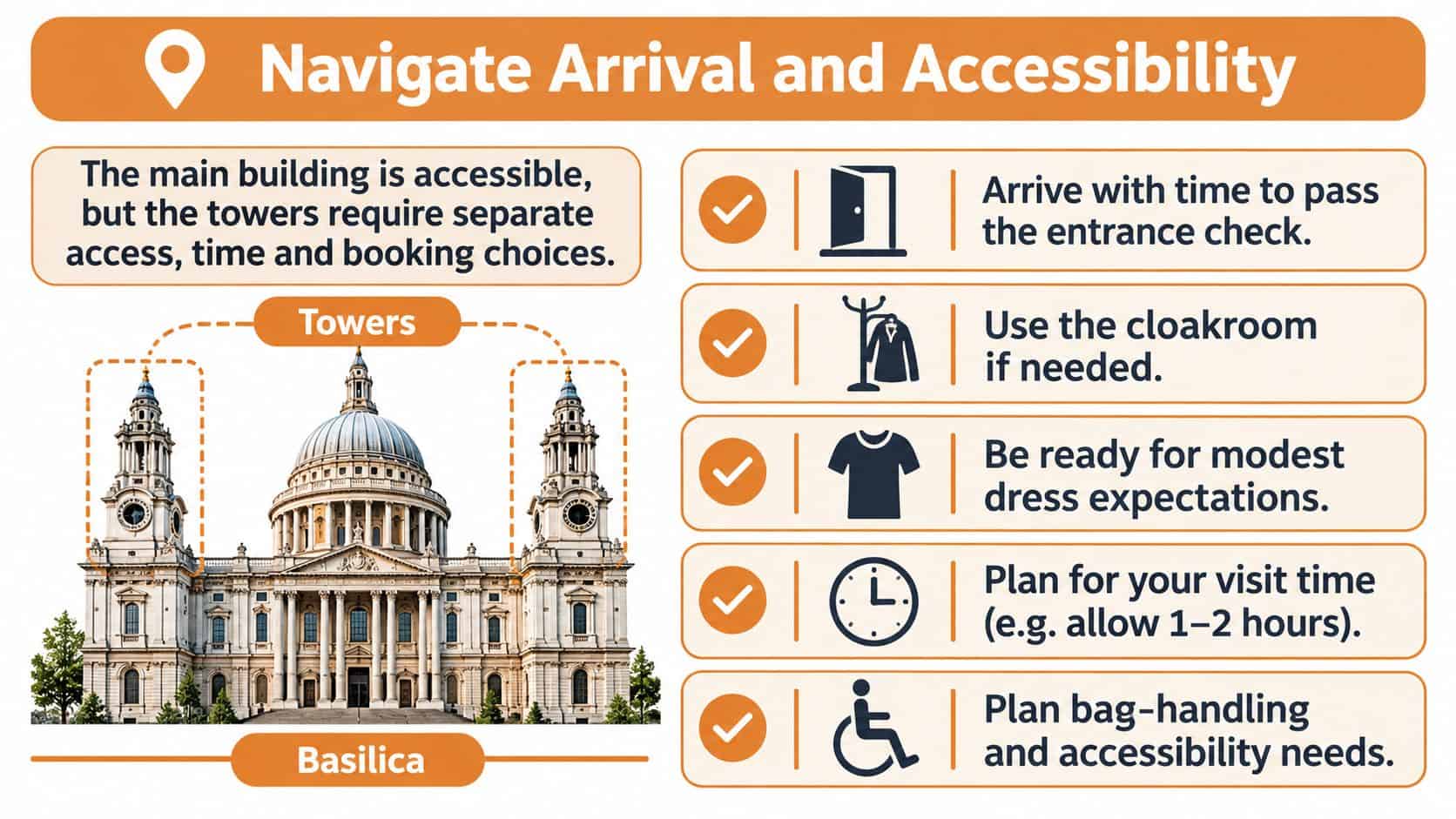
Say this plainly before you travel. The basilica is accessible except for the towers. Too many guides use a wheelchair symbol as if it covers the whole experience. It doesn’t. The official guidance directs visitors with reduced mobility to Entrance B on Carrer de la Marina, with wheelchairs available there subject to availability and official proof required for disability-related concessions, as explained in the official accessibility guidance in the FAQs.
Use the arrival checklist below to separate the accessible basilica visit from the restricted tower visit before anyone buys the wrong combination.
A Practical Arrival Sequence
Head to the entrance named for your needs, not the first queue you see. Visitors with reduced mobility should use Entrance B on Carrer de la Marina. Arrive with time for identity and security checks, keep documents where you can reach them, and don’t bury your ticket under screenshots, boarding passes and hostel confirmations.
Documents ready: Passport or national ID, plus official disability documentation if you’re requesting a related concession.
Phone ready: Booking saved offline, app downloaded where needed, battery charged and headphones packed.
Bags sorted: Anything that must go into a tower locker separated from documents and medication you’ll keep with you.
Group roles agreed: One person leads navigation, one holds meeting-point details, and nobody assumes someone else checked.
Our overview of getting around Barcelona will help you plan the journey across the city, but check current opening and access information on official basilica pages close to departure. Transport plans are useless if you arrive at the wrong entrance with the wrong document.
Plan Access Without Guesswork
The towers are not accessible to people with reduced mobility or functional diversity. That’s not a minor footnote. If tower access is essential to one person and impossible for another, decide before booking whether you’ll split, skip the tower entirely, or choose a different shared highlight. Don’t leave that conversation for the pavement outside.
Ask practical questions in advance. Can a companion stay with the visitor through entry? Is a wheelchair likely to be available at your arrival time? What documentation is accepted? Are there sensible places to rest? Will the app-based audioguide work with your hearing, visual or digital access needs? If the answer matters, confirm it before travel rather than relying on a general claim that the site is accessible.
Digital access is part of accessibility now. A visitor who can’t easily use a phone app, hear through standard headphones or keep a device charged needs a plan for that. Bring the headphones that work for you, test the app before the day, and consider whether a human guide is more usable than phone-based interpretation.
Make the Final Visit Decision
Now challenge the add-ons. Plenty of visitors buy a tower ticket because they fear missing out, then discover they dislike heights, can’t manage the descent comfortably, or would rather have spent the time inside. Others book a tour because it sounds thorough, then resent following a group. Neither purchase becomes good value just because it’s popular.
Ask four questions. Do you want explanation, a panorama, less navigation stress, or time alone with the building? Pick the answer that matters most. Then test it against mobility, health, weather, language, age and the confirmed names in your group.
Run the Pre-Departure Check
Names match documents: Every nominative ticket corresponds to the passport or national ID that person will carry.
The extra still makes sense: Tower users meet the conditions, and tour users have the language and time they expected.
Access is explicit: Reduced-mobility visitors know to use Entrance B and have official documentation ready.
Phones will survive: Tickets and audioguide material are available offline, batteries are charged and headphones are packed.
Arrival is realistic: You’ve allowed time for travel, security and identity checks before your booked slot.
The basilica’s official visitor guidance confirms that the Basilica is accessible except for the towers and that visitors with reduced mobility should use Entrance B, with wheelchairs subject to availability, in the official Sagrada Família FAQs. Keep that distinction in the final check. Accessible basilica and accessible tower are not the same promise.
My final recommendation is simple. Build around the basilica. Add the official tour if a structured explanation will turn admiration into understanding. Add the audioguide if you want context without surrendering pace. Add the tower only if the physical climb, restrictions and possible weather closure are acceptable to every person using that ticket.
Check current official opening, ticketing and access information immediately before departure. Then stop optimising. Once the names, documents, entrance and format are right, give the building your attention. That’s what you came for.
After a timed basilica visit, base yourself somewhere central where you can compare notes with other travellers without organising another expedition across Barcelona. St Christopher’s places you on Las Ramblas with Belushi’s downstairs, clean dorms and private rooms, and booking direct brings practical perks such as a welcome drink, food savings and flexible cancellation. Book your Barcelona base through St Christopher’s and keep the money you save for the experiences you actually want.
Our direct rates are guaranteed to be at least 5% cheaper than anywhere else online, with a free drink on arrival, 25% off food at the bar, and free cancellation options available.