Vienna Best City to Live: A Practical Guide for Travellers
Hayley
Vienna scored 98.4 out of 100 in The Economist’s 2024 Global Liveability Index, taking first place among 173 cities. It...
Share This Article
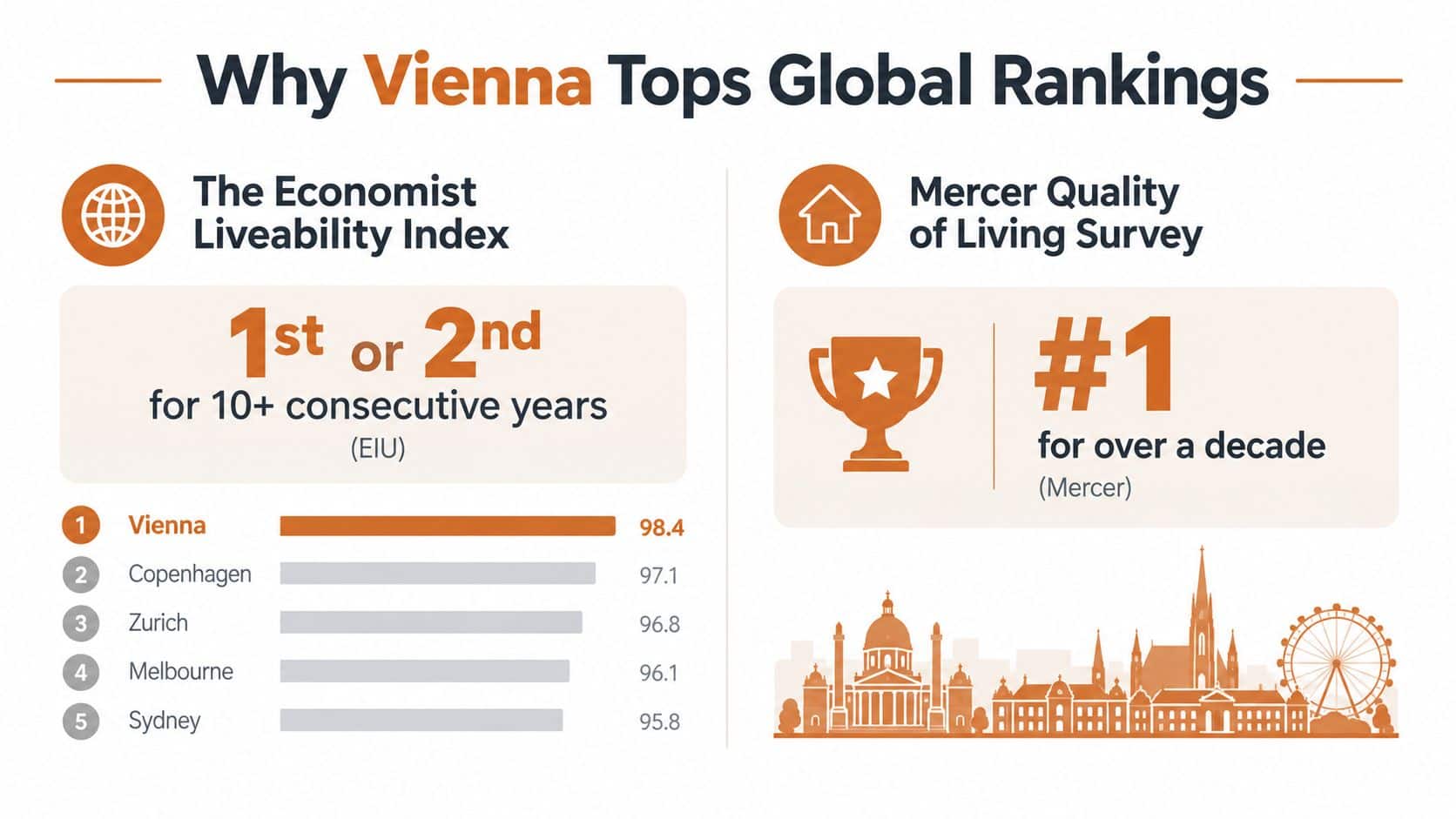
Vienna scored 98.4 out of 100 in The Economist’s 2024 Global Liveability Index, taking first place among 173 cities. It then moved to second place in the following editions, which makes the useful question less “is Vienna the best city to live?” and more “does Vienna still offer the right kind of life for me?” Vienna’s official ranking summary gives the headline context, but it doesn’t tell you what it feels like to arrive alone, manage a London-sized budget, choose a district or get from the airport without making a daft decision.
I’ve based myself in Vienna and would recommend it strongly, with one condition: choose it for reliable everyday living, culture and comfort, not for constant nightlife or guaranteed sunshine. This guide cuts through the ranking language and looks at the practical trade-offs for UK visitors, students, remote workers and solo travellers.
Why Vienna Keeps Topping the Best City to Live Lists
Vienna’s reputation isn’t built on one lucky result. The city ranked first in The Economist’s Global Liveability Index in 2018, 2019, 2022, 2023 and 2024, then second in 2025 and 2026. In the 2024 edition, it scored 98.4 out of 100 and came first among 173 cities, a run that points to sustained performance rather than a temporary tourism campaign. The city’s official ranking record is unusually persuasive because the results repeat across years.
That matters to British travellers because Vienna offers something many European breaks don’t: a city that’s rewarding for a weekend but also comfortable enough for a longer stay. Its healthcare, education, infrastructure, culture and environmental performance support the polished surface. You can spend the morning in a grand museum, get across town without a taxi and still find a quiet neighbourhood café in the afternoon.
What the ranking means for a visitor
A liveability index isn’t a promise that every street will suit you. It measures the systems underneath daily life. That distinction is important if you’re deciding between a quick city break and a month working abroad.
The European Commission’s quality-of-life survey adds a resident perspective. Ninety-five per cent of respondents in Vienna rated their city as a good place to live, placing it alongside Aalborg at the highest level recorded in that survey’s comparison. The European Commission report uses 2019 survey data published in its 2020 results, so treat it as a strong comparative benchmark, not a live pulse check.
For a short stay, that translates into less friction. For a longer stay, it means your budget buys access to functioning services, manageable journeys and a city that doesn’t demand constant logistical effort.
What the Liveability Rankings Actually Measure
The Economist Intelligence Unit’s index doesn’t judge Vienna on beauty alone. It uses 30 indicators across stability, healthcare, culture and environment, education and infrastructure, so the result reflects the machinery of urban life as much as the postcard centre. The EIU’s 2024 explanation is useful because it shows why healthcare, education and infrastructure carry so much weight.
The categories behind the headline
The five areas work roughly like this:
Stability: How secure and orderly daily life feels.
Healthcare: Access, quality and availability of medical services.
Culture and environment: Museums, food, recreation, climate and environmental conditions.
Education: The quality and availability of education.
Infrastructure: Transport, utilities, housing-related systems and communications.
Mercer’s approach is broader in a different direction. Its quality-of-living work considers socio-cultural, economic and political conditions alongside the natural environment. For a traveller, that means the two frameworks overlap but don’t answer precisely the same question. EIU is particularly useful for comparing urban systems, while Mercer’s lens is closer to the conditions an international worker might assess before relocating.
Category
Vienna
Zurich
Geneva
Copenhagen
Stability
Very strong, with the recent ranking pressure concentrated here
Strong
Strong
Strong
Healthcare
Consistently top-tier
Very strong
Very strong
Very strong
Culture and environment
Strong cultural depth and urban comfort
Strong
Strong
Strong
Education
Repeatedly high-performing
Strong
Strong
Strong
Infrastructure
Consistently high-performing
Strong
Strong
Strong
Why Vienna slipped from first to second
The recent change doesn't mean Vienna's hospitals, trams or museums suddenly became worse. The EIU's 2025 ranking placed Vienna at 97.1 points, tied with Zurich and behind Copenhagen, while the 2026 edition kept Vienna in second. The published explanation identifies stability as the main drag after terrorism scares in 2024 and 2025, rather than a collapse in healthcare or infrastructure. The EIU's 2026 ranking announcement provides that nuance.
My view is straightforward: this is a marginal ranking shift, not a meaningful deterioration in the visitor experience. If you're comparing cities for a move, it's sensible to examine how indices are constructed, including discussions of quality of life indices for fiscal policy, rather than treating a league table as a complete answer.
Vienna vs London for Travellers and Long Stays
Vienna wins the everyday comparison with London. The difference isn't that London lacks culture or energy. London is more commercially intense, more internationally connected and often better for ambitious English-only careers. Vienna asks less of you to live well.
A London versus Vienna comparison records an overall quality-of-life score of 194.59 for Vienna compared with 134.77 for London, alongside lower cost of living, a lower property-price-to-income ratio and much shorter commute times. The same comparison lists commute times at 22.35 for Vienna and 44.77 for London, with Vienna also ahead on safety and healthcare. The London and Vienna comparison is best used directionally, because comparison databases change, but the pattern is clear.
Where Vienna genuinely wins
You'll notice the difference first in movement. Vienna's compact centre, U-Bahn, trams and reliable connections make it possible to build a day around walking and public transport rather than planning around traffic. That leaves more energy for galleries, cafés and evening plans.
Housing is another major advantage, although Vienna isn't a fantasy budget city. The comparison's property-price-to-income ratio is 15.19 in Vienna against 18.58 in London, while its cost-of-living index is 61.35 against 76.07. A detailed guide to London affordability helps explain why British visitors often feel London's housing burden even when headline salaries are higher.
Expense
Vienna
London
Overall quality-of-life score
194.59
134.77
Cost-of-living index
61.35
76.07
Property-price-to-income ratio
15.19
18.58
Commute-time index
22.35
44.77
London still has the edge for direct flight choice, English-only workplaces, international business networks and salary ceilings in some sectors. Vienna suits the person who values time, order and manageable urban routines over maximum career velocity. For a weekend, that means fewer wasted hours. For a long stay, it can mean a noticeably calmer baseline.
Realistic Costs for UK Visitors in Vienna
Vienna is affordable compared with London, but calling it a budget city without explaining housing is misleading. UK-facing cost data places Austria at about £1,676 a month for one person in 2026, with Vienna around £1,900.63, while an average central one-bedroom rent is around £753. Wise's Austria cost guide makes the key point clearly: Vienna can be materially cheaper than London for housing, but central accommodation still creates serious pressure.
Separate the daily budget from the housing budget
For a short solo trip, your main costs are accommodation, food, transport and attractions. For a student or remote worker, rent changes the entire calculation. Shared accommodation in outer districts can make Vienna manageable, while a central studio can absorb the budget before groceries and social plans begin.
Be careful with precise prices copied from old relocation guides. Supermarkets such as Hofer, Lidl and Billa give you different levels of value, and local cafés vary sharply by district. Buy breakfast supplies and lunch ingredients from a supermarket, then spend selectively on a proper schnitzel, coffee or evening meal.
Expense
Student budget
Working traveller budget
Housing
Keep rent low through sharing and a less central district
Allow the largest share for a private or better-located base
Food
Cook often, use Hofer or Lidl, reserve restaurants for occasional treats
Mix supermarket meals with cafés, lunch menus and dinners
Transport
Buy the pass that matches the length of your stay
Use public transport rather than taxis for routine journeys
Mobile data
Choose a local prepaid or rolling plan
Choose a plan with enough data for work and navigation
Leisure
Prioritise parks, neighbourhood walks and free cultural listings
Add museums, concerts and paid experiences selectively
Some costs arrive before your first proper week. Rent deposits can require three months’ rent upfront, an agency can charge a 10 per cent fee, and longer-term residents may encounter the Austrian broadcasting contribution system formerly associated with GIS. Confirm the current rules for your housing contract and residency status rather than assuming a travel blog has it right.
Budget rule: Vienna rewards people who pay for the experiences they care about and stop paying for convenience they don’t need.
Don’t treat the central district as the default. A well-connected room outside the most tourist-heavy streets can give you better value and a more useful daily routine. For a short stay, location near a tram or U-Bahn stop often matters more than being beside the cathedral.
Best Neighbourhoods for Every Type of Traveller
Vienna’s district numbers make choosing a base easier once you understand the logic. The 1st district is the historic centre, while the surrounding districts offer different mixtures of local life, green space, nightlife and housing value.
Match the district to your habits
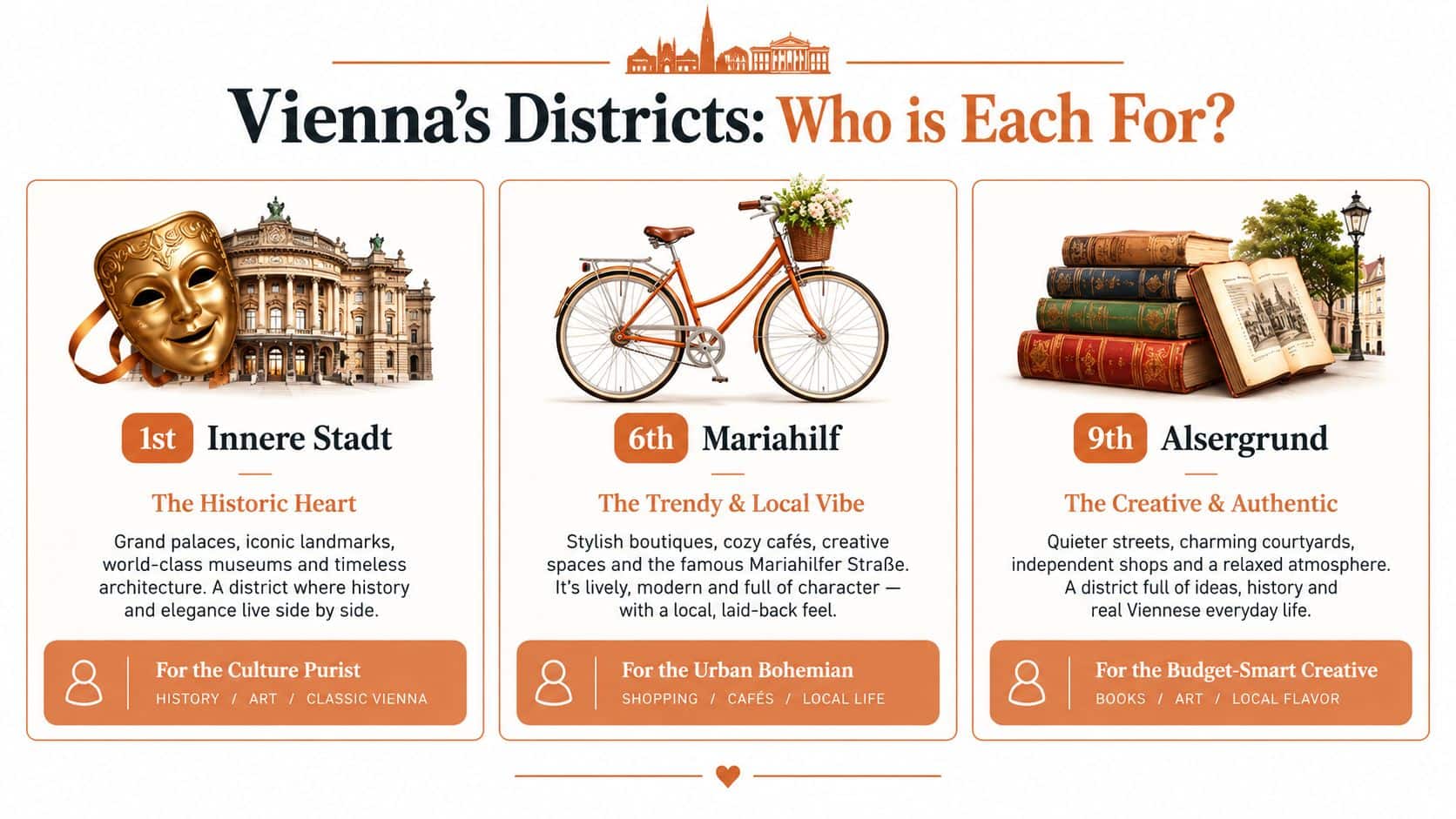
Innere Stadt, the 1st: Choose it if you want grand architecture and the shortest walk to major sights. You’ll pay for that convenience and tolerate heavier visitor traffic, so it’s better for a culture-first weekend than a quiet month.
Leopoldstadt, the 2nd: This is my pick for digital nomads who want parks, independent food spots and a less polished atmosphere across the canal. The Prater gives you breathing room, while the centre remains easy to reach.
Wieden, the 4th: A strong choice for students, artists and travellers who like cafés, markets and a younger local rhythm. It sits close to the centre without feeling like a sightseeing set.
Mariahilf, the 6th: Select it for shopping, restaurants and transport access. It’s lively and convenient, though some streets are busier and less restful than the residential districts.
The districts I’d shortlist for a longer stay
Neubau, the 7th, suits backpackers and creative travellers who want independent cafés, galleries and evening energy. It’s more stylish than tranquil.
Alsergrund, the 9th, works well for academics and students. The university presence brings affordable food, bookish corners and a residential feel near the central districts.
Margareten, the 5th, is the sensible middle ground. It feels more local than the centre, remains well connected and can offer better value than neighbouring districts.
Favoriten, the 10th, is where I’d look first for a lower-cost long stay, but I’d inspect the exact street before committing. It’s multicultural and practical, while some corners feel less comfortable late at night.
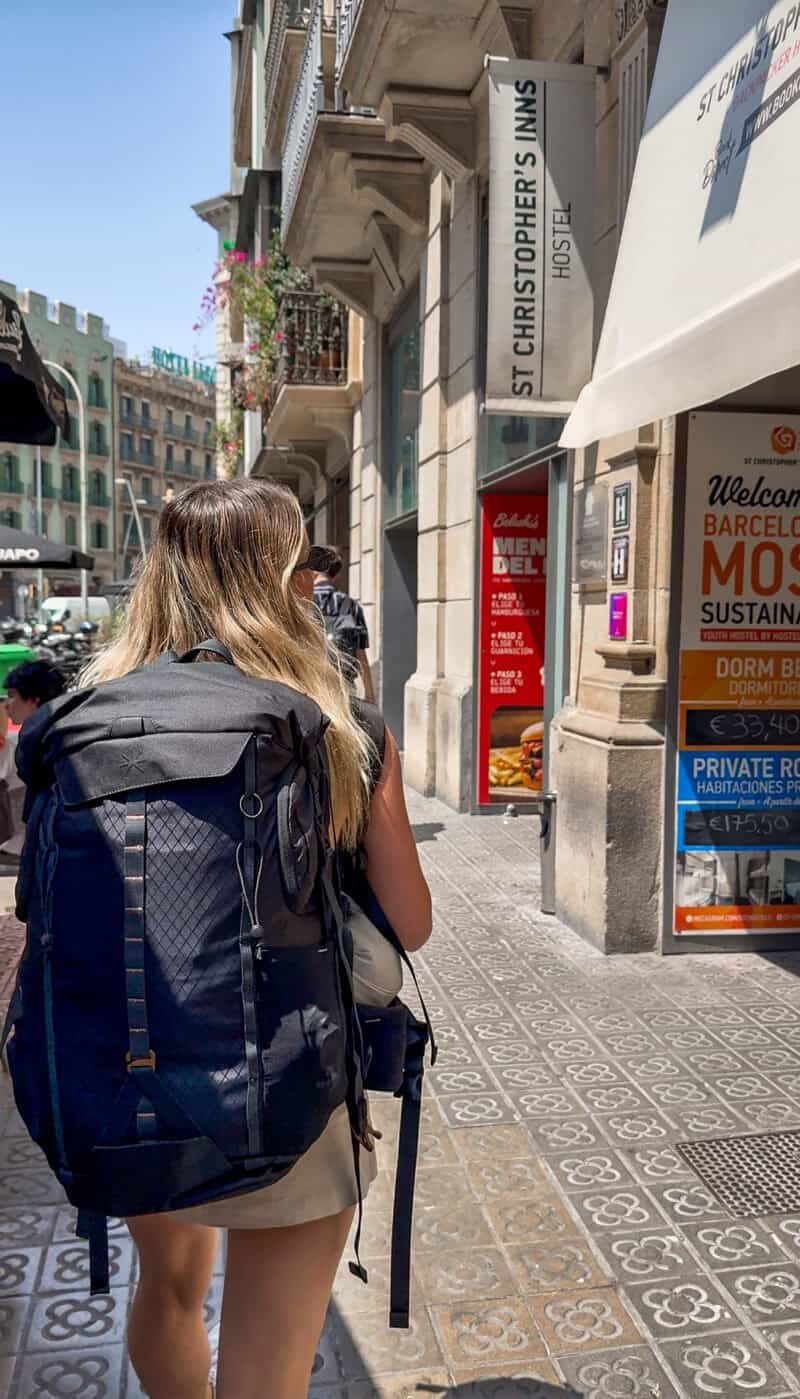
Families should consider Donaustadt if they value open space and a quieter base. Hikers may prefer Hütteldorf, with easier access towards the Vienna Woods. For a central, budget-friendly hostel base, St Christopher’s Vienna in Margareten offers an on-site bar and straightforward tram connections. See this guide to things to do in Vienna before choosing the district around your itinerary.
Getting In and Around Vienna
Vienna International Airport is refreshingly simple to use. The official tourism information says Railjet and Intercity services run twice an hour to Vienna Central Station in about 15 minutes, or to Vienna Meidling in just under half an hour. Vienna’s airport transfer guidance is the page I’d check before travelling because services and ticketing can change.
Choose your airport transfer
The City Airport Train is the premium, simple option. It runs daily from 05:30 to 23:37, costs €14.90 one way or €24.90 return, and gives you a direct city connection. Vienna Airport’s CAT information has the current timetable and fare.
Railjet and Intercity trains are fast choices if you’re heading towards the main station. The S-Bahn S7 and regional services are usually the sensible choice when you want to keep the transfer cost down, but check the route to your exact district before boarding.
Use the city network intelligently
Vienna’s U-Bahn, trams, buses and night lines cover the city well. Don’t buy a separate single ticket for every movement if you’re planning a full day of sightseeing. Check whether a 24-hour or longer pass fits your itinerary, and remember that paper tickets may need validation before use.
For a first day, I’d keep the route simple:
Travel into the city and leave your luggage at your accommodation.
Take the U-Bahn to Stephansplatz.
Walk through the historic centre and along the Ringstraße.
Continue by tram towards the Prater for a change of pace.
Finish with drinks or dinner around Neubau.
Citybike Wien is useful for short urban journeys, particularly around flatter central routes. I wouldn’t cycle everywhere on your first afternoon, though. Learn the tram stops and ticket rules first, then use a bike when you know the city’s rhythm.
Smart Tips for Short and Long Stays
My first three days in Vienna would be deliberately unambitious. The city rewards walking, and you’ll understand it faster by repeating a few routes than by ticking off every attraction in a rush.
Hour one to seventy-two
Start by learning your immediate neighbourhood. Find the nearest supermarket, tram stop, bakery and cashless café. Then do one central walk, one museum and one unplanned wander.
For a solo traveller, a hostel near the Hauptbahnhof can remove a lot of arrival friction. You get a transport hub nearby, somewhere social to meet people and an easier departure day. If you’re staying longer, Mariahilf works well for digital nomads who want cafés and central access, while a shared flat in an outer district can make more sense for an Erasmus student.
Week one
Buy the Wiener Linien ticket that fits your actual stay rather than automatically choosing the most expensive option. Vienna’s annual ticket is famously attractive for residents, but short-term visitors should compare the available durations against their number of travel days.
Time museums for quieter periods and check opening hours before walking across town. The Wien Museum on Karlsplatz is closed on Mondays, opens 09:00 to 18:00 on Tuesday, Wednesday and Friday, 09:00 to 21:00 on Thursday, and 10:00 to 18:00 at weekends. Its visitor information makes it an easy cultural stop to plan around.
Use Billa, Hofer and Lidl for supplies, look for a Mittagsmenü at lunchtime and drink tap water instead of buying bottles. Vienna’s water is excellent, and the Hochstrahlbrunnen fountains make a useful refill point when you’re out walking.
Month one and beyond
By the time you’re staying a month, stop behaving like a visitor every day. Use free events calendars, reserve free walking tours, join a recurring class or meetup and build a shortlist of cafés where staff recognise you.
The biggest saving comes from designing your routine around transport and neighbourhoods. A supermarket breakfast, a filling lunch menu and a carefully chosen evening experience will leave room for concerts and museums without making every day expensive. This guide to the best time to visit Vienna is useful when planning around weather, cultural events and crowd levels.
Is Vienna Really the Best City to Live for You
Vienna deserves the title for people who value structure, culture and low-friction daily life. The repeated EIU results, the 98.4 out of 100 score in 2024 and the European Commission’s 95 per cent resident approval all support that conclusion, with the relevant context covered in the earlier sections. The later move from first to second reflects a stability-related score change, not the collapse of the systems that make the city comfortable.
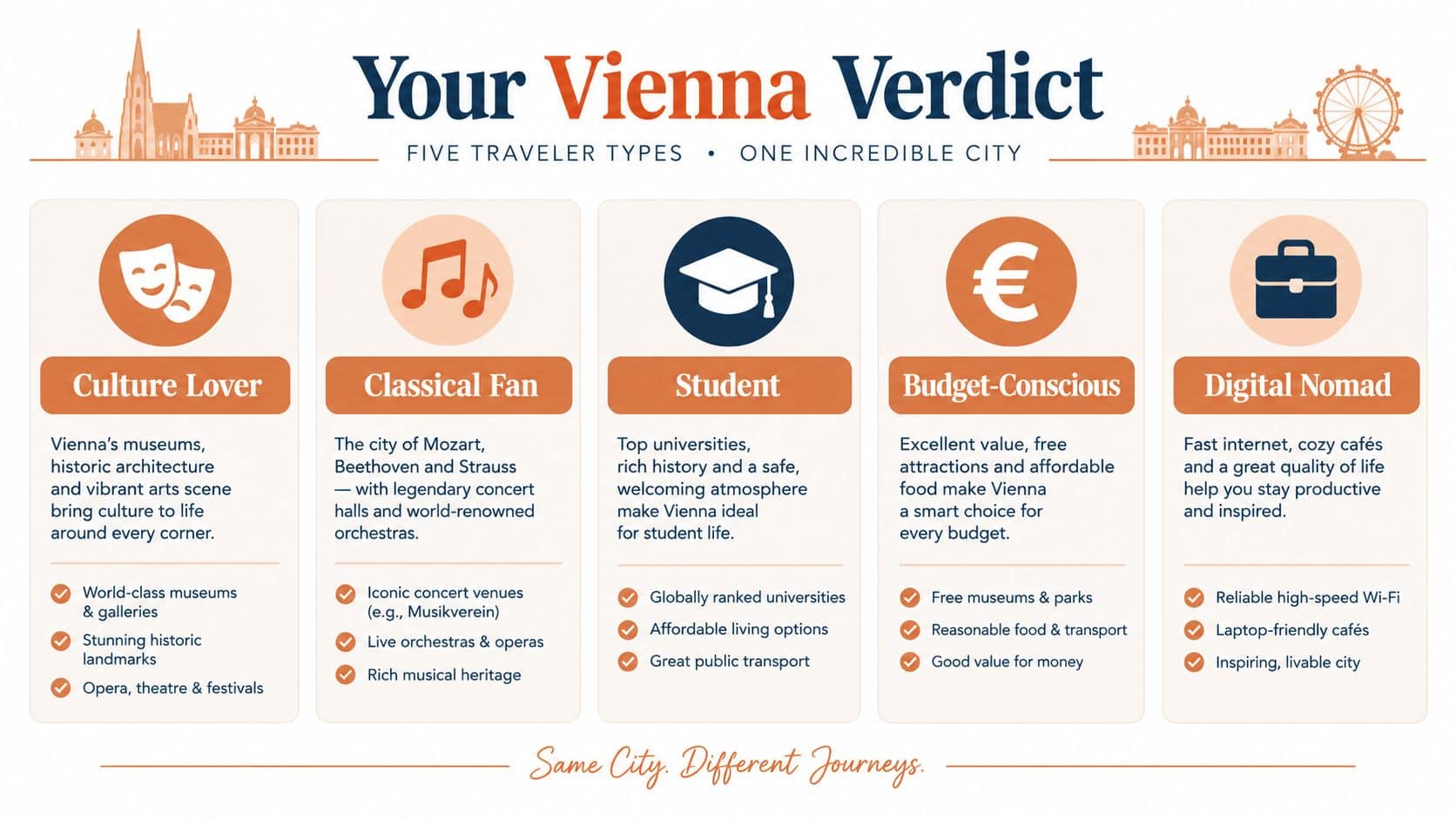
Choose Vienna if you’re a culture lover who wants museums and architecture within easy reach, a classical music fan who enjoys a city built around performance, a student who values reliable transport and public services, or a remote worker who wants a dependable base. Budget-conscious travellers can make it work by controlling housing and eating costs, rather than assuming the whole city is inexpensive.
I wouldn’t choose Vienna if beaches, constant heat or intense nightlife are your main priorities. London remains stronger for some English-language careers, global connections and sheer variety, while other European cities may suit people who want a smaller or more overtly party-focused scene.
My verdict is clear: Vienna is one of Europe’s best cities to live in, and probably the best fit for travellers who want a beautiful city that still functions on an ordinary Tuesday. Visit for several days first, stay in a district that matches your habits, then decide whether the calm, cultured routine is something you want to keep.
St Christopher’s offers a social, budget-friendly base in Vienna with central transport connections, clean rooms, an on-site bar and practical facilities for solo travellers. If you want to test whether Vienna really is your best city to live before committing to a longer stay, visit St Christopher’s and plan your base around the kind of traveller you are.
Our direct rates are guaranteed to be at least 5% cheaper than anywhere else online, with a free drink on arrival, 25% off food at the bar, and free cancellation options available.