Are Youth Hostels Safe in Europe? a Traveller’s Guide
Hayley
Yes, European youth hostels are generally safe for budget and solo travellers, and the most common risks are petty theft...
Share This Article
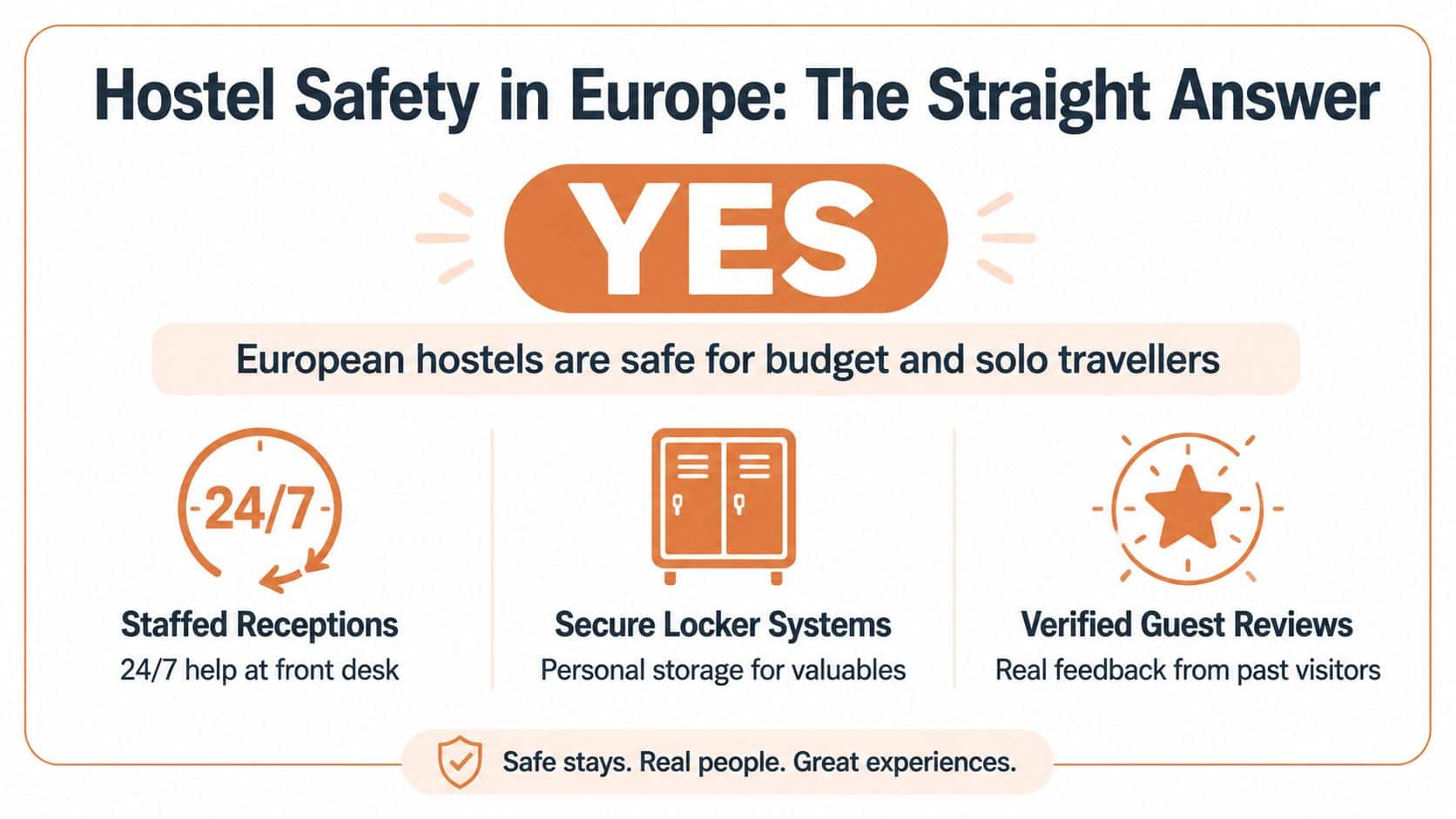
Yes, European youth hostels are generally safe for budget and solo travellers, and the most common risks are petty theft and shared-space discomfort rather than violent crime.
You’re probably asking because you’ve found a well-located dorm, noticed the price is far below a private hotel room, and then pictured arriving alone after dark with your passport in a locker and strangers sleeping nearby. That anxiety is normal, particularly for solo women. Recent UK and EU survey coverage found that 100% of UK women aged 18 to 24 worried about personal safety when travelling alone, while 40% said they didn’t feel safe at all after dark (survey coverage of solo female traveller safety).
The honest answer is that the hostel building is usually only one part of the calculation. You need to judge the property, the people sharing it, and the route between the station, the hostel and your evening plans.
The Straight Answer to Hostel Safety in Europe
Yes, most European youth hostels are safe, provided you choose a properly managed property and use the security systems it provides. The main practical risk is opportunistic theft from an unsecured bag or unattended bed space. The bigger daily nuisance is usually not crime at all, but snoring, late arrivals, bright phone screens, cramped bathrooms and the occasional roommate who treats a dorm like their private dressing room.
Violent incidents inside hostels remain uncommon in ordinary travel experience. That doesn’t mean you should ignore warning signs, but it does mean you shouldn’t treat a dormitory as a dangerous environment just because you’re sharing it with strangers.
Separate the two kinds of safety
Structural safety is the building’s responsibility. Look for controlled entry, working locks, individual lockers, clear fire exits, smoke detection and staff who can help when something goes wrong. Interpersonal safety is about the room and the people in it. A smaller dorm, a female-only room or a bed with a privacy curtain can make shared accommodation feel far more manageable.
Choose the room that matches how you sleep and travel. If you’re a light sleeper, a large party-oriented dorm may be a poor decision even if the building is secure. If you’re travelling alone and feel uneasy about mixed accommodation, a female-only dorm can provide extra comfort without cutting you off from the communal areas.
Practical rule: A secure hostel should make the basics obvious. You shouldn’t have to guess where your locker is, how to enter after dark or what to do if you feel uncomfortable.
The building is rarely the whole story. A hostel beside a busy, well-lit transport route can be a sensible choice, while a cheaper property requiring a long walk through unfamiliar streets can create more exposure before you even reach reception. The rest of this guide focuses on that complete pattern, from theft prevention and fire safety to late arrivals, night transport and trusting your judgement.
What a Typical European Hostel Stay Really Feels Like
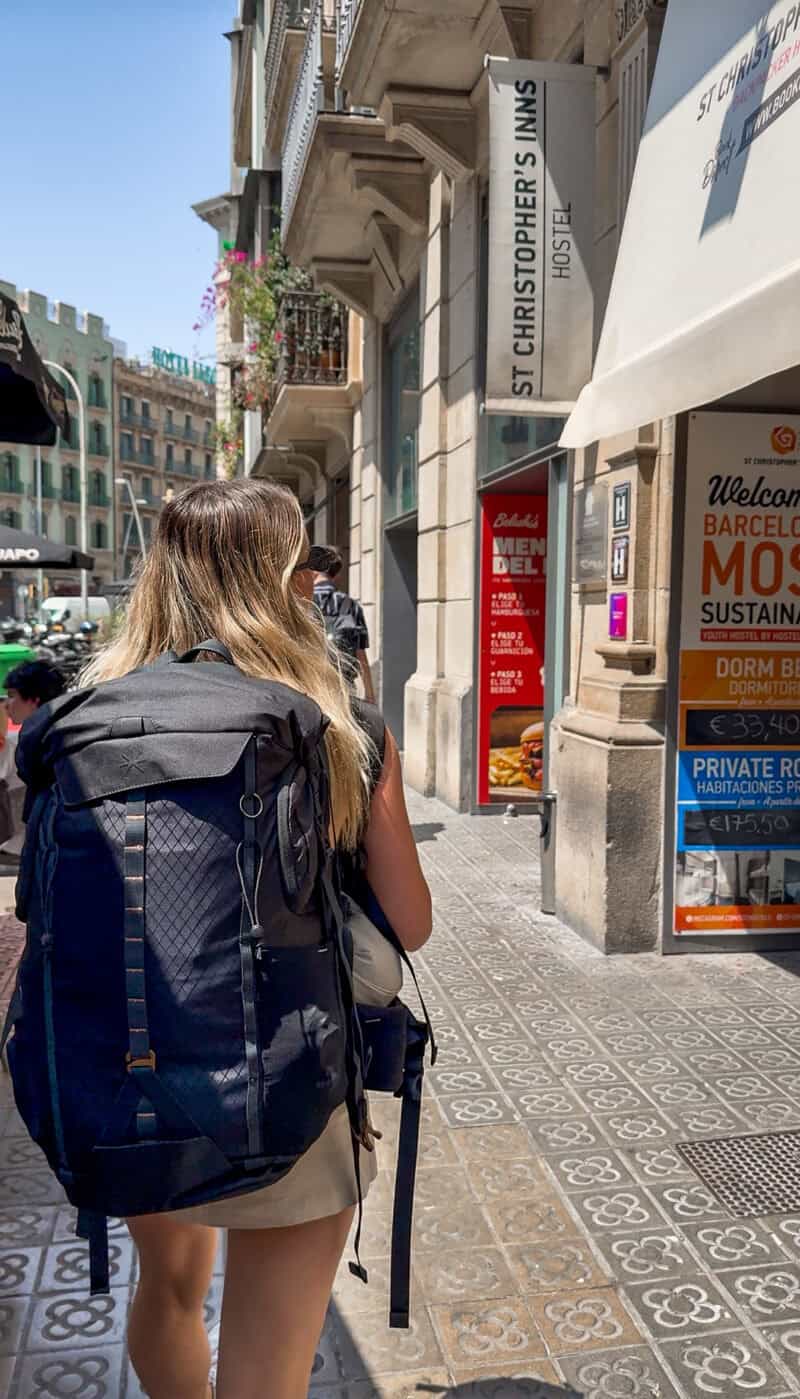
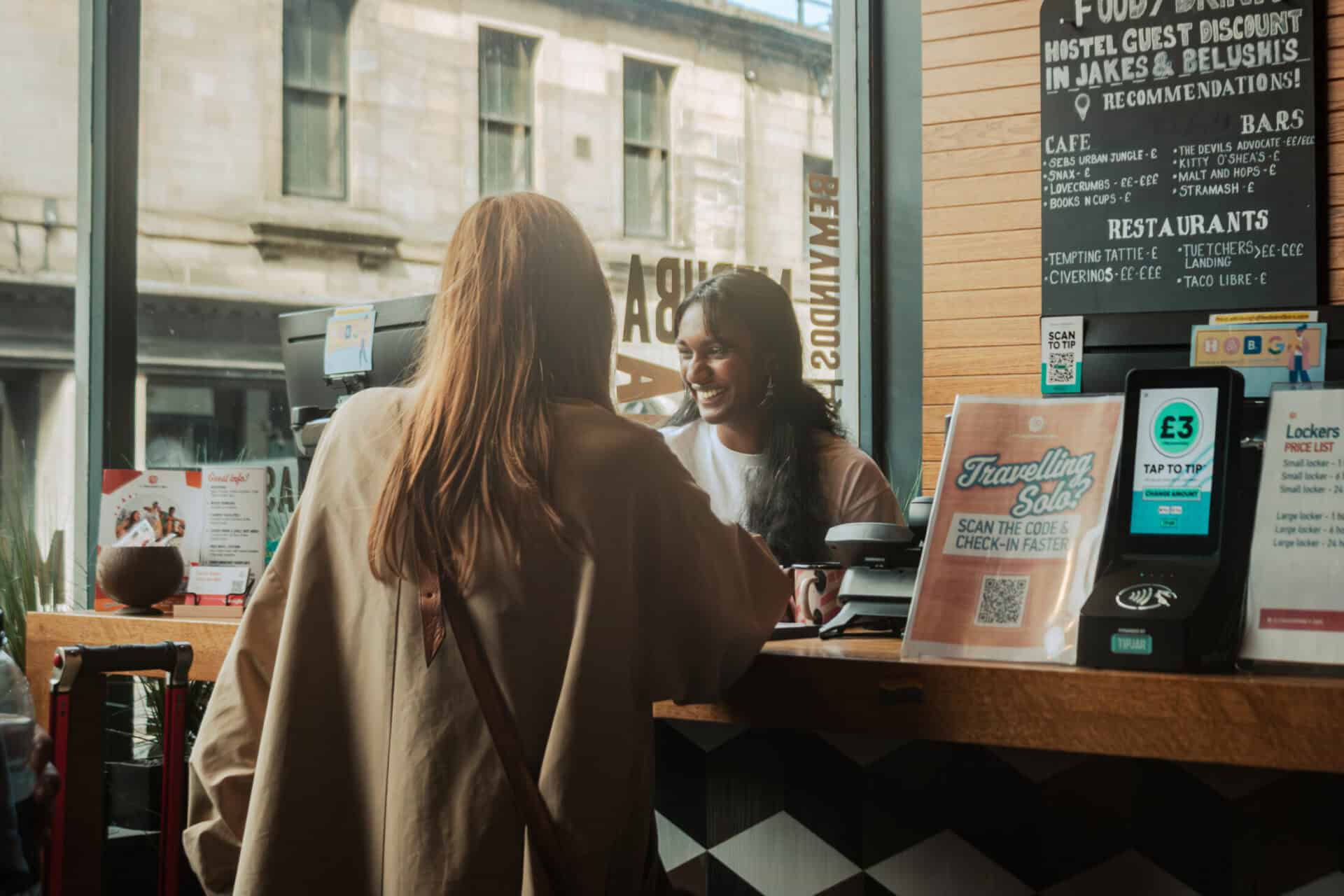
You arrive with one hand on your suitcase and the other checking the address on your phone. The entrance is busy, but not chaotic. Someone is making toast in the kitchen, a couple are comparing train routes near the noticeboard, and the receptionist asks for your details before explaining the room, locker and access arrangements.
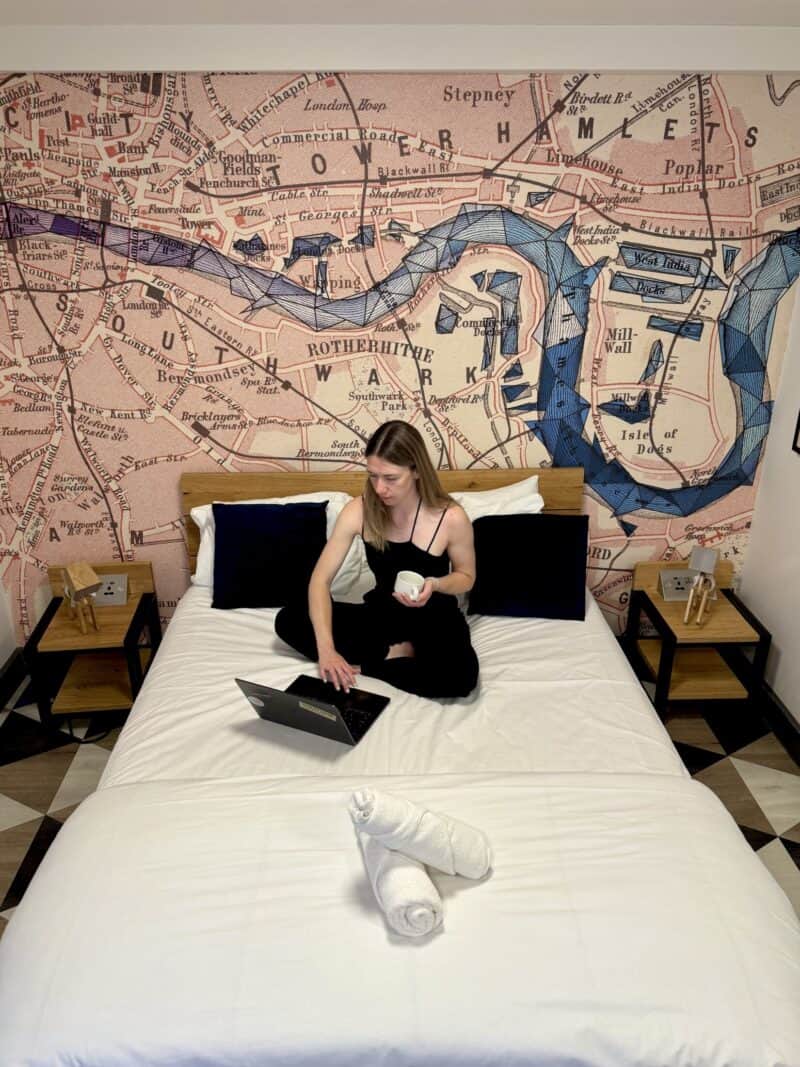
The key card beeps at the dorm entrance. Inside, you find bunk curtains, reading lights and a locker beneath or beside the bed. I’d ask to see the locker before unpacking, particularly if I’d brought a laptop or camera. If it takes a padlock, I’d use my own rather than assuming the hostel has one available.
The small choices make the difference
I prefer a bed that feels easy to reach without climbing over someone’s luggage, but I don’t treat a particular bunk position as a security guarantee. Near the door can mean convenient access and more movement. Farther from the bathroom can mean less disturbance. The sensible choice depends on whether you value sleep, privacy or a quick exit route.
The passport goes into the locked bag or locker, not under a pillow where it can slide into the gap between mattresses. The phone stays close while charging, and everything else gets organised before I leave the room. That routine removes most of the temptation created by loose valuables.
For a first-time guest, the social side can be surprisingly ordinary. One roommate may forget their padlock and ask reception for help. Another may snore loudly enough to make earplugs seem like essential equipment. Someone else may invite you to join a group heading out for dinner, which is often the moment a nervous solo arrival starts feeling like a holiday.
A practical first-hostel walkthrough is covered in this guide to staying in hostels for the first time. The aim isn’t to eliminate every minor irritation. It’s to know which problems are manageable, and to recognise the difference between an awkward dorm and a genuine safety issue.
Security Features That Matter and Which to Look For
Hostel security features aren’t equally valuable. A glossy description mentioning cameras means little if the entrance is open to anyone, lockers are too small for your belongings and no staff member answers the desk at night.
Rank the protection, not the marketing
Security feature
What it actually does
Effectiveness for solo travellers
Individual locker
Keeps passports, cash and electronics away from casual access
High, if it’s large enough and can be securely locked
Controlled key-card entry
Limits access to registered guests and allows lost cards to be cancelled
High, particularly at the main entrance and dorm doors
Reception with night support
Gives you a person to contact during disputes, late arrivals and emergencies
High, provided the stated hours are genuine
CCTV in common areas
Helps deter and review activity around entrances, corridors and storage areas
Moderate, useful as a supporting control rather than a replacement for staff
Luggage storage
Keeps bags in a designated area instead of scattered around reception or dorms
Moderate, depending on access control
Female-only dorm
Provides a room arrangement some women find more comfortable and predictable
Personal, valuable for comfort but not a substitute for locks
Clear, well-lit corridors
Improves visibility and makes movement through the building easier at night
Moderate, especially for late returns
Lockable bathroom stalls
Adds privacy and reduces discomfort in shared facilities
Comfort-focused, rather than a theft-control measure
Bring a small personal padlock unless the property confirms that its lockers use a built-in code or lock. A locker that can’t fit your main bag is still useful for a passport, wallet and electronics, but you’ll need a separate plan for larger luggage.
CCTV should cover entrances, reception and other shared areas, never dorm beds or bathrooms. A front desk that looks staffed at breakfast but has no clear night contact is not the same as continuous support.
For a property-specific overview of beds, lockers, luggage storage and access arrangements, read the St Christopher’s hostel amenities guide. Judge every feature by the problem it solves, not by how prominently it appears in the listing.
Smart Questions to Ask Before You Book
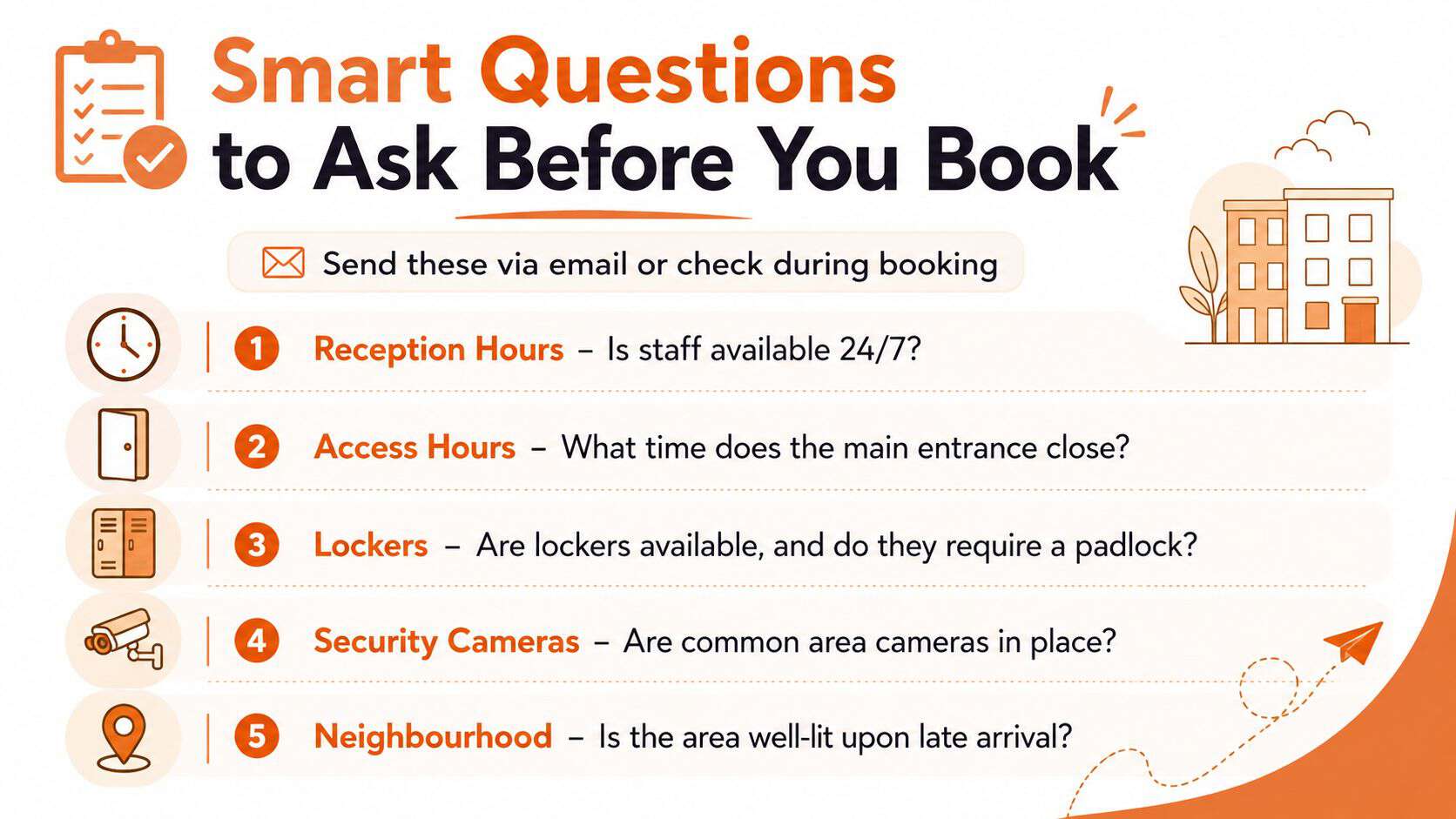
A hostel’s safety information should help you make a decision before you pay. If it doesn’t answer the practical questions below, send a message. A clear reply from staff tells you more than a vague line about “secure facilities”.
Ask about access first
Start with the arrival problem. Is reception staffed 24/7, or does support stop at a particular hour? What time does the main entrance lock? If your train arrives late, how will you enter, collect your key card and reach your room without standing outside?
Then check the locker. Ask whether it fits a full backpack or only small valuables, and whether you need to bring a padlock. A locker that protects your passport and phone may be enough for some travellers, but it won’t solve the problem of an exposed suitcase.
Ask about the room and neighbourhood
If you want a female-only dorm, ask whether it’s a separate room with controlled access or a curtained section inside a mixed space. Ask whether luggage storage is available before check-in and after check-out, and how guests access it.
For the surrounding area, ask which station or tram stop is most practical after dark. Staff can usually tell you whether the walk follows a busy main road or takes you through quiet side streets. You can also inspect the route on a map and street-level imagery before committing.
Use recent reviews to check whether staff respond quickly to problems, whether the property is showing wear and whether guests mention incidents or broken access systems. Don’t rely on a historic overall score if newer comments describe a different experience.
If the accommodation budget is your main concern, this guide to affordable accommodation in Europe offers a useful way to compare value without reducing the decision to the lowest bed price.
Why the Streets Around the Hostel Matter More Than You Think
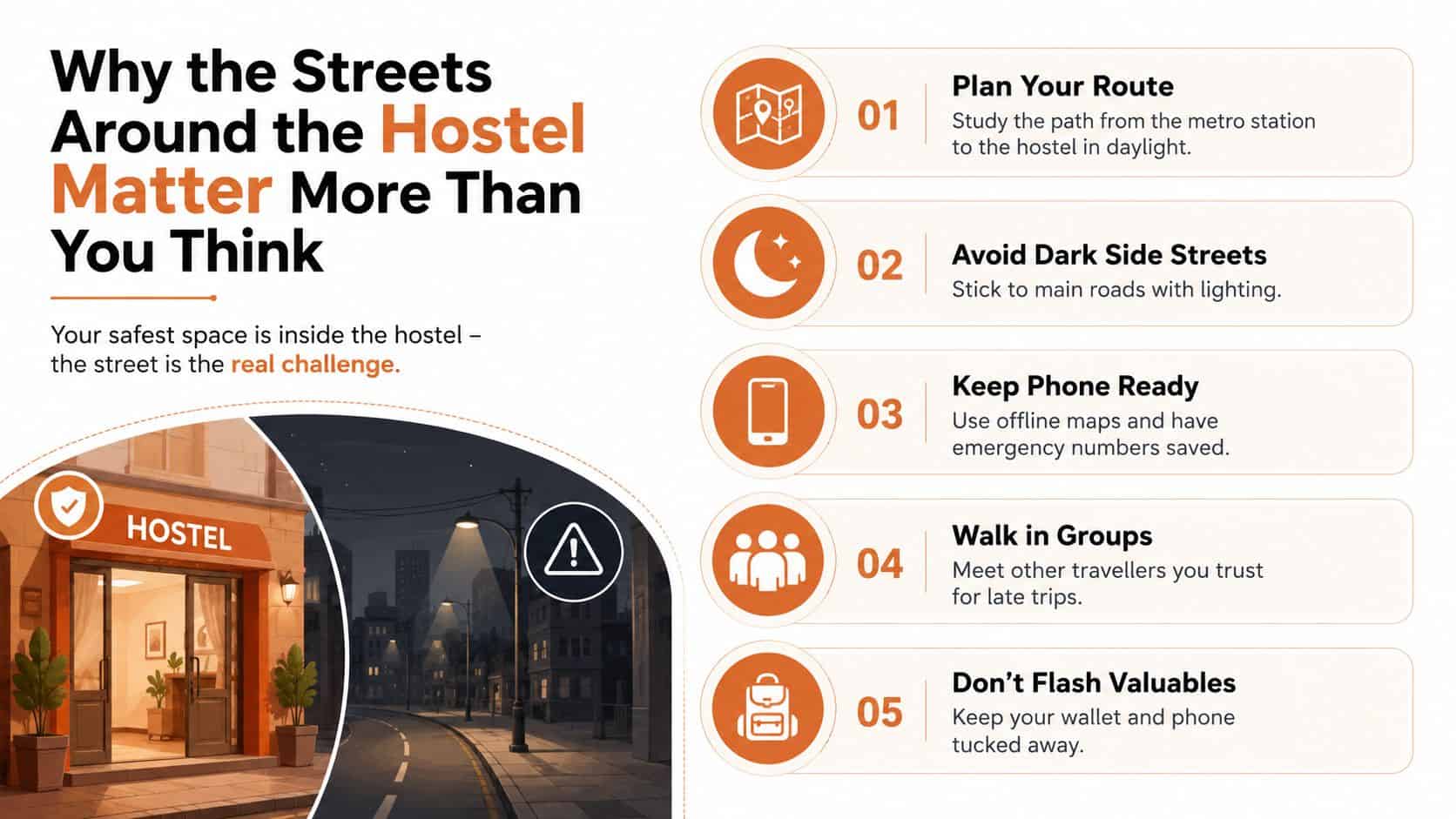
A hostel can have lockers, key-card entry and reception staff, yet the riskiest part of your evening may begin when you leave the station. You are carrying luggage, checking an unfamiliar map and walking through streets you do not know, often after dark. The building’s security cannot protect you there.
Choose a central, well-reviewed area near public transport, even if another hostel offers a cheaper bed farther out. A practical location shortens the walk, may reduce transport costs and makes late arrivals less stressful. Check how the route feels at the time you expect to use it, not only how close the hostel looks on a daytime map.
Tourist-heavy areas, including Barcelona’s Las Ramblas, Paris Metro routes and the surroundings of Rome’s Termini, can create opportunities for pickpocketing. Crowds, luggage and confusing platforms give thieves openings. UK figures also show a rise of 15% in theft from the person in the year ending March 2025 (UK police recorded crime data).
Build a safer travel pattern
Use these habits for arrivals and evenings:
Study the route: Check the walk from the station in daylight, then save an offline map.
Stay on main roads: Skip quiet shortcuts after dark, even when they appear faster.
Keep your phone discreet: Check directions before leaving the station and put the phone away while walking.
Join trusted travellers: If you feel comfortable with people from the hostel, walk back together after evening plans.
Keep valuables out of sight: Use a zipped cross-body bag and avoid displaying your wallet, passport or camera on crowded transport.
For solo women, the route to and from the hostel can shape the whole stay. Survey coverage found that 57% of women said 24/7 staff would make them feel safer (solo female traveller safety survey coverage). That preference is practical. A staffed arrival point gives you somewhere to ask for local advice, recover after a difficult journey and get help if the street outside feels wrong.
Call 112 in EU countries for emergency services, and save the hostel’s contact details before leaving home. If the planned route feels unsafe, change it. Pay for a taxi or wait in a staffed station rather than forcing yourself through an unfamiliar area to keep the journey cheap.
Fire Safety, Emergencies and Being Prepared
The risk people discuss least is often the one that deserves a quick check on arrival. In shared accommodation, a fire can spread concern quickly because guests may be asleep, unfamiliar with the building or unsure which corridor leads outside.
Official England and Wales data recorded 811 accidental fires, one fire fatality and 77 non-fatal casualties in the category “hotel, boarding houses, hostels etc.” The wider category of “communal living” recorded 2,126 accidental fires, eight fire fatalities and 191 non-fatal casualties (official fire and crime data tables). These categories aren’t a personal risk calculator, but they explain why evacuation arrangements deserve more attention than a quick glance at the room.
Spend ten minutes on arrival
Find the nearest marked exit and a second route if one exists. Check that the stairwell and corridor aren’t blocked by bags, and notice whether fire doors close properly. Make sure you can hear the alarm from the dorm, particularly if the property has a bar or communal area downstairs.
Fire and Rescue Services carried out 51,020 fire safety audits in England in the year ending March 2025, showing the scale of official inspection activity around public premises with sleeping risks (UK fire safety audit data). The average response time to primary fires in England was 9 minutes and 25 seconds in the year ending March 2026 (UK fire response data). That response begins after a call, so staff detection and immediate evacuation remain essential.
If you want a clearer explanation of landlord and operator duties, this guide to fire risk assessment regulations UK gives useful background. At the hostel, follow staff instructions, leave by the nearest safe exit and don’t return for luggage.
Keep 112 saved in your phone for emergencies in EU countries. Travel insurance can help with medical treatment, theft and disruption, while an EHIC or GHIC may support access to necessary state healthcare arrangements where applicable. For a longer stay, save your embassy’s contact details and share your itinerary with someone at home.
A Practical Safety Checklist for Your Trip
Use this as a quick reference before you leave, then repeat the short arrival check once you’ve got your key card. It covers the decisions that change your experience, rather than asking you to behave as though every hostel is a crisis zone.
Before booking
Read recent reviews: Look for current comments about staff response, room security, noise, cleanliness and the surrounding streets.
Check the locker dimensions: Confirm whether the locker is deep enough for your main bag. If the property specifies a locker over 40 cm deep, check whether that measurement refers to the usable internal space.
Confirm reception support: Ask whether staff are available 24/7 or whether there’s a clear emergency contact outside desk hours.
Review the location: Trace the route from the main station or late-night transport stop, paying attention to lighting and busy roads.
Check fire arrangements: Look for clear information about smoke detection, marked exits and evacuation procedures.
Before you pay
Ask about female-only dorms: Confirm whether the room is separate and who can access it.
Ask about CCTV: Find out whether cameras cover entrances, reception and luggage areas, not private rooms.
Ask about luggage storage: Check whether you can leave bags securely before check-in and after check-out.
Confirm late arrival instructions: Save door codes, reception details and the property’s emergency number offline.
During the first ten minutes
Walk the exit route: Locate the nearest fire exit and a backup route.
Check the alarm position: Identify the smoke detector and make sure nothing blocks it.
Test the locker setup: Confirm its size, lock mechanism and access.
Place valuables deliberately: Passport, cash, electronics and important medication should go into the locked storage system, not on the nightstand.
Notice the atmosphere: If a person, room or situation feels wrong, tell reception and request a change.
Every day
Carry a small padlock: Use it whenever the locker requires one.
Keep a low-value spare wallet: Carry only what you need for the day and keep your main documents secured.
Never leave your passport beside the bed: It belongs in the locker unless you’re actively using it.
Plan evening routes: Keep offline maps and emergency contacts ready before leaving.
Trust your judgement: Move away, contact staff or change accommodation if your instincts raise a genuine concern.
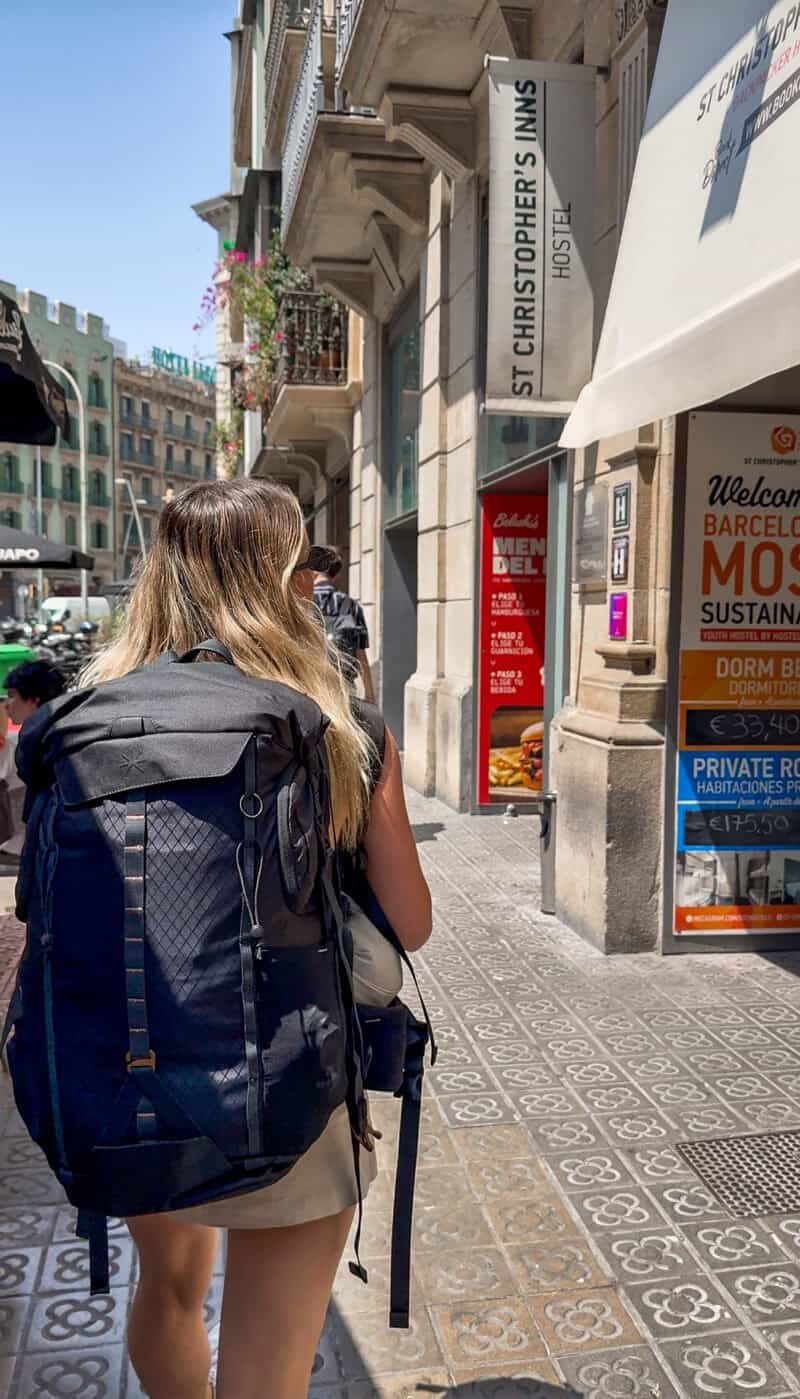
St Christopher’s offers central European bases with room lockers, luggage storage, key-card access and 24-hour reception at many properties, alongside social communal spaces and on-site bars where travellers can meet without heading back out alone. Visit St Christopher’s to check the locations, room arrangements and direct-booking benefits, including a welcome drink and 25% off food at the bars during your stay.
Our direct rates are guaranteed to be at least 5% cheaper than anywhere else online, with a free drink on arrival, 25% off food at the bar, and free cancellation options available.



























































_1783508733.jpg)