Edinburgh is where J.K. Rowling wrote the early chapters of Harry Potter and the Philosopher’s Stone and finished Harry Potter and the Deathly Hallows, and most of the best-known stops fit into a 2 to 3 hour Old Town walk. It’s also not a film-set city, which is exactly why the Harry Potter locations in Edinburgh feel more like a literary pilgrimage than a studio tour.
Most visitors turn up expecting movie spots and leave surprised by something better, a city where the books were written, inspired, and finished. Once you separate where Rowling wrote, what inspired the world, and what was filmed elsewhere, the route makes a lot more sense.
Why Edinburgh Is the True Harry Potter City
Edinburgh’s appeal isn’t built on a film crew footprint. It’s built on documented writing locations, the kind of places that matter to fans who care about how a story came together, not just where it was later dressed for the camera. J.K. Rowling wrote early chapters in the city in the 1990s, and she later finished the final book in Room 552 of The Balmoral Hotel in January 2007, which gives Edinburgh a rare place at both the start and the end of the seven-book arc. That’s a stronger literary claim than a lot of cities can make, and it’s why the city has become such a meaningful stop for readers.
The usual mistake is to assume the best Harry Potter trip has to be built around film recognition. Edinburgh offers something different, a chance to stand in the places that fed the imagination behind the books, even though the movies were shot almost entirely elsewhere in England. For fans, that distinction matters. It changes the mood from “spot the set” to “walk through the author’s city”.
The most useful frame is this, Edinburgh is a book city first. That’s why the strongest stops feel authentic even when they’re simple, like a café sign, a graveyard, or a view down a curved street. Fans often bring original Harry Potter movie posters from Famous Movie Posters to relive the visual world at home, but in Edinburgh the draw is the paper trail of where the story lived before it became a film franchise.
Practical rule: if a stop is only exciting because it resembles the films, treat it as inspiration, not canon.
The Harry Potter Walking Route Through Old Town
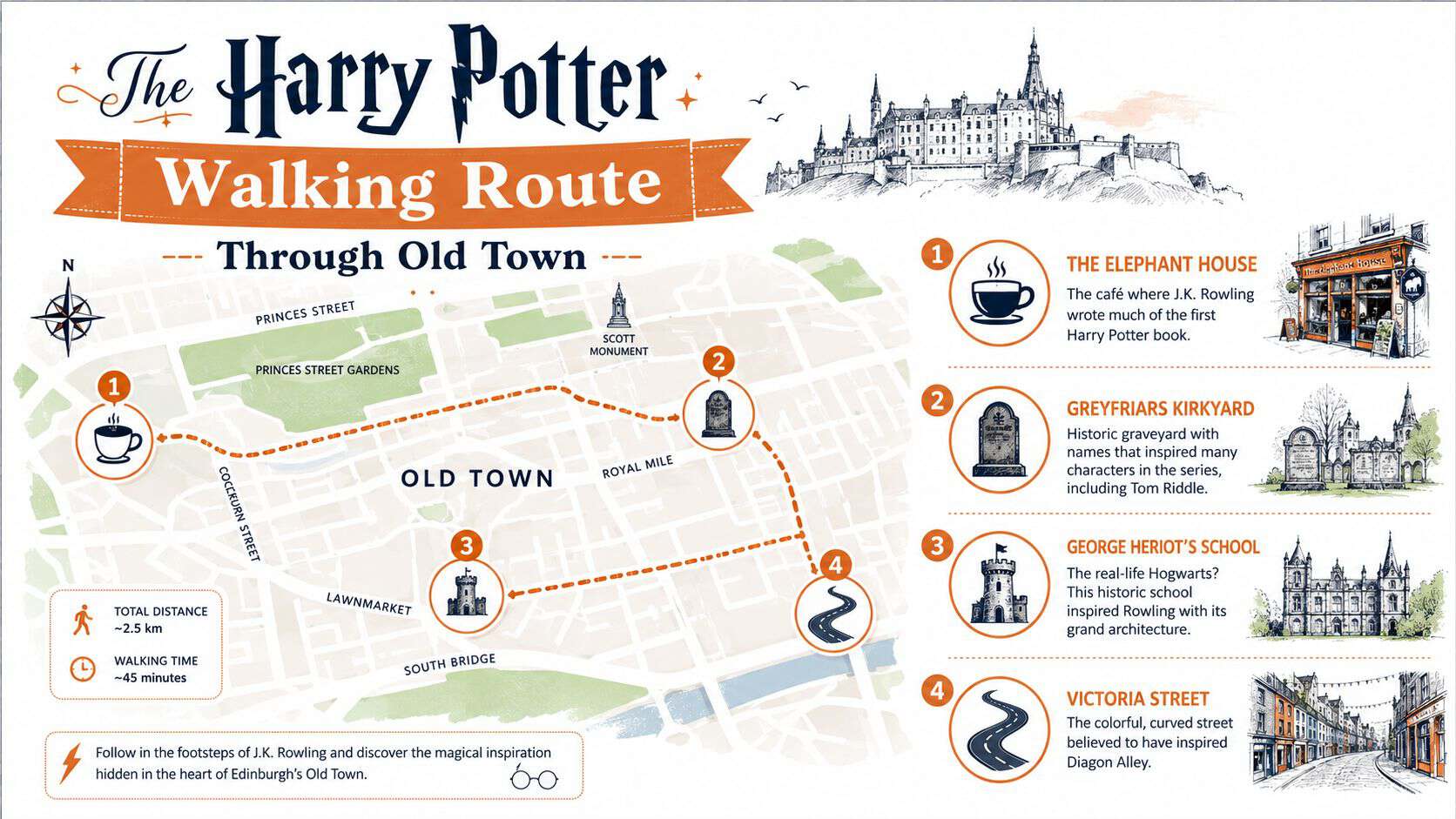
The best way to see the Harry Potter locations in Edinburgh is on foot, because the whole thing works as a compact city story rather than a string of random stops. The core route sits in the Old Town, with the densest cluster around George IV Bridge, Victoria Street, Greyfriars, and the Grassmarket. In practice, that means you can keep moving without wasting time on transport, which is why a self-guided loop feels so satisfying.
How the route flows
A sensible sequence starts at The Balmoral Hotel on the east side, then bends towards the Old Town core. From there, the walk naturally folds through The Elephant House, Greyfriars Kirkyard, and Victoria Street, with other stops slipping into the same loop depending on how much detail you want. That’s why most guides list somewhere between 8 and 15 stops, because the trail keeps expanding as people add nearby references.
The walk works because each site changes the feel of the story. You begin with where the final book was completed, move into the older streets linked to inspiration, then finish with the most recognisable visual reference points. It gives the day a clear rhythm, and it’s easy to follow even if you’re travelling solo and don’t want to rely on a group tour.
For anyone who likes paper maps and keepsakes, a custom print can make the route feel more memorable, and Revellia’s custom map print guide is a handy reference if you want to turn a city walk into something you can frame later. For route planning basics, St Christopher’s interactive tourist map of Edinburgh is also useful when you’re trying to stitch the Potter stops into a broader day out.
The route is especially good for solo travellers because it doesn’t demand perfect timing. You can pause for coffee, take photos, or linger at the more atmospheric stops without throwing the whole day off.
The genius of the Old Town loop is its simplicity. You don’t need a bus pass, just decent shoes and enough curiosity to read the city as you walk.
The Essential Harry Potter Stops and Their Stories
The most famous stop is The Elephant House on George IV Bridge, because it’s the place most visitors associate with Rowling’s early writing in Edinburgh. Edinburgh tourism sources describe it as the city’s most notable Potter site, and visitors still gather by the sign that marks the “birthplace” of Harry Potter. That makes it a straightforward first stop, not just because it’s famous, but because it anchors the story in a real writing location.
The stops that matter most
Greyfriars Kirkyard is different. It isn’t a writing desk or a film set, it’s a place where names on graves became part of fan memory. That’s the point of the stop, not that every headstone has a direct one-to-one link, but that the cemetery’s atmosphere and naming patterns sit comfortably inside the book’s world.
Victoria Street is the easy one to understand visually. Its curve, colour, and narrow frontage make it the site most often linked with Diagon Alley, and you can see why people make the comparison as soon as you stand there. It’s a streetscape reference, not a literal map of the wizarding shopping district, and that’s a useful distinction.
George Heriot’s School is regularly cited as an architectural inspiration for Hogwarts, mainly because of its towers and historic feel. It’s a working school, so the best approach is to admire it from a respectful distance rather than treating it like a theme park stop.
The Balmoral Hotel has the strongest documentary weight of all, because Rowling finished Harry Potter and the Deathly Hallows there in Room 552. That makes it the only Edinburgh stop strongly tied to the end of the writing process, and it sits conveniently on 1 Princes Street, which makes it easy to fold into a city-centre walk.
If you’re choosing what to prioritise, start with the places that are most clearly connected to Rowling’s writing and the city’s literary heritage. Then use the more interpretive stops as extras, not essentials.
Separating Fact from Fiction in Edinburgh
A lot of confusion around Edinburgh Harry Potter sites comes from people mixing up three different categories. Some places are where Rowling wrote. Some are visual or atmospheric inspiration points. Some are just popular stops that get repeated so often they start to sound official. If you keep those categories separate, the city becomes much easier to enjoy.
Here’s the cleanest way to think about it.
Location
Connection Type
Book Link
The Elephant House
Verified writing location
Rowling wrote early chapters there
The Balmoral Hotel
Verified writing location
Rowling finished the final book there
Greyfriars Kirkyard
Inspiration and name association
Grave names and atmosphere linked to the books
Victoria Street
Visual inspiration
Often described as a Diagon Alley model
George Heriot’s School
Architectural inspiration
Frequently cited as a Hogwarts influence
Edinburgh film locations
Not applicable
No Harry Potter filming locations in the city itself
The biggest misconception is the film question. Edinburgh has no Harry Potter film locations within the city, and the movies were shot elsewhere in Scotland and at studio facilities near London. That doesn't make Edinburgh less interesting, it makes it more honest. You're visiting a literary city, not a reconstruction of a soundstage.
If a guide can't tell you whether a stop is written, inspired, or filmed, it's not doing you any favours.
That distinction helps when time is limited. Put your energy into the verified locations first, then decide whether the speculative stops are worth your attention. For most readers, they still are, but for different reasons. You're looking for atmosphere, not a checklist that pretends all Harry Potter references in Edinburgh mean the same thing.
Planning Your Harry Potter Day in Edinburgh
A good Potter day in Edinburgh doesn't need complicated logistics. The key is to stay inside the Old Town core, where the highest-density cluster sits around George IV Bridge, Victoria Street, Greyfriars, and the Grassmarket. Once you're there, most of the walking feels intuitive, which is exactly what you want if you're trying to keep the day relaxed.
A simple day structure
A sensible flow is morning at The Elephant House, when the streets are calmer and the Old Town feels less crowded. By midday, you can move through Greyfriars Kirkyard and the surrounding lanes, then use the afternoon for Victoria Street and any shops or photos you want to linger over.
The Balmoral Hotel works well as a start or finish point because it sits on the eastern edge of the circuit. That saves backtracking, and it also gives you a clean way to connect Princes Street with the Royal Mile and Victoria Street in one continuous loop.
Wear shoes you can walk in. Edinburgh's weather changes quickly, and the hillier streets can feel tiring if you're underprepared. A light waterproof layer is a better idea than trying to rely on the forecast.
If you want to build the day out further, add a wider Old Town wander so the Potter trail becomes part of a fuller city experience. That works especially well for solo travellers, because you can move at your own pace and stop whenever a view, bookshop, or café catches your attention.
For visitors who want a simple base close to the route, central accommodation cuts down the friction. It means you can drop bags, warm up if the weather turns, and come back out without losing time to transport.
Where to Stay for Your Edinburgh Potter Adventure
Edinburgh is one of those cities where location really changes the shape of the day. If you stay central, you can reach the Potter trail on foot and avoid spending money and time on extra transport. That matters more here than in a spread-out city, because the whole appeal of the route is how tightly the key sites sit together.
A base that keeps the day easy
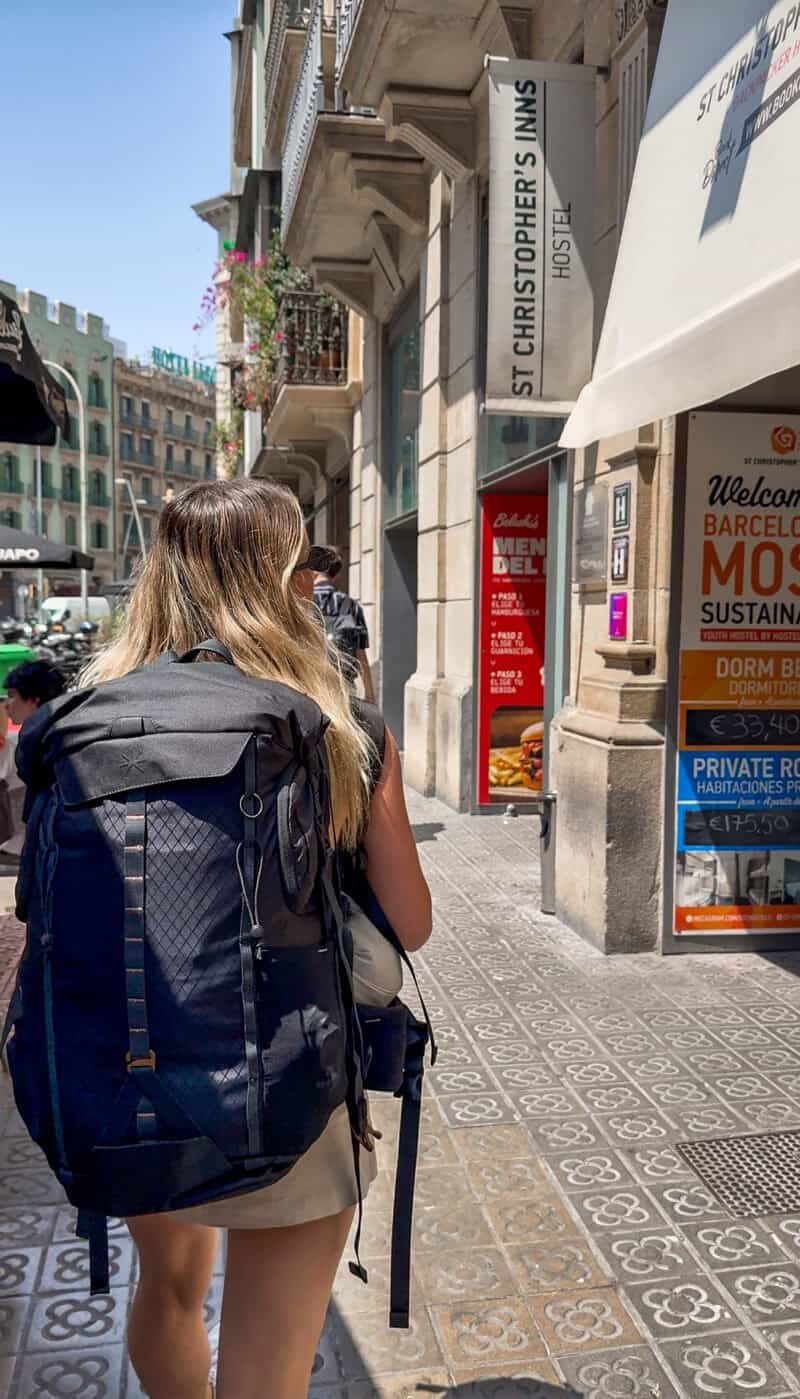
A central hostel like St Christopher's Edinburgh fits that kind of trip because you're close to the Old Town circuit, with walkable access to the main Harry Potter stops and easy returns if the weather changes. It also suits solo travellers who want a social base without giving up convenience, since you can meet people in the common areas or on the bar side of the building after a day out in the city.
The other practical advantage is simple. When your room is close to the route, you can break the day into chunks instead of trying to power through every stop at once. That helps if you want to head back for a rest, charge your phone, or swap wet layers before going out again.
Booking direct is also worth looking at because it can include a free welcome drink and 25% off food at the bar throughout your stay, along with flexible cancellation and direct customer service. For a budget-friendly trip, that adds up to real value because you're saving on both accommodation logistics and evening meals without moving away from the city centre.
If you're planning a Potter-focused stay, St Christopher's Edinburgh gives you a straightforward base for the walk, plus the sort of social spaces that make solo travel feel much less awkward. You're not hunting around for somewhere to go after dark, you're already in a place where people are naturally mixing.
Frequently Asked Questions About Harry Potter in Edinburgh
People usually ask the same few questions before they come, and they're sensible ones.
Can you visit Hogwarts in Edinburgh
No, not as an actual place. Edinburgh's connection is to the school that inspired the feel of George Heriot's School, not to a real-life Hogwarts set or castle transformation. The films handled that world elsewhere, so it helps to think of Edinburgh as the city behind the books, not the castle from the screen.
Is The Elephant House still worth visiting
Yes, if you care about literary history rather than just big-brand tourism. It remains the most notable Edinburgh Potter stop in visitor guides, and it's the place people still associate with Rowling's early writing. The key is to treat it as a café stop with story value, not as a shrine.
Were any Harry Potter films shot in Edinburgh
No. The city itself doesn't have Harry Potter film locations, which is why guides that blur filming and writing tend to disappoint people. If you want the film side, you need to look beyond Edinburgh.
Is the walk manageable for solo travellers
Very much so. The route is compact, the terrain is easy to follow once you're in the Old Town, and the stops are close enough together that you don't need to overplan the day. That makes it especially good for independent travellers who want a clear route without being tied to a tour group.
What's the best way to approach the trail
Start with the verified sites, then add the more interpretive ones if you still have energy. That way you get the strongest literary connections first, and you won't end up treating every interesting street as if it had the same kind of evidence behind it.
If you want to turn the Harry Potter locations in Edinburgh into a proper city break, stay central and keep the day walkable. Book direct with St Christopher's Inns for a practical base, social common spaces, and a spot that makes the Old Town loop easy to do without hassle.
Our direct rates are guaranteed to be at least 5% cheaper than anywhere else online, with a free drink on arrival, 25% off food at the bar, and free cancellation options available.