Your first solo trip is usually a strange mix of excitement and mild panic. You can already see yourself wandering...
Share This Article
Your first solo trip is usually a strange mix of excitement and mild panic. You can already see yourself wandering through Berlin, Amsterdam or Paris with complete freedom, but you’re also wondering who you’ll talk to at dinner, whether you’ve budgeted properly, and what happens if you get lost or just feel a bit lonely. That tension is normal. In fact, it’s part of what makes the first trip memorable.
Solo travel has become far more mainstream in the UK. One in four British holidaymakers are eager to travel alone within the next three years, and among 18 to 24 year olds the figure rises to 40%, according to a 2023 UK travel trends report covered by The Mirror. Even if you’re a bit older than that bracket, the same shift applies. More people are choosing independent trips because they want flexibility, space and a trip that feels like their own.
We’ve been helping first-time travellers for over 30 years, and the best advice is rarely about buying more gear or planning every hour. The smart moves are simpler than that. Choose accommodation that helps you meet people. Stay central so you don’t waste money and energy commuting. Give yourself structure without over-scheduling your days. Build a few habits that make you feel secure from the start.
These are the tips for first time solo travelers that make the trip easier, cheaper and more social.
1. Book Direct Accommodation to Maximise Your Budget
If you only change one thing before your trip, make it this. Book your accommodation direct.
Online travel agencies add commission, and that eats into the budget you could spend on meals, museum tickets or an extra night in a city you end up loving. With St Christopher’s, booking direct gives you practical value rather than vague “member perks”. You get at least a 5% saving, free cancellation with refunds, a free welcome drink, direct customer service and 25% off food during your stay.
Look at total trip value, not just the bed price
A solo trip is rarely just about the room. It’s also the coffee you grab downstairs because you’ve got an early train, the dinner you have before heading out, and the drink that helps you settle in and talk to people on night one.
That’s why direct booking works so well for solo travellers. You’re not splitting costs with a partner, and that matters because UK solo travellers spend an average of £1,147 per trip, which is 47% higher than the £781 per-person cost for couples, according to Radical Storage’s solo travel statistics. If you’re travelling alone, every smart saving counts more.
Practical rule: if two bookings look similar, choose the one that saves money across the whole stay, not just on the first night.
At St Christopher’s, that can mean your breakfast, lunch or late burger at the on-site bar costs less throughout the trip. It also means you’ve got flexibility if plans change, which matters more than most first-time solo travellers realise.
2. Stay in Central Locations to Reduce Transport Costs
A lot of first-time solo travellers make the same mistake. They book the cheapest bed they can find, then spend the rest of the trip paying to get anywhere interesting.
A central location usually saves more than it costs. It also makes solo travel feel easier from the moment you arrive. You can walk home after dinner, pop back to your room in the afternoon, and explore without constantly checking train times.
Convenience matters more when you’re travelling alone
When you’re on your own, every bit of friction feels bigger. A forty-minute journey back to the hostel at midnight feels different when there’s nobody with you. So does working out the right tram after a long museum day.
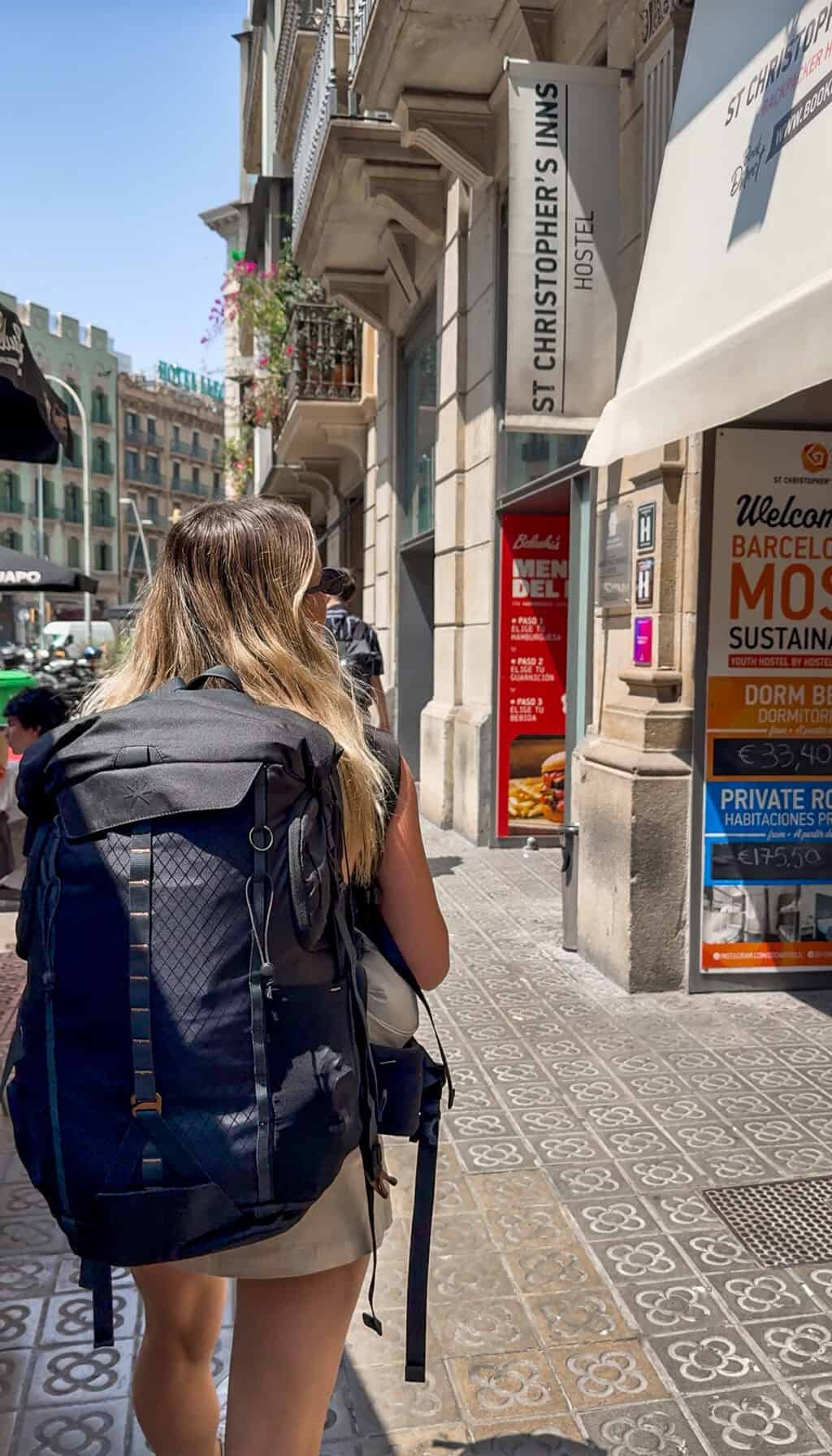
St Christopher’s properties are strong on this. Berlin Mitte is well placed for Museum Island. The Winston sits right in Amsterdam’s historic centre. St Christopher’s Paris Canal puts you close to Canal Saint-Martin, which is one of the easiest parts of the city to enjoy without over-planning. In London, the hostels are in lively neighbourhoods where food, pubs, transport and attractions are already around you.
Use this simple comparison before you book:
Walking distance: can you reach cafés, supermarkets and evening spots on foot?
Late-night ease: can you get back without relying on a complicated route?
Daytime flexibility: can you drop bags, recharge, or change plans without losing half the day in transit?
There’s also a safety benefit. The question of how to manage UK transport alone without relying fully on a smartphone is often badly covered, yet guidance around solo travel rarely addresses non-digital back-up plans or overnight gaps in service. Research highlighted in a YouTube discussion on solo travel safety and UK transport points to anxiety around navigating night transport alone, especially in London. A central base cuts a lot of that stress before it starts.
3. Use Hostel Social Spaces to Meet Travel Companions Organically
It’s not being alone all day that gives people pause. The apprehension comes from the awkward social interactions. Where do you meet people without forcing it?
That’s where the right hostel earns its keep. Good social spaces remove the pressure. You don’t need a script. You just need to be in the room often enough for conversations to happen.
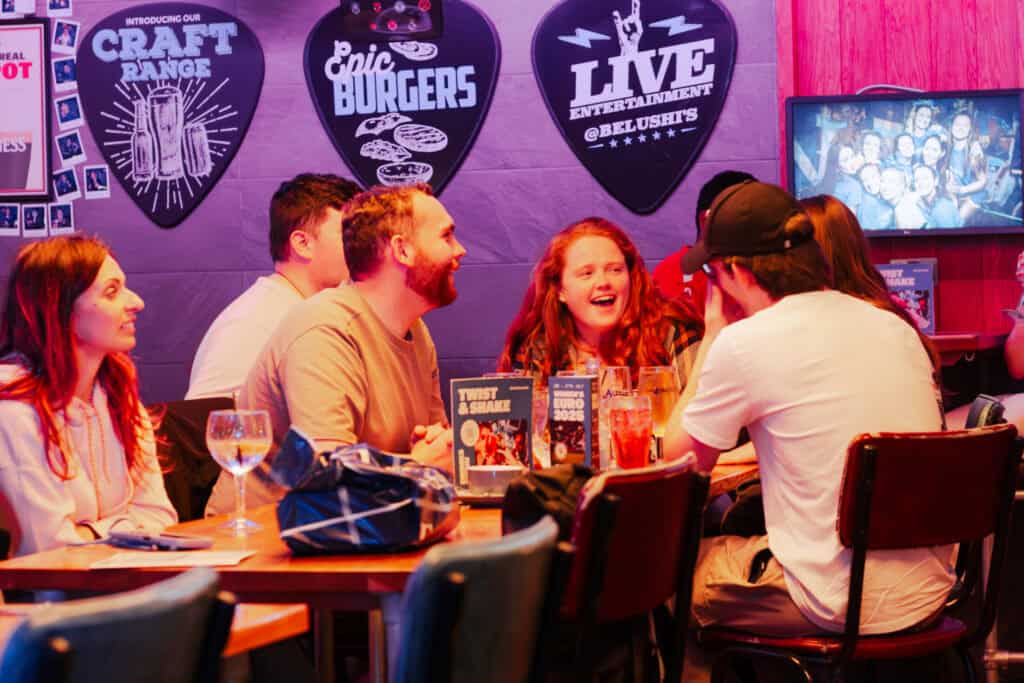
A vibrant social space in a St Christopher’s Inn where travellers connect and unwind.
At St Christopher’s, that usually means the bar downstairs or the communal areas around it. Belushi’s works especially well in London, Paris, Barcelona and Berlin Alexanderplatz because people naturally drift there without needing an “event” to justify it. In Bruges, The Bauhaus has a different feel, more local musicians and artists, less big sports-bar energy.
Don’t chase instant friendship
You do not need to walk in and become best mates with a table of six people. What works better is smaller, low-pressure contact. Ask someone what they did that day. Ask staff what’s happening that evening. Sit where conversation can happen instead of hiding in a corner scrolling on your phone.
The social challenge around meals is real too. A Tripadvisor article on solo travel essentials points to a gap between feeling lonely at mealtimes and joining more structured food experiences. In practice, this is why hostels that combine social space with food and drink are useful. You’re not wandering a city trying to decide where to eat alone. You’ve got an easy starting point downstairs.
A simple way to break the ice is to spend your first evening in the common area even if you’re tired. One drink and half an hour often turns into dinner plans for the next day.
4. Plan a Flexible Itinerary Rather Than a Rigid Schedule
The first solo trip often gets over-planned. People book every train, every bed, every museum slot, then realise they’ve turned a holiday into admin.
A flexible itinerary works better. Book the first part of the trip properly, know how you’re arriving, and leave room for the rest to evolve. That gives you space to stay longer when a city clicks, or move on when it doesn’t.
Freedom is the point
This isn’t just a nice idea. For many solo travellers, freedom is the reason they go at all. Staysure’s Solo Travel Statistics 2023 found that 32% of UK solo travellers choose to travel alone specifically to experience freedom. That lines up with what first-time travellers usually discover after a few days. The best moments tend to come from saying yes to a recommendation, a spontaneous day trip or an extra night, not from sticking rigidly to a spreadsheet.
Try this approach instead:
Book your first stop properly: give yourself a stable landing point for the opening nights.
Use flexible cancellation: if you’re staying direct with St Christopher’s, you can keep room to adapt.
Leave blank space: not every day needs a landmark or a reservation.
The best solo itineraries have structure at the start and freedom in the middle.
A real example. Someone lands in London planning three nights, meets a few people downstairs at Belushi’s, gets tips from staff, and decides to stay longer before heading to Paris. Another traveller reaches Amsterdam, enjoys the canals but doesn’t love the pace, then moves on earlier to Bruges. Neither situation is a mistake. That’s solo travel working properly.
5. Leverage Hostel Staff Knowledge for Authentic Local Recommendations
Guidebooks are useful for the obvious stuff. Staff are useful for practical stuff.
If you ask a receptionist or bartender where they’d send a friend for a late lunch, a walk, a cheap dinner or an easy solo night out, you usually get a much better answer than you will from a generic “top 10 things to do” list.
Ask better questions and you’ll get better advice
Don’t ask, “What should I see?” That’s too broad, and you’ll often get the standard sights.
Ask things like:
For food: where can I eat nearby without falling into a tourist trap?
For atmosphere: which area feels lively but still easy to get around alone?
For evenings: if I want somewhere social but not chaotic, where should I go?
For walking: what’s a good route if I’ve only got two hours and want to get a feel for the city?
At St Christopher’s, this matters because the hostels are in neighbourhoods where staff know the area. In London, that might mean being pointed towards a local pub with live music rather than a crowded tourist strip. In Berlin, it might mean a riverside route or a café you’d otherwise walk straight past. In Paris Canal, it might mean the kind of bistro you won’t find by searching “best restaurants in Paris”.
Local insight: ask staff during quieter parts of the day. You’ll get more thoughtful recommendations than you will during the evening rush.
This is also one of the easiest ways to make your trip feel less generic. Instead of doing what everyone does, you build days around what suits you. If you’re into markets, music, vintage shopping, galleries, football, parks or just sitting somewhere good with a coffee, say so. Staff can only tailor their advice if they know what you’re after.
6. Establish a Rough Daily Budget and Track Spending
Budget stress ruins more solo trips than people admit. Not because the trip is unaffordable, but because travellers don’t know whether they’re spending sensibly or drifting.
Set a rough daily budget before you leave. Not a punishing one. A realistic one. Then track what you spend for the first few days so you know what the trip costs you.
Start with categories, not perfection
For most city breaks, your spending usually falls into the same few buckets. Accommodation. Food. Drinks. Local transport. Paid attractions. Once you know your own habits, everything gets easier.
A practical method is to note each meaningful purchase in your phone for the first three or four days. You’ll quickly spot patterns. Maybe you’re fine on food but overspending on transport because you booked too far out. Maybe your museum budget is tiny but your social budget is bigger because you’re enjoying nights at the hostel bar.
Modern solo travellers also increasingly rely on flexible booking policies and digital tools such as apps and reviews, as highlighted in Gitnux’s overview of solo travel statistics. That can be helpful, but don’t let the tech do all the thinking for you. The budget only works when you understand your own behaviour.
A simple example. You stay at a central St Christopher’s property, walk most places, use your 25% food discount downstairs a few times, and suddenly your spending is much steadier than it would be if you were bouncing between taxis, pricey cafés and random dinner spots.
Give yourself a buffer
The mistake is budgeting right down to zero. Leave room for the unexpected. That could be laundry, a last-minute gallery ticket, a pharmacy stop, or just a night that turns into a better one than planned.
Track accurately: don’t ignore the little spends.
Review every few days: daily numbers can wobble, the trend matters more.
Adjust fast: if one city is costing more, balance it in the next one.
7. Use Your First Days in Each City to Establish a Routine
You do not need to conquer a city on day one. In fact, you probably shouldn’t.
The best first days are usually the least dramatic. Drop your bag, learn the area around your hostel, find a decent coffee spot, work out where you’d sit for half an hour with no plan, and get comfortable moving around. That routine creates confidence fast.
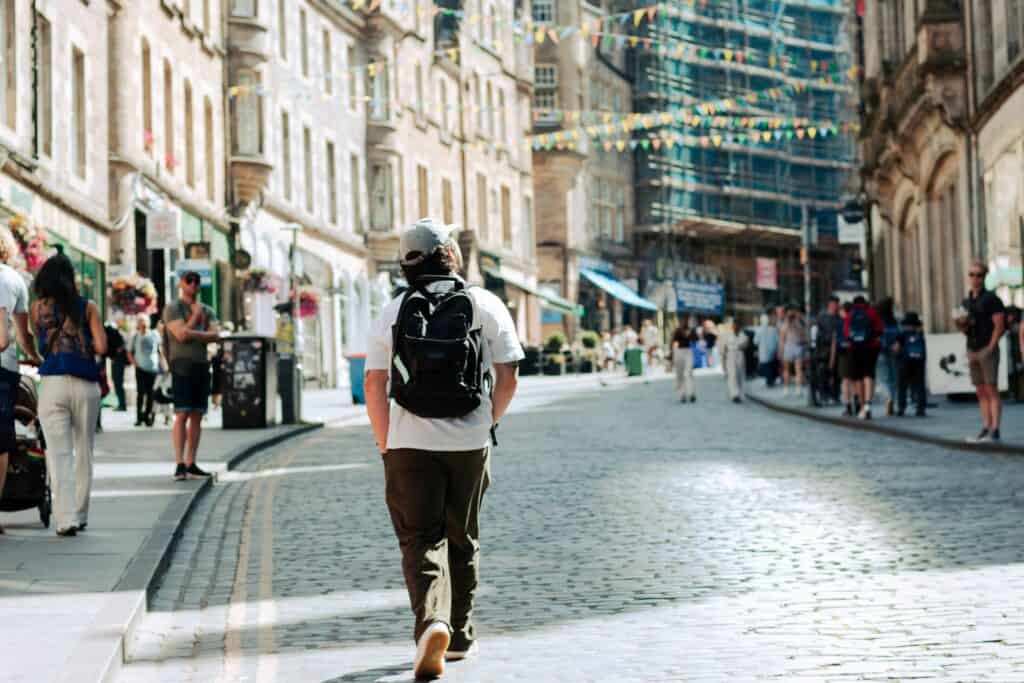
A solo traveller exploring a lively city street, enjoying the vibrant atmosphere and urban scenery.
Familiarity lowers stress
When solo travellers feel overwhelmed, it’s often because everything is unfamiliar at once. New bed, new streets, new language, new transport, new social setting. If you create a little routine, the city starts feeling manageable.
A good first 48 hours might look like this:
Arrival day: check in, unpack properly, walk the immediate area, eat nearby.
Next morning: find a café you like and a route you can repeat without maps.
Second evening: spend time in the hostel social space before trying bigger plans.
At St Christopher’s Amsterdam, that could mean walking the nearby canals and settling into The Winston’s city-centre rhythm before doing anything ambitious. In Berlin, it might mean using your first evening to understand the area around the hostel, then heading to Museum Island once you’ve got your bearings. In London, it often means learning your local Tube stop and then realising you don’t need it as much as you thought because so much is already walkable.
A city becomes less tiring the moment you stop feeling like a temporary visitor in it.
This is one of the most underrated tips for first time solo travelers because it doesn’t sound exciting. But it works. By day three, you’re no longer reacting to the city. You’re moving through it with a bit of ownership, and that changes the whole experience.
8. Join Daily Hostel Events and Activities to Create Structure and Connection
Unlimited freedom sounds brilliant until you’re standing in the lobby at 6pm thinking, right, now what?
Hostel events solve that. They give the day shape, remove decision fatigue and make it easier to meet people without doing the awkward self-introduction routine over and over.
Let the event do the social work
The best hostel activities aren’t valuable because they’re unique. They’re valuable because they make interaction normal. Walking tours, casual drinks, communal meals and neighbourhood events all do the same thing. They put you in a shared situation where conversation happens more naturally.
St Christopher’s properties are especially useful for this because the social side is built into the stay. You’ve got on-site bars, communal areas and regular activities that make it much easier to avoid the common first-time problem of spending too much time alone in your bunk deciding what to do.
This matters in a broader market too. The UK is seen as the top European market for solo tourism opportunities, helped by a culture that encourages independence and solo travel, according to the CBI overview of solo tourism market potential. That same independent mindset is great, but even independent travellers need a bit of structure when they’re in a new city.
A realistic example. You join a hostel walking tour on your first day in London, chat to two other guests, then end up grabbing dinner with them later. Or you head to an evening event at Belushi’s Berlin Alexanderplatz, meet a mix of locals and travellers, and suddenly the city feels much more open.
Don’t overthink whether it’s “your thing”
If you wait for the perfect event, you’ll often miss the useful one. A walking tour might not be your dream activity, but the people you meet on it might become your dinner group, museum mates or nightlife crew for the next two days.
9. Develop a Nightlife Strategy That Feels Comfortable
Nightlife is where a lot of first-time solo travellers put pressure on themselves. They think they should be out every night, always saying yes, always chasing the “best” evening.
That usually backfires. A better plan is to decide what kind of night out suits you, then use that as your baseline.
Start with a place that already makes sense
For many solo travellers, the easiest move is simple. Begin downstairs.
At St Christopher’s, that could mean Belushi’s in London, Paris, Barcelona or Berlin Alexanderplatz, or one of the more traditional pub settings in London such as The Flying Horse or St Christopher’s Pub depending on the property. You don’t need to figure out an unknown location, and you’re surrounded by a mix of travellers and locals rather than walking into a venue completely cold.
If you like bigger nights, the on-site bar can be your warm-up before heading elsewhere with people you’ve met. If you’re quieter by nature, it can be the whole night. Both approaches are valid. The point is to stop treating nightlife as a test you have to pass.
Pick one default spot: usually your hostel bar on the first night.
Set a loose time limit: stay for an hour or two, then decide.
Leave yourself an exit: if you’re tired, you’re already home.
Solo and small group female travel also play a growing role in the European market, with British women in particular highlighted as an important group of travellers in Europe by The Traveler’s article on British women as power travellers. That makes this point even more relevant. Feeling comfortable on a night out matters more than trying to copy somebody else’s travel style.
10. Create a Solo Travel Safety Routine and Trust Your Instincts
Good solo travel safety is mostly boring. That’s a good thing.
You don’t need to be paranoid. You need a few habits that reduce stress and help you react quickly if something feels off. Once those habits are in place, you can relax more.
Build a simple routine you can repeat anywhere
Keep valuables in the hostel locker. Carry only what you need for the day. Save the hostel address offline and write it down as well. Tell someone your rough plan if you’re heading out for the day or night. Keep enough charge in your phone to get home.
That last point matters more than people think. UK solo travellers report that a powerbank is the single most important item for safety and connectivity on a solo trip, according to Statista’s solo traveller topic overview. It’s not glamorous kit, but it keeps maps, messages, tickets and emergency contact details available when you need them most.
Your accommodation choice matters here too. Hostels with central locations, staffed reception and active communal areas usually feel easier for first-time solo travellers than isolated places where you’re left to figure everything out alone. At St Christopher’s, you’ve got staff around, other travellers nearby, lockers, shared spaces and well-used common areas. That combination is reassuring, especially on a first trip.
If a person, street, venue or situation feels wrong, leave. You don’t need to justify it.
Safety is also social
One underrated part of staying somewhere social is that you’re less likely to feel stranded. You can ask reception for directions. You can walk back with people you’ve met. You can tell someone where you’re headed. You can change your plans without feeling like you’re completely on your own.
That’s the difference between travelling solo and being isolated. They are not the same thing.
Your Adventure Awaits
Your first solo trip will probably contain at least one moment where you think, right, I’m doing this. It might happen when you check into your hostel on your own, when you order dinner in a city you’ve never been to before, or when you realise you’ve made plans for tomorrow with people you only met two hours ago. That’s the shift. The nervousness doesn’t vanish all at once, but confidence starts replacing it bit by bit.
The best tips for first time solo travelers aren’t about becoming fearless. They’re about making the trip easier on yourself. Book direct so your money goes further. Stay central so you spend less time navigating and more time enjoying the city. Use hostel social spaces so meeting people feels natural. Keep your itinerary flexible enough to let good things happen. Ask staff for proper local advice. Track your spending just enough to stay relaxed. Build a routine in each place. Join activities when you need structure. Make nightlife fit your personality. Keep a simple safety system and trust your instincts.
That combination works because it tackles the three things first-time solo travellers usually worry about most. Budget. Safety. Connection. Get those right, and the trip opens up quickly.
This is also why accommodation matters so much more than many people expect. A good hostel isn’t just somewhere to sleep. It can save you money through central location and guest discounts. It can make nights out easier because the social side is already there. It can make a new city feel less intimidating because you’ve got staff, common areas and other travellers around you. St Christopher’s Inns does that especially well for people exploring European cities for the first time. You get clean rooms, central bases, lively bars and communal spaces that help solve the awkward parts of solo travel before they become a problem.
There will still be little challenges. You might have one lonely meal, one confusing station, one expensive coffee in a tourist square, or one evening where you decide to head back early instead of forcing a big night out. None of that means you’re doing it wrong. It means you’re travelling like a real person, not performing some polished version of solo travel for anyone else.
That’s the whole point. Your first solo trip doesn’t need to be perfect to be unforgettable. It just needs to begin. Once it does, you’ll come home with better stories, better judgement and a lot more confidence than you had when you packed your bag.
Europe’s waiting. Book the first stay, keep the plan loose, and let the trip become your own.
If you’re ready to turn nerves into a proper plan, St Christopher’s Inns gives first-time solo travellers a strong start with central locations across Europe, social on-site bars, clean and safe rooms, and direct booking perks including a free welcome drink, 25% off food, flexible cancellation and at least a 5% saving on the best online rate.
Our direct rates are guaranteed to be at least 5% cheaper than anywhere else online, with a free drink on arrival, 25% off food at the bar, and free cancellation options available.