The popular advice is to avoid restaurants altogether. I disagree. The smartest way to eat cheaply in Paris is to...
Share This Article
The popular advice is to avoid restaurants altogether. I disagree. The smartest way to eat cheaply in Paris is to eat your main meal at lunch, then use bakeries, markets and supermarkets for the other two. You still get French cooking, table service and a proper sit-down meal, but you stop paying the evening premium.
That matters even more if you’re converting pounds into euros. A few extra euros on every meal can become a noticeable difference across a short break, especially when drinks, snacks and transport are added. The useful question isn’t “What’s the cheapest food in Paris?” It’s “What’s the best-value meal for this part of my day?”
This guide uses a simple three-meal rhythm: bakery breakfast, fixed-price lunch, picnic or bouillon dinner. It’s the same practical principle behind eating well on a limited food budget at home, and how to eat clean for less is a useful companion if you want broader ideas for planning filling meals without waste.
Eating Well in Paris Without Blowing Your Budget
Cheap eating in Paris is mostly about refusing the wrong moments to spend. If you sit down in the busiest square, order at dinner, and pay for the view, you will burn through your food budget fast. If you build your day around one good-value sit-down meal and keep the rest flexible, Paris suddenly feels manageable, even with a pounds-to-euros mindset in the back of your head.
That is the shift that matters. Treat food spend as its own daily budget, separate from museums, Metro tickets and all the other little costs that creep into a city break.
A few streets off the main drags, neighbourhood bistros display fixed-price lunch menus outside, bakeries sell substantial food well beyond breakfast, and supermarkets give you an easy dinner without any kitchen. You are still eating well. You are just buying the right thing at the right time. The same practical logic behind how to eat clean for less applies here too. Spend where the meal gives you real value, not where the setting inflates the bill.
The timing decision that changes everything
A neighbourhood-bistro formule de midi commonly costs about €15 to €22 for two courses, while comparable evening à-la-carte cooking can cost roughly €30 to €55, according to UK travel guidance on Paris spending. That same guidance also shows the gap can be roughly €15 to €33 per person on your main restaurant meal, around 27% to 60% below the higher dinner range.
So make lunch your proper restaurant meal. Go between midday and 2pm, read the board outside before you sit down, and pick a formule or plat du jour. Save dinner for a supermarket picnic, bread and cheese by the river, or a simple hot meal at a bouillon.
My rule: pay for the restaurant experience once a day, and make lunch the occasion.
Place matters almost as much as timing. If you are already in a neighbourhood you want to explore, eat there. Chasing a famous cheap spot across the city often stops being cheap once you add transport, time, and the extra coffee or snack you buy on the way.
This rhythm suits solo travellers especially well. You can grab something from a bakery while sightseeing, take your time over lunch when you want a proper pause, then end the day with an easy, low-pressure dinner that still feels like Paris.
A Realistic Day of Eating in Paris on €25 to €35
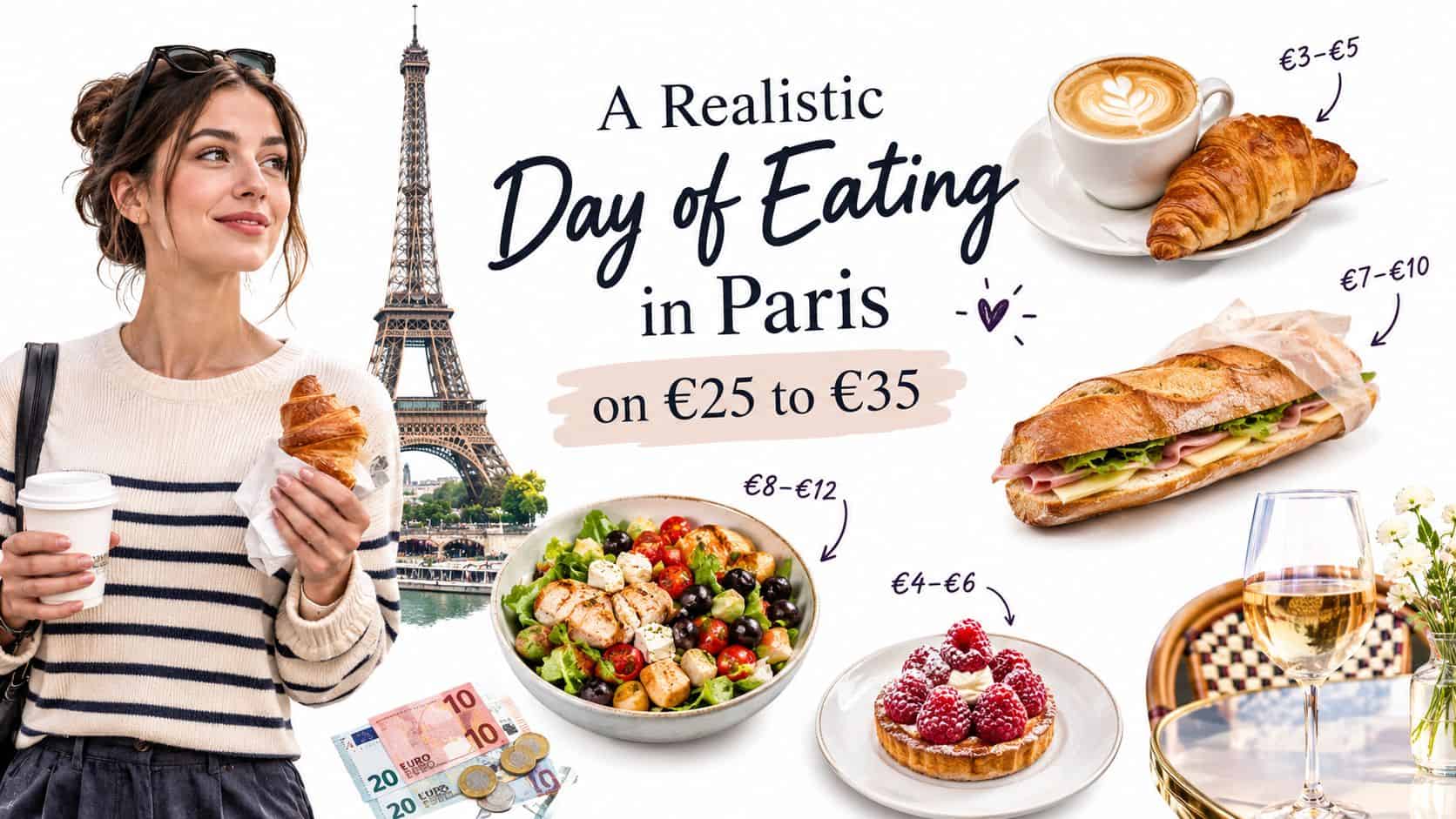
You do not need to “survive” Paris on sad budget food. A realistic food-only day can sit around €25 to €35 per person, before drinks, if you build the day around one good choice at a time instead of defaulting to three sit-down meals, as noted in Paris food-cost guidance.
Start with a boulangerie
Do breakfast the Paris way. Grab a croissant for around €1.20 to €1.80 and keep moving, per Exiap’s Paris spending guide. Buy coffee separately if you want it. Hotel breakfasts rarely earn their price when all you need is something fresh in hand on the way to your first stop.
If you wake up hungry, go bigger. A jambon-beurre sandwich at about €4 to €6 works as a proper breakfast or a portable early lunch, a range supported in read St Christopher’s Paris guide for doing the city on €30 a day. That is the better call on a museum day, when stopping twice costs more than buying once.
Spend your middle meal carefully
Lunch is where you keep the day balanced. Aim for a market counter or takeaway in the €8 to €15 range, which keeps the total realistic while still giving you options such as a savoury crêpe, galette, prepared dish or noodles from a neighbourhood spot.
This is the meal to judge hard. If a place is trading on the view, the queue or the postcode, keep walking.
If you want table service, make lunch your restaurant moment and keep dinner simple. That gives you one proper pause without turning the whole day into a string of overpriced menus.
Finish with food you assemble yourself
Dinner is where budget travellers either stay on track or blow the lot. A supermarket picnic for two can cost around €15 to €25, and that is often the smarter choice after a heavier lunch. If you want something hot and unmistakably Parisian, a bouillon meal can come in around €15 to €20 for three courses, according to Paris food-cost guidance. Solo travellers usually do even better because they can buy exactly what they will eat.
Keep one distinction clear. Food-only spending is not the same as your total daily budget. Broader city costs rise fast once you add transport, attractions and small extras. For a home-budget comparison of how repeated food purchases add up, find Fintrack’s food cost guide.
If you think in pounds, hold a small sterling buffer rather than treating €25 to €35 as a promise. Card fees, exchange rates and one unplanned drink can nudge the day upward.
Fixed-Price Lunches and Formules Explained
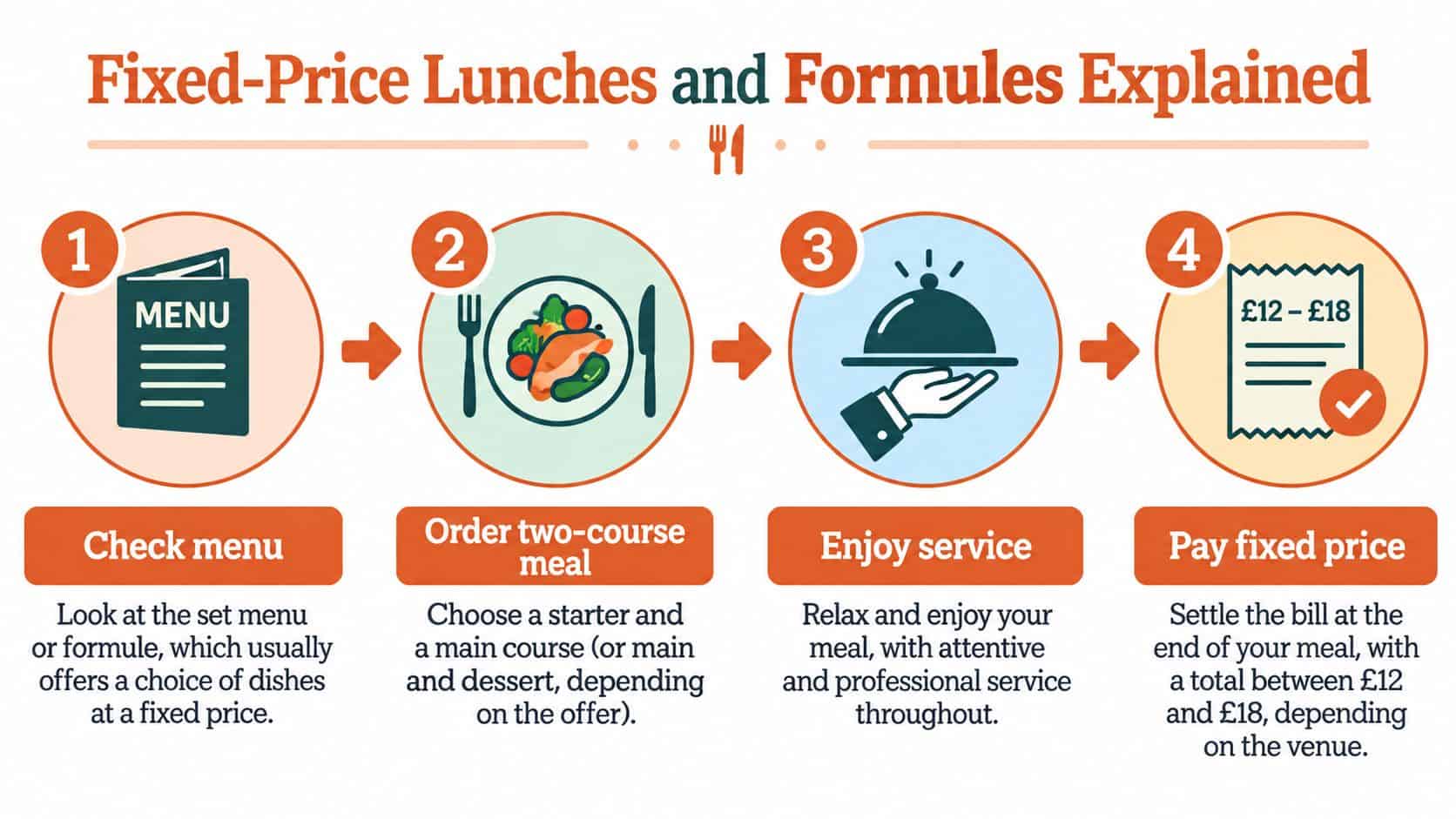
Lunch is where Paris often makes the most sense on a budget. If you want one proper sit-down meal in the day, make it this one. A formule gives you a set-price combination, usually two or three courses, and a plat du jour is the day’s featured dish at a controlled price instead of a full à la carte order.
For anyone keeping a rough pounds-to-euros tally in their head, this is the moment to spend deliberately. A formule de midi commonly sits around €15 to €22, while similar cooking ordered à la carte in the evening can climb much higher. That gap is why lunch is the smarter restaurant slot. You get the bistro experience, the plate, the pause, and none of the dinner-time financial nonsense.
How to choose the right menu
Check the board before you even think about taking a seat. In France, restaurants must display prices outside and inside, and the listed prices include taxes and service, as explained by France’s official restaurant pricing guidance. Read all of it, not just the headline number. Drinks matter. So do small conditions such as weekday-only service or lunch-only availability.
Look for these terms:
Formule de midi, a fixed-price lunch menu
Plat du jour, the day’s main dish
Service compris, meaning service is included
Timing matters too. These deals are usually aimed at the lunch crowd, roughly between midday and 2pm. Turn up late and you may find the offer gone, even if the board outside looked promising earlier. If there is no set menu at all, and only separate dishes with tourist-area pricing, skip it unless you genuinely want that place enough to pay more.
Do not chase the absolute lowest number across the city. The best-value bistro is usually the one with a clear menu, a steady stream of locals, and a location a street or two back from the busiest square. Save money on the plate, not by wasting your afternoon crossing Paris for a lunch that ends up costing more in time and transport.
Markets, Boulangeries and the Supermarket Picnic
Cheap eating in Paris starts to feel good, not dutiful. Build one solid picnic into your day and your food budget stays under control without turning lunch into a sad backup plan. If you’re thinking in pounds as well as euros, this is often the meal that keeps the whole day sensible.
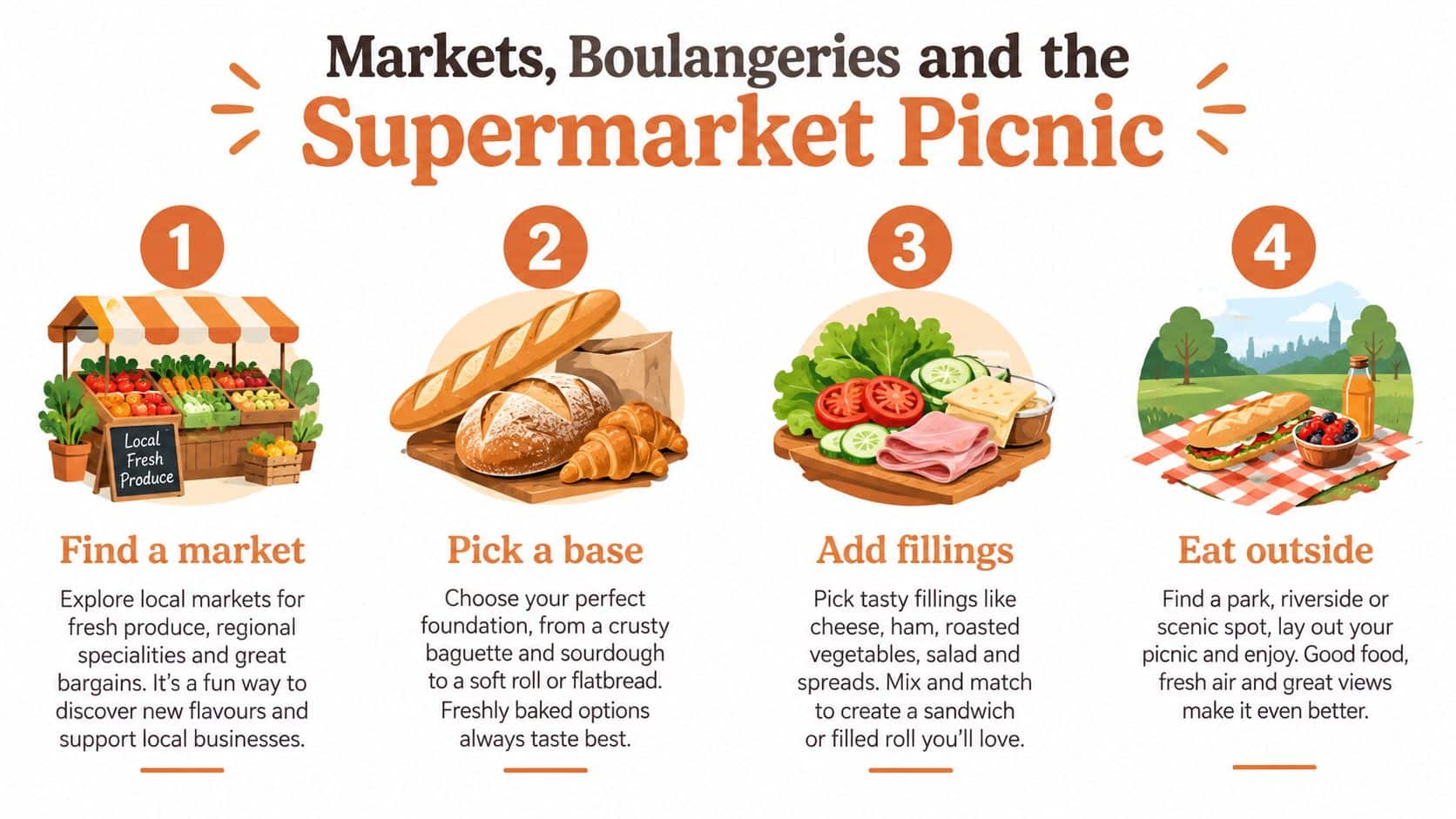
Use a four-step market protocol
First, check what’s open. Pick your market before you get hungry. Paris has both open-air and covered markets, and hours vary enough that turning up blind can leave you circling for food when you should already be eating. Paris market guidance is the practical place to check what is running that day.
Next, choose one filling base. Start with bread, a baguette sandwich or one prepared savoury item from a boulangerie or stall. A jambon-beurre is usually one of the simplest value plays in the city. Crêpes and galettes can work too, but only if you want something handheld and quick rather than a full spread. The mistake is buying three carb-heavy snacks before you’ve sorted the rest of the meal.
Then add balance. Get fruit or vegetables, then cheese, charcuterie, a protein portion or a ready-made dish. This is the point where a supermarket often beats a market, especially for two people or a group. You can see the running total, compare options fast, and leave with a lunch that actually feels like lunch instead of a bag of random treats. Paris Tourism’s affordable food guide is useful for the general idea of keeping everyday meals simple and unfussy.
Finally, set the ceiling. For a budget traveller, the picnic wins when you decide the number before you buy anything. The current section of your day matters. If dinner is your splurge, keep lunch tight. If you’re eating out later in a bouillon or bistro, buy one meal’s worth and stop. Markets make overspending easy because everything looks appealing in small amounts, and all those small amounts add up fast.
Carry a modest amount of cash for smaller stalls. Also keep the picnic physically manageable. Soft cheese, ripe fruit and drinks sound charming until they’ve been in your bag for an hour while you walk across town. A compact lunch usually beats an ambitious one.
Where you can eat it
Paris allows individual or family picnics for fewer than 30 people in its parks, gardens and squares, as long as you leave the space clean, according to Paris city guidance on green spaces. Fires, barbecues and alcoholic drinks are prohibited. Larger group meals need authorisation.
That still gives solo travellers and small groups plenty of freedom. Buy food that works cold, bring napkins, and assume you may end up on a bench or the grass rather than at a proper table.
Choosing Between Bouillons, Asian Eateries and Street Food
Cheap dinners in Paris get easier once you stop chasing the single cheapest option and start matching the meal to the evening. If you are tracking food spend in the way a UK budget traveller usually does, separate dinner from the rest of the day and ask one simple question. Do you want a proper sit-down meal, something hot and fast, or something you can eat while you keep moving?
Option
Typical price per person
Best for
Bouillon
€15 to €20 for three courses
A proper French dinner
Asian noodle meal
€8 to €13
Warm, filling food in Belleville or the 13th arrondissement
Crêpe or galette
€5 to €10
A portable snack or casual meal
Neighbourhood bistro
€14 to €22 for a set lunch
Sitting down without eating in a tourist zone
Supermarket picnic
Around €15 to €25 for two people
Groups, self-catering and flexible timing
Bouillons for the full experience
Pick a bouillon when you want dinner to feel like a night out rather than refuelling. They were created as affordable restaurants for ordinary diners in the 19th century, and that original purpose still comes through. You get classic French dishes, fast turnover, busy rooms and prices that do not punish you for wanting a starter or dessert.
That matters at the end of a long day. A bouillon lets you sit down, eat recognisably Parisian food and still keep the food-only budget under control. Three courses at €15 to €20 is hard to beat if you want the full experience instead of another snack eaten on a bench.
They also work well solo. In a crowded, noisy dining room, eating alone feels normal.
Asian food when you need warmth
Asian noodle spots are the practical choice on cold or rainy evenings, especially if you have walked all day and want something substantial without stretching dinner into an event. Belleville and the 13th arrondissement are reliable areas for this. A bowl of noodles or a similar hot meal at €8 to €13 can be the difference between a cheap day that still feels enjoyable and one that feels mean.
Street food does a different job. A crêpe or galette is useful when you are between neighbourhoods, heading to a late museum slot, or trying to avoid spending restaurant money just because you got hungry near a landmark. The trick is to treat it realistically. Some are meals, some are snacks with Paris pricing. Check the filling before you order, and buy away from the busiest sights whenever possible.
If you want a traditional French meal without bouillon-style scale, a neighbourhood bistro at lunch can still be good value, and this guide to affordable French restaurants in Paris is a useful starting point. The smart choice is the one that fits your evening, not the one with the lowest number on the board.
Smart Habits for Drinks, Service and Tourist Markups
Budget days in Paris rarely fall apart because of dinner. They fall apart because you stop for two coffees, sit on the terrace because the view looks good, grab a bottle of water without thinking, and only notice the damage when the bill lands.
Coffee is the easiest place to stay sharp. Prices climb fast once you swap the counter for a chair, especially in busy central areas. If your goal is to keep your food spend in the kind of range that still feels reasonable in pounds, drink at the bar, take it away, or save the longer sit-down for the place you actually want to linger. If you enjoy making coffee yourself, these quick coffee recipes are a good reminder that a satisfying drink does not need much fuss.
Make the bill predictable
Ask for tap water straight away. Say une carafe d'eau and make it routine. It is one of the simplest ways to stop a cheap lunch becoming an overpriced one, especially if you are eating out more than once in the same day.
Service usually is not the extra line item some visitors expect. The European Consumer Centre explains that bills should show service included, often with the wording “prix service compris”, and that standard items served with a meal can include bread, tap water in a carafe, crockery and napkins, as set out in its France restaurant advice. Leave the automatic big tip out of your budget maths.
Prices should be displayed clearly, with taxes and service already included. Use that to your advantage. Read the full board before you sit down. Check the drink prices, not just the main dishes. If one seated coffee plus a soft drink turns a decent-value lunch into something that no longer fits the day, walk on.
Practical habit: price the whole stop, not just the food.
Tourist markups are real, and they are usually obvious once you look for them. Around major sights, you are often paying for the location first and the meal second. A side street one block away, a bar counter instead of a terrace table, or a takeaway drink carried to a bench will usually serve you better. Cheap in Paris should still feel good. It should not feel like you paid extra for the postcard view.
Putting It All Together on a Two-Day Paris Trip
Two days in Paris gets expensive when every decision is made on the hoof. Set your food budget first, treat it as separate from museums and metro fares, and the city gets much easier to enjoy. For a budget traveller thinking in pounds as well as euros, that matters. You are not trying to “do Paris cheaply” in some grim, deprived way. You are trying to eat well, keep food spend under control, and still leave room for the bits of Paris that are worth your time.
Day one
Keep the first morning light. Grab a bakery breakfast, eat standing up or take it with you, and save your sit-down meal for later. That one decision usually sets the tone for the day.
Lunch should be the proper restaurant stop. Pick somewhere near the museum or neighbourhood you already plan to visit, read the menu board outside, and go for the formule or plat du jour. You get the table-service Paris moment without paying evening prices, and you do not waste time crossing the city for a meal that is only slightly better than the place around the corner.
Dinner is where many budgets drift. Do the opposite. Head to a supermarket, buy bread, fruit, cheese and one prepared savoury item, then eat in a permitted park or garden if conditions allow. After a full afternoon on foot, simple food often lands better than an overhyped dinner in a busy tourist quarter.
Day two
Make day two the market day. Build lunch around one filling base, then add fruit or vegetables plus a cheese or protein portion, and stop once you hit your own per-person limit. If the weather holds, the market picnic travels well to one of the free things to do in Paris on your route, whether that means a walk by the Seine or time in a public green space.
Go warmer and more social at dinner. A bouillon is the right call on the second night, especially if you want a proper meal without wrecking the budget. Eurostar's Paris budget guide points to a three-course meal at or below €20 as a useful benchmark. Use that as your line in the sand. If the drinks list pushes the total too far, have one drink near where you are staying instead of chasing a terrace that is famous mostly because visitors keep photographing it.
Where you stay affects the maths more than people admit. A central base cuts down the extra metro rides, late-night taxi temptation and random snack spending that comes from being stranded across town.
Before you go, keep this checklist handy:
Eat the main meal at lunch when you want table service.
Check menus outside before sitting down.
Carry water and ask for a free carafe in restaurants.
Use bakeries, markets and supermarkets for flexible meals.
Keep a euro contingency for exchange-rate movement and card charges.
Avoid tourist-square markups when the location is not the point.
Separate food spending from the total trip budget, because transport and attractions are different costs.
Choose the meal that fits the day, not merely the lowest price.
Our direct rates are guaranteed to be at least 5% cheaper than anywhere else online, with a free drink on arrival, 25% off food at the bar, and free cancellation options available.