8 Best Day Trips from Barcelona: Times, Costs and Tips
Hayley
It’s Saturday morning in Barcelona. You’ve got a backpack, no firm plans and a train timetable open on your phone....
Share This Article
It’s Saturday morning in Barcelona. You’ve got a backpack, no firm plans and a train timetable open on your phone. A beach sounds good, but so does a mountain walk. What you don’t want is to spend the afternoon worrying about how you’ll get back.
The best day trips from Barcelona aren’t always the ones with the longest list of sights. They’re the ones that match your energy, your budget and the evening you want afterwards. Sitges works for a relaxed seaside escape. Montserrat needs more attention to connections. Cadaqués is a bigger commitment, especially without a car.
Plan the return before buying the outward ticket. Check the service for your actual travel date, not a timetable screenshot someone shared last summer. Then add transport, admission and food together before deciding whether the trip feels affordable.
The budget notes below describe what you’ll need to pay for rather than promising fixed totals that won’t match your departure date. Likewise, an early evening return is a planning choice, not a guarantee that a particular service will run. Pick the day you want, then make sure the journey supports it.
1. Montserrat
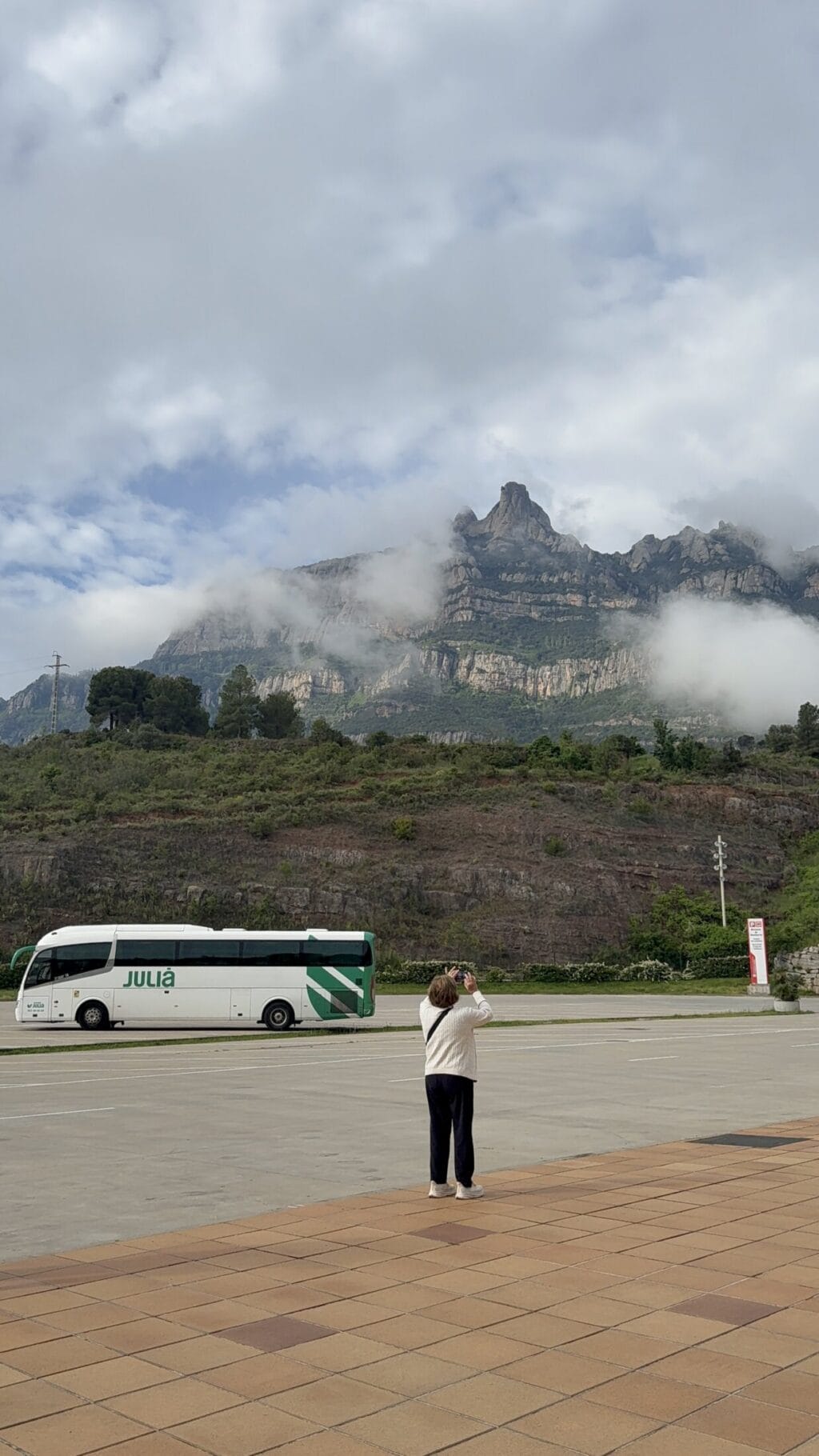
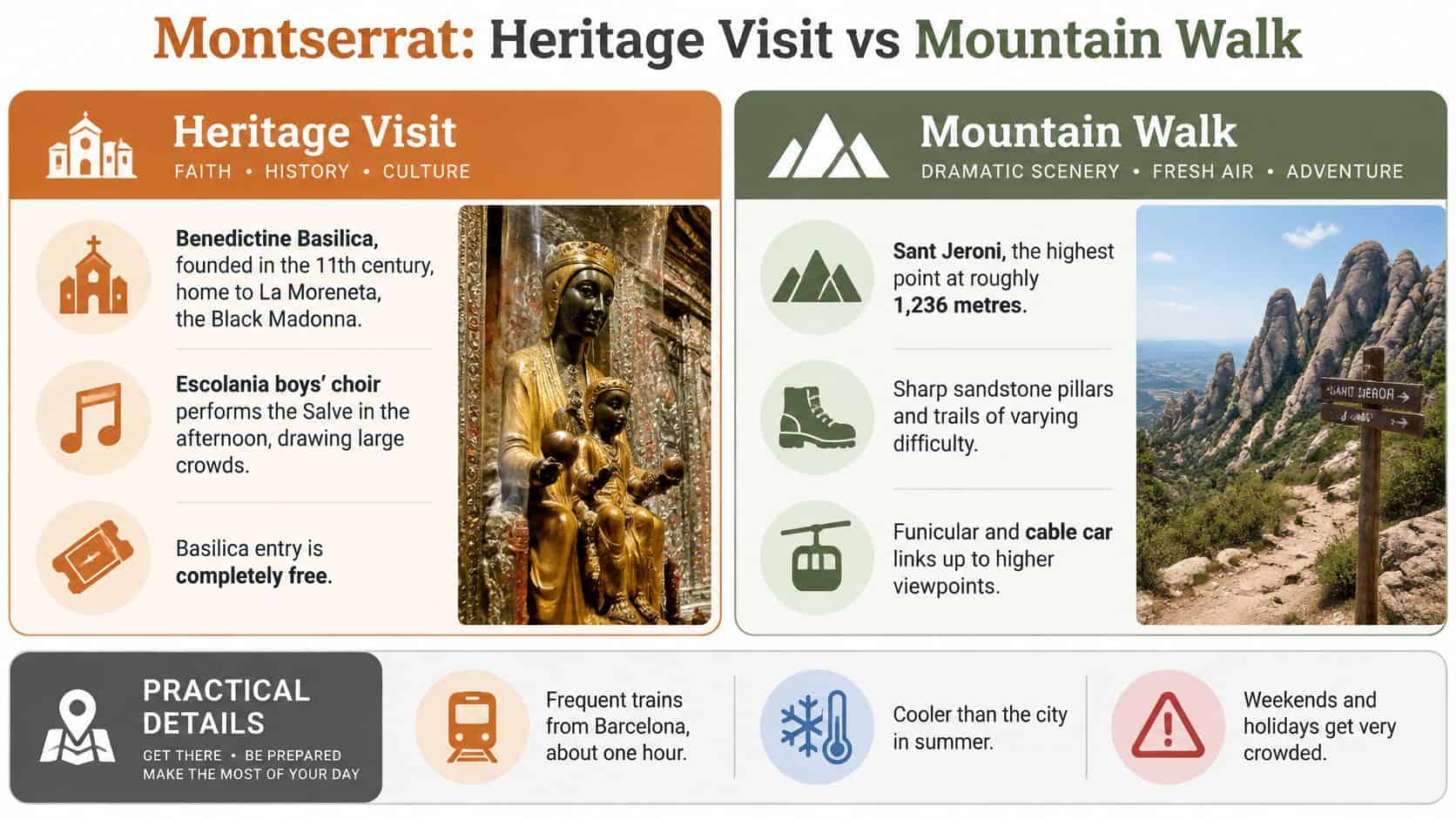
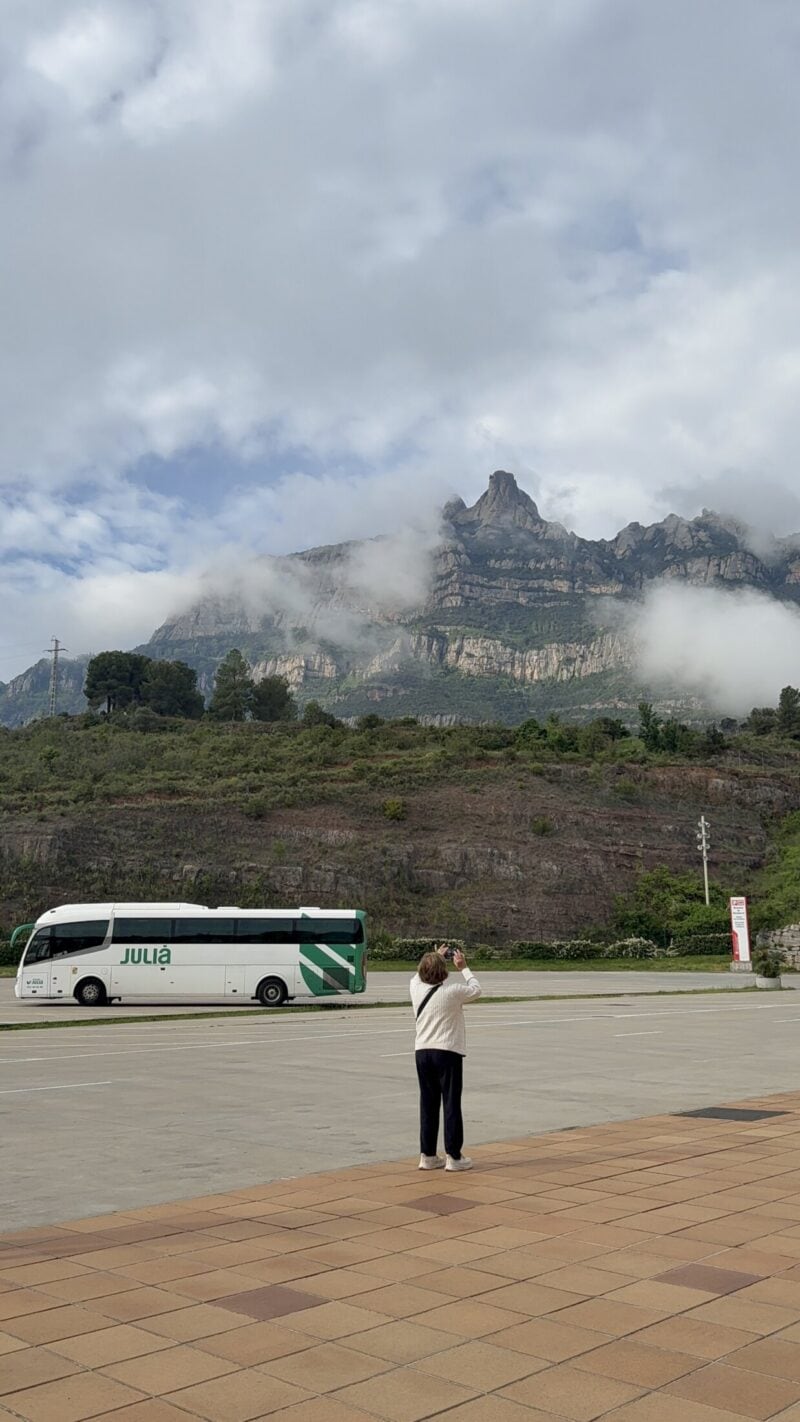
Montserrat is the mountain escape to choose when you want a proper change of scenery. The monastery beneath the jagged rock formations feels far removed from Barcelona, but you’ll enjoy it more if you decide between a heritage visit and a substantial walk before setting off.
This comparison helps separate those different kinds of day.
Catch FGC’s R5 towards Monistrol de Montserrat, then connect with the Cremallera rack railway, following FGC’s Montserrat rail connection. This isn’t a Rodalies service, and the mountain connection is part of the journey, not an optional detail.
Choose the mountain day you can comfortably finish
For a manageable solo outing, explore the monastery area, take a walk suited to the weather and leave time to descend without rushing. Don’t commit to a long summit walk just because other travellers are heading that way.
Ticket choice: The TransMontserrat combined ticket bundles specified transport and visitor experiences. Compare its inclusions with what you’ll really use.
Return plan: Check the descent and onward train together. Your last useful mountain departure may matter more than the last train towards Barcelona.
Meeting people: A shared walk offers a natural conversation starter, but don’t depend on meeting someone to make your route safe.
Wear walking shoes and carry water. Check choir performances and visitor access separately rather than assuming either is included or available.
For a visual introduction to the mountain, watch this before choosing your walking route.
2. Sitges
Some mornings call for less ambition. Sitges suits the day when you want sea air, a wander through the old streets and lunch without a complicated sightseeing schedule.
The seafront is the obvious starting point, but leave room for the streets behind it. If lying on a beach alone doesn’t appeal, make the town itself the outing and treat swimming as an optional extra.
This is the coastal setting you’re heading for.
Keep the return separate from the nightlife
Use the R2 Sud from Barcelona Passeig de Gràcia or Sants, checking that your selected service stops at Sitges. Check live service information before leaving, rather than treating a familiar route as a guaranteed journey.
An evening train home and a night out in Sitges are different plans. Decide which you’re doing before ordering another drink.
Daily budget: This can be a lower-spend outing if you stick to return transport, a packed lunch and the beach. Museum admission, restaurant meals and drinks change that calculation, so price your preferred version rather than assuming seaside means inexpensive.
For example, a solo traveller wanting a quiet afternoon could bring lunch, walk the seafront and return before dinner. Someone hoping to socialise might prefer an organised cultural activity followed by an early evening drink, while keeping their intended train firmly in view.
Meeting people is possible, not automatic. A busy beach can still feel solitary. Activities give you a reason to talk; sitting near other visitors doesn’t necessarily do that.
Festival and Carnival periods need more planning, not less. If a particular event is your reason for going, check its programme against the return timetable before committing.
3. Girona
Girona makes sense when you want a city to explore rather than an activity to complete. Walk beside the Onyar, browse the old quarter and leave yourself enough energy for the steps and slopes around the cathedral.
It’s a particularly good choice if you like travelling alone at your own pace. You can stop for coffee, linger in El Call or change direction without disrupting a group’s plans.
The riverside gives you an easy starting point for that kind of day.
Choose the service, not just the destination
Start at Barcelona Sants for high-speed services. Don’t assume every Barcelona-to-Girona ticket offers the same journey or departure station. Renfe lists a first departure at 06:55, but says travellers should check the service for their date on its Barcelona–Girona route page.
Daily budget: Compare your actual return fares, then add lunch and any cathedral or museum admission. Walking through the city can be the main activity, so you don’t need to stack paid attractions.
Travel effort: The transport choice matters. A faster service may justify its fare when your Barcelona stay is short.
Return plan: Choose your intended train before getting absorbed in the old town. Check ticket-change conditions if flexibility matters.
Social potential: A guided walk offers more opportunity for conversation than an independent circuit of the sights.
A practical day might mean the cathedral area first, lunch near the river and an afternoon wander before heading back. Sunset photographs are tempting, but they shouldn’t force you onto a return you haven’t checked.
Bring comfortable shoes. A compact historic centre doesn’t mean a completely flat or step-free day.
4. Tarragona
Tarragona suits a day when you want Roman history without giving up the coast. The amphitheatre is a natural starting point, then the old town offers a slower walk between visits. Choose your main focus before leaving Barcelona: trying to fit in every archaeological site, a long lunch and beach time can make the day feel rushed.
The amphitheatre’s setting is part of the appeal.
Check the arrival station carefully
When searching regional trains from Barcelona Sants, confirm that your ticket arrives at Tarragona’s city station. A station serving the wider area is not necessarily a convenient arrival point for the city centre. Check the return service before you pay, too.
Rodalies and regional lines can face disruption. Catalan News reported 1,500 hours of delays on the Rodalies regional rail service in the first half of 2025, as detailed in its report on network delays. That figure is historical, not a forecast for your journey. Check live alerts on the day and leave enough time for your return.
Flight-day rule: Keep a regional rail day trip off the schedule before an evening flight. Stay close to Barcelona instead.
Daily budget: Count the return fare, admission to the Roman sites you plan to visit, and lunch. Ask whether combined admission is available, then compare it with the individual tickets. A bundle only saves money if you actually want to see the included sites.
Tarragona is easy to explore alone, but meeting other travellers takes a little planning. A guided visit creates a natural chance to talk; an independent walk is better if you want to set your own pace.
Catch an early service so you have time for your priority site during opening hours. Set a return train before lunch, and let that departure shape how long you stay in town.
5. Figueres and the Dalí Theatre-Museum
The Dalí Theatre-Museum is the reason to choose Figueres. If surrealist art interests you, build the day around the museum and give yourself permission to look slowly rather than treating it as a stop on a packed regional circuit.
A museum-led outing also works well alone. You don’t have to match anyone else’s pace, and you can revisit an installation without negotiating what comes next.
Match the station to the museum booking
Check whether your train arrives at Figueres or Figueres-Vilafant. The station name affects the onward journey, so calculate your museum arrival from the station you’ve booked, not from a general map pin for Figueres.
Before paying: Match museum availability with outward and return trains. An attractive train fare isn’t useful if it leaves you struggling to reach your admission slot.
Daily budget: Add return rail travel, museum entry, any station transfer and lunch. This is an admission-led day, so don’t judge affordability by the rail ticket alone.
Return plan: Leave room between finishing at the museum and your train. Include the transfer back to the correct station.
Meeting people: A guided visit gives you a shared subject to discuss. Independent museum visits are less naturally sociable, though they can be rewarding without company.
An art student might spend the morning in the museum and the afternoon sketching or comparing notes over lunch. A casual visitor may prefer a shorter museum visit followed by an unhurried walk through town.
Don’t automatically add Cadaqués. Combining them means more transport decisions and less time with the art you came to see. It can make sense on a carefully organised itinerary, but it isn’t the default budget-friendly choice for an independent solo day.
6. Sant Sadurní d’Anoia and the Cava Route
A booked cellar visit gives this day something solo travellers sometimes miss: a shared activity with a clear beginning and end. You arrive for the same reason as everyone else, which makes conversation easier than approaching strangers in a café.
Choose Sant Sadurní d’Anoia if you’re interested in cava production, cellar architecture and tasting, rather than just looking for somewhere to drink. Codorníu and Freixenet are names to investigate, but compare the actual visit descriptions before choosing.
Book the experience before building the day
A cellar booking should determine your outward journey. Check the meeting point, tour language, walking requirements and what the tasting includes, then confirm how you’ll reach the entrance from the station.
Don’t assume every cellar is beside the railway or that a booking accepts late arrivals.
Daily budget: Include return transport, the guided visit, lunch and any local transfer. Bottles bought afterwards are extra, not part of the basic excursion cost. A tour that includes the experience you want can offer better value than a lower headline price with several additions.
For an easier solo day: Pick a shared guided visit rather than arranging a private tasting and hoping it becomes sociable.
For example, book a daytime cellar tour, have lunch afterwards and return while you still have comfortable transport choices. That’s a more relaxed plan than squeezing in another tasting and discovering the next practical departure is much later.
Travel effort is moderate, but booking dependence is high. Check current regional rail arrangements and any replacement transport before committing to a fixed arrival time.
Finish drinking early enough to manage the journey confidently. Keep your phone charged, carry water and save the return details before the tasting starts. Those small preparations matter more when you’re travelling alone.
7. Tossa de Mar
Tossa de Mar is for the day when you’re happy to exchange more travel effort for a coastal outing. The appeal is straightforward: the walled Vila Vella above the water, a wander through narrow lanes and time beside the sea.
The bus timetable is the deciding factor. Look for services from Barcelona Nord, then check the actual date, departure point and return availability before making plans around the beach.
Secure the journey home first
Unlike a casual city stroll, a bus-dependent day needs a firm stopping point. If return reservations are available, arrange yours before settling into the afternoon.
Daily budget: Include return coach travel, lunch, drinks and any paid beach activity. Bringing water and food gives you more control over spending, but transport remains a core cost.
Energy level: Choose between a gentle town-and-beach visit and a longer coastal walk. Don’t add a demanding path just because it looks short on a map.
Return plan: Aim for an earlier workable departure rather than relying on the final advertised bus.
Meeting people: A shared walk or organised activity is a better social bet than an independent beach afternoon.
A realistic solo plan is to explore Vila Vella on arrival, eat lunch and spend the remaining time near town. You can enjoy the coast without walking so far that getting back to the bus becomes stressful.
Don’t assume sunset fits your transport. It’s an optional extra only when the dated timetable supports it.
Tossa can also suit friends with different energy levels, provided everyone agrees where and when to meet again. Keep the booking details available offline, and check where you need to board for Barcelona rather than assuming it’s identical to the arrival stop.
8. Cadaqués and Cap de Creus
Cadaqués is the trip to choose deliberately, not the one to improvise after a late breakfast. The whitewashed waterfront, Dalí connection and rugged surroundings are appealing, but an independent journey asks more of you than the simpler rail outings.
Treat Cadaqués, Portlligat and Cap de Creus as choices, not an automatic package. A village day is different from an art visit followed by a substantial walk.
Make the connections prove the plan
If travelling by train to Figueres and onward by bus, check the whole chain in both directions. Confirm the railway station, bus departure point, transfer time and final Barcelona connection before buying anything non-refundable.
A short connection on a journey planner isn’t much comfort if you’re unfamiliar with the transfer.
Daily budget: Allow for return rail and bus travel, food, any local transport and admission if you book the Portlligat house. This is a higher-commitment budget because there are more moving parts. Don’t assume a low train fare represents the cost of the day.
For an art-focused visit, secure the house admission first and keep the rest of the itinerary modest. For a walking day, carry water, wear suitable shoes and choose a route that leaves you comfortably back for transport.
Meeting people is less predictable here. A shared excursion can provide company and simplify logistics, but check exactly what it includes and how much free time you’ll have.
The appealing photograph is a sunset at a remote viewpoint. The practical question is how you’ll get from that viewpoint to your booked return. If the answer depends on an uncertain lift or a rushed connection, choose the waterfront instead.
Save Figueres for another day unless your transport arrangements genuinely make combining them sensible.
Day trips from Barcelona compared by travel time, transport, entry costs and best use
Item
Travel time from Barcelona
Main transport
Typical entry costs
Best for
Montserrat
About 1 hour
Train, then rack railway or cable car
Basilica is free; transport and mountain lifts cost extra
Monastery visits and hiking
Sitges
35–40 minutes
Rodalies R2 Sud train
Beaches and outdoor sights; museum admission may apply
Beach days, culture and nightlife
Girona
About 40 minutes on the fastest trains
High-speed or regional train
Cathedral and some museums charge admission
Medieval history and a walkable old town
Tarragona
About 1 hour
Regional train
Roman sites charge admission; combined tickets are available
Roman history and coastal scenery
Figueres and the Dalí Theatre-Museum
Train journey; time varies by service
High-speed or regional train
Museum tickets are relatively expensive; advance booking recommended
Surrealist art and unusual architecture
Sant Sadurní d’Anoia and the Cava Route
45–60 minutes
Regional train
Cellar tours with tastings are paid
Cava, architecture and vineyard visits
Tossa de Mar
1.5–2 hours
Bus
No general entry cost noted; beach and old-town visits
Swimming and coastal scenery
Cadaqués and Cap de Creus
2–2.5 hours
Train to Figueres, then bus
Dalí house admission is paid and requires advance booking
Dalí history, hiking and nature
Pick Your Day and Plan the Return Train First
Start with the return journey, then choose a trip that matches your energy. Sitges suits a relaxed seaside day, while Girona is easy to explore independently. Montserrat takes more planning because you need to coordinate the mountain connection with the train. For longer journeys, check how late the bus or train runs before committing to an evening plan.
Tarragona is better with an early start and one clear priority. Figueres works when the museum is the main event. Sant Sadurní d’Anoia can make meeting people easier through a shared cellar tour, while Tossa de Mar and Cadaqués ask more of you on the way home. A packed schedule can feel tiring when the return trip is long.
You don’t need to leave Barcelona every day to make your stay count. Choose an excursion you genuinely want, and leave some evenings free instead of spending them researching the next destination.
Spend on the day you actually want
Add up the whole daily budget, including transport, station transfers, admission, lunch and drinks. A beach day with a packed lunch costs differently from a museum visit with reserved rail seats. Set aside enough for the return journey, too, rather than spending your transport budget before the day is over.
Be realistic about meeting other travellers. A busy train doesn’t guarantee conversation. A group cellar tour, guided walk or organised excursion gives you a natural chance to chat, while an independent day in Girona or a beach visit may leave you to make your own openings.
Crowds don’t disappear when you leave Barcelona. Visit popular places with realistic expectations, and respect residential streets as you explore. Where your schedule allows, choose a quieter travel day or keep the itinerary flexible.
Leave another workable return option behind your intended one. Treat the last departure as a contingency, not a target.
Check live transport information before you leave and again before heading back to the station or bus stop. If disruption makes the return awkward, switch plans rather than forcing the original itinerary.
Save your return details before you set off, and pack for the day you have planned. The journey home should be settled before you head out.
Our direct rates are guaranteed to be at least 5% cheaper than anywhere else online, with a free drink on arrival, 25% off food at the bar, and free cancellation options available.