London’s highest free viewing platform doesn’t charge admission. Visit London identifies Horizon 22 as that record-holder, a useful reminder that...
Share This Article
London’s highest free viewing platform doesn’t charge admission. Visit London identifies Horizon 22 as that record-holder, a useful reminder that an expensive observation deck ticket isn’t essential for a memorable skyline view.
Some of the best affordable views in London come from public gardens, bridges and hilltops, where you can keep your money for food and exploring. The difference isn’t always height. It’s whether you need a reservation, how far you’ll travel and whether you’ll still enjoy the outing when the weather turns.
For solo travellers, flexibility matters. A riverside viewpoint you can reach on foot might be better value than a free rooftop with no available tickets. Equally, a booked indoor panorama can rescue a damp afternoon, provided there’s enough visibility to see beyond the windows.
These picks balance entry cost, booking effort, station access and worthwhile nearby stops. You don’t need to visit them all. Choose a central riverside route or a relaxed park outing, rather than spending your day crossing London between distant viewpoints.
1. Sky Garden
Best for a big skyline experience without a paid observation ticket. Sky Garden’s indoor planting and broad windows make it feel more like a destination than a quick photo stop. Its City location also makes it easy to combine with historic streets and the Thames.
The important detail is booking. According to Visit London’s guide to the Walkie Talkie, free tickets are released every Monday for the week beginning the following Monday, and the venue is at 20 Fenchurch Street. Check the live calendar rather than assuming you can reserve months ahead.
Book the view, not an unnecessary meal
A free viewing reservation and a restaurant booking aren’t the same thing. If you’re protecting your budget, secure the public viewing ticket rather than reserving a table just to get inside.
Station approach: Walk from Monument, or use Tower Hill if you’re arriving after visiting the Tower of London.
Best slot: Choose late-afternoon daylight if available, checking sunset against your permitted visiting time.
Backup plan: If tickets have gone, head towards the riverside and Tower Bridge instead of waiting for uncertain walk-in access.
Say you’re spending the afternoon around the Tower of London. Book Sky Garden around that existing route, then continue to the river rather than paying for another journey across town.
Budget rule: Treat food and drink as optional spending, not part of the price of seeing the skyline.
If you want a drink with your panorama, compare the atmosphere and spending expectations in our guide to London’s rooftop bars before choosing.
2. Tate Modern Level 10 Viewing Gallery
Tate Modern makes most sense as an art-and-river outing with a possible rooftop bonus, not a journey built entirely around terrace access. Its Bankside position gives you plenty to enjoy even if the upper viewing space isn’t operating when you visit.
Visit London’s overview of skyline viewpoints lists Tate Modern’s viewing terrace as free. However, check Tate’s current visitor information before setting off, specifically for the viewing gallery rather than just the museum: an open building doesn’t guarantee an open terrace.
Make Bankside the main attraction
Approach from St Paul’s across the Millennium Bridge if you want the cathedral, river and gallery to form a natural walking route. Blackfriars and Southwark are useful station options, depending on where you’re travelling from.
If the terrace is available, look across towards St Paul’s and take time to understand how the City fits around the river. If it isn’t, stay with the free collection and enjoy the cathedral view from outside.
Best timing: Try a weekday morning for a calmer start, without treating quieter conditions as guaranteed.
Weather trade-off: The museum is a useful wet-weather stop, but an outdoor viewing terrace still depends on conditions.
Food decision: Borough Market is a tempting continuation, though browsing and buying lunch are different budget choices.
For a typical solo afternoon, visit the collection, take whichever viewing areas are open, then walk west along the Thames. You won’t need to buy another attraction ticket to keep the day interesting.
Our free things to do in London guide gives you more ways to extend the outing without building it around paid admission.
3. Waterloo Bridge at Sunset
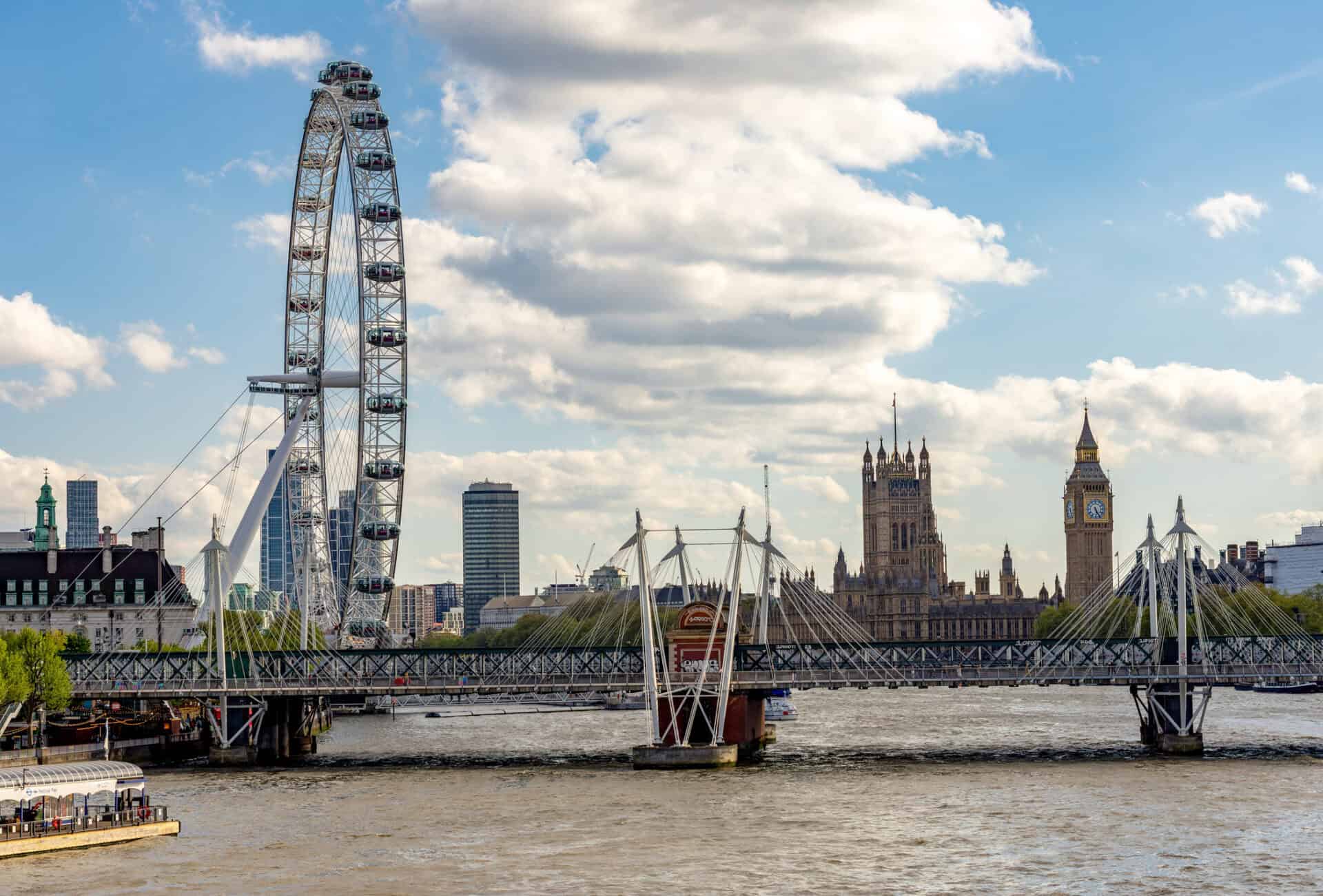
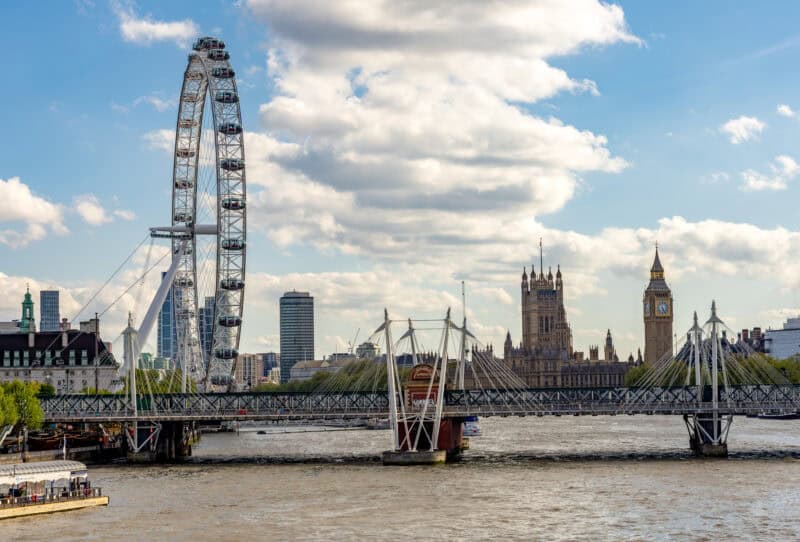
Waterloo Bridge is the easy option when you don’t want bookings, queues or a spending commitment. The Thames gives the skyline breathing room, with the London Eye and Westminster in one direction and the City in the other.
It’s particularly rewarding around sunset, when the changing sky and riverside lights create a more atmospheric view than a midday photograph. But this is a working bridge, not a viewing platform: keep the pavement clear and don’t stop suddenly in front of other pedestrians.
From Waterloo station, head towards the South Bank and Royal Festival Hall before joining the bridge. From Covent Garden, walk towards the Strand and approach from the northern end.
Give yourself room to wander
Arrive while there’s still daylight rather than trying to catch the final moment of sunset. Walk along the bridge before deciding where to pause, because the angle changes as you move.
You don’t need the highest viewpoint to get the most recognisable London photograph. River, sky and a clear foreground often matter more.
For an easy evening, walk from Covent Garden to the bridge, enjoy the changing light, then finish along the South Bank. It works equally well alone or with someone you’ve met during the day, without needing to coordinate tickets.
The trade-off is exposure. Bring a warm layer even if the streets felt comfortable earlier, and keep your phone secure when leaning towards the parapet. If rain or wind makes lingering unpleasant, shorten the bridge crossing rather than forcing the sunset plan.
4. Primrose Hill
Bring something to sit on, pick up picnic supplies before the climb and let the skyline be the backdrop rather than the entire activity. Primrose Hill is best for a relaxed park evening, especially if you’re already exploring Camden or Regent’s Park.
The view is broad rather than close-up. You’ll see central London spread across the horizon, but this isn’t the place for detailed landmark photographs on a phone with limited zoom.
Chalk Farm is a useful station approach. Walk through the surrounding streets towards the park, then allow for the uphill section rather than assuming the station exit puts you beside the viewpoint.
Pair it with Camden, not a cross-city dash
A practical afternoon is to browse Camden, buy your picnic and walk towards Primrose Hill before the evening light changes. That gives the journey a purpose beyond arriving, taking a photograph and immediately heading back.
Best timing: Reach the summit before sunset so you can choose a comfortable spot without rushing uphill.
What to carry: Bring water, a jacket and a bag for your rubbish. A small blanket helps if the grass is damp.
Access reality: The climb is part of the outing. Anyone who struggles with slopes should consider whether a riverside alternative would be more enjoyable.
The hill can feel sociable on a fine evening, but don’t mistake that for guaranteed peace and quiet. If the summit is busy, find space farther down where you can still enjoy the skyline without joining the tightest crowd.
For solo travellers, arriving in daylight also makes it easier to get your bearings and plan the return walk.
5. Parliament Hill, Hampstead Heath
Choose Parliament Hill when you want a proper green-space outing rather than another central attraction. The skyline is the reward for the walk, with enough surrounding heath to turn the visit into a leisurely afternoon.
Visit London’s Sky Garden guide offers an indoor alternative for unsettled weather, but Parliament Hill is the better choice when you want open air and space to roam. Don’t choose between them purely on height: visibility and how you want to spend the day matter more.
Gospel Oak is a practical rail approach for the hill. Plan your route to the viewpoint before wandering deeper into the heath, particularly if you’re arriving late in the day.
Budget for the journey and the ground conditions
The viewpoint doesn’t require an admission ticket, but travelling north solely for a hazy skyline may not be the best use of your afternoon. Check visibility, bring a picnic and give yourself time to explore beyond the summit.
Wear shoes with grip. Paths can be muddy or uneven after rain, and an exposed hilltop is less comfortable when the wind picks up.
Choose the outing first: Parliament Hill is excellent value when you want a walk as well as a view. It’s less compelling as a hurried photography detour.
A useful solo plan is to arrive with lunch, walk up to the viewpoint and then choose a return route suited to the remaining daylight. Save a map on your phone rather than relying on recognising paths after sunset.
If you’re deciding between a park panorama and a more central landmark view, our guide to panoramic views in London helps you compare the experience.
6. Greenwich Park and Observatory Hill
Greenwich’s appeal is the composition: historic buildings in the foreground, the river beyond and modern towers behind them. You don’t need to enter the Royal Observatory to enjoy the hilltop outlook.
Keep the free park visit separate from any paid attraction decisions. Observatory admission is an optional addition, not a requirement for seeing the skyline, so check current charges only if the astronomy and history interest you.
Cutty Sark DLR is a useful arrival point for exploring the town before walking into the park. Greenwich station is another option, particularly if your rail connection is more convenient.
Make it a half-day, not a photo stop
The climb is noticeable, so wear comfortable shoes and carry water. If you’re travelling with someone who has limited mobility, plan the sloping approach carefully rather than assuming an open park means a flat route.
Best conditions: Choose clear weather for the distant skyline and a weekday if you’d prefer a less busy visit.
Food plan: Bring a picnic or decide your food budget before browsing Greenwich Market.
Return route: Walk back through the park and town towards the river, instead of immediately retracing everything to the station.
For example, arrive through Greenwich town centre, climb to the viewpoint, stop for your picnic and finish with a riverside walk. That makes the transport worthwhile without adding a paid attraction.
Don’t try to squeeze Greenwich between distant north London hilltops. It deserves its own outing, and rushing it usually means sacrificing the slower streets and riverfront that make the trip enjoyable.
7. The Monument
The Monument is the paid pick for travellers who enjoy the climb itself. You’re exchanging lift convenience for a narrow staircase and a close-up perspective on the City, rather than buying the widest possible panorama.
BBC Travel’s guide to free and low-cost London views identifies the Monument as a lower-cost alternative to major observation attractions, offering a high-up perspective. Check the current admission charge and ticket arrangements before arriving, rather than relying on an old price quoted elsewhere.
Monument station is the simplest approach. London Bridge also works if you’re coming from Borough Market and want the bridge crossing to form part of the outing.
Decide whether the stairs are part of the fun
There’s no lift alternative to the viewing gallery, so this isn’t a suitable choice for wheelchair users or anyone unable to manage a sustained stair climb. Narrow stairs also mean you’ll need patience when other visitors pass.
Carry less: Leave bulky luggage behind and keep your hands free.
Go early: Aim near the start of the published opening period if you want to reduce the chance of waiting.
Combine sensibly: Pair it with the City streets and riverside, not another paid tower just to collect viewpoints.
Say your Sky Garden reservation falls through. The Monument can be a worthwhile substitute if you’re happy to pay and climb, but it isn’t an equivalent accessibility or indoor-weather option.
8. Alexandra Palace Terrace
Alexandra Palace earns its place for space, atmosphere and a distant sweep of London, rather than convenience from the centre. Known as Ally Pally, it’s a better choice for travellers who fancy a park outing than those trying to tick off landmarks quickly.
The public terrace and surrounding park let you enjoy the outlook without buying an event ticket. However, check the palace’s current event information before travelling, because a major event can change how busy the area feels and which approaches are practical.
Use rail to Alexandra Palace station, then plan for an uphill walk. Don’t assume the station name means you’ll step straight onto the terrace.
Choose clear weather and leave time for the return
Haze matters more here than at a close riverside viewpoint. If the forecast suggests poor visibility, stay central or visit because you want the park, not because you expect a crisp skyline photograph.
A picnic keeps the outing affordable, but bring a layer and check your return connection before settling in. Walking downhill after dark can feel different from arriving in daylight, especially when you don’t know the paths.
A free viewpoint isn’t automatically the best-value viewpoint. Count the journey, the climb and what else you’ll enjoy nearby.
For a typical visit, arrive during daylight, walk up through the park, spend time on the terrace and return without adding another distant attraction. If there’s an event you want to attend, the skyline becomes a welcome extra.
Otherwise, keep expectations realistic: this is a spacious north London escape with a view, not the most efficient stop on a central sightseeing day.
What Each London Viewpoint Costs and How to Reach It
Viewpoint
Cost
Best Time to Visit
Nearest Station
Accessibility
Sky Garden
Free; timed booking required
Late afternoon for daylight and city lights
Monument, Tower Hill or Fenchurch Street
Indoor and outdoor areas; security checks apply
Tate Modern Level 10 Viewing Gallery
Free; special exhibitions may charge
Weekday morning
Southwark or Blackfriars
Level 10 gallery accessible by lift
Waterloo Bridge at Sunset
Free
Sunset
Waterloo, Temple or Embankment
Wide pedestrian pavements; limited seating
Primrose Hill
Free
Around sunset
Chalk Farm or Camden Town
Steep climb may be difficult for visitors with mobility concerns
Parliament Hill, Hampstead Heath
Free
Clear, dry weather
Gospel Oak or Hampstead Heath
Uneven paths; can be muddy in winter
Greenwich Park and Observatory Hill
Park is free; some attractions charge
Weekday
Greenwich or Cutty Sark
Steep climb to the hilltop
The Monument
Paid entry
Early morning
Monument or London Bridge
311 narrow steps; not wheelchair accessible
Alexandra Palace Terrace
Free
Clear day
Alexandra Palace
Park and terrace are open; access details not specified
Build a Budget-Friendly View-Hopping Day
Group viewpoints by neighbourhood, not by how impressive they look in photographs. Sky Garden and the Monument work together in the City, while Tate Modern and Waterloo Bridge make a straightforward riverside pairing. Primrose Hill and Parliament Hill suit a north London day, provided you’re happy with the walking or transport between them.
For a first visit, I’d choose the central route. Start around the City, use your Sky Garden reservation if you’ve secured one, then cross the river and follow Bankside towards Tate Modern. Continue towards Waterloo Bridge if your energy and the weather hold, rather than treating sunset as another appointment you must reach.
Keep the hidden costs under control
Check access before setting off. The Monument’s narrow staircase isn’t wheelchair accessible, while Sky Garden and Tate Modern have lift access, though you should still confirm that the viewing areas you want are operating.
Use contactless buses when a short hop saves tired legs, but walk where the journey itself includes river views. If you’re considering cycling between stops, the urban riding guide from Punk Ride is useful background reading, not a reason to add rental spending to an otherwise walkable day.
Book the fixed stop first: Build around a confirmed rooftop reservation, not hoped-for walk-in availability.
Carry your basics: Water, a supermarket picnic and a weatherproof layer prevent avoidable purchases.
Keep an easy fallback: Bridges and riverside walks are useful when rooftop tickets have gone, provided conditions are comfortable.
Our London properties offer a social base, clean facilities and on-site bars where you can meet fellow travellers after a day exploring the skyline. Visit St Christopher’s to choose your London location and book direct, then plan a nearby free-view walking route around it.
Our direct rates are guaranteed to be at least 5% cheaper than anywhere else online, with a free drink on arrival, 25% off food at the bar, and free cancellation options available.