The Shard delivers London’s highest all-round panorama, while Primrose Hill and Waterloo Bridge are the strongest free alternatives. For a...
Share This Article
The Shard delivers London’s highest all-round panorama, while Primrose Hill and Waterloo Bridge are the strongest free alternatives. For a different kind of skyline, Parliament Hill rises to 98 metres, and the London Eye lifts you 135 metres above the Thames.
London’s best panoramic views aren’t all competing for the same title. Paid observation decks give you height, comfort and broad landmark coverage. Historic towers put you inside the city’s architecture, bridges bring the Thames into the frame, and open hills offer a slower, more local experience without an entry fee.
The right choice depends on your budget, tolerance for stairs, weather, preferred landmarks and whether you want a polished attraction or an outdoor wander. The practical details matter just as much for solo travellers. A view can look spectacular online but be frustrating if it involves long queues, difficult access or a journey that takes up half your day.
Below, each viewpoint includes the experience it creates, the best photography window, nearby transport, accessibility considerations and an easy way to build it into a low-cost London day.
1. The Shard for London Bridge and the widest city panorama
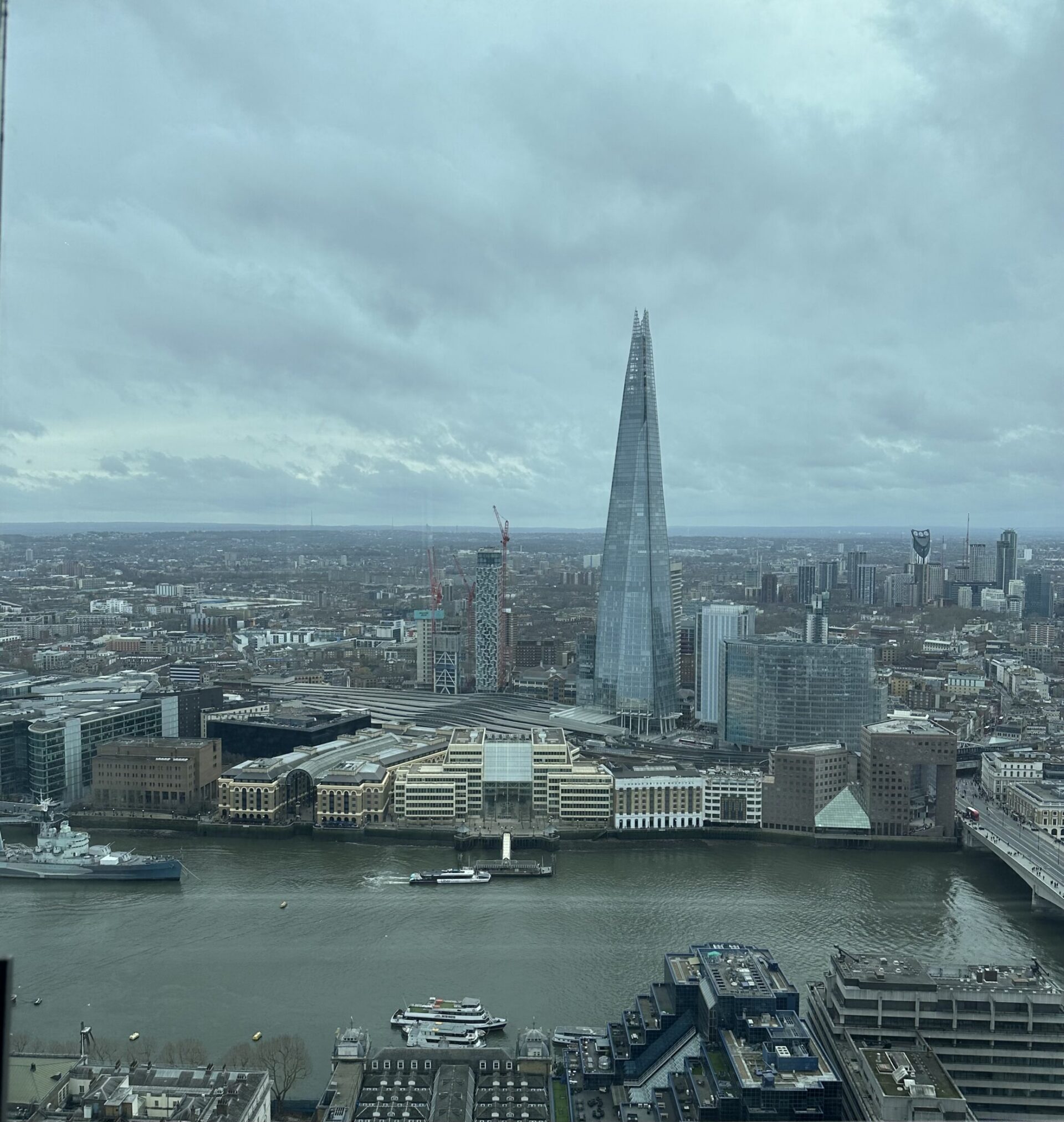
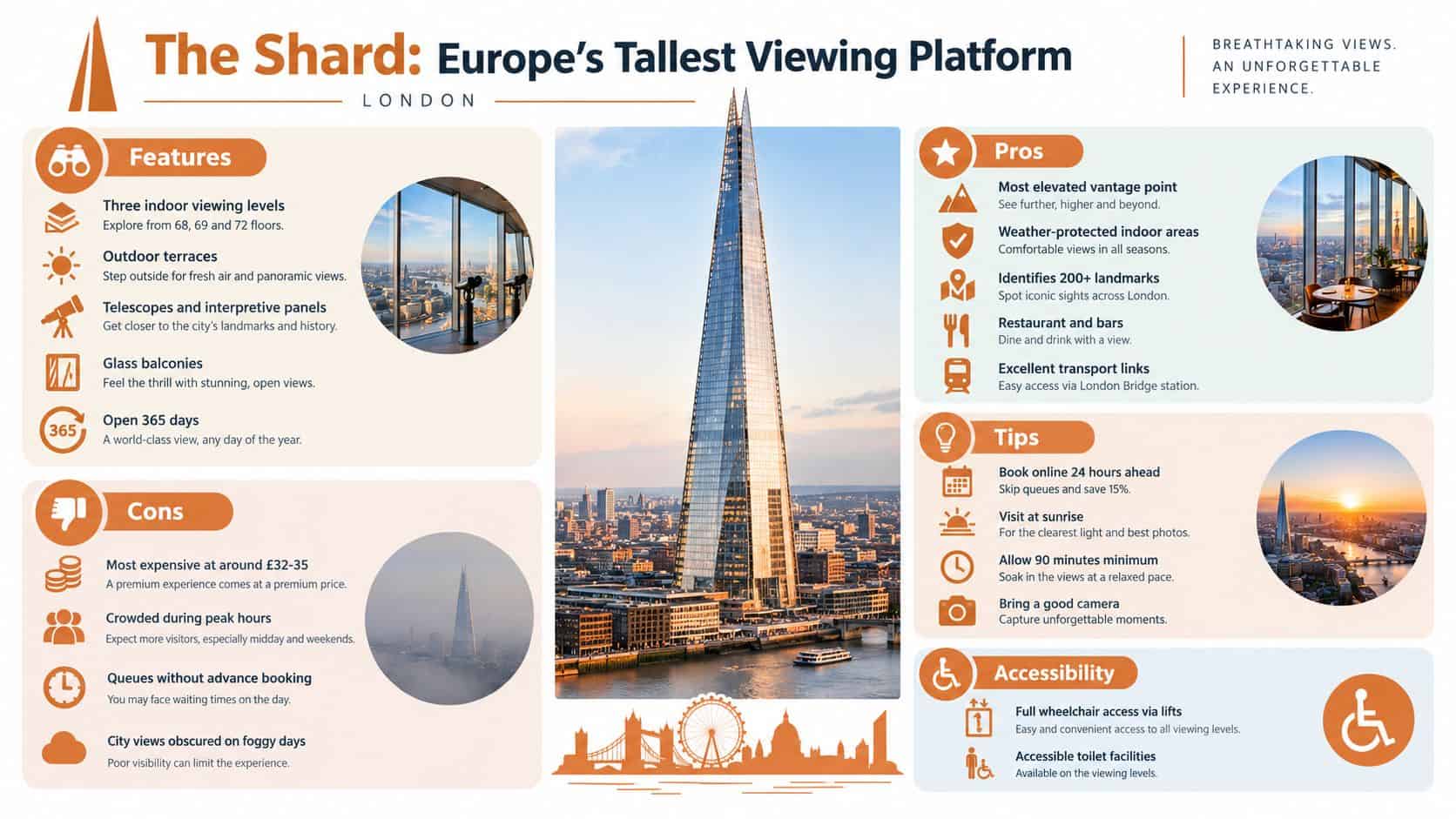
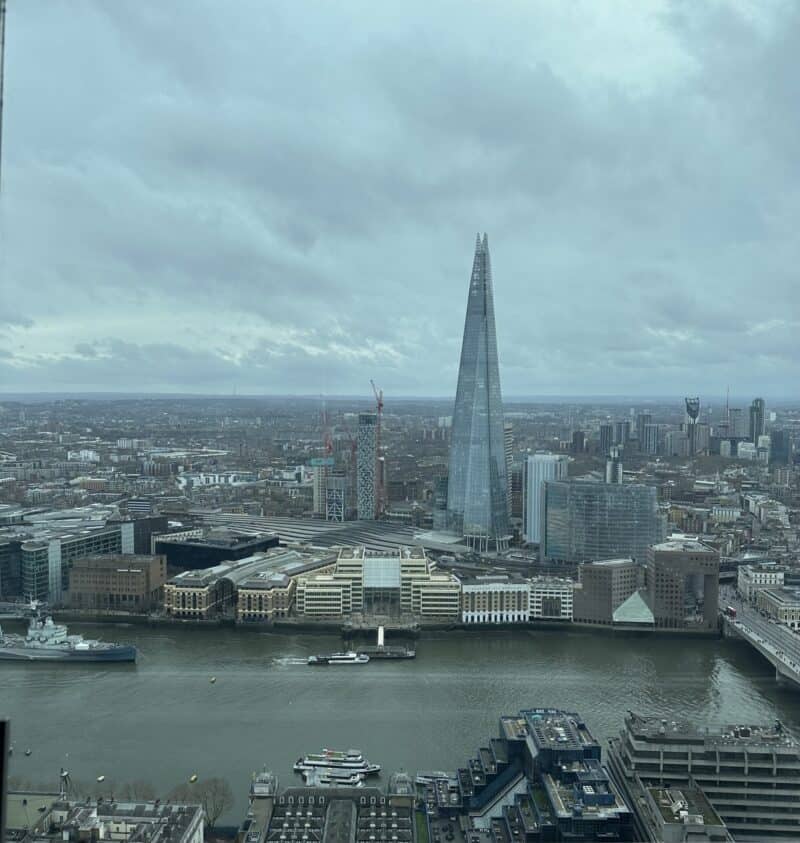
The View from The Shard is the strongest choice if you want one paid attraction to show you as much of London as possible. Its position above London Bridge gives you an expansive outlook over the Thames, the City, South Bank and the capital’s outer edges.
General entry starts at £19, with prices rising to £32 depending on the slot booked. Children under four can enter free, and a family ticket for four is available for £69, according to current visitor information for The View from The Shard.
The experience works well for solo travellers because you can move at your own pace rather than waiting for a group. Clear weather matters more than paying for a particular time of day. On a hazy afternoon, the skyline loses definition, while a bright morning can give you crisp views of the river and individual buildings.
Best use of your time: Pair The Shard with Borough Market and a Thames walk, rather than paying for another observation deck on the same day.
2. St Paul’s Cathedral for history, architecture and stair climbing
St Paul’s Cathedral gives you a more intimate relationship with London than a modern glass observation deck. You’re climbing through one of the capital’s defining buildings, then looking out across the City from within its dome.
The galleries reward patience, but this isn’t the best choice if you want effortless access. The stair route is physically demanding, and the view becomes less rewarding in poor weather. Allow time to pace yourself, carry water and take short pauses rather than treating the climb as a race.
What makes St Paul’s different is the scale of the surrounding city. From here, streets, offices, church towers and the Thames sit close together. You’re not just looking at a distant skyline, you’re reading the historic structure of London from inside a landmark that has shaped it for centuries.
Plan the visit around the wider riverside route
Arrive near opening time if you want a calmer climb. Afterwards, walk down to the Millennium Bridge and continue towards Tate Modern. That route gives you a useful contrast, first viewing London from above, then seeing St Paul’s framed from the river.
3. Tower Bridge for engineering and Thames-level perspective
Tower Bridge offers one of London’s most distinctive combinations of attraction and outlook. The high-level walkways place you above the river while keeping you inside the structure of the bridge, so the view feels connected to the engineering around you.
Look directly along the Thames and you’ll see the river’s curve organising the city. The Tower of London sits nearby, while St Paul’s appears further along the water. This is a different visual experience from The Shard, where the city spreads out beneath you. At Tower Bridge, the river becomes the main subject.
The glass sections are excellent for photographs, although they can make some visitors hesitate. Stand still, hold your phone securely and wait for a clean composition rather than rushing across the walkway. Late afternoon light can bring out reflections on the water and warm the stonework.
Combine the exhibition with a riverside walk
Give yourself time to explore the exhibition as well as the view. Then walk along the Thames towards the Tate Modern or in the direction of Westminster, stopping to photograph the bridge from lower viewpoints.
4. Primrose Hill for a free skyline and a local park day
Primrose Hill is the best free viewpoint for a classic central London skyline without a ticket, booking slot or enclosed platform. The hill rises to 63 metres above sea level, and official visitor information says it’s open daily from 6:00 to 22:00 in this Primrose Hill visitor guide.
The view is broad but not overwhelming. London’s landmarks sit along the horizon, while the surrounding grass and trees keep the scene feeling like a park rather than a financial district. That balance is the attraction. You can take photographs, sit with a coffee or bring a picnic and watch the light change without feeling hurried.
For the clearest photographs, go in the morning or around sunset. After rain, the air can feel cleaner, but the ground may be muddy, so sensible footwear helps. Approach from Chalk Farm for a straightforward route, or enter through Primrose Hill Road if you want a quieter arrival.
“The best free view is the one you can enjoy without watching the clock.”
The hill has an incline and uneven outdoor surfaces, so it isn’t equivalent to a lift-accessible deck. If you prefer a gentler visit, take your time and stop as needed. Continue into Regent’s Park afterwards for a longer, low-cost walk.
5. The London Eye for a slow, enclosed Thames panorama
The London Eye suits travellers who want a panoramic experience without stairs or exposure to wind. Its sealed capsules rotate above the South Bank, giving you a changing view of the Thames, Westminster and the surrounding city rather than one fixed composition.
The wheel stands 135 metres above the River Thames, and the attraction advertises visibility of up to 40 km, or 25 miles, on a clear day, as described by Visit London’s guide to the capital’s best views. Those figures only help when the weather cooperates. On a dull day, the experience becomes more about the movement and the landmark setting than long-distance visibility.
Book a slot that fits your day, with late afternoon often giving the most interesting change in light. Avoid the busiest part of the day if you want more room in the capsule. Once aboard, move around as the wheel turns so you see both Westminster and the wider river corridor.
Make South Bank the main event
Don’t travel to the London Eye just for the ride and leave. Walk along the South Bank afterwards, choosing either the Westminster direction or the route towards Tower Bridge. Street performers, riverside cafés and bridges give you plenty of free opportunities for further photographs.
6. Parliament Hill for green space and a wide natural outlook
Parliament Hill offers one of London’s broadest natural panoramas, with open heath and woodland between you and the city. At 98 metres, it ranks among London’s highest natural viewpoints, with clear-day sightlines towards St Paul’s Cathedral, the Houses of Parliament, the Gherkin and The Shard, according to Hampstead Heath visitor information.
Where Primrose Hill keeps the skyline close, Parliament Hill gives you space, quiet and a proper walk before the city appears. The resulting photograph feels less like a landmark portrait and more like a distant urban band framed by grass, trees and open sky.
Allow extra time for Hampstead Heath’s uneven paths and unavoidable inclines. Early morning usually brings a quieter atmosphere, while late afternoon can add warmer tones to the skyline. Visibility depends heavily on weather, so check conditions if distant views matter to your plans.
Turn the viewpoint into a half-day walk
Begin in Hampstead, walk through the village, then continue into the Heath. Bring or buy a picnic and leave time to explore. Solo travellers can set their own pace here, without fitting the visit around an attraction slot or timed entry.
For a budget-conscious day, the viewpoint and Heath cost nothing, leaving your spending for food in Hampstead or a picnic.
7. Canary Wharf for modern London and docklands reflections
Canary Wharf tells a different story from the viewpoints focused on Westminster, St Paul’s and the older City. Here, glass towers, docks and the changing architecture of east London dominate the outlook. The Thames appears as part of a working, redeveloped stretch rather than a historic procession of monuments.
One Canada Square rises to 235 metres, forming the district’s most recognisable vertical marker. The area is useful for photographers who want strong geometric lines, reflections and a skyline shaped by modern finance. Across the river, Greenwich provides a contrasting layer of older architecture and open space.
Visit in the afternoon if you want light on the water and buildings. Sunset can be especially effective around the docks, where the reflections change as the sky darkens. The district also works well as a walking destination, with the Thames Path offering a route west towards Tower Bridge.
Photography tip: Use the docks as foreground, not just the skyline. Reflections and repeating lines often create a stronger image than a straight view across the towers.
Take the Jubilee line to Canary Wharf, then explore on foot. Check the specific observation venue’s current access arrangements before travelling, as public viewing policies can change.
8. Waterloo Bridge for the classic free river photograph
Waterloo Bridge is arguably the best free option for a landmark-focused photograph. From the pedestrian walkway, St Paul’s Cathedral appears upstream, while the river, boats and surrounding buildings create movement across the frame.
The bridge doesn’t give you the height of The Shard or the quiet of Parliament Hill. Its strength is position. You’re standing within the city’s geography, close enough to notice the Thames traffic and far enough back to see several major landmarks working together.
Cross slowly rather than treating it as a route between stations. Early morning brings more space and softer light, while evening gives you illuminated buildings and reflections. The viewpoint changes as you move, so stop at several points instead of taking one photograph and continuing.
Build a free central London route
Start on the South Bank, cross Waterloo Bridge, then continue towards Covent Garden or St Paul’s. You can also approach from Somerset House and finish beside the river. This makes the bridge easy to include in a day that already features galleries, markets or riverside walks.
9. Richmond Hill for a countryside panorama within London
Richmond Hill gives you a view of London that feels more like a painting than a city postcard. The hill rises to 70 metres, and the view follows the Thames as it curves through parkland. On a clear day, Windsor Castle can be visible, according to Visit London’s overview of the city’s best views.
This is the right choice when you want to see London’s relationship with open countryside. The skyline doesn’t dominate the frame. Instead, the river valley, trees and parkland lead your eye towards the wider region.
Richmond works best as a full-day destination. Walk down from the hill towards the river, explore the surrounding parkland and continue along the Thames Path if the weather is comfortable. Kew Gardens can also form part of a longer west London itinerary, although you’ll need to check opening arrangements and allow enough time.
Choose a clear day and slow down
Overcast weather can flatten the view, so check the forecast before committing to the journey. Early morning and late afternoon usually offer more atmospheric light, while a picnic gives you flexibility if you want to stay longer.
10. The Monument for a compact historic climb
The Monument to the Great Fire of London is a small, intense viewpoint rather than a relaxed observation deck. The column rises to 61 metres, and reaching the viewing platform involves climbing 311 steps, as recorded in this accessibility-focused London views guide.
That climb is the main trade-off. The Monument isn’t suitable for anyone looking to avoid stairs, confined spaces or physical exertion. For those comfortable with it, the ascent gives the visit a sense of achievement that lifts and escalators can’t replicate.
At the top, the City feels compressed. Medieval street patterns sit beside contemporary towers, and the viewpoint reveals how old and new London occupy the same small area. The platform is enclosed, so it doesn’t provide the same open-air feeling as a hill or bridge, but the historic setting adds character.
Go early or later in the afternoon to reduce the chance of a crowded climb. Bring water and pace yourself. The Monument pairs naturally with Leadenhall Market, the area around St Mary Axe and a walk towards Tower Bridge.
Top 10 Panoramic Views in London, Comparison
Viewpoint
Access & Ease
Cost & Time
View Quality & Expected Outcome
Ideal Use Cases
Key Advantages
Main Limitations
The Shard
Easy access (lift, above London Bridge); low physical effort
Paid (~£32–35); allow 90 mins; book online to skip queues
Highest-altitude 360° panoramas; long-distance visibility on clear days
Sunrise/sunset photography; first- time visitors wanting wide city overview
Most elevated vantage; indoor climate control; interactive displays
Most expensive; crowded peak hours; weather can obscure views
St Paul’s Whispering Gallery
Stair climb (528 steps to highest galleries); physically demanding
Paid (cathedral entry); allow 60–90 mins
Intimate, layered city views; close- range architectural perspectives
Cultural visitors who want architectural immersion with views
Unique acoustic/architectur al experience; fewer crowds than big decks
Not wheelchair accessible; steep stairs; less expansive panorama
Far from central London; needs full- day commitment; less urban skyline focus
Monument to the Great Fire
Stair climb (311 spiral steps); narrow ascent
Low cost (~£5–6); allow ~45 mins
Intimate 360° City views emphasizing medieval street layout
History/architecture enthusiasts; compact City visits
Low cost; open platform for unobstructed photos; historical significance
Tight spiral stairs (claustrophobic); not wheelchair accessible; exposed summit
Choose Your View, Then Make a Day of It
There's no universal winner among the best panoramic views in London. Choose The Shard when maximum height, comfort and broad coverage matter most. Choose Primrose Hill or Waterloo Bridge when you want a memorable free photograph without booking an attraction. The two experiences are quite different, Primrose Hill gives you grass, distance and open air, while Waterloo Bridge puts the Thames and central landmarks directly into the composition.
St Paul's Cathedral and the Monument suit travellers who want history with their panorama and don't mind climbing. St Paul's offers a richer architectural visit, while the Monument is more compact and physically intense. If stairs aren't suitable, prioritise venues with lift access or outdoor paths that match your mobility needs. One independent guide identifies The Shard, Sky Garden, The London Eye, The Garden at 120, The Look Out at 8 Bishopsgate and One New Change as lift-accessible, while Primrose Hill and Parliament Hill use accessible paths with inclines.
Sky Garden is a particularly useful budget option, but free doesn't mean spontaneous. Entry is controlled through timed bookings available up to three weeks in advance, each ticket is valid only for the booked time and visits are limited to one hour, according to Sky Garden's visitor information. Its official opening hours are 10am to 6pm on weekdays and 11am to 9pm at weekends, as stated on the official Sky Garden site.
Weather should influence your plan. The Greater London Authority describes panoramic views as high, publicly accessible vantage points generally 3 to 10 km from a protected area, and its views strategy highlights how tree cover can obstruct some outlooks in summer. That's a useful reminder to check the season, not just the map. A viewpoint can be technically open while foliage, haze or low cloud makes the panorama disappointing.
For a green setting, Parliament Hill is the stronger choice than Primrose Hill, while Richmond Hill offers the most countryside-led experience. Richmond's BBC coverage includes panoramic images and virtual tours, and London's visual heritage extends well beyond modern towers. The London Museum preserves a bird's-eye drawing of London by William Wordsworth from around 1806, showing that high vantage points have been part of the city's cultural memory for more than two centuries, as described in the BBC's London views feature.
Don't pay for several decks in one trip. Pick one paid experience, then add a bridge, hill or riverside walk nearby. Solo travellers can keep the day flexible, save on repeated admission and see how the same skyline changes from different distances.
St Christopher's gives solo travellers a central, social base for this style of trip, with London properties near areas such as London Bridge and Camden. Booking direct can include a free welcome drink and 25% off food at its bars, subject to current terms. The value is practical as well as social, central locations can reduce transport time, while on-site bars give you an easy place to meet other travellers after a day of exploring.
Before leaving, check the attraction's current opening times, booking rules, weather and accessibility information. Then choose the view that matches your day, not just the one with the highest number attached to it.
St Christopher's offers central London hostels with clean dorms and private rooms, social spaces and lively on-site bars where travellers can meet without leaving the building. Visit St Christopher's to find a convenient base for reaching The Shard, Primrose Hill, Waterloo Bridge and London's other panoramic viewpoints.
Our direct rates are guaranteed to be at least 5% cheaper than anywhere else online, with a free drink on arrival, 25% off food at the bar, and free cancellation options available.