You’ve got a backpack, a Friday evening arrival and roughly 48 hours in Berlin before the return journey starts. The...
Share This Article
You’ve got a backpack, a Friday evening arrival and roughly 48 hours in Berlin before the return journey starts. The temptation is to sprint from Brandenburg Gate to a museum, then cross the city for street art, nightlife and one last currywurst. Don’t. Berlin rewards a bit of structure, especially when you’re travelling solo and every unnecessary train ride eats into the weekend.
The smart approach is to settle the transport question first, sleep near the sights and pair neighbourhoods that naturally fit together. Berlin’s central historical axis works brilliantly for day one, while Friedrichshain and Kreuzberg deliver the street life, food and late nights on day two. This is a practical plan for seeing the city without turning your break into a checklist.
Arriving in Berlin with a Plan
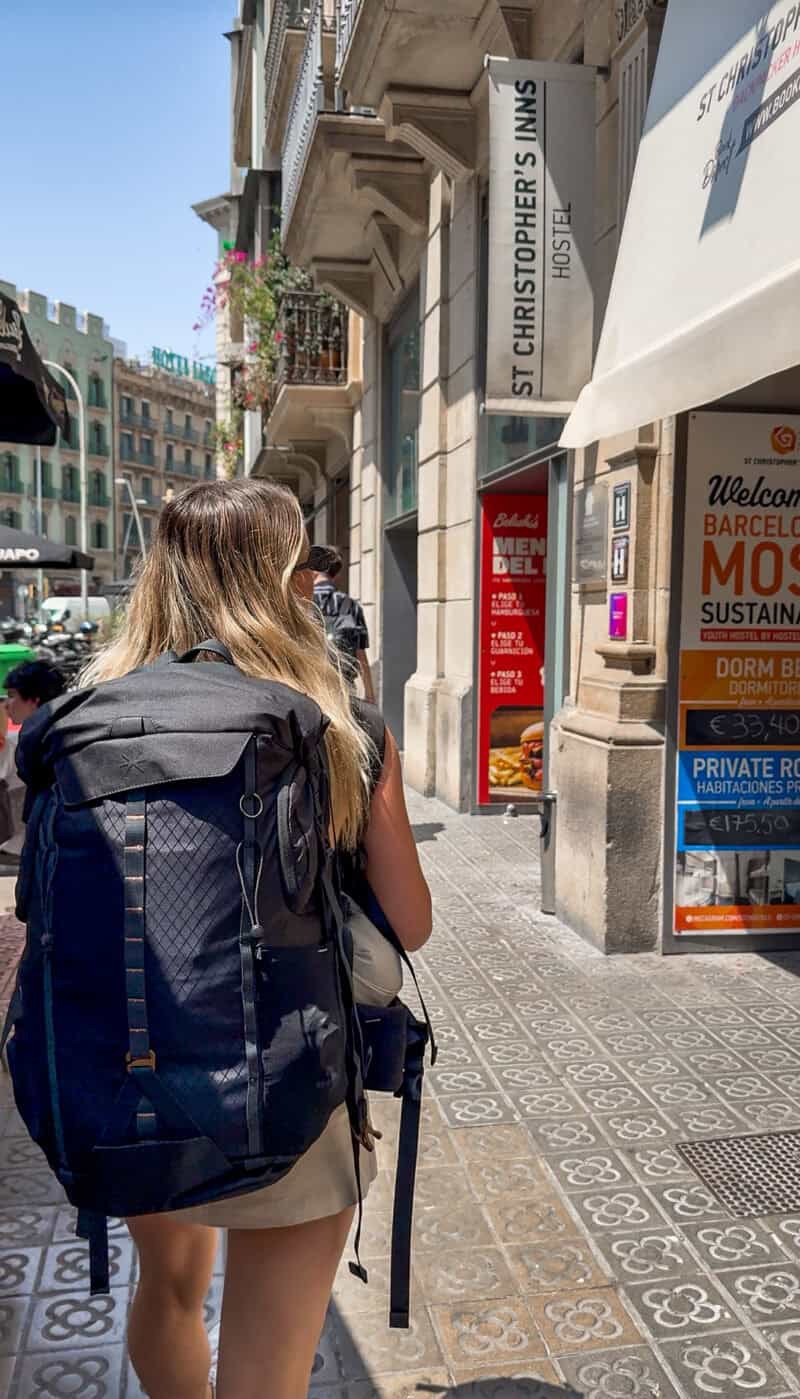
I step off the FEX at Berlin Hauptbahnhof on a Friday evening, backpack hanging from one shoulder, phone buzzing with hostel check-in details. The station is huge, the platforms are busy and I’ve got three immediate decisions to make. Which ticket should I buy? Which part of the city should I sleep in? Do I drop my bag and go straight out, or accept that an early night might save the whole weekend?
My advice is simple. Stay central, buy the correct transport zone and don’t waste Friday night trying to prove you’ve arrived. Mitte and the area around Alexanderplatz give you the easiest start for Berlin’s historic sights. Friedrichshain and Kreuzberg are better for street art, food and nightlife, but you can reach them easily once you’ve got your bearings.
Berlin has a particularly strong connection with UK visitors. In 2024, travellers from the United Kingdom generated approximately 1.4 million overnight stays, an 11% increase compared with 2023, making the UK the city’s largest foreign source market by overnight stays, according to Berlin’s 2024 tourism review. Those figures count nights rather than individual people, but they still show that a short Berlin break is a well-established trip rather than a niche idea.
The first decisions matter
If you’re splitting accommodation or shared travel costs with friends before arriving, a per-person split calculator can make the budget clearer. Solo travellers don’t have that particular problem, but the same principle applies. Decide what deserves your money before you start tapping a card at every station machine and museum desk.
Friday-night rule: Check in, eat something, walk around your immediate neighbourhood and save the serious sightseeing for Saturday morning.
The rest of this guide answers those Friday questions directly. You’ll get a transport decision rather than a vague recommendation, a central first day, an east Berlin second day and practical ways to keep the social side of solo travel going without paying for unnecessary taxis or crossing the city repeatedly.
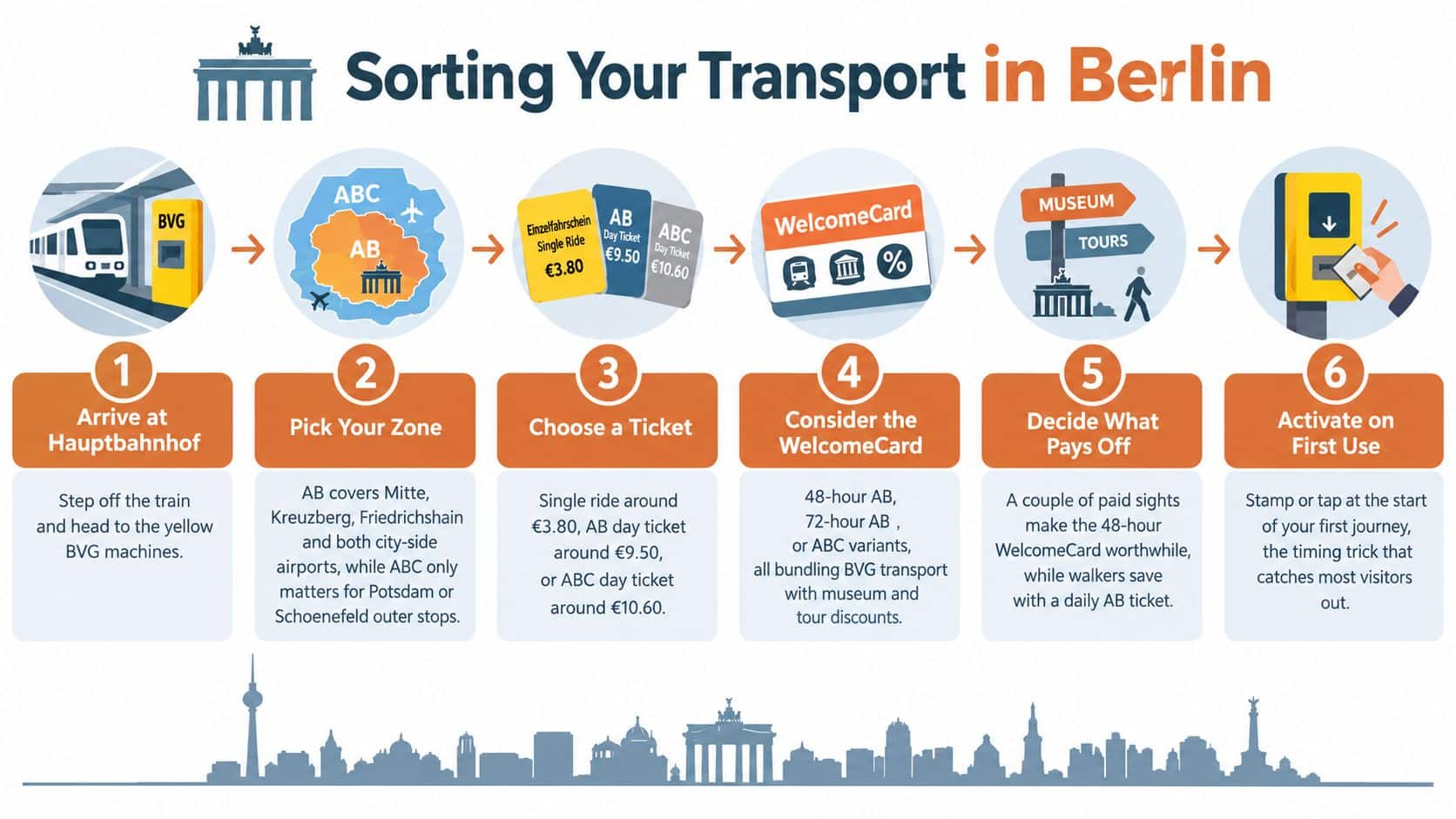
Sorting Your Transport and the WelcomeCard
Berlin’s public transport is good enough that you don’t need taxis for a normal sightseeing weekend. The network combines S-Bahn and U-Bahn trains with trams, buses, regional trains and ferries, so the main job is choosing the right ticket rather than finding a clever route.
For most short visits, AB is the zone you need. Zone A covers central Berlin and the S-Bahn Ring, while Zone B reaches the city limits. Zone C includes the outer suburbs, Potsdam and Berlin Brandenburg Airport. If you’re flying into BER, you need an ABC ticket for the airport journey. An AB ticket won’t cover that leg.
Ticket
Approx. price
Best for
Single journey
Check current fare
One or two planned trips
AB day ticket
Check current fare
Visitors walking between central sights
ABC day ticket
Check current fare
BER, Potsdam or outer suburbs
Berlin WelcomeCard, 48-hour AB
€28.50
Two days with several journeys and paid attractions
Berlin WelcomeCard, 48-hour ABC
€34.50
Two days including BER or Potsdam
The official Berlin WelcomeCard information confirms the 48-hour prices of €28.50 for AB and €34.50 for ABC. The card covers travel in the selected zone and offers reductions of up to 50% through more than 170 participating attractions and partners. That makes the AB version a sensible choice if you’ll use public transport several times and enter a couple of paid sights.
Which ticket actually pays off
Choose the 48-hour AB WelcomeCard if your weekend includes Museum Island, several U-Bahn or S-Bahn journeys and a few attractions with participating discounts. Choose ordinary AB tickets if you’re staying centrally, walking between Brandenburg Gate, the Reichstag and Museum Island, and only using transport occasionally.
Choose ABC when the itinerary includes BER, Potsdam or another Zone C journey. Don’t buy it merely because it sounds like it covers more ground. For airport travel, direct services include the S9 and S45 S-Bahn lines, the FEX and regional RB or RE trains, as outlined in the BVG tourist transport guidance.
The key trick is activation. A 48-hour ticket runs continuously from validation, not from midnight on the day you buy it. If you arrive in the afternoon but won’t travel until the evening, don’t activate it at the machine just because you’ve purchased it. Start the clock when your first journey begins.
Start around 9am with coffee and a buttery pretzel near your accommodation, then walk south through Mitte. The first day should feel concentrated rather than frantic. Berlin’s major historical sights sit close enough together that you can cover a lot on foot, provided you resist the urge to add every museum and viewpoint to the same morning.
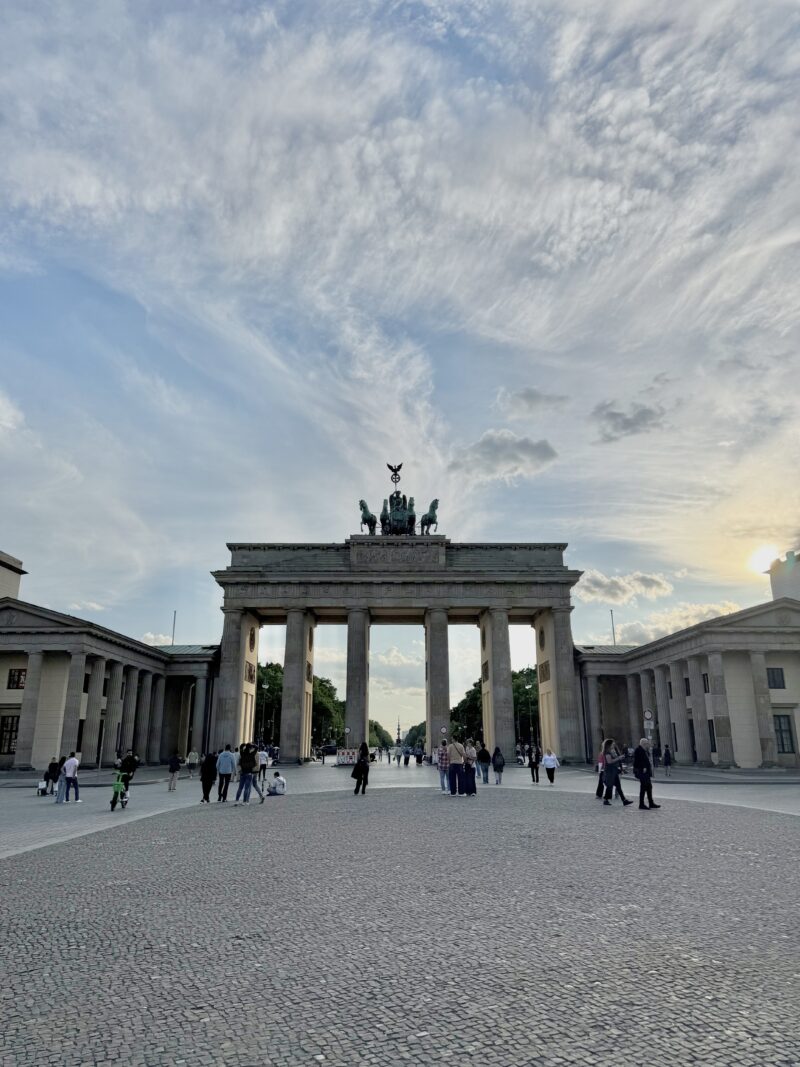
Begin at Brandenburg Gate while the light is still soft and the crowds are manageable. Walk towards the Reichstag afterwards, but only build the dome into your schedule if you’ve registered in advance. The dome is free, yet the Bundestag’s visitor information makes clear that advance registration is required. Bring valid photo identification, and treat the booking as the fixed point around which you arrange the morning.
A strong central route
From the Reichstag, cross towards the Memorial to the Murdered Jews of Europe. Give it proper time rather than treating it as a photo stop. The concrete columns create an intentionally disorientating space, and the underground information centre adds essential context.
Continue towards Checkpoint Charlie, then spend at least 45 minutes at the Topography of Terror. The outdoor sections are free, and the site gives the surrounding streets a historical weight that you’ll miss if you only photograph the checkpoint sign. Berlin’s geographical itinerary guidance supports this central-first sequence, with the east-central districts reserved for the following day.
Lunch should be unfussy. Pick up currywurst around Friedrichstrasse rather than losing an hour at a sit-down restaurant. You’ll need your energy for Museum Island, where the biggest mistake is trying to see everything. Berlin’s official museum ticket information lists the Museumsinsel-Ticket at €24, valid for one day across the participating institutions, including the Neues Museum, Alte Nationalgalerie, Altes Museum, Bode-Museum and Pergamonmuseum Das Panorama. Check opening days carefully, because the museums close on Mondays and some also close on Tuesdays. See the official Museum Island ticket information before committing.
Pick one major museum, or two at most. Choose the Neues Museum if seeing the Nefertiti bust is your priority. Choose Pergamonmuseum Das Panorama for a focused archaeological experience while the main Pergamon building remains unavailable. The point is to leave with memories, not museum fatigue.
A late-afternoon walk beside the Spree takes you towards Hackescher Markt for dinner. If you’re travelling alone, this is a good time to join a walking tour or small group activity, and resources such as Samba for city tour operators can help tour organisers find suitable city experiences. Finish with one or two drinks near your accommodation, not a full club night. Berlin’s second day is better when you’re not already running on fumes.
Day Two in the East
Start around 9am with coffee, then head to the East Side Gallery. Get there early enough to walk along the remaining wall without constantly stopping for other people’s photographs. The murals are colourful, but the location matters just as much as the artwork. You’re following a physical remnant of the city’s division, not merely visiting an open-air gallery.
Walk towards Friedrichshain and take a late brunch near Boxhagener Platz. If it’s Sunday, the flea market adds a useful browse before the area gets busier. From there, continue towards Kreuzberg rather than doubling back to Mitte. That east-central pairing is exactly why this day works better geographically than a city-wide list of attractions.
Street life, parks and a flexible afternoon
Kottbusser Tor is a good entry point for Kreuzberg’s street life. Stop for falafel at Mustafa’s if you’re prepared to queue, or choose Mustafa’s Gemüse Kebap nearby when you want food rather than a long wait. Continue through Görlitzer Park, keeping your phone and wallet zipped away in crowded areas.
If it’s Sunday, Mauerpark is the obvious afternoon choice for flea-market browsing and bear-pit karaoke. If it isn’t, choose between RAW-Gelände and Tempelhofer Feld. RAW-Gelände suits travellers who want alternative venues and urban textures. Tempelhofer Feld gives you open space on the runways of a former airport, a welcome change after two days of buildings and pavements.
Your late afternoon should reflect your interests:
Art lovers: Try C/O Berlin or the Boros Collection, checking opening rules before setting off.
History fans: Use the DDR Museum or return to a section of the Topography of Terror that you rushed on day one.
Nightlife-first travellers: Rest at your accommodation, eat properly and start the evening in Friedrichshain rather than arriving at a club exhausted.
Berlin nightlife needs flexibility. Berghain, Watergate and smaller venues all have their own rhythms, and a queue isn’t a guarantee of entry. A pub crawl can be easier for a solo traveller because you meet people before deciding where to stay later. Finish with a late-night döner, then call it a night when the city finally starts to quieten.
Budget Eats by Neighbourhood
A budget food plan starts with your neighbourhood, not a restaurant list. For a solo traveller, Imbisse are the quickest way to get a filling meal, markets let you compare several stalls, and a sit-down main works best when you want to rest rather than rush between sights. Choose the area you are already exploring and you will save both money and time.
Prices vary by venue and change over time, so treat these patterns as planning guidance rather than fixed rates. Smaller Imbisse and market stalls often offer better value than restaurants aimed at visitors. Ask whether a stall accepts cards, and keep some cash for places that do not.
Match the meal to the neighbourhood
Mitte is convenient for a meal between central sights, but convenience can come with a higher bill. Use it for a quick döner, falafel or currywurst rather than spending your limited evening on a long restaurant meal. If you are already in Kreuzberg, stay there for a food crawl. Mustafa’s is famous for a reason, although the queue can consume too much of a short weekend. Choose Mustafa’s Gemüse Kebap nearby when you want the dish without committing to the longest wait.
Burgermeister by Schlesisches Tor U-Bahn is another distinctly Berlin stop, set beneath the railway arches. Markthalle Neun gives you more choice when you would rather browse several stalls than commit to one plate. Kreuzberg is my first pick for affordable variety, especially when travelling alone and wanting food that feels like part of the neighbourhood.
Friedrichshain suits a casual dinner before drinks, with plenty of relaxed options around the evening route. Neukölln is a good choice for Korean fried chicken around Sonnenallee and a more local atmosphere. Pair it with Kreuzberg if you want two food-focused neighbourhoods in one day, rather than crossing the city for a single meal.
In Prenzlauer Berg, Konnopke’s Imbiss is the classic currywurst stop. The area also rewards a slower wander, so it works better for an unhurried lunch than a rushed stop between major attractions.
Vegetarians get strong value from falafel, Turkish market food and Berlin’s broad range of casual Middle Eastern restaurants. Use this Berlin foodies’ budget guide to shortlist a meal before crossing town.
Late-night opening changes, especially on Sundays. Check hours before leaving, eat before joining a club queue and keep a little cash with you. Treat the final döner as part of the plan, not a meal you hope to find after everything else has closed.
Where to Stay and Why Central Saves Money
For a 48-hour trip, central accommodation is usually the affordable choice once you count time, transport and late-night decisions. Sleeping far out may look appealing on a booking screen, but a long journey back after Kreuzberg drinks, a night bus replacement or a club queue can quickly erase the saving.
The money-saving calculation: A central bed can cost more on paper than a distant one, but it may save transport, late-night fares, wasted daylight and the temptation to pay for a taxi when you’re tired.
Packing, Safety and Tailoring the Weekend
Berlin involves more walking than first-time visitors expect, so pack for pavements rather than photographs. Comfortable shoes matter more than a second outfit, particularly when day one runs from the Reichstag to Checkpoint Charlie and Museum Island.
A winter or shoulder-season bag should include:
Waterproof layer: Berlin weather can turn quickly, and a light jacket packs more usefully than a bulky coat.
Reusable bottle: Fill it before setting out rather than buying a drink every time you feel thirsty.
Power adapter: Charge your phone before leaving for the evening, especially if you’re using maps and transport apps.
Small zipped bag: Keep your passport, cards and phone closed away in crowded stations and busy parks.
UK government advice says crime levels in Germany are similar to those in the UK, while recommending extra vigilance against pickpocketing and bag-snatching at airports, railway stations and crowded public places. Keep valuables secure around Kreuzberg parks, Hauptbahnhof and packed train carriages. Also watch the cycle lanes. Berlin cyclists move quickly, and stepping into a marked lane while checking your map is a good way to start the weekend badly. The official UK safety guidance for Germany is the right final check before departure.
Three ways to adjust the route
Art lovers: Swap part of the second-day park time for C/O Berlin or the Boros Collection, then keep the evening in Friedrichshain.
History fans: Add the DDR Museum, protect your time at the Topography of Terror and register for the Reichstag before you travel.
Nightlife-focused travellers: Sleep late after the first evening, arrive at clubs before midnight when practical and keep the final afternoon light enough that you still have energy for the queue.
Activate your WelcomeCard on the first journey, not automatically when you arrive. Register for the Reichstag dome at least two weeks ahead, check museum opening days and download the transport app before leaving the station. Fewer cross-city transfers will give you more Berlin, not less.
St Christopher’s offers central, social bases in Berlin, with clean dorms and private rooms, lively on-site bars and direct-booking extras such as a welcome drink and 25% off food. For a weekend built around walking, meeting people and keeping transport costs under control, visit St Christopher’s and choose your Berlin base before you travel.
Our direct rates are guaranteed to be at least 5% cheaper than anywhere else online, with a free drink on arrival, 25% off food at the bar, and free cancellation options available.