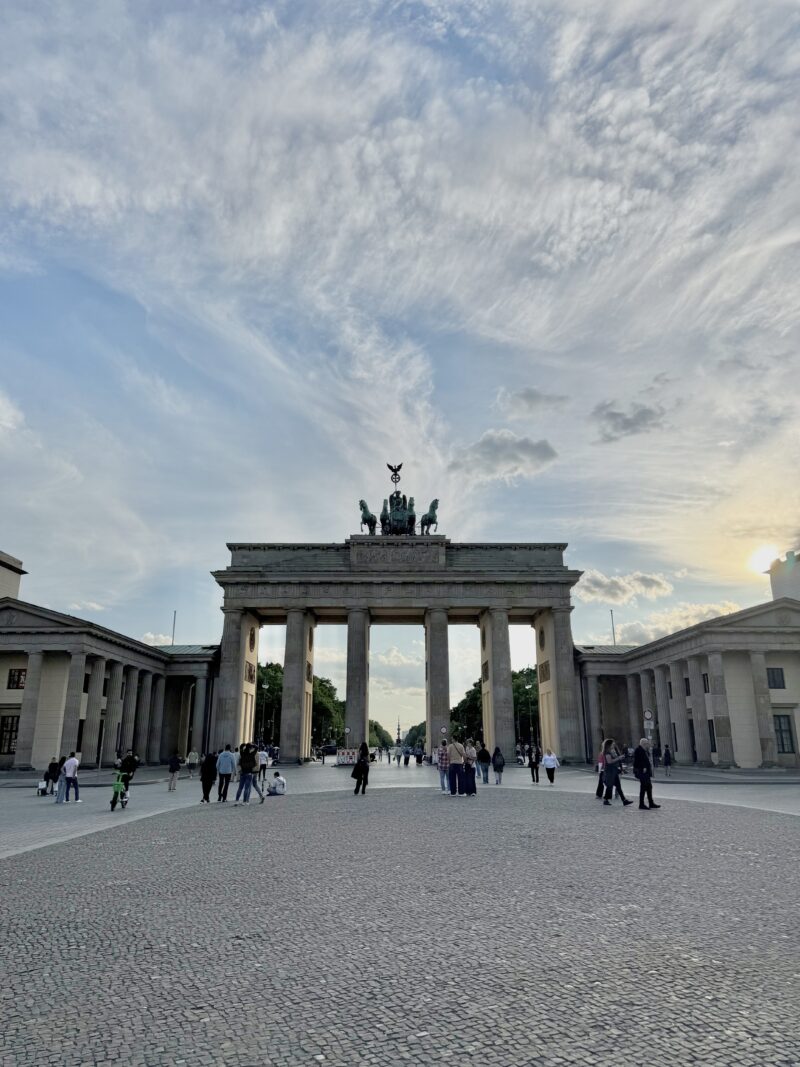
You’ve done the Brandenburg Gate photo, queued for the TV Tower, and walked the East Side Gallery with everyone else...
Share This Article
You’ve done the Brandenburg Gate photo, queued for the TV Tower, and walked the East Side Gallery with everyone else who landed that morning. Now you’re wondering where Berliners spend a free afternoon, and how you do it without spending a fortune or feeling like the only solo traveller in the room.
That’s where these underrated things to do in Berlin earn their place. They’re affordable, social, and mostly easy to reach from central Mitte and Alexanderplatz. You’ll get former runways turned into picnic fields, a market hall where dinner costs less than a club entry fee, quiet courtyards five minutes from Hackescher Markt, and a Sunday park where strangers sing together.
The pattern works because Berlin rewards neighbourhood hopping. Demand is strong, with visits to Berlin museums and memorials up 22% in the figures reported in visitBerlin’s review of 2023 tourism growth, so headline sights feel busier than ever. Pair one big name with one smaller stop, travel by U-Bahn or tram, and you’ll see more variety for less money.
Each suggestion below includes transport, best timing, what to bring, and the honest trade-off. Some are free and step free. Others involve hills, stairs, or darkness, and I’ll flag that clearly. At the end, you’ll find simple one, two, and three day routes you can copy, plus tips for meeting people without paying for an organised tour every day.
1. Tempelhofer Feld
Free, vast, and slightly surreal, Tempelhofer Feld is the easiest win on this list. It’s a former airport in southern Berlin, closed in 2008, where the old runways are now wide, car free paths for cycling, skating, kite flying, and lazy picnics. There’s no ticket desk and no timed entry, which helps when your plans drift.
The scale is the point. On summer evenings, locals settle along the tarmac with barbecues and drinks while the sky opens up above Neukölln and Tempelhof. At weekends, kite flyers and skaters take over the straight runs, and solo travellers blend in easily with a book, a bike, or a supermarket picnic.
Getting There and Making It Work
Take the U6 to Platz der Luftbrücke: Handy for the northern entrances and the old terminal side.
Take the U8 to Boddinstraße: Better if you’re coming from Alexanderplatz or staying near Neukölln.
Hire a bike nearby: The marked paths make a full loop simple, even if you haven’t cycled in a while.
Eat before you enter: Grab food on the Neukölln streets nearby, as on site options are limited and scattered.
Go late afternoon in summer for sunset and cooler air. Midday can feel exposed, with little shade once you’re on the runways. Bring water, sun cream, and a light layer, because wind picks up fast across open tarmac.
Practical rule: Treat Tempelhofer Feld like a beach without the sea. Arrive fed, carry water, and plan your exit station before you wander, because distances inside are bigger than they look.
It’s also one of the more accessible picks for step free wandering once you’re in, thanks to flat former runways. The journey still matters, so check lift status at your station on the day.
2. Teufelsberg
Teufelsberg is the dramatic one, and it’s not for everyone. This man made hill in the Grunewald forest was built from Second World War rubble, then used as a Cold War listening station run by the United States. The abandoned domes and buildings are now covered in large scale street art, with views back across Berlin on clear days.
Go for the contrast. One minute you’re walking through quiet forest, the next you’re looking at torn radar domes, painted stairwells, and murals that change as artists add new work. Street art fans treat it as a rotating outdoor gallery, while history fans come for the listening station story.
Many visitors pair a guided tour with time by the nearby Grunewald lakes in warmer months. If abandoned places are your thing, read up on Berlin’s other abandoned sites and how to visit them safely before you build a whole day around ruins.
The Honest Trade Offs
Book ahead at weekends: Guided slots fill first, and turning up hopefully can waste the forest walk.
Take the S3 to Grunewald: Allow 20 to 30 minutes on foot through the forest from the station, with an uphill finish.
Wear sturdy shoes: Paths can be steep, uneven, and muddy after rain, and parts of the site feel rough underfoot.
Visit in daylight: The site isn’t lit like a central museum, and you want daylight for both art and footing.
Bring water and don’t rely on buying supplies at the top. Solo travellers often prefer a tour here, not for safety theatre, but because guides explain what you’re looking at and you naturally meet people in the group.
This is an underrated thing to do in Berlin if you’re fit, curious, and bored of polished exhibitions. Skip it if stairs, hills, or uneven ground are a problem. Underrated shouldn’t mean hard to reach at any cost.
3. Badeschiff Berlin
Swimming in a pool that floats on the River Spree sounds like a gimmick until you’re in the water looking back at the city. Badeschiff, over in Treptow, is built inside a former cargo ship structure and runs as a summer hangout with a sunny terrace, a relaxed bar, and space to stretch out between swims.
Locals treat it as an afternoon plan rather than a quick dip. People claim a spot on the sun deck with a drink and a book, swim, dry off, repeat. Evening sessions and events pull in a mix of Berliners and travellers, so it’s social without forcing conversation.
Take the S-Bahn to Treptower Park, then walk along the river. The stroll helps, because you’ll spot the entrance and get your bearings in an area most first time visitors only pass through. From Alexanderplatz and Ostkreuz, the route is straightforward with one main transport leg.
When to Go
Weekday afternoons are the sweet spot if you want a quieter swim and a better choice of deck space. Hot weekends get busy early, and queues can eat the relaxed mood you’re paying for. Always check the opening calendar before you go, as dates change each year and weather can affect summer opening.
Pack like you mean it. Bring a towel, sun cream, and a lock for your belongings if you plan to swim properly and leave your bag. Solo travellers should keep valuables locked away or in a waterproof pouch you can keep close.
Arrive fed or plan food nearby in Treptow or Kreuzberg afterwards. Badeschiff works best as a slow afternoon, not a rushed stop between museums across town.
The downside is simple. It’s seasonal, weather dependent, and less appealing on a grey day. In peak summer, though, few central sights feel this local, this refreshing, or this easy to enjoy alone with a book and no agenda.
4. Markthalle Neun Street Food Thursday
Thursday evening in Kreuzberg has a clear answer. Markthalle Neun, a historic indoor market hall running since 1891, hosts Street Food Thursday, where vendors serve small dishes from around the world under one roof. It’s busy, noisy, and brilliant for eating well on a budget without committing to one restaurant.
The social part matters for solo travellers. Long tables mean you often share space with local groups, and conversations start over what’s worth queuing for next. Many Berliners use it as a regular weekly catch up, which gives the hall a neighbourhood feel rather than a tourist food court vibe.
Order a few small dishes rather than one large meal. You’ll taste more, spend at your own pace, and avoid the classic mistake of filling up at the first stall by the door. If you’re building a food list for the week, pair this with these budget friendly cheap eats across Berlin neighbourhoods and you’ll cover most cravings without overspending.
Simple Logistics
Arrive before 7pm: You’ll get a seat more easily and the best choice before popular stalls sell out or queues stretch.
Take the U1 to Görlitzer Bahnhof: A short walk puts you in the heart of Kreuzberg for bars afterwards.
Take the U8 to Schönleinstraße: Useful from Alexanderplatz and Neukölln, depending on where your evening starts.
Carry cash: Some stalls may not accept cards, and small notes speed things up for everyone.
Expect crowding at peak time and limited elbow room. That’s the trade off for atmosphere and choice. Go early, do a full lap before buying, and keep your bag close.
If rain ruins outdoor plans, this is your best fallback. It’s indoors, affordable, and easy to enjoy alone while still feeling part of the city’s Thursday night routine.
5. Stasi Museum Normannenstraße
Some museums impress you. The Stasi Museum on Normannenstraße unsettles you, in a useful way. It’s housed in the former headquarters of East Germany’s secret police in Lichtenberg, where you walk through original offices, surveillance kit, and archive rooms that show how closely the state monitored its citizens.
That setting does heavy lifting. You’re not reading about power in a neutral white gallery. You’re standing in the rooms where decisions were made, looking at furniture, files, and equipment that made surveillance feel routine. History students value the archive material, but you don’t need a degree to follow the human impact.
Getting More From the Visit
Allow at least two hours for the main exhibits. Rushing turns a layered story into a blur of grey offices. A guided tour helps if Cold War Berlin is new to you, because context connects individual objects to everyday life in the GDR.
Check opening hours before you go, as they vary by day, and plan your public transport route in advance. Lichtenberg sits outside the usual Mitte loop, which is exactly why many travellers skip it in favour of more famous museums closer to Unter den Linden.
Many visitors combine the museum with Friedrichshain or the East Side Gallery afterwards. That pairing works emotionally too. You move from state control indoors to painted Wall segments outdoors, then decompress with food and a walk by the Spree.
Solo tip: Put a lighter plan after this museum. A market, a park, or dinner with people from your hostel balances a heavy morning better than another memorial straight away.
Among underrated things to do in Berlin, this is the one to choose if you want substance over spectacle. It won’t lift your mood, but it will change how you read the rest of east Berlin. You’ll notice street names, housing blocks, and former official buildings differently for the rest of your trip.
6. Sophie-Gips-Höfe Courtyards
You can walk past the Sophie-Gips-Höfe without realising what’s behind the street frontage in Mitte. Step through, and a series of interconnected courtyards opens up near Hackescher Markt, each with its own feel, mixing galleries, cafés, small boutiques, and quiet corners where you can sit with a coffee and reset.
This is central Berlin at human scale. Local artists hold exhibitions and pop up events in the courtyards, and the architecture rewards slow looking rather than tick box sightseeing. Pair it with a stroll through the Scheunenviertel and you’ll cover one of the prettiest pockets of Mitte without paying museum entry.
How to Slot It Into Your Day
Visit on a weekday morning for a quieter walk and better photos without crowds in every archway. Check gallery opening times in advance, as many close on Mondays, and don’t assume every courtyard business keeps the same hours.
Museum Island is a short walk away, which makes this an ideal palate cleanser before or after a big museum. That contrast helps, because the five institutions on Museum Island, a UNESCO World Heritage Site since 1999, attract more than 3 million visitors annually, as noted in Berlin’s overview of Petri Berlin and the city’s museum landscape. The courtyards give you breathing room nearby.
There’s no single headline attraction here, and that’s the appeal. You browse, you sit, you notice details. For solo travellers who feel over scheduled, an hour in these courtyards can do more for your trip than another queue. Keep voices low, respect residents and working studios, and treat it as a shared neighbourhood space, not an open air mall.
7. Mauerpark Sunday Flea Market and Bearpit Karaoke
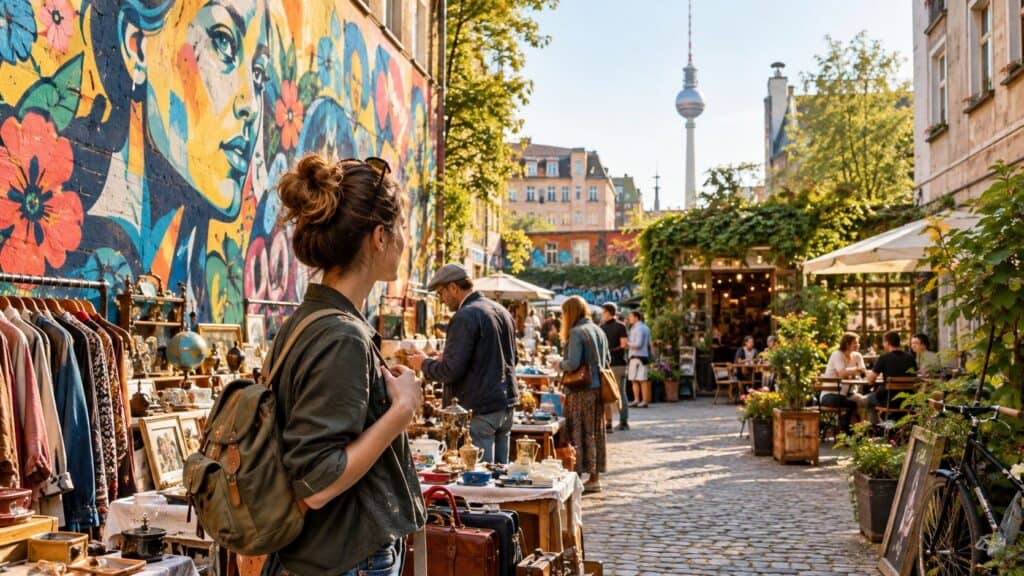
If you’re in Berlin on a Sunday, go to Mauerpark. This long strip of green in Prenzlauer Berg follows a former stretch of the Berlin Wall, and Sundays bring a large flea market plus open air karaoke in the amphitheatre. Locals, artists, families, and travellers mix in a way that feels effortless.
The market comes first for many visitors. You browse clothes, records, furniture, prints, and food stalls, then drift towards the music as the afternoon builds. If flea markets are your weakness, compare dates and neighbourhoods in this guide to the best Berlin flea markets for bargain hunting so you don’t miss a Saturday option elsewhere.
Making Sunday Work
Arrive by midday: You’ll explore the market before the biggest crowds and still catch karaoke warming up.
Take the U2 from Alexanderplatz to Senefelderplatz: It’s a short walk from there, with cafés en route for a pre market coffee.
Bring cash: Market stalls often prefer it, and you’ll move faster for small buys and snacks.
Stay into the evening: Karaoke gets liveliest as the amphitheatre fills and the crowd commits to every chorus.
Solo travellers do well here because groups form naturally. People chat while waiting for singers, share reactions to brave song choices, and sing along to songs everyone knows. You can join in loudly or watch from the grass with a drink, no pressure either way.
The trade offs are crowds, variable weather, and market quality that changes week to week. Go for atmosphere first and bargains second. That mindset stops disappointment if you don’t find the perfect vintage jacket.
For many visitors, this is the most social of all the underrated things to do in Berlin. It costs little to enjoy, needs no booking, and turns a lazy Sunday into the story you tell first when you get home.
8. Späti Culture and Kiez Evenings
Berlin nights don’t always start in a bar. They start at a Späti, the late night corner shops that stay open long after regular stores close. Many double as informal meeting points, where locals buy a drink and sit outside on crates or benches to talk, people watch, and decide what happens next.
Each Kiez, or neighbourhood, has its own rhythm. In Kreuzberg, Neukölln, and Friedrichshain, groups meet at a favourite Späti before heading to a bar, while others turn an evening into a gentle crawl between several shops. It’s affordable, low pressure, and much closer to everyday Berlin life than a pricey cocktail list.
Ground Rules That Keep It Fun
Carry some cash: Small shops may not accept cards, especially for low value purchases late at night.
Stick to well lit, busy streets: Choose lively corners over quiet residential blocks when you’re unfamiliar with an area.
Keep noise low: Residents live above these shops, and being respectful keeps the culture welcome.
Watch your belongings: Crates and benches are relaxed, but bags still need a strap around a leg or a hand on them.
Don’t over plan a route. Pick a neighbourhood, choose a busy Späti with seating outside, and stay while the conversation’s good. Move on when it dips. That flexibility suits solo travel, because you can join a group for one drink or call it a night early without awkwardness.
This won’t suit travellers who want guaranteed seating, table service, or a dress code. It suits anyone who wants Berlin as Berliners use it after dark, affordable and social, with the city unfolding one corner at a time.
9. Olympiapark Berlin and Olympiastadion Tour
Head west and the crowds thin out fast. Olympiapark Berlin, built for the 1936 Summer Olympics, is a sprawling sports complex where you can tour the stadium, climb the Glockenturm bell tower for panoramic views, and wander grounds dotted with sculptures and wide open space. Architecture, sport, and difficult history sit side by side here.
Football fans time visits around matches at the Olympiastadion, when the atmosphere shifts from quiet monumental park to full matchday buzz. Architecture students use the site to study 1930s design in person, at a scale photos flatten. Even without a match, the stadium bowl and surrounding park justify the trip.
Take the U2 to Olympia-Stadion station, a short walk from the park entrances. That direct line from Alexanderplatz and Zoologischer Garten makes planning easy, and you’ll stay within central fare areas for this trip. For wider days out, remember Berlin transport uses Zone A for the centre including the S-Bahn ring and Zone B to the city limits, as explained in BVG guidance on Berlin fare zones for visitors.
Plan for Weather and Fixtures
Check the stadium tour schedule and book ahead on busy days, especially around matches and events. Visit the Glockenturm on a clear day for the best views, and allow time to wander the wider park rather than rushing back to the U-Bahn.
Combine the tour with a slow loop of the grounds for a full afternoon out. Bring water and comfortable shoes, because distances across the complex add up. Food options cluster around events, so eat beforehand or plan a stop in Charlottenburg on the way back.
This is one of the most overlooked underrated things to do in Berlin for travellers who only stay east of the Brandenburg Gate. You’ll get space, views, and a chapter of city history many short trips miss, without fighting central queues. If the weather turns, keep the stadium tour and shorten the park wander rather than scrapping the day entirely.
9 Underrated Berlin Experiences: Side-by-Side Comparison
Use this comparison to match each stop to your time, budget and energy. Costs are approximate, and opening times, event schedules and tour availability can change, so check before setting out. For a hostel-friendly day, combine nearby neighbourhood stops rather than crossing the city between every activity.
Experience
Planning Effort
Typical Cost and Resources
Expected Experience
Ideal For
Key Advantage
Tempelhofer Feld
Low; check restricted areas and weather
Free; bring water and snacks; bike hire about €10–15
Spacious outdoor recreation on former airport runways
Cycling, skating, picnics and relaxing
Vast, car-free green space with free entry
Teufelsberg
Moderate; plan transport and consider booking a tour
Tours about €10–20; sturdy shoes and water recommended
Cold War history, street art, forest trails and city views
History and art enthusiasts, hikers
Unusual mix of history, art and nature
Badeschiff Berlin
Moderate; check seasonal opening dates
Entry about €5–10; bring a towel and sunscreen
Swimming, sunbathing and summer social events
Summer visitors seeking an urban swim
Floating pool and sun terrace on the Spree
Markthalle Neun Street Food Thursday
Moderate; arrive early to avoid queues
Most dishes about €8– 15; cash may be useful
International street food in a lively historic market
Budget dining and social meals
Broad food choice in an informal communal setting
Stasi Museum Normannenstraße
Moderate; plan transport and allow at least two hours
Low entry fee; guided tours available
Stasi offices, equipment and history
Visitors interested in East German history
Preserved headquarters give a direct historical perspective
Sophie-Gips-Höfe Courtyards
Low; check gallery and shop hours
Free to explore; optional spending at cafés and shops
Quiet courtyards, galleries, boutiques and cafés
Architecture, design and relaxed city walks
Historic creative spaces close to central sights
Mauerpark Sunday Flea Market and Bearpit Karaoke
Low; expect Sunday crowds and bring cash
Free entry; food and drinks around €5–10
Flea-market browsing, street food and outdoor karaoke
Social outings, shopping and live entertainment
Park history alongside a lively Sunday gathering
Späti Culture and Kiez Evenings
Low; choose a neighbourhood and take care late at night
Low-cost drinks and snacks; cash may be useful
Casual neighbourhood socialising at late-night shops
Experiencing everyday Berlin nightlife
Flexible, affordable way to explore local districts
Olympiapark Berlin and Olympiastadion Tour
Moderate; check event schedules and tour times
Tours and tower visits about €10–20
Stadium history, architecture, park walks and panoramic views
Sports fans, history enthusiasts and architecture visitors
Historic stadium and expansive grounds in one outing
For a low-cost plan with friends, pair the free courtyards or a park visit with a neighbourhood evening. Save paid tours and swimming for days when those activities are the main event, and check transport connections before committing to stops on opposite sides of Berlin.
Plan Your Offbeat Berlin Weekend
Group stops by neighbourhood and energy. Berlin is spread out, so crossing the city repeatedly costs time and transport money. These routes work well for solo travellers using public transport, with an indoor alternative on each day.
One day, central and social. Start at Sophie-Gips-Höfe in the morning, then walk to Museum Island and choose one museum rather than trying to see all five. Head to Kreuzberg for Markthalle Neun if it’s Thursday, then finish with a nearby Späti. On other days, trade the market for a smaller museum: the Museums of Curiosity listings for specialist collections include DesignPanoptikum, Werkbundarchiv Museum of Things, Computerspielemuseum and Museum der Unerhörten Dinge. These are useful indoor options when the weather turns.
Two days, history plus fresh air. Visit the Stasi Museum on day one, then spend time outdoors around Friedrichshain and the East Side Gallery. On day two, choose between Tempelhofer Feld and Teufelsberg. Tempelhofer Feld is flat, free and suited to a picnic or an easy cycle. Teufelsberg means a hillier ride and rougher forest approaches. If you’re cycling out west, e-bike torque for steep urban hills explains why motor performance matters on climbs. Leave time for either stop rather than squeezing both into a tiring afternoon.
Three days, with Sunday and the west. Save Sunday for Mauerpark, start slowly and bring cash for the market. Visit Olympiapark on a clear day for views from the Glockenturm. If you’re following Berlin’s history, add Berliner Unterwelten. Its museum covers four floors and six principal themes, including air-raid protection and forced labour, as described in Berlin’s museum profile of Berliner Unterwelten. Tours generally cost from €17, according to the same profile. Set aside money for this paid visit and keep other activities low-cost.
Plan access as carefully as transport. Check step-free entrances, lifts, toilets, seating and station access for every stop. A venue may be accessible while the nearest station lift is out of service, so confirm both before setting off. visitBerlin’s reporting on measurable sustainability and accessibility offers further context on accessibility in the city.
Choose two main stops each day and leave room to wander. A park, market or Späti recommendation from someone you meet can be a better use of an open evening than another cross-city trip.
For routes served by the U2 and trams, book direct with St Christopher’s for central beds at Alexanderplatz and Mitte, on-site bars where solo travellers can meet, and booking perks including 25% off food and a free welcome drink. Eligible rates offer free cancellation. Check your dates and plan your first Späti stop before you arrive.
Our direct rates are guaranteed to be at least 5% cheaper than anywhere else online, with a free drink on arrival, 25% off food at the bar, and free cancellation options available.