How to Save Money Travelling: A Practical Europe Guide
Sophie
You’re probably looking at a city break that has somehow become much more expensive than the original plan. The room...
Share This Article
You’re probably looking at a city break that has somehow become much more expensive than the original plan. The room costs more, trains punish last-minute decisions, and a few coffees, taxi rides and nights out turn a manageable trip into a painful card statement. The answer isn’t to strip all personality from the journey. It’s to protect the parts you care about, such as a central location, good food and an easy way to meet people, while cutting the costs that add little to the experience.
For UK travellers, that matters more than ever. Domestic overnight travel in Great Britain rose from £85 per night per person in 2022 to £107 in 2024, and the average domestic overnight trip reached £312 in 2024, up 17% year on year, according to the Department for Transport’s travel behaviour research. This guide focuses on how to save money travelling without turning your holiday into a series of compromises.
Why Most Travel Budget Advice Falls Short
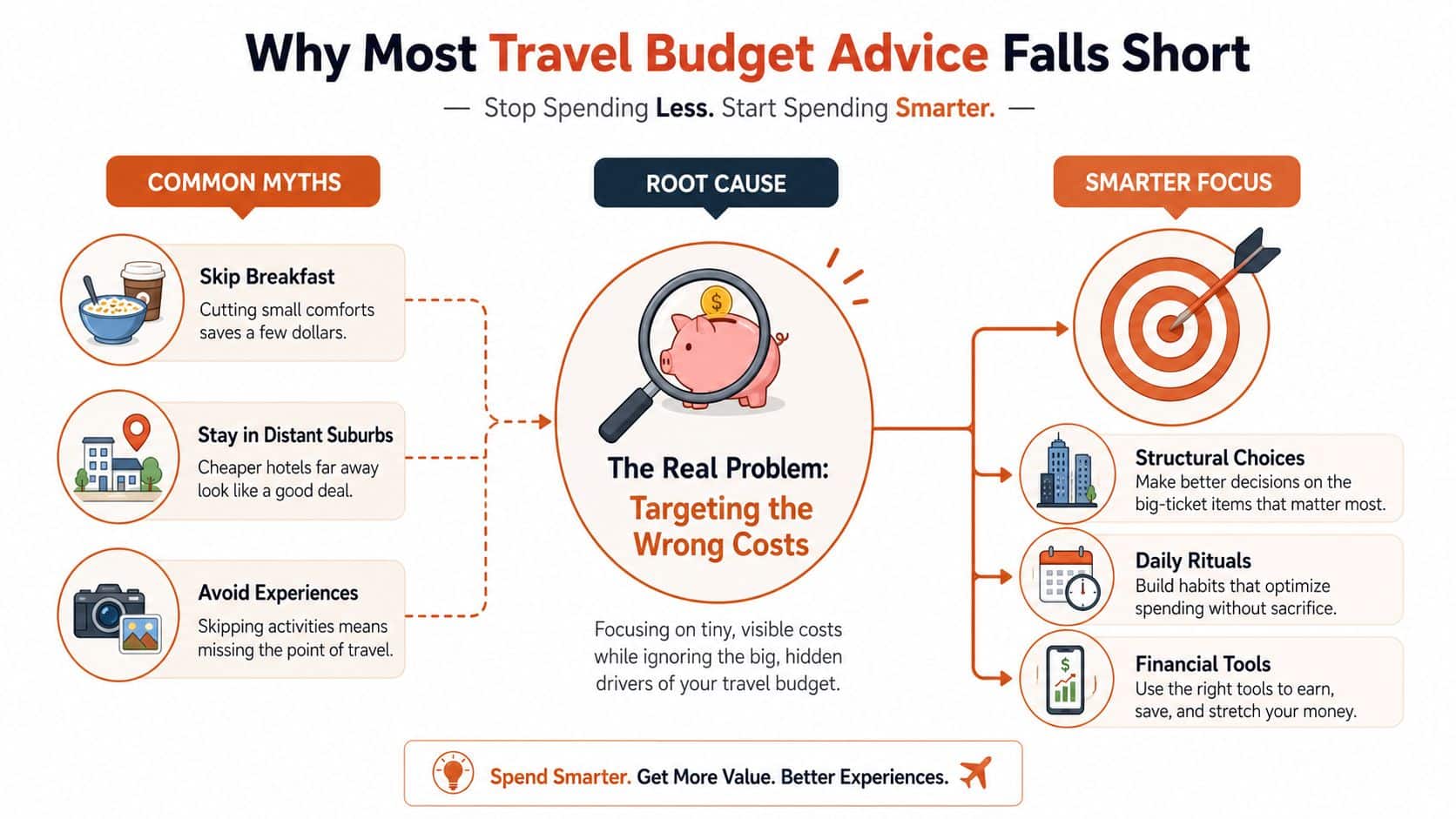
Most budget advice tells you to spend less everywhere. That’s the wrong target. You don’t need to make every part of a trip miserable. You need to identify the costs that shape the entire experience, then remove waste around them.
Staying an hour outside the centre might reduce the room rate, but the saving can disappear through metro fares, taxis and lost time. Skipping breakfast often leaves you hungry by mid-morning, which makes an overpriced snack feel irresistible. Booking a flat because the headline price looks attractive can also mean paying more for transport, cleaning, groceries and evenings spent alone.
The better question is simple: what do you want to keep, and what do you barely notice losing?
Protect the parts that make the trip work
For most solo travellers, the valuable parts are usually:
Location: Walk to the old town, main sights and evening areas instead of paying to cross the city.
Atmosphere: Stay somewhere with a social common space, rather than saving money and then paying for nightlife to meet people.
Convenience: Choose a base that makes arriving, eating and getting around straightforward.
Flexibility: Keep cancellation and booking terms clear so a price change or altered plan doesn’t become an expensive mistake.
Accommodation is often the biggest controllable lever. The UK government’s travel research shows that travellers are already changing their behaviour to manage costs, with 65% of respondents taking action to reduce travel and transport spending in the three months before November 2023. Walking more was the most common measure, but transport savings won’t rescue a trip if the stay itself is poorly located or overpriced. The same government report supports a broader approach, one that combines fewer paid movements with better planning.
The practical rule: Don’t cut every small pleasure. Cut repeated costs that follow you from arrival to departure.
The rest of the strategy rests on four choices: plan the trip in the right order, choose transport by route rather than habit, treat accommodation as a cost-saving tool, and control daily spending without banning experiences. Direct booking belongs inside that system because it can add flexibility and inclusions that third-party booking channels often don’t provide.
Planning and Booking Hacks That Actually Cut Costs
Start with timing, but don’t treat “off-peak” as a magic phrase. A shoulder-season trip that forces you to take awkward connections or pay for extra nights may not be cheaper overall. Look for the least popular practical departure and return days, then compare the complete cost, including airport transfers, luggage, meals during long waits and the extra time required.
Next, build the route before choosing individual tickets. Put cities in a logical line rather than zigzagging between them. London to Paris to Brussels is structurally different from travelling from London to Brussels, back to Paris and then returning east. Fewer backtracks mean fewer transfers and less temptation to take a taxi when you’re tired.
Price the trip in the order you’ll actually pay for it
Choose the dates. Mark the periods when you can travel comfortably, then check weekday and shoulder-season alternatives.
Build the route. Prioritise direct connections and nearby city combinations.
Set a daily ceiling. UK travel budget guidance places budget travel at about £70 to £110 per day, with mid-range trips usually around £150 to £250 per day, according to this UK travel budget guide. Treat those figures as planning baselines, not promises.
Choose the accommodation type. A dorm suits a social solo trip. A private room may make sense when you need sleep, privacy or a short stay. An apartment can work for a group that will cook, but it’s a poor choice if you’ll eat out and spend the day sightseeing.
Book direct. Check the accommodation provider’s own terms for the total price, cancellation conditions, breakfast, welcome benefits and room availability.
A useful route budget should include transport, accommodation, food, attractions, local travel and a contingency. If you’d rather build the calculation before booking, estimate travel costs with Fintrack using those categories instead of relying on a single headline total.
Compare rooms by total value
A lower dorm price isn’t automatically better if it excludes cancellation, sits far from the centre or leaves you paying for breakfast and evening transport. Compare the final cost of the room, commute, food access and social plans.
For Europe-focused planning, the European travel planner can help you shape a route before you commit to individual bookings. The best booking decision is the one that leaves fewer expensive decisions for later.
Getting Around Without Burning Cash
Transport savings come from matching the mode to the journey. Budget airlines can work well across longer distances, but the advertised fare isn’t the full cost once you add baggage, airport transfers and time. Trains are often the cleaner choice between connected city centres, especially when you buy an advance fare and avoid backtracking. Coaches can be uncomfortable, but an overnight service may remove the need for a night’s accommodation.
Transport Type
Typical Cost
Speed
Best For
Budget airline
Varies by route and extras
Fast in the air, slower door to door
Longer routes with light luggage
Intercity train
Varies by advance booking and route
Fast between city centres
Popular corridors and central arrivals
Rail pass
Varies by itinerary
Flexible
Several rail journeys across countries
Long-distance coach
Usually lower than flying
Slowest
Tight budgets and overnight travel
City public transport
Varies by local system
Reliable in busy centres
Daily sightseeing
Walking
Free
Slow but direct
Central neighbourhoods and short hops
For train-heavy journeys, compare advance fares with regional passes and Interrail or Eurail products. A pass only makes sense when you’ll use enough eligible journeys to justify its price and value the flexibility. Otherwise, advance tickets may be simpler.
Calculate door to door, not terminal to terminal
Rome2Rio is useful for comparing journey time and the full chain of transport. Check the walk to the station, the station transfer, airport transport and the cost of reaching your accommodation. A flight that looks quicker can become poor value when it involves a distant airport and a late arrival.
Once you’re in a city, walkable neighbourhoods should be your first transport saving. The government’s UK travel data shows that walking was the most common action among respondents trying to reduce travel and transport spending. Plan each day by area, rather than crossing the city for every attraction.
City travel passes become more useful when you’re staying for several days and expect to take multiple journeys. Don’t buy one automatically. Add up the routes you’ll use, then compare that total with single fares and walking.
Door-to-door beats headline price. The cheapest ticket is the one that gets you where you need to be without expensive add-ons.
Where You Stay Changes Everything
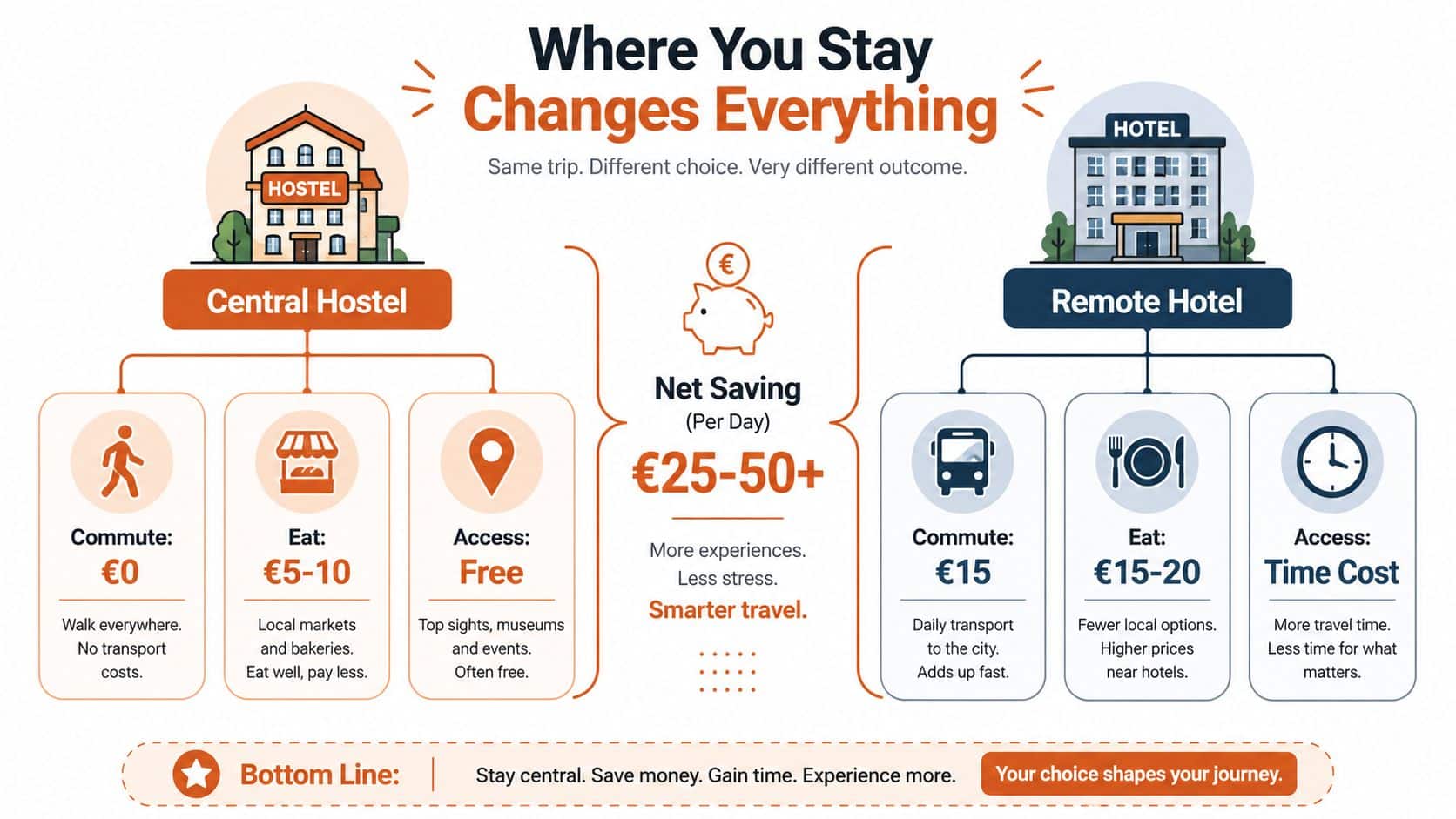
Accommodation isn’t just a bed. It determines how much you pay to commute, where you eat, how easily you meet people and whether an evening out requires another expensive journey.
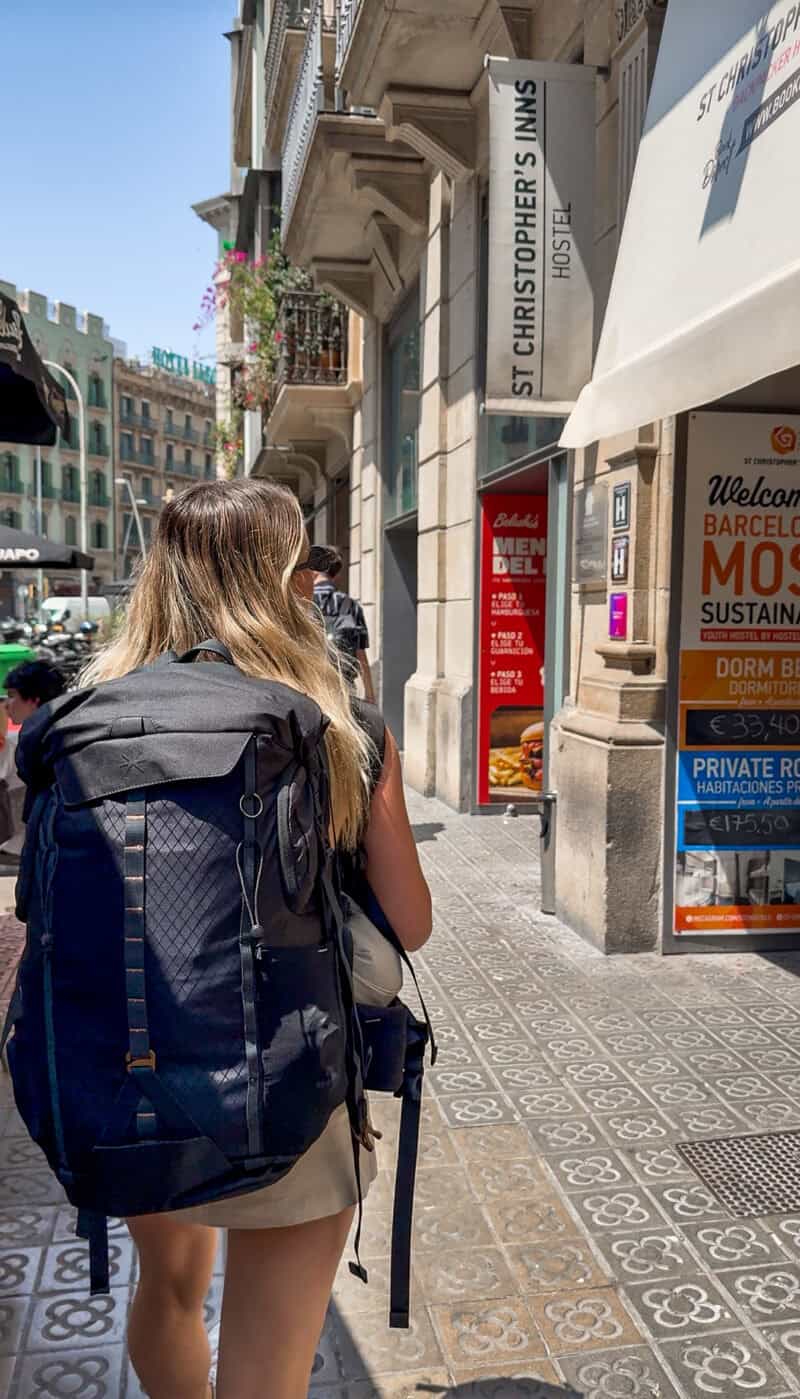
A central hostel can collapse those costs into one decision. You can walk from the station, return during the afternoon, use a communal kitchen or nearby bakery, and meet other travellers in a common room or thriving on-site bar. A peripheral hotel may offer a lower room rate, but the extra metro fares, taxi rides and time can erode the saving quickly.
Judge the location before the room
Look for four practical features:
Walking access: The old town, main station or central attractions should be reachable on foot or with a simple public transport connection.
Food flexibility: A kitchen, breakfast option or nearby market gives you control over daily spending.
Secure storage: Lockers reduce the need to carry valuables around all day.
A social base: A common room, events programme or quality on-site bar can replace paid nightlife and make solo travel less awkward.
For a deeper comparison of the practical features that make a stay affordable, use this guide to cheap accommodation in Europe. The important test is total trip cost, not the room rate on its own.
Eating Out, Going Out, and Saving Anyway
A good food budget doesn’t mean eating badly. It means giving each meal a job.
Start with breakfast from a bakery or supermarket. Fruit, yoghurt, bread, pastries and coffee from a local shop will usually cost less than sitting down near a major sight. Make lunch your main cooked meal, then look for the local phrase that signals value: menú del día in Spain, plat du jour in France, Tagesmenü in German-speaking cities and tavola calda in Italy.
Follow a simple day of spending
Morning: Buy breakfast near the hostel, fill your water bottle and leave with a snack. This prevents the first hunger decision from happening beside an attraction.
Midday: Choose a set menu, market stall or busy local café away from the main square. You’ll often get a more substantial meal at lunchtime than in the evening.
Afternoon: Use public parks, waterfront walks, neighbourhood streets and free museum hours. Check the attraction’s official website before buying a pass. A multi-site pass can work if you’ll visit several included sights within its validity period, but it’s poor value if you’re only interested in one.
Evening: Share tapas or small plates, choose an early or social-hour menu, and decide what you want to spend before ordering another round. One paid treat per day is a useful rule. Everything else should be free, shared or chosen for value.
Make socialising part of the budget
Solo travellers often spend more because they’re paying for the easiest available way to meet people. A hostel with organised events, free walking-tour connections and a lively on-site bar can solve that problem without forcing you into an expensive club or a long taxi ride.
Don’t treat every free walking tour as entirely free. Check the organiser’s terms and prepare to contribute if the model expects it. The wider principle is sound, though. Spend on the one experience you’ll remember, then use walks, public spaces and social accommodation to keep the rest of the day accessible.
Money, Safety and Smart Spending on the Road
A cheap trip becomes expensive quickly after one lost card, avoidable fee or rushed cash withdrawal. Set up a simple system before departure, then follow it without improvising.
Use one fee-free travel card for everyday spending and a separate debit card for ATM withdrawals. Carry a small amount of euros or local currency for places that accept cash only, and keep the backup card away from your main wallet. Always choose to pay in the local currency rather than accepting dynamic currency conversion, which lets the merchant or ATM set the exchange rate.
Skip airport exchange desks and isolated cash machines. Use an ATM connected to a bank branch, read the fee screen and withdraw only what you can safely carry. Set a daily spending alert in your banking app, then check your balance each morning. These habits protect the money you set aside for the parts of the trip you value, such as a central hostel, a good bar or an extra night out.
Keep your documents and valuables organised
Put your passport, spare card and important documents in a secure hostel locker or accommodation safe. Photograph your passport, insurance certificate and booking confirmations, then store the copies securely offline and in cloud storage. Tourist zones, stations and crowded public transport require ordinary awareness rather than panic. Keep your phone and wallet where you can feel them, especially while boarding or leaving a busy train.
Travel insurance deserves the same attention as the room booking. The Financial Ombudsman explains that the policy excess is the amount you pay towards a claim, and the policy documents must state the amount clearly. Some policies apply separate excesses to each person and each section claimed under, so one incident can create more than one charge. Citizens Advice guidance on insurance excesses also defines the excess as the amount deducted from a claim. Compare the premium and the possible excess together. A cheaper premium can cost more after a claim.
Five-minute daily routine: Check your balance, confirm tomorrow’s route, move only the day’s planned spending into your travel account and return your cards to the same secure place.
Use the same preparation to make local communication easier. If you’re visiting France, you can practice French verb conjugation, including the verb for “to save”, before you travel. Practical phrases can help you understand menus, transport instructions and payment questions, while a few minutes of preparation can prevent an unnecessary mistake.
Save this departure checklist:
Cards: Activate your travel card and confirm the backup works.
Insurance: Save the policy and emergency contact details offline.
Documents: Store passport and booking copies securely.
Emergency details: Save local emergency numbers and your insurer’s claims line.
Payments: Check whether your destination commonly accepts cards.
Security: Pack a small document wallet and confirm locker arrangements.
A Realistic 4-Night City Break Budget and Final Checklist
Use a mid-priced European capital for the calculation, with a central dorm bed budgeted at €30 to €60 per night. The example below excludes flights and uses the lower end of that range, so it’s deliberately practical rather than luxurious.
Spend category
Calculation
Total
Accommodation
4 nights × €40
€160
Intercity transport
One advance rail or coach journey
€35
Local transport
5 days × €5
€25
Food
5 days × €20
€100
Paid sights
2 attractions × €15
€30
Nights out
2 evenings × €20
€40
Contingency
Set aside for small extras
€40
Trip total
€430
That works out at €86 per day across five days, excluding flights. The arithmetic is straightforward, but the method matters more than the exact result. Walk for short journeys, use the local transport allowance only when it saves meaningful time, buy breakfast from a bakery or supermarket, make lunch the substantial meal and choose two paid sights you want to see.
You can also reverse-engineer the accommodation cost from your total. The UK solo travel cost guide recommends starting with the route, setting the room budget, pricing local and intercity transport, then adding food, attractions and a solo convenience buffer. Its budget solo range is about £85 to £130 per day, while mid-range solo travel is around £150 to £240 per day, as outlined in this UK solo travel cost guide.
Your final pre-trip check
Dates: Compare practical shoulder-season and weekday options.
Route: Remove backtracking before buying tickets.
Accommodation: Choose a central dorm or private room that fits your sleep and social needs.
Booking channel: Check direct terms, cancellation and included benefits.
Transport: Compare walking, public transport, train, coach and flight costs door to door.
Food: Find a market, bakery and set-menu area before arrival.
Sights: Confirm which attractions justify admission and which can be explored free.
Money: Pack a fee-free card, backup debit card and limited local cash.
Insurance: Check the excess for each section of cover.
Packing: Bring a refillable bottle, secure day bag and copies of key documents.
Swapping the central hostel for a hotel outside town may reduce the room headline price but add transport, food and time costs. Replacing taxis with walks and planning city clusters can do the opposite, preserving the central stay while lowering the total. For more route ideas and practical arithmetic, use this guide to backpacking Europe on a monthly budget.
Book a central St Christopher’s dorm or private room directly when you want affordable accommodation, clean and secure facilities, social spaces and quality on-site bars that reduce transport and nightlife costs. Check St Christopher’s for locations across the UK and Europe, then compare the direct-booking rate, free cancellation options, welcome drink and 25% food saving before you set off.
Our direct rates are guaranteed to be at least 5% cheaper than anywhere else online, with a free drink on arrival, 25% off food at the bar, and free cancellation options available.