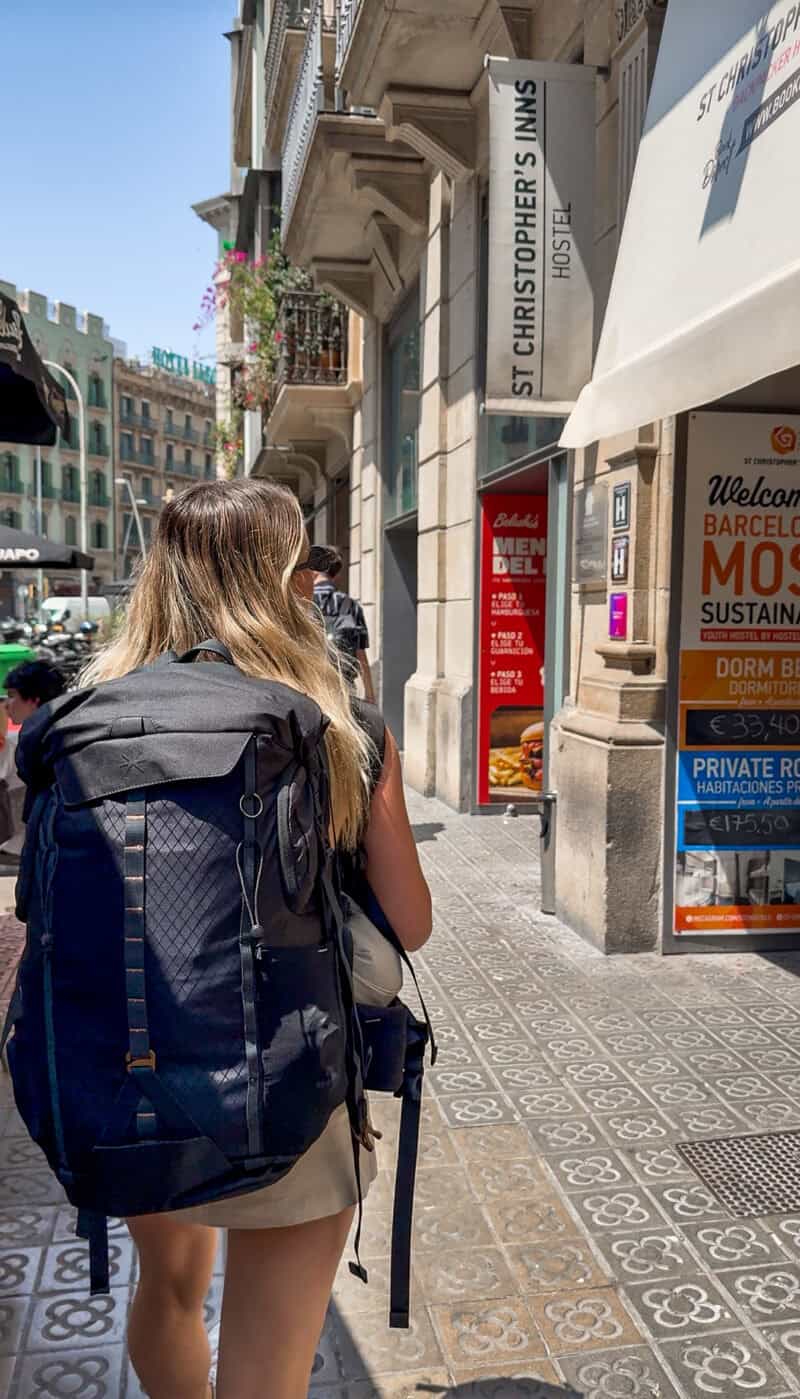
You’ve landed in a new city, backpack over one shoulder, and a long list of famous sights still to see....
Share This Article
You’ve landed in a new city, backpack over one shoulder, and a long list of famous sights still to see. The easiest choice is often a taxi to the next attraction, a takeaway wrapped in layers of plastic, and another night spent in a busy tourist quarter. None of those decisions makes you a bad traveller, but repeating them can leave a bigger footprint, put pressure on residents, and cost more than you expected.
Responsible travel is more practical than perfect. It’s about choosing a central base, walking when you can, using public transport, carrying a few reusable items, spending money with local businesses, and treating neighbourhoods as homes rather than backdrops. For solo travellers, it also means making sensible safety choices, finding social spaces where meeting people feels natural, and leaving room for experiences run by residents.
These responsible travel tips focus on city-hopping destinations where St Christopher’s is present. You’ll find realistic advice on transport, packing, food, local culture, socialising, direct booking, and timing your trip. Where a central St Christopher’s location, communal area, staff recommendation, or on-site venue makes a lower-impact choice easier, I’ll say so. The point isn’t to sacrifice fun. It’s to make choices that work better for you and the places you visit.
1. Stay Central and Use Public Transport or Walk to Reduce Emissions and Costs
You arrive with a full day planned, then realise your hostel is outside the centre and every museum, meal, and evening plan needs a separate journey. A central base changes that calculation. From accommodation near the areas you want to explore, you can walk to breakfast, use public transport for longer trips, and return for a break without paying for repeated taxis or losing hours in transit.
Transport choices have a wider effect. Domestic transport accounted for 30% of the UK’s total domestic greenhouse gas emissions in 2024, and international transport added 41.2 MtCO2e, according to UK government transport emissions statistics. For a city-hopping trip, combining rail, metro, tram, bus, and walking is a practical way to reduce unnecessary journeys and keep costs under control.
St Christopher’s Berlin Mitte is close to Museum Island. St Christopher’s Amsterdam The Winston is in Amsterdam Centrum, within walking distance of the Canal Ring and Central Station. St Christopher’s in Barcelona also makes reaching the Gothic Quarter and Las Ramblas on foot straightforward.
Practical rule: Check the walking time to your first three planned sights before booking. A central room may cost more per night, but fewer paid journeys and less wasted time can narrow the difference.
Make public transport your default
Set up Citymapper, Google Maps, or the local transport app before arrival. For a stay of several days, check whether a multi-day pass covers your routes, but read the zone limits first. A pass saves money only when it matches the journeys you will make.
Hostel staff can suggest a well-lit walking route, a quieter tram, or the simplest connection to a neighbourhood market. Walking in daylight also reveals cafés, small shops, and residential streets that pass unnoticed from a car. For route planning in the German capital, use this practical guide to getting around Berlin by public transport.
For longer city hops, compare rail and coach routes before looking at flights. Eurostar standard tickets allow two pieces of luggage plus one small hand item, with no strict weight limit if you can carry and store everything safely. London routes permit bags up to 85 cm, while other routes permit bags up to 75 cm, according to Eurostar’s luggage rules. Those limits reward a compact bag and make transfers between stations, hostels, and public transport easier.
You can also book walking tours online, then check the meeting point against your accommodation and transport connections.
2. Support Local Economies by Eating Where Residents Eat
Food is one of the easiest ways to make your spending more useful. Instead of eating beside the busiest landmark every night, walk a few streets into a residential area and look for the café filled with local workers, the market stall with a short menu, or the small bistro serving what people in the neighbourhood eat.
Local restaurants and markets often give you a better sense of daily life, not just a polished version of the destination. Berlin’s Markthalle Neun, for example, brings together independent food vendors, while Paris’s 11th arrondissement has plenty of neighbourhood bistros where a weekday lunch can be a more grounded experience than a meal beside a major monument. In Amsterdam, brown cafés offer traditional food and a relaxed setting, while Barcelona’s markets can work well for fresh ingredients, snacks, and prepared food away from the busiest entrance areas.
Ask St Christopher’s staff where they’d eat on an ordinary evening, not where they’d send someone celebrating a special occasion. Other guests can also be a useful source of recommendations, particularly if they’ve already spent a few days in the city.
Turn one meal into a local conversation
Try eating lunch where local workers eat, especially if the menu changes daily. You don’t need to avoid every restaurant with an English menu, but a short menu, handwritten specials, and a busy dining room can be encouraging signs. Learn a basic greeting and ask before photographing food vendors or market stalls.
Market shopping also helps you reduce packaging. Buy fruit, bread, cheese, or prepared food that you can take back to a hostel kitchen, then store leftovers in a reusable container. That approach is often more flexible than buying individually wrapped snacks throughout the day.
A local meal doesn’t have to be elaborate. A bakery breakfast, worker’s lunch, market snack, or family-run dinner can give you a more useful connection to the city than a restaurant selected only because it appears in every search result.
3. Respect Local Neighbourhoods by Following Community Guidelines
A neighbourhood isn’t a theme park, even when visitors treat it like one. People live above the bars, take early trains to work, walk children to school, and need quiet streets at night. Your behaviour affects their experience long after you’ve moved on to the next city.
Read the signs in your accommodation and pay attention to local guidance. Some destinations have introduced restrictions or changed tourism rules because residents are concerned about noise, crowding, and the effect of visitors on residential areas. You don’t need to understand every local debate to behave considerately. Keep voices low in stairwells, don’t block pavements with luggage, and avoid turning a residential street into an outdoor party.
Make nightlife easier for everyone
If you want a lively evening, choose a venue designed for it rather than drinking loudly outside someone’s home. The distinction matters. Don’t describe every venue as a sports bar, and don’t assume that a lively atmosphere gives you permission to disturb the surrounding area.
Respectful travel sounds simple: Enjoy the city’s nightlife, then keep your journey home quiet.
If another guest is making excessive noise, tell hostel staff rather than confronting them in a corridor or dorm. Lock your door when you’re inside, keep valuables secure, and avoid displaying your room number in public. Solo travellers should also follow the Foreign, Commonwealth & Development Office guidance on independent travel, including booking accommodation before arrival, especially for your first night, and checking for suitable smoke alarms and fire exits.
4. Engage with Local Culture Through Small-Scale Experiences Rather Than Mass Tours
A small experience can leave you with more genuine understanding than a packed itinerary of headline attractions. Look for neighbourhood walks led by residents, independent museums, local cooking sessions, language exchanges, and events where people are sharing something they already do, rather than performing a simplified version of local life for visitors.
The best option depends on the city. In Berlin, a resident-led walk through Kreuzberg or Prenzlauer Berg can reveal how streets, cafés, and creative spaces fit together. In Paris, a family-run cooking session can offer a personal story alongside the food. Amsterdam is well suited to local cycling experiences through residential areas, while Barcelona’s El Raval has artist-led events and studio open days that can feel more connected to the neighbourhood than a large group excursion.
You don’t need to book every activity in advance. Ask hostel staff what’s happening locally, check community notices in shared areas, and speak to people you meet in the common space. A recommendation from someone who has just returned from an event can be more useful than a generic list of attractions.
Choose providers with a local connection
Look for clear information about who runs the experience, where the money goes, and how the activity treats residents and public spaces. Reviews can help you assess organisation and communication, but don’t rely on star ratings alone. Read recent comments for signs that the operator respects group sizes, local customs, and the people being visited.
A language exchange at a café may be free, while a small paid workshop supports an individual directly. Both can be worthwhile if you arrive with curiosity rather than expecting locals to provide a performance on demand.
Ask yourself before booking: Will this experience help me understand the city, or am I simply being moved through it?
Small-scale doesn’t mean dull or uncomfortable. It can mean a more flexible pace, a chance to ask questions, and a better opportunity to meet people naturally. Leave an evening unplanned so you can accept a local suggestion from a new friend or hostel staff member.
5. Choose Hostels with Strong Social Communities That Enable Natural Connections
Solo travel can feel oddly isolating when you’ve spent all day sightseeing alone and then return to a room where nobody speaks. A hostel with communal areas, regular events, and an active venue gives you somewhere to meet people without having to approach a group in a random bar.
The social setting should still suit you. You don’t need to join every activity, but check whether reviews mention a welcoming atmosphere, useful common spaces, and guests meeting organically. A shared kitchen can lead to a simple conversation over dinner, while an on-site bar gives you a comfortable place to sit without having to plan an entire night out alone.
Use the social space at your own pace
Arrive during the day if you can, when common areas are usually easier places to start conversations. Ask staff whether there’s a group dinner, local outing, or evening event. If you’re nervous, sit at the bar with a book or order food, then make one low-pressure observation about the city or the evening’s activity.
Choose accommodation where connection happens in a shared setting, rather than assuming you’ll somehow meet people after leaving the building.
6. Book Accommodation Directly from Hostel Websites to Maximise Value and Support Quality Operations
Booking direct isn’t only about finding a room. It gives you a clearer line of communication with the people who’ll handle your arrival, room questions, accessibility needs, or changes to your plans. It can also make the total value easier to understand because the included benefits appear in the booking terms rather than being hidden across several pages.
Look beyond the headline room rate
A slightly different nightly rate can be misleading if one option includes food savings, flexible cancellation, or no deposit. Read the confirmation carefully and save the property’s contact details on your phone. If you need a quieter bunk, a lower floor, or a specific room type, ask the hostel directly rather than relying on a third-party message system.
This approach also helps you plan meals. If you’re already staying centrally and can use the on-site venue for a meal, you may avoid an extra journey and make better use of the food discount.
Direct booking doesn’t remove the need to compare the actual cancellation rules. A best price guarantee is useful only when you understand what is included, which dates qualify, and whether the rate is refundable.
A good booking habit: Save the confirmation, cancellation terms, property address, and arrival instructions together before you start travelling.
7. Support Environmental Sustainability by Refusing Single-Use Plastics and Carrying Reusable Items
A refill stop before leaving the hostel can save space, money, and waste during a city-hopping trip. Pack a lightweight water bottle, a foldable shopping bag, refillable toiletry containers, and, if you use them often, a compact cup or reusable cutlery set. Keep these items easy to reach so you do not buy a new bottle or bag each time you head out.
Tap water is commonly available in the cities covered by this guide, but check local guidance or ask hostel staff if you are unsure. Berlin has public drinking fountains, Paris has its Wallace fountains, Amsterdam is known for high-quality tap water, and Barcelona has public fountains across central areas. Refill at your accommodation, then use a café or public fountain when you need more.
For wider context, read St Christopher’s guide to what sustainable travel means. The practical priority is preventing waste before it is created, rather than relying on recycling after buying disposable items. For a detailed overview of current rules, see this guide to latest single-use legislation.
Pack for real travel, not an imaginary expedition
Use small refillable containers instead of full-size toiletries. A folding bag handles market shopping and groceries, while an accessible bottle makes refilling easier. If a café accepts reusable cups, ask whether it offers a small discount, but carry the cup because it fits your routine, not only for the saving.
Hostel kitchens can reduce packaged meals. Make a simple breakfast or store leftovers, especially before an early train or bus. Wash reusable items promptly so food residue does not sit in your bag throughout a travel day.
Street food creates another easy choice. Decline cutlery and napkins when you already have what you need. Check security rules before flying, too. A reusable utensil that cannot pass an airport check is poor preparation for that day, so keep the kit flexible and leave anything unsuitable behind.
8. Explore Beyond Obvious Tourist Attractions to Discover Local Businesses
The famous sights still deserve your time. Responsible travel isn’t a competition to avoid every landmark. The more useful adjustment is to balance the headline attractions with ordinary neighbourhoods where independent cafés, markets, bookshops, galleries, and small businesses depend on regular local trade.
In Berlin, try looking beyond Museum Island towards Kreuzberg, Neukölln, or Friedrichshain. In Paris, Canal Saint-Martin, Belleville, and the 11th arrondissement offer a different pace from the areas around Notre-Dame. Amsterdam Noord is accessible by free ferry, while De Pijp and Jordaan provide distinct neighbourhood experiences. In Barcelona, Sant Antoni and its local market offer an alternative to spending every hour around the Gothic Quarter and Las Ramblas.
London makes this balance particularly easy. Ask staff for a neighbourhood they personally enjoy, not just the standard list handed to every visitor.
Wander with a loose plan
Use Google Maps to mark a market, independent shop, or café, then walk between two planned points using side streets. Morning is a good time for markets because residents are shopping and traders have more time for a brief conversation. Sit down for a coffee instead of rushing through, and notice how people use the space.
Try dividing your day between major sights and neighbourhood time, but don’t turn that into a rigid formula. A wrong turn may lead to a better lunch, a local event, or a street you’d never have found through a standard itinerary.
The useful test: Would this business still exist if visitors stopped coming tomorrow? If the answer is yes, your spending is more likely to support everyday local life rather than a visitor-only economy.
Central accommodation helps because you can return to your base between areas instead of crossing the whole city for every small activity. It also makes it easier to walk home or use public transport after an evening out.
9. Travel During Quieter Periods and Mid-Week to Reduce Pressure on Cities
Changing your dates can be more effective than trying to squeeze responsible behaviour into the busiest travel period. Visiting during a quieter season spreads demand across the year, gives residents more breathing room, and often makes it easier to find a seat in a neighbourhood café or speak with a local guide.
The trade-off is weather and availability. Some attractions may have shorter opening hours, outdoor plans may need flexibility, and evenings can feel quieter. For a solo traveller, that can be a benefit if you prefer slower days, but you’ll need to check transport and activity schedules before arriving.
September and October can offer a useful balance in many European cities, with milder conditions than high summer. February and March can suit a lower-key trip if you’re comfortable packing for rain. April may bring spring energy, while November can be a calmer time to explore Barcelona. London in September can feel more manageable after the summer rush, though local events may still make particular weekends busy.
Choose dates with flexibility
Avoid major holiday periods and local festivals unless they’re the reason you’re travelling. Prices and availability can change sharply around popular events, and locals may also be travelling. Mid-week stays often make it easier to access museums, markets, and restaurants without competing with weekend crowds.
Check the forecast shortly before departure, then plan one indoor alternative for each outdoor-heavy day. A rainy morning can become a museum visit, cooking session, or long lunch, while a clear afternoon gives you time to walk through a neighbourhood.
Travelling outside the busiest period isn’t automatically responsible if you still behave carelessly. Keep noise down, respect local rules, and spend with independent businesses regardless of the calendar. The timing gives you a better chance to experience a city without adding to its most intense pressure points.
9-Point Responsible Travel Tips Comparison
Strategy
Implementation complexity
Resource requirements
Expected outcomes
Ideal use cases
Key advantages
Stay central & use public transport / walk
Medium, requires booking central lodging and learning transit
Low, flexible dates, acceptance of variable weather/closures
20–40% lower accommodation prices, fewer crowds, more authentic interactions
Budget travelers, flexible solo travelers, those avoiding crowds
Lower costs, less congestion, improved service and availability
Make Your Next City Break Count
Responsible travel works best as a routine, not a performance. Before you leave, choose a base with useful public transport nearby, check the route from the station or airport, and save the accommodation address offline. A central location can shorten daily journeys, while a shared space or on-site venue can give you somewhere comfortable to meet people without travelling across the city every night.
Pack a small reusable kit. A water bottle, folding bag, and refillable toiletries are enough to prevent a lot of avoidable waste. Keep them accessible, because an item hidden at the bottom of your bag won’t help when you’re buying breakfast or visiting a market. Ask about refill points and local tap water when you arrive, and use the hostel kitchen where it makes sense.
Your daily decisions can stay simple. Walk the short journeys, use public transport for longer ones, and combine nearby sights instead of crossing the city repeatedly. Eat at a local café or market, then spend some time in a neighbourhood where residents shop and socialise. If you’re booking an activity, look for a local operator, a small group, and a clear connection to the community.
Respect matters just as much as environmental choices. Read the accommodation guidance, follow quiet hours, keep luggage and groups out of residents’ way, and use designated nightlife venues instead of turning residential streets into party spaces. If you’re travelling alone, book your first night in advance, check the property’s fire and safety arrangements, lock your door when inside, and keep your room details private, following the practical advice from the Foreign, Commonwealth & Development Office.
You don’t need to be perfect. You’ll still take a taxi when you’re exhausted, buy a packaged snack when the train is leaving, or visit a major attraction because you want to see it. Responsible travel isn’t about removing enjoyment. It’s about making the higher-impact choices deliberately, especially around transport, trip frequency, waste, and where your money goes.
UK transport data makes that priority clear. In 2022, domestic transport produced 113.2 MtCO2e, equal to 28% of domestic greenhouse gas emissions, and road travel accounted for the vast majority of domestic transport emissions, according to Transport and Environment Statistics 2024. Small habits still help, but choosing rail, coach, walking, and public transport is usually more consequential than reusing a towel once.
Solo travel gives you flexibility. You can take the slower train, stay an extra night rather than rushing through another destination, choose a smaller experience, or change plans when a neighbourhood feels too busy. If you’re staying at St Christopher’s, ask staff for local walking routes, quieter food spots, transport advice, and events where you can meet people naturally. Communal areas and on-site venues can make a central, lower-impact trip feel social without forcing you into a packed itinerary.
Responsible travel should leave you with more than photographs. You should return having supported real businesses, respected the people who live in the places you visited, and found corners of a city that a rushed itinerary would have missed.
St Christopher’s offers central hostels, clean dorms and private rooms, communal spaces, and on-site venues where solo travellers can meet naturally while reducing unnecessary journeys. Visit St Christopher’s to find a practical base for your next city-hopping trip and ask the team for neighbourhood advice when you arrive.
Our direct rates are guaranteed to be at least 5% cheaper than anywhere else online, with a free drink on arrival, 25% off food at the bar, and free cancellation options available.