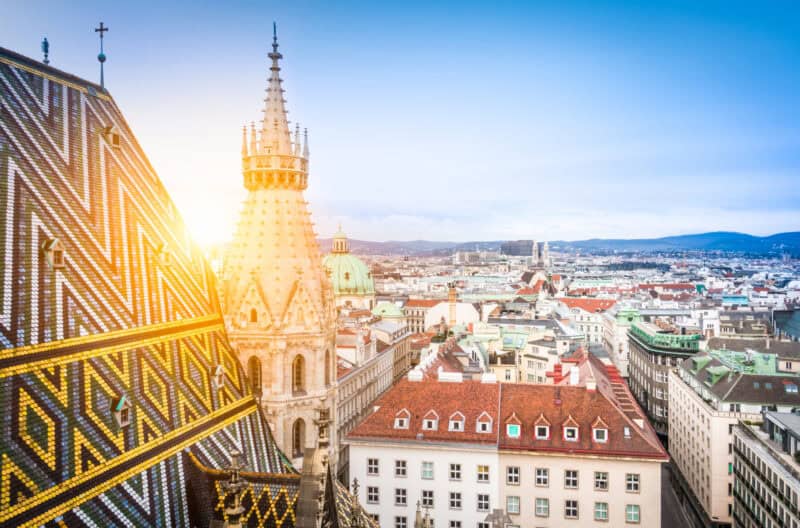
Vienna isn’t only imperial palaces, grand boulevards and famous museums. The city’s more memorable stories often sit in compact, specialist...
Share This Article
Vienna isn’t only imperial palaces, grand boulevards and famous museums. The city’s more memorable stories often sit in compact, specialist spaces, quiet green corners and hillside venues that reward a little planning. These hidden gems in Vienna suit solo travellers especially well because they offer distinctive subjects, manageable visits and easy opportunities to build a day around one neighbourhood or transport route. For more ideas beyond the obvious European stops, browse this guide to hidden gems across Europe.
This route covers a film museum, a sewer tour, medical history, Art Nouveau architecture, a Japanese garden, an unusual globe collection and a city farm with views. For each, you’ll find the reason to go, the best visiting window, access details, approximate cost and the trade-off that could affect your plans. Check official opening information before setting out, particularly for seasonal attractions and venues affected by renovation work.
1. Third Man Museum
The Third Man Museum, or Dritte Mann Museum, is one of Vienna’s finest small-scale experiences for anyone fascinated by cinema, post-war history or the city’s less polished past. Dedicated to the 1949 film The Third Man and everyday life in Vienna between 1945 and 1955, it’s a private, owner-run collection filled with original props, documents and carefully explained details.
The museum feels more like a passionate conversation than a conventional institutional visit. A free English or German audio guide is available through the Hearonymus app, while the owners’ knowledge adds context that you won’t get from a standard display label. The compact layout means you can concentrate on the material rather than spending hours navigating a vast building.
Plan around Saturday
Public opening is mainly on Saturdays from 14:00 to 18:00, so this isn’t a museum to leave until the last afternoon of a flexible weekend. Adults pay €12, concessions cost €10 and children’s admission is €8, according to the Third Man Museum’s official visitor information. Private VIP tours can be arranged outside regular hours for a flat €180 for one to ten people, which makes sense for a small group but is a substantial solo-travel cost.
The central weakness is access to the collection rather than the collection itself. It’s a small space, not a full-scale museum day, and the limited public schedule can make it awkward to fit around Vienna’s other sights. If the timing works, though, it offers far more personality than a generic film display. Pair it with the practical suggestions in this guide to spending 48 hours in Vienna.
Best for: Film lovers, history enthusiasts and travellers who prefer an owner-curated experience to a large museum circuit.
2. The Third Man Sewer Tour
The companion sewer tour turns The Third Man from a museum subject into a physical setting. You descend into historic Viennese sewers used as filming locations, following a guide through an atmospheric piece of urban infrastructure that feels quite different from the city above.
This is a genuine cinema pilgrimage, but you don’t need to be a devoted film scholar to enjoy it. The tunnels provide the appeal, while the guide supplies the connection between the film and Vienna’s post-war streets. The central meeting point is straightforward to reach by U-Bahn, making this one of the easier unusual experiences to add to a day in the inner city.
Check the season before you travel
The tour operates from May to October, with tours running Thursday to Sunday hourly from 10:00 to 19:00, and the last tour at 19:00. An English-language tour runs daily at 15:00. Full admission is €18, with reduced tickets of €14 and €9, and group size is capped at 20 people, as set out in the official Dritte Mann Tour information.
Safety equipment is provided and the operation is run in cooperation with Wien Kanal. Even so, expect wet and uneven surfaces, low light and confined sections. It isn’t a comfortable choice if you dislike damp environments or tight spaces, and popular dates can sell out during the busiest travel periods.
For a solo traveller, the group format is useful because you’re sharing a memorable activity rather than trying to create your own entertainment in an empty attraction. Book or check availability before making it the fixed centrepiece of your day, especially if you’re visiting close to the end of the operating season.
3. Pathologic-Anatomical Collection in the Narrenturm
The Narrenturm is an unusual museum before you’ve seen a single exhibit. This circular eighteenth-century tower was built as Europe’s first purpose-built psychiatric tower, and today it houses the Pathologic-Anatomical Collection of NHM Vienna. The building’s history gives the visit an unsettling sense of place, while the modernised exhibition provides more considered interpretation than the name “Fools’ Tower” might suggest.
Across 19 showrooms, the collection explores disease, pathology and medical history through preserved specimens and related material. It’s intellectually absorbing, but it can also be graphic. Visitors can explore independently or add a guided visit, and the show collection has barrier-free access. Photography isn’t allowed, which helps preserve the quiet, museum-focused atmosphere.
A strong indoor choice for curious minds
Opening is Wednesday to Saturday from 10:00 to 17:00. The official Narrenturm visitor page publishes current admission details, so check them before travelling rather than relying on an old guide. Its affordable admission and generally quieter atmosphere make it a sensible alternative to a full day among Vienna’s major museums.
The main trade-off is personal taste. This isn’t a gentle diversion or a quick collection of decorative objects, and some specimens may be difficult to view. Read the exhibition description before you go, particularly if medical imagery makes you uncomfortable.
The Narrenturm works well on a wet afternoon because the visit has enough depth to feel purposeful without requiring a huge time commitment. It also suits solo travellers who enjoy moving at their own pace, stopping when a label interests them and leaving when they’ve had enough.
The building is part of the experience, but the medical material is the reason to choose it. Don’t treat it as a novelty visit if you know graphic displays aren’t for you.
4. Otto Wagner Church at Steinhof
Otto Wagner’s Church of St Leopold, commonly called the Otto Wagner Church at Steinhof, gives you top-level Vienna Secession architecture without the concentration of visitors found around the best-known central landmarks. The marble-clad sanctuary sits on a hilltop beside the Steinhofgründe park, with Koloman Moser’s stained glass providing the visual focus inside.
The building deserves time for its details rather than a rushed photograph from the outside. Its setting is part of the attraction too, since the surrounding greenery turns the visit into a wider escape from the centre. For an architecture-focused solo traveller, it’s a rewarding pairing of a specific building and a quieter environment.
Treat it as a seasonal outing
The church is open Tuesday to Saturday from 10:00 to 17:00 and Sunday from 11:00 to 17:00. It closes for winter from 1 October to 1 May, while occasional event-led late openings may appear on the official calendar. Adult admission is €5, with reduced admission at €4, and exhibit texts are available in German and English, according to the Wien Museum’s official information.
Access needs careful consideration. Steps and a gravel forecourt mean the building isn’t barrier-free, and the site has limited facilities, with no toilets and only a small shop. That makes it less suitable as an unplanned stop between meals or as a straightforward option for visitors with mobility limitations.
Go when the weather is pleasant enough to enjoy the grounds, and allow extra travel time for the hilltop location. The church is more satisfying as part of a wider Penzing outing than as a quick dash from the central districts.
5. Setagayapark
Setagayapark is a compact Japanese garden in Döbling, designed by Ken Nakajima in 1992. Ponds, Yukimi lanterns and a tea house create a calm change of pace from Vienna’s formal architecture, while the residential setting keeps the experience grounded in everyday city life rather than sightseeing spectacle.
The garden covers roughly 4,700 square metres, so it’s deliberately small rather than a substitute for a large botanical park. That’s precisely why it works for solo travellers. You can sit, take photographs and reset between larger visits without committing half a day to the attraction.
Visit for atmosphere, not scale
The park opens seasonally from 1 March to 31 October, from 07:00, with closing times varying by month. It’s closed in winter and during wintry conditions, and entry is free. The Vienna municipal guide to Setagayapark also makes clear that dogs aren’t permitted.
Spring blossom and autumn maples are the obvious seasonal draws, but peak periods may be busier than the garden’s hidden-gem reputation suggests. Outside those windows, you’ll usually get a quieter, more reflective visit, although the visual impact can be less dramatic.
Go early when you can: The park’s small scale rewards a peaceful visit before you’ve filled the day with louder, busier attractions.
Allow no more than an hour unless you’re deliberately using it as a reading or sitting break. It pairs naturally with a wider Döbling day, and this guide to the best time to visit Vienna can help you weigh seasonal conditions before adding it to your route.
6. Globe Museum
The Globe Museum, or Globenmuseum, is one of Vienna’s most satisfying specialist collections. Housed in Palais Mollard, it focuses on terrestrial, celestial, lunar and planetary globes, alongside the instruments and historical ideas that shaped how people represented the world and sky.
Its appeal is narrow in the best sense. You’re not walking into another general history museum with a few maps in a corner. The collection gives globes their own subject, making it a strong choice for travellers interested in cartography, astronomy, exploration or the way knowledge changes over time. An audioguide is available, which helps solo visitors engage with the material without needing to join a group.
Central, distinctive and temporarily reduced
The museum is near Herrengasse U-Bahn, so it’s one of the simplest attractions in this guide to reach from central Vienna. It opens Tuesday and Wednesday, Friday to Sunday from 10:00 to 18:00, and Thursday from 10:00 to 21:00. It’s closed on Mondays. Current tickets are sold through the Austrian National Library shop, and the official Globe Museum page advises visitors to check the relevant ticket type for current rates.
The Collectors’ Cabinet is under renovation until September 2026, while the main displays remain open. That limitation won’t ruin the visit, but it matters if you’re travelling specifically to see the complete collection. Check the renovation notice before paying for travel or arranging your afternoon around that section.
A late Thursday opening is particularly useful for a solo itinerary because it can fill an awkward evening slot without requiring a long journey. Combine it with nearby central sights, but give yourself time to examine the objects properly rather than treating it as a quick novelty stop.
7. Landgut Wien Cobenzl
Landgut Wien Cobenzl takes you into Vienna’s wine hills for a hands-on city-farm visit, animal areas and broad views across the surrounding terrain. It’s a different side of the capital, with green space, nearby viewpoints and heuriger options that make the trip feel more like a countryside outing than an urban attraction.
The farm is family-friendly, but solo adults can enjoy it too if they’re comfortable with a relaxed, low-key visit. The animal-petting areas provide the hands-on element, while the location gives you a reason to stay in the area afterwards. Pairing the farm with a walk towards the Vienna Woods or Kahlenberg makes better use of the journey than travelling there for a brief stop alone.
Check the weather before leaving
From March, regular hours are daily from 10:00 to 19:00, with last entry 30 minutes before closing. Admission is €10.50 for adults, €10 for students and pensioners and €9.50 for children, according to the official Landgut Wien Cobenzl admission page. Group bookings are available by appointment.
Weather can change the plan. Storms or ice may lead to closure, and outdoor operations can be affected by seasonal conditions. Dogs face restrictions too, with a muzzle and lead required where they’re permitted.
The farm is best treated as a half-day outing, not a quick central attraction. You’ll spend more time and effort reaching it than you would the Globe Museum, but you get open air, animals and views in return. For more ideas to shape the rest of your itinerary, see this guide to things to do in Vienna.
7 Hidden Gems in Vienna, Comparison
Attraction
Visit planning
Access & resources
Experience / Expected outcome
Ideal use cases
Key advantages
Third Man Museum (Dritte Mann Museum)
Low planning but very limited public hours (mainly Sat); private VIP tours available by booking
Admission ~€12 (concessions cheaper); free English/German audio guide via app; compact, owner‑run space
Niche, curated deep dive into The Third Man and post‑war Vienna; memorable for fans
Film buffs, history enthusiasts, small private groups
Authentic specialist collection, curator insights, good value
The Third Man Sewer Tour (Dritte Mann Tour)
Moderate planning, seasonal (May–Oct), timed departures, can sell out
Tickets ~€18 (reductions available); central meeting point, safety gear provided; max ~20 people
Immersive, atmospheric visit to original sewer film locations; adventurous urban experience
Urban explorers, adventurous film pilgrims, small groups
The best choice depends on the kind of story you want Vienna to tell. Choose the Third Man Museum and sewer tour if film history appeals to you and you like the idea of moving from props and documents into the actual underground locations. They work as a natural pair, but remember that the museum’s public hours are limited while the sewer tour is seasonal, so check both calendars before committing.
For an unusual indoor afternoon, the Narrenturm and Globe Museum offer completely different rewards. The Narrenturm is intimate, medical and sometimes graphic, with the distinctive setting of the historic psychiatric tower adding weight to the visit. The Globe Museum is more contemplative and visually accessible, centred on maps, astronomy and scientific history. Its central location makes it easier to fit around other plans, although the Collectors’ Cabinet remains closed for renovation until September 2026.
The Otto Wagner Church at Steinhof suits travellers who want architecture and open space in the same outing. Its hilltop setting and nearby park make the journey worthwhile, but seasonal closure, steps, gravel and limited facilities mean you should plan rather than arrive casually. Setagayapark is the gentler option for a quiet pause. It’s free, photogenic and easy to enjoy alone, though its compact size means it won’t fill an entire afternoon.
Choose Landgut Wien Cobenzl for hills, animals and city panoramas. It’s the most relaxed rural-style escape here and combines well with a Vienna Woods or Kahlenberg plan, but weather can disrupt the visit. For a broader starting point, Vienna Tourism’s official hidden-gems guide is useful for discovering less familiar districts and attractions.
Vienna has more than 100 museums across a city of about 2 million people, giving curious travellers plenty of specialist collections beyond the imperial landmarks, as explained by The Telegraph’s overview of Vienna’s museums. The city’s tourism infrastructure is substantial too. Vienna recorded 18.9 million bednights in 2024, up 9% year on year, while 2023 brought 7.4 million arrivals and 17.2 million overnight stays, according to the Vienna Tourist Board’s 2024 annual result. That level of demand supports exploring beyond the busiest landmarks, but it also makes advance checks sensible for small or seasonal venues.
Before setting out, verify every opening time, ticket condition and seasonal notice on the linked official site. Then choose one clear theme, leave room for an unplanned café or neighbourhood walk, and let Vienna’s smaller stories shape the day.
St Christopher’s offers clean dorms and private rooms, central transport connections, communal spaces and lively on-site bars that make meeting people easier when you’re travelling alone. Book direct for a free welcome drink and 25% off food during your stay, then use it as your base for exploring Vienna’s unusual museums, gardens and hillside views through St Christopher’s.
Our direct rates are guaranteed to be at least 5% cheaper than anywhere else online, with a free drink on arrival, 25% off food at the bar, and free cancellation options available.