Hostels vs Budget Hotels: A Practical Traveller Guide
Phill
Hostels and budget hotels now overlap more than their old stereotypes suggest. Hostels can offer private rooms, comfortable dorms, central...
Share This Article
Hostels and budget hotels now overlap more than their old stereotypes suggest. Hostels can offer private rooms, comfortable dorms, central locations and lively on-site spaces, while budget hotels have made privacy and standardised comfort accessible to more travellers. The right choice depends on the friction you most want to remove, whether that’s loneliness, noise, cost, uncertainty or the need for a dependable private bathroom.
A small hotel may require a key collection, a keypad or a late-night check-in arrangement. A hostel may involve finding the right entrance, locating a dorm door and unpacking discreetly while other guests sleep. Neither option is automatically easier. The best choice depends on what you need once you arrive.
A budget hotel wins when what you want most is quiet, privacy and a smooth arrival, guaranteed calm, your own bathroom, no surprises. A hostel wins when you want local tips, instant company and a social base from the moment you drop your bag.
For a solo traveller on a first city break, the hostel can remove the awkwardness of eating alone and planning the next morning alone. A common room, kitchen or thriving on-site bar gives you somewhere to go without having to research nightlife while exhausted. If you’ve spent the day working remotely, however, privacy may matter more. Advice on choosing a quiet room with coworking access is useful when a private base and a productive setup are more important than instant conversation.
Once you know whether you need sleep, company or simplicity, the hostels vs budget hotels decision becomes much faster. You’re no longer comparing every feature. You’re matching the format to the trip.
What Sets Them Apart
The decisive difference is simple: hostels usually sell a bed, while budget hotels sell a private room. That choice shapes how you sleep, meet people, use shared facilities and manage your accommodation budget.
Feature
Hostel
Budget Hotel
Room format
Shared dorms, commonly with 4 to 12 beds, plus some private rooms
Private double, twin or single rooms
Social design
Communal kitchen, lounge, events and an on-site bar
More private, with social contact usually limited to reception or breakfast
Typical amenities
Individual lockers, shared bathrooms, kitchen and common areas
En-suite bathroom, television, kettle and regular housekeeping
Safety signals
Key-card dorm access, lockers and often 24-hour reception
Lockable room, internal corridors and a smaller front desk
Booking style
Per-bed reservations, often with flexible cancellation options
Room-based rates, with non-refundable advance-purchase offers common
Best for
Solo travellers, social trips and keeping accommodation costs accessible
Couples, light sleepers, work trips and travellers who want predictable privacy
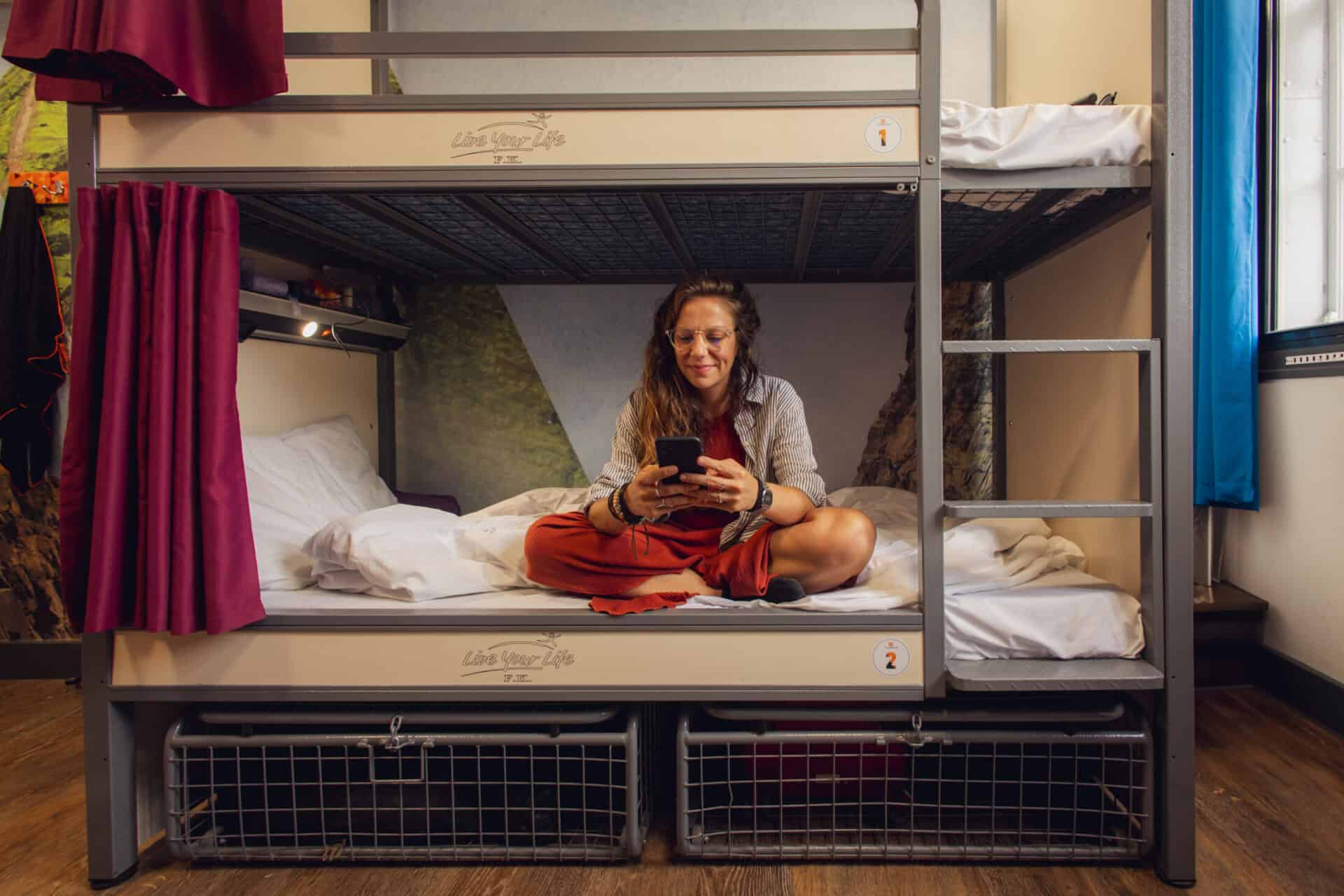
A dorm with 4 to 12 beds suits a solo traveller who wants conversation and a lower entry price. You will usually get a locker, but the room and sometimes the bathroom are shared. Modern hostels reduce the inconvenience with privacy curtains, reading lights, charging points and smaller dorms. Check the exact room description before booking. The word “hostel” covers very different setups.
A private twin room changes the experience. Couples or friends get their own sleeping space, while some hostels still provide a kitchen, lounge or bar for meeting other travellers. Those facilities can matter more than a television on a first Europe trip, especially when you want local suggestions without arranging every interaction yourself.
Hotels keep the arrangement contained. You get the room to yourself, normally with an en-suite bathroom, television and kettle. A budget hotel may add housekeeping and a compact workspace, but it rarely offers a communal kitchen where you can prepare breakfast or meet other travellers naturally.
Safety and arrival arrangements
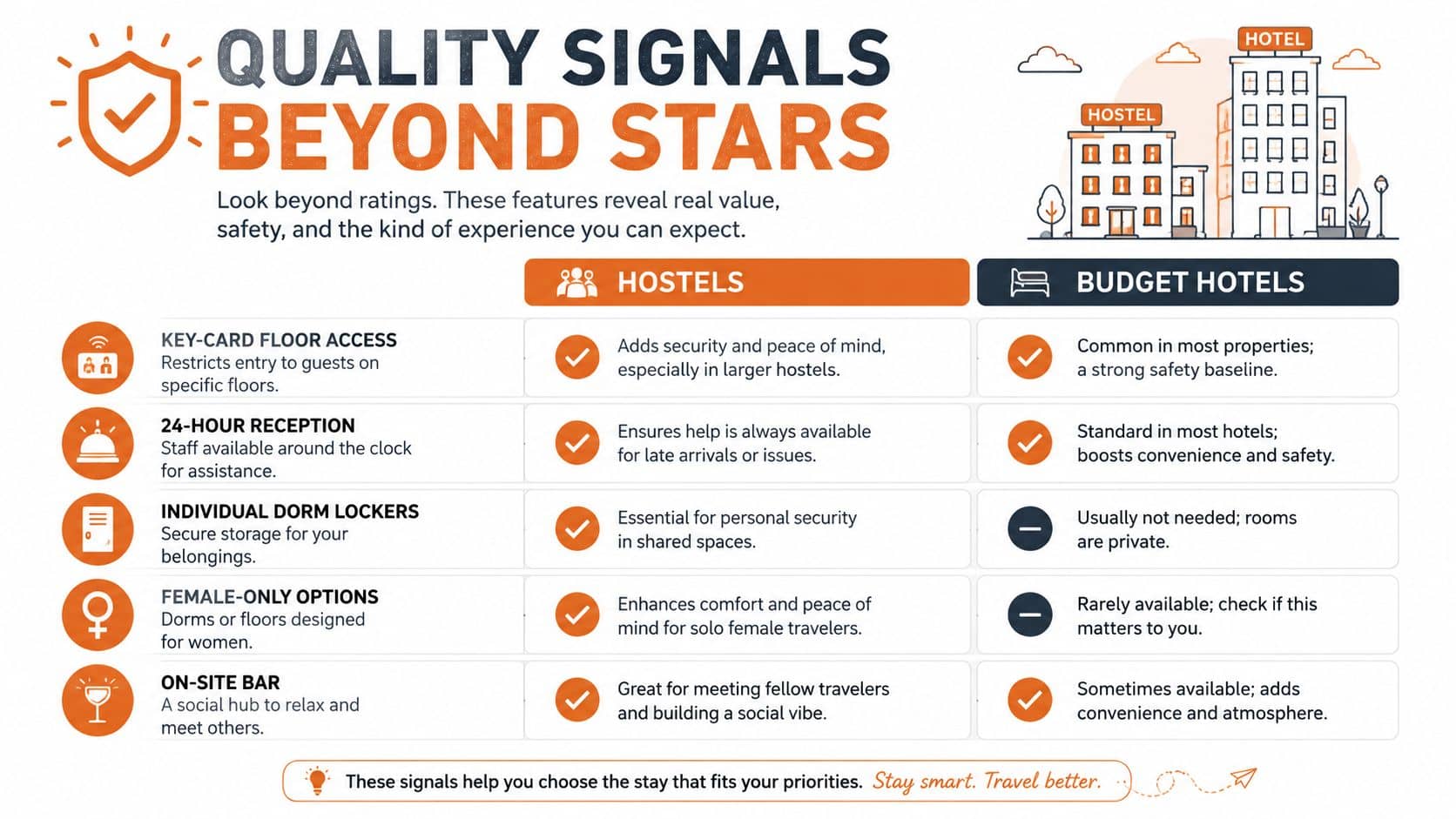
A reputable hostel should make its security arrangements easy to assess. Look for individual lockers, key-card access to dorm floors, clear reception hours and instructions for late arrivals. St Christopher’s properties in London and Barcelona provide practical details travellers can review before booking. The St Christopher’s hostel amenities guide explains the facilities a hostel stay may include.
A budget hotel usually gives you a lockable private room and a direct route from reception to bed. That simplicity suits a couple arriving tired or a light sleeper protecting an early start. The trade-off is a quieter, more private stay with fewer shared spaces and fewer spontaneous conversations.
Booking terms
Hostel reservations are usually made for an individual bed, letting a solo traveller select the dorm or private room that fits the trip. Budget hotels present a room rate, often with cheaper advance-purchase options tied to stricter cancellation terms. Read the cancellation window, deposit policy and late-arrival instructions before paying. A low headline rate loses its value if a changed train leaves the reservation non-refundable.
Price, Doubles and the Hidden Commission
Your travel setup determines the better deal. A solo traveller pays for one hostel bed, while a solo hotel guest pays for an entire private room. For two people, the calculation changes because a hotel room rate usually stays fixed, while hostel charges apply to each bed.
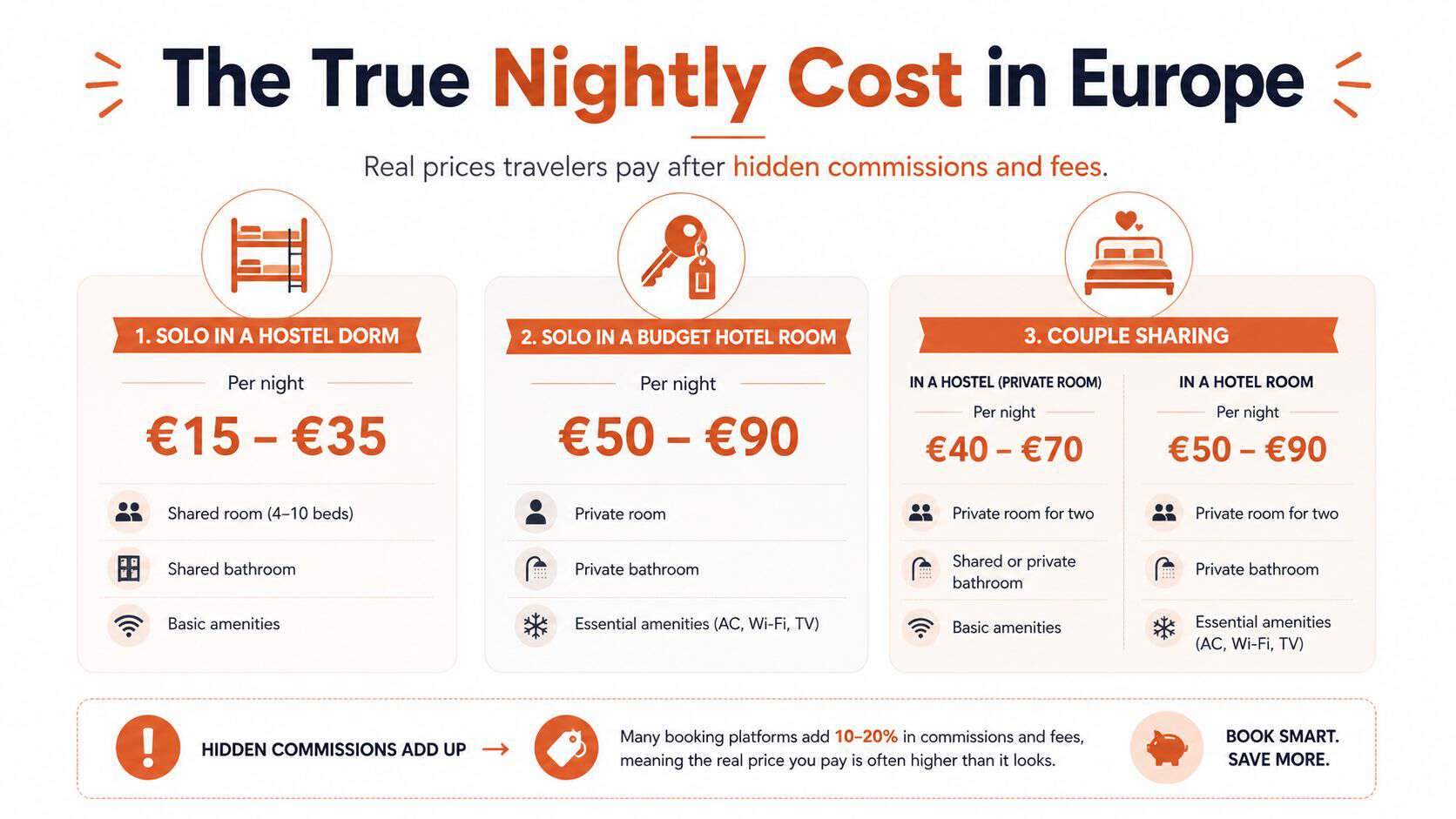
A dorm bed in Lisbon or Prague might sit in the €18 to €35 range, while a private double in the same hostel might be €55 to €90. A budget hotel double in a similar location might be €70 to €120. Treat these as practical ranges, not promises. Location, dates and demand can move the rate.
The cost pattern looks like this:
Solo in a hostel dorm: One bed, shared room and shared facilities.
Solo in a budget hotel: One person pays for a complete private room.
Two people in a hostel dorm: Two beds, so the per-person saving becomes smaller.
Two people in a hostel private room: A fixed room rate may bring the total closer to a hotel.
Two people in a budget hotel: One room rate covers both travellers, with privacy included.
For a solo trip, choose a hostel dorm first if keeping costs down and meeting people matter. Hostels are generally priced per bed rather than per room, as explained in this guide to budget hotels or hostels. A couple should compare the full room total instead. A private hostel room may offer the same basic privacy as a budget hotel while retaining access to shared spaces.
The public rate can hide a distribution cost. As noted earlier, UK parliamentary evidence documents online travel agencies charging hotels 15% to 30% of the booking value, with the effective cost potentially reaching around 18% to 36% when commission is calculated on VAT-inclusive rates. That helps explain why a budget hotel’s visible price may be higher than its direct-booking rate.
For a four-night stay, a £100 nightly hotel booking represents £400 before extras. At 15% commission, that is £60, while 30% represents £120. Hotels do not necessarily pass the full amount directly to guests, but booking through the property can narrow the gap. Check the hotel’s own terms, then compare the final total, cancellation conditions and inclusions. The same approach applies to cheap accommodation in Europe. Book direct with the hostel when its rate and terms match the OTA, because avoiding the markup leaves more of your budget for the trip.
Safety, Sleep and Social Vibes
A star rating won’t tell you whether a dorm feels secure at midnight or whether a hotel room faces a noisy road. You need to read the signals in the room details, property photos and recent reviews.
For hostels, start with the bed area. An individual locker should be large enough for your important belongings, and key-card access to dorm floors adds a useful barrier between the room and public areas. Female-only dorms can make some travellers more comfortable, while 24-hour reception matters if your train arrives late or you need help outside normal desk hours.
Budget hotels offer a different type of reassurance. A private room, internal corridor and en-suite bathroom remove several shared-space concerns. Street-facing windows can still bring traffic, nightlife and deliveries into the room, so scan photos carefully and ask whether a quieter internal-facing room is available.
Read the sleep signals
Hostel sleep quality depends on more than the number of beds. Quiet hours, solid mattresses, privacy curtains and considerate room design matter. Earplugs are part of the sensible hostel kit, but you shouldn’t treat them as an excuse for poor management. A clean, well-run dorm should make rest possible.
Hotels usually provide more control over noise because you close your own door. Housekeeping can support a predictable routine, although an early corridor clean or thin partition can still interrupt sleep. Light sleepers should prioritise recent comments about noise over broad praise about location.
Make three checks before booking
Read recent reviews for cleanliness: Look for specific comments about bathrooms, bedding, lockers and reception rather than relying on a single overall score.
Inspect the photographs: Worn bedding, damaged lockers and neglected shared spaces are warning signs, whether you’re looking at a dorm or a private room.
Email the property directly: Confirm late check-in, lift access, luggage storage and the quietest available room before committing to a reservation.
The social difference is just as practical. A hostel’s shared kitchen, lounge and organised pub crawl create easy conversation without demanding that you approach strangers in the street. A hotel breakfast room can be pleasant and calm, but most guests are there to eat and leave. Choose the atmosphere you’ll use, not the one you think sounds impressive.
Which Format Fits Your Trip
Your travel situation should decide the format. Choose the accommodation that removes the problem most likely to spoil the trip. Solo in a new city, a hostel can provide company and practical local help. Travelling as a couple, with teenagers or with work equipment, a budget hotel usually gives you the privacy and routine the day requires.
Trip Situation
Better Fit
Why It Works
First 48 hours in a new capital
Hostel
Staff and guests can help with orientation, food and evening plans
Multi-city rail trip with a partner
Budget hotel
Private space makes luggage, planning and recovery easier
Travelling with teenagers
Budget hotel
A private room and dependable bathroom simplify the day
Carrying business equipment
Budget hotel
A lockable room and dedicated surface protect routine and focus
Light sleeper
Budget hotel or private hostel room
You can control the sleeping environment more easily
Remote worker
Budget hotel or quiet private hostel room
Privacy and a stable workspace reduce interruptions
Airport layover
Budget hotel
Guaranteed check-in and a private room suit a short stop
Solo city break
Hostel
Social spaces and activities reduce the effort of meeting people
Multi-week budget itinerary
Hostel
Shared kitchens and bed-based rates preserve funds for the journey
Choose for the biggest friction point
On your first two days in a new capital, I’d choose a hostel. Staff can point you towards food and transport, while common areas give you somewhere to sit and a natural chance to find company for dinner or a walk. Arriving alone feels easier when the building already offers a social setting.
A couple moving between cities by rail will usually get more value from a budget hotel. Shared luggage, early departures and recovery between journeys make a private room worth paying for. Families with teenagers also benefit from a dependable bathroom and one private place where everyone can regroup.
Late-night arrivals and one-night transit stays favour hotels because simplicity matters more than atmosphere. Remote workers need a private room or a quiet private hostel category, with enough space to maintain a routine. The same choice suits travellers spending several weeks on the road, especially when sleep and focused work are harder to replace than social opportunities.
Solo city breaks and multi-week budget itineraries point towards hostels. Shared kitchens can reduce meal costs, while bed-based rates leave more of the budget for trains, museums and day trips. Book directly with the hostel where possible. OTA commissions can raise the rate of a budget hotel, while a direct hostel booking may show the property’s actual value more clearly.
Pick the format that fixes the problem most likely to spoil the trip. Compare the situation first, then choose the room type and price that support it.
Why Hostels Win for Solo European Trips
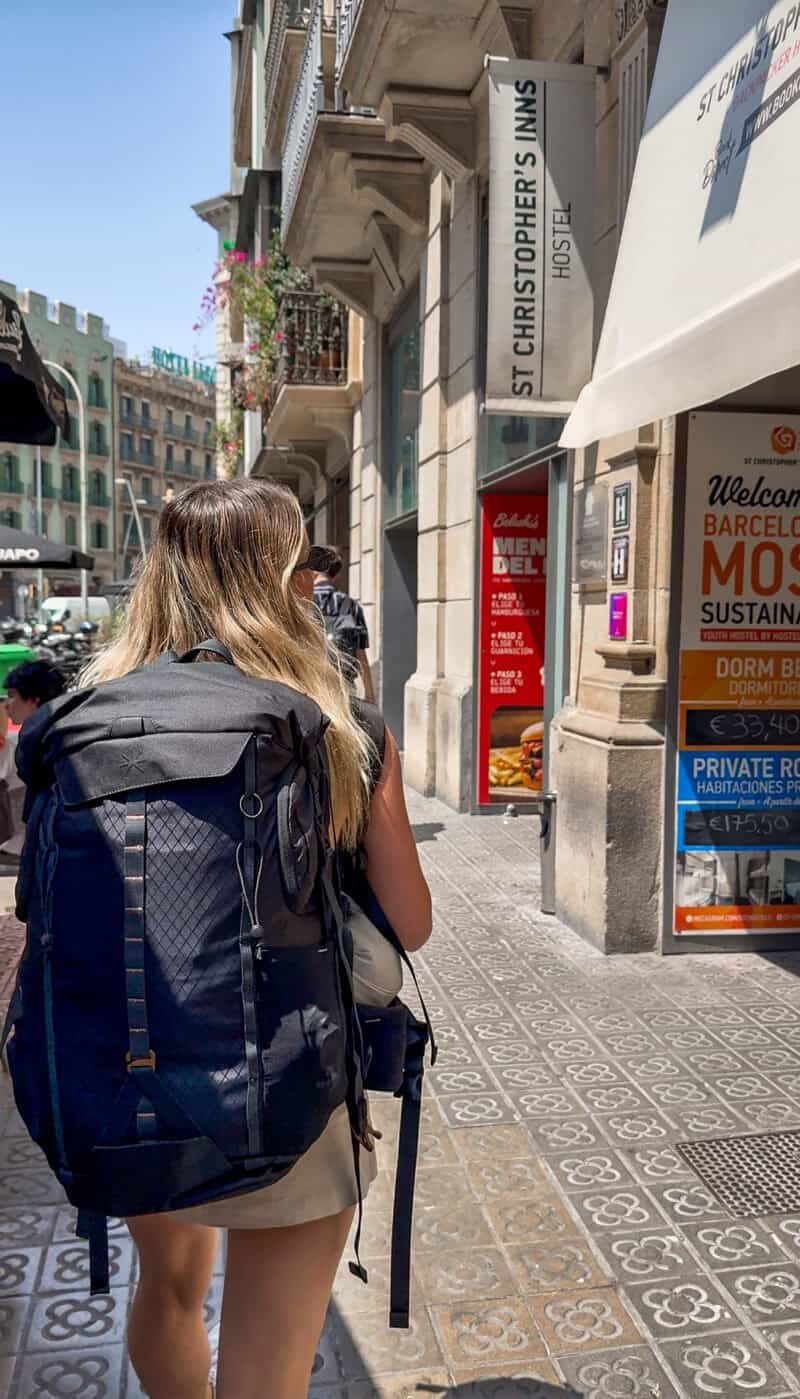
You land alone in Barcelona on Friday afternoon, drop your bag at a central hostel and still have a route into the evening. A shared kitchen gives you an easy opening to speak with other travellers. A hostel-arranged walking tour or tapas crawl provides a plan without requiring a companion, while an on-site bar lets you meet people without crossing an unfamiliar neighbourhood alone.
That social infrastructure is the main reason I recommend hostels for solo European trips. You can join a conversation, find dinner company and build the next day’s plan in the same place. A budget hotel may give you a quieter room, but it leaves you to create those connections yourself.
Location strengthens the case. A hostel near a main station, old-town nightlife or a ferry terminal reduces the effort of carrying a full pack alone.
Take that Barcelona weekend. You arrive, check in, join the hostel’s tapas crawl and meet three people seeking plans for Saturday. The group chooses Montserrat, shares the planning and divides the effort of getting there. A comparable budget hotel double might provide a calmer room, but it will not create that travel network.
I would not attach a fixed saving to the example. Rates change with dates and room type, and the hostel’s advantage is not always a single percentage. The stronger value is practical: shared plans can replace the cost of private tours or organised introductions. See this guide to the benefits of staying in hostels for solo travel for more advice.
Choose the room format to control the noise. A smaller dorm, female-only room or private room gives you a retreat inside a social property. You can meet people early in the trip, then book a private room before your flight home.
Here’s the kind of communal atmosphere worth looking for:
For a solo traveller, that choice matters. Hostels give you company when you want it and a clean, secure room when you have had enough.
Booking Direct and Getting Real Value
You land late, need a quiet room, and have no patience for a generic booking page. Booking direct gives you a clearer line to the property, its cancellation rules and the team handling your arrival. Compare the complete stay, not just the lowest headline rate.
Online travel agency commissions add cost to hotel bookings, as noted earlier. That helps explain why a hostel or budget hotel may offer better value through its own website, even when the displayed room prices look similar. Direct booking does not guarantee the cheapest rate, so check what you receive.
Check the complete package
Before paying, confirm:
Best price guarantee: Check the matching conditions, dates, room type and booking channel covered.
Welcome benefits: Look for a welcome drink, food discount or access to a walking tour.
Cancellation terms: Confirm whether “free cancellation” means a cash refund, then note the exact deadline.
Arrival support: Ask about late check-in, room location, lift access and group requests.
Included essentials: Verify linen, breakfast, luggage storage and local charges.
Direct contact is especially useful for solo travellers. Tell the property about a late arrival, request a quieter dorm position or ask where to leave your bag before check-in. A short exchange can answer practical questions that generic room descriptions leave unresolved.
Choose according to the trip you are taking. A couple who need guaranteed quiet may prefer a budget hotel. A solo traveller on a first Europe trip may get more from a hostel’s central location, social spaces and choice of dorm or private room. Compare the hostel’s own offer with the hotel’s full cost, including fees, breakfast and cancellation terms.
St Christopher’s has hostels across UK and European cities, including dorms, private rooms, communal spaces and venues such as Belushi’s, traditional pubs and The Bauhaus in Bruges. Visit St Christopher’s to check direct booking benefits, cancellation terms and property details for your next solo city trip.
Our direct rates are guaranteed to be at least 5% cheaper than anywhere else online, with a free drink on arrival, 25% off food at the bar, and free cancellation options available.